 0
0
 0
0
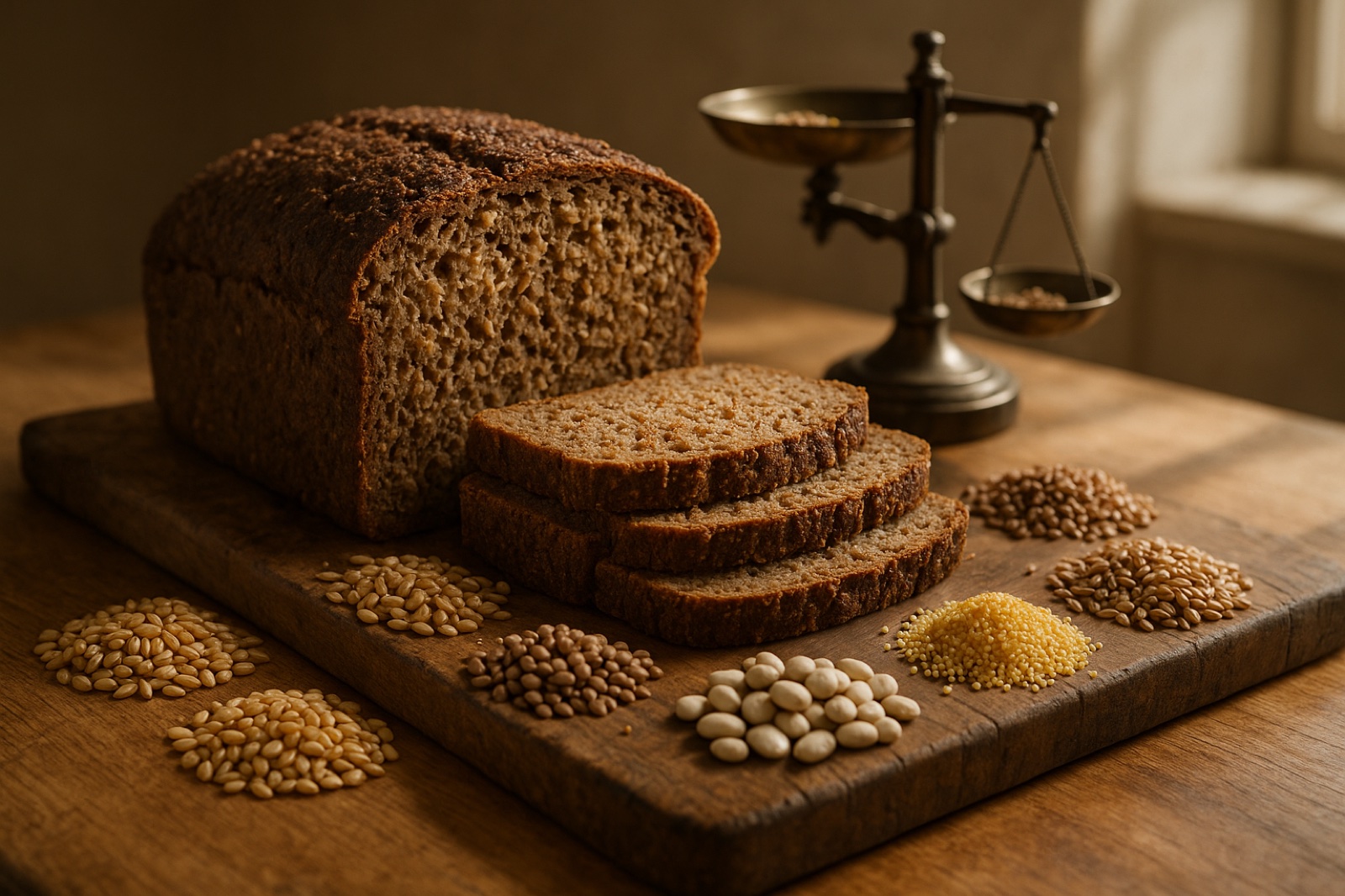
There is a loaf in the bread aisle that sounds like it came out of a museum. Ezekiel bread. No flour. Just sprouted wheat, barley, beans, lentils, millet and spelt, pressed into one heavy, chewy loaf.
The name is not marketing fluff. The recipe really does come from an ancient book, the book of Ezekiel. What the packet doesn’t tell you is why that recipe was first written down.
It wasn’t a health tip. It was a picture of a city running out of food.
And this week, a large new review of heart research answered the question that same bread aisle keeps asking: how much whole grain do you actually need?
What Is Ezekiel Bread, Exactly?
Ezekiel bread is a sprouted whole grain bread. The best-known version is sold by a company called Food for Life, which names its loaf after the verse the recipe comes from.
Instead of grinding dry grain into flour, the grains and legumes are soaked until they start to sprout, then mashed and baked. There are six ingredients at its heart: wheat, barley, beans, lentils, millet and spelt.
The company says that when those six are sprouted and combined, the bread becomes a complete protein, with all nine essential amino acids. It also says sprouting makes the bread easier to digest. Those are the maker’s claims, not findings from the new heart study below.
Interestingly, the family behind the brand has said it was never made for a religious purpose. Gary Torres told the news site HuffPost that the bread “has never been produced to fill a religious purpose.” They simply liked the recipe.
The Whole Grain Sweet Spot: What 87 Trials Found
A review published this week in the European Heart Journal pulled together 87 randomised controlled trials that tested what happens when people eat more whole grain. Together, those trials involved 6,529 people in Asia, Europe, the United States, Canada, Australia and Brazil. The work was led by Dr Helda Tutunchi of Tabriz University of Medical Sciences in Iran.
Here is what they found:
- Benefits started early. They were already showing up at around 30 to 40 grams of whole grain a day.
- The sweet spot was 60 to 100 grams a day. That is roughly four to six servings, and it is where the strongest overall improvements appeared.
- The strongest evidence (rated high certainty) was for lower body weight, a smaller waist, lower total cholesterol, and lower levels of an inflammation marker called interleukin-6.
- Moderate-certainty evidence pointed to better LDL cholesterol, triglycerides, blood pressure, fasting blood sugar and insulin resistance.
“Whole grain” has a specific meaning here. It is grain where the bran, the germ and the starchy centre are all still there, in the same proportions as the original kernel, whether it is eaten whole, rolled into flakes, or milled into flour. The review’s examples were ordinary foods: oatmeal, wholegrain bread and brown rice.
What the study can’t tell you yet
The researchers were honest about the limits. Most of the trials lasted only about eight weeks. They measured risk factors, like cholesterol and waist size, not actual heart attacks or strokes. And very few trials tested more than 140 grams a day, so nobody can say whether eating far more adds anything.
One more thing worth knowing: grams of whole grain are not the same as grams of food on your plate. A slice of bread or a bowl of cooked rice weighs more than the grain inside it, because of the water.
If you like seeing large reviews like this ranked out plainly, we looked at another one recently: 139 trials that ranked 12 non-drug treatments for knee arthritis.
Cheap ways to get there
Nothing in this review says the grain has to come from a special loaf. The foods it named are some of the cheapest in the world.
- Swap one refined breakfast for a bowl of oats.
- Choose brown rice or another whole grain for one meal a day.
- When you buy bread or flatbread, look for “whole grain” or “wholemeal” as the first ingredient.
Where the Ezekiel Bread Recipe Really Comes From
Now for the part the packet leaves out.
Ezekiel was a prophet living in exile in Babylon, in the years before the Babylonian army besieged Jerusalem. The city fell around 586 BC. Before it happened, Ezekiel was told to act the siege out in public, like a living warning sign.
He was to lie on his side for 390 days. During that time he was to take wheat, barley, beans, lentils, millet and one more grain, put them all in one pot, and make bread from the mix. The old King James translation calls that last grain “fitches.” Many modern translations say spelt, which is the word the bread company uses.
Then came the rules that turn it from a recipe into a ration:
- It was weighed. Ezekiel’s food was limited to twenty shekels a day. Commentators usually estimate that at somewhere around 230 to 280 grams, though ancient weights were never perfectly standard. That was not his whole grain allowance. That was all his food.
- His water was measured too.
- The fuel was dung. He was first told to bake it over human dung. Ezekiel protested that he had never eaten anything unclean in his life, and he was allowed to use cow dung instead.
The passage then says plainly what all this meant. The bread supply of Jerusalem was about to be broken. People would eat their bread by weight, anxiously, and drink their water in dismay.
That is why the grains were mixed. Professor Larry Yarbrough, speaking to HuffPost about the verse, put it simply: this is food for famine, or for a city under siege. It is “real bread, but it’s not good bread.” You throw in beans and lentils and millet because there isn’t enough of any one kind of flour left.
A Siege Ration on a Supermarket Shelf
Put the two stories side by side and something lovely shows up.
The mix that once meant “there isn’t enough of anything” now sits on a shelf as a premium health food. The same grains that kept a starving city going are the grains researchers are now telling us to eat more of. Scarcity food became abundance food.
And both stories are about weighing grain. Ezekiel weighed his because there might not be tomorrow’s. Researchers weigh ours to find out how much is enough.
There is an old prayer that doesn’t ask God for a full storehouse. It asks for bread for today. Just today’s. People have prayed it through sieges and famines, and people pray it in full kitchens. It sounds like a small request, until you notice it keeps you looking up every single morning, grateful for what’s already on the table.
Maybe that is the healthiest thing about this bread. Not the amino acids. The reminder. We wrote once about a pioneer family who were grateful for what we’d call poverty, and it is the same quiet lesson: enough, noticed, is a kind of wealth.
So the next time you cut a thick slice of grainy bread, or pour a bowl of plain oats, you are doing two good things at once. You are feeding your heart the way 87 trials suggest. And you are eating a food that once meant survival, on an ordinary morning when it simply means breakfast.
That is worth a moment of thanks.
Curious how small, surprising things change how the body behaves? You might like this one too: smelling chocolate before a workout added 18 reps.
Ezekiel Bread and Whole Grains: Questions People Ask
What is Ezekiel bread made of?
Ezekiel bread is a flourless bread made from sprouted whole grains and legumes. The best-known brand, Food for Life, uses six main ingredients: wheat, barley, beans, lentils, millet and spelt. The grains and legumes are soaked until they sprout, then mashed and baked instead of being ground into dry flour.
Where does the name Ezekiel bread come from?
The name Ezekiel bread comes from the book of Ezekiel in the Bible, where the prophet Ezekiel is told to make bread from wheat, barley, beans, lentils, millet and a sixth grain often translated as spelt. In that story the bread was a siege ration, weighed out each day and baked over dung fuel, to act out the coming Babylonian siege of Jerusalem around 586 BC. It was a sign of scarcity, not a health recipe.
How much whole grain should you eat a day for heart health?
A review of 87 randomised trials published in the European Heart Journal in September 2026 found that the strongest improvements in heart risk factors came at 60 to 100 grams of whole grain a day, roughly four to six servings. Benefits were already visible at 30 to 40 grams a day. Most trials lasted about eight weeks and measured risk factors such as cholesterol and waist size rather than heart attacks or strokes.
Is Ezekiel bread healthier than regular bread?
Ezekiel bread is a whole grain bread, and whole grain bread is one of the foods that a 2026 review of 87 trials linked to better heart risk factors such as lower cholesterol and a smaller waist. That review did not test Ezekiel bread specifically, and claims about sprouting and complete protein come from the manufacturer. Cheaper whole grain foods such as oats and brown rice count toward the same daily amount.
Was Ezekiel bread really baked over dung?
In the original story in the book of Ezekiel, yes. The prophet Ezekiel was first told to bake the mixed-grain bread over human dung as a sign of how desperate the siege of Jerusalem would become. Ezekiel protested that he had never eaten anything unclean, and he was allowed to use cow dung as fuel instead. Modern Ezekiel bread is baked in ordinary ovens.
What Do You Think?
Does knowing that Ezekiel bread began as a siege ration make it more interesting to eat, or a little less appetising? Tell us which way it tips for you in the comments. We read them.
If you’d like to get better at noticing the ordinary gifts in a normal day, we made a free video guide and companion PDF about exactly that.
Share This
- Ezekiel bread wasn’t invented as a health food. In the original story it was a siege ration, weighed out daily and baked over dung. https://bgodinspired.com/?p=115756
- A review of 87 trials just found the whole grain sweet spot for heart health: 60 to 100 grams a day. Oats and brown rice count. You don’t need a fancy loaf. https://bgodinspired.com/?p=115756
- The mixed-grain bread that once meant “there isn’t enough of anything” is now a premium health food. Same grains. Very different mornings. Still thinking about that one. https://bgodinspired.com/?p=115756