 0
0
 0
0
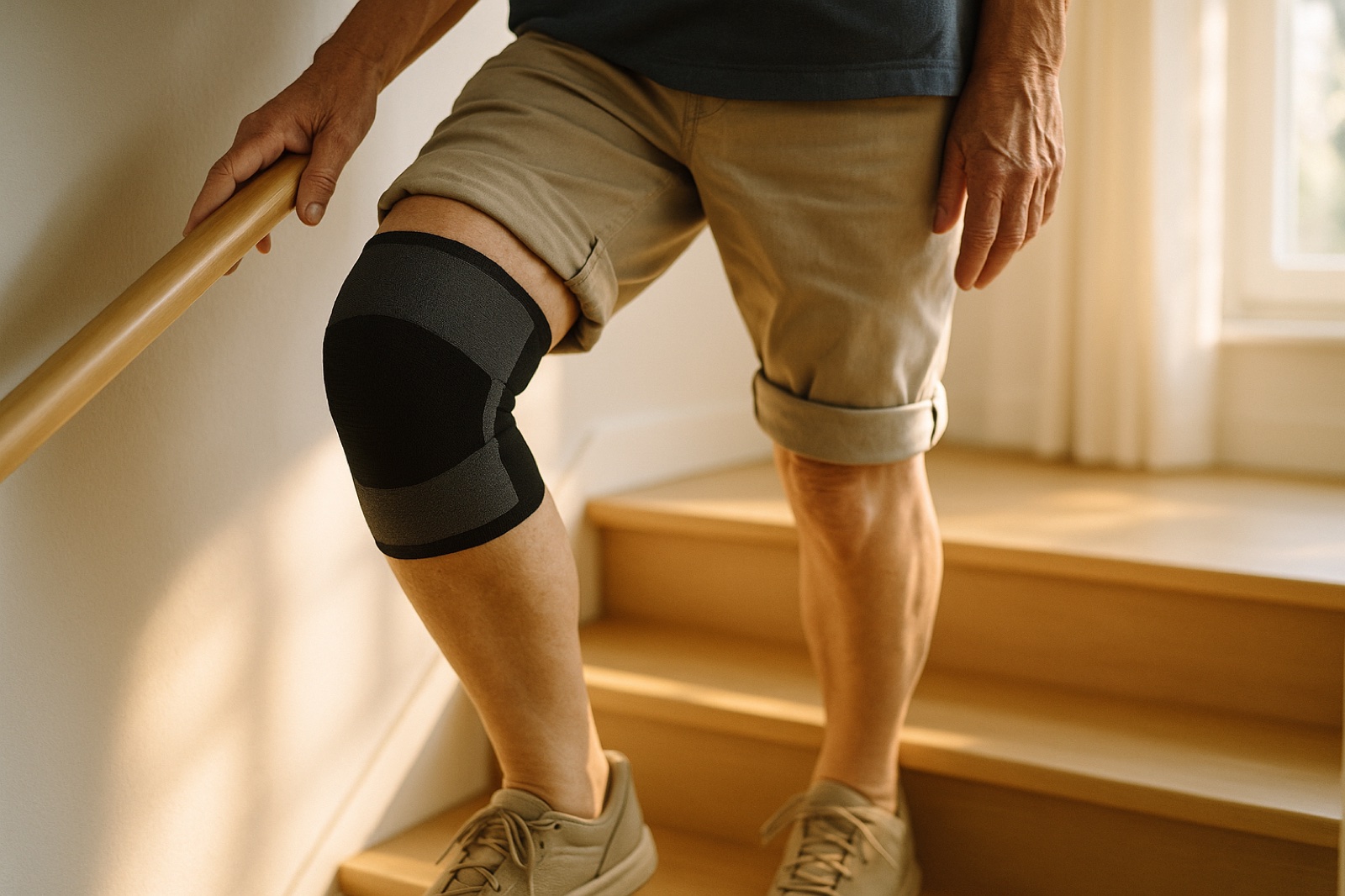
If your knee hurts when you stand up from a chair, you already know the routine. A hand on the armrest. A little push. A small wince you try to hide. Stairs get slower. Long walks get shorter.
And if you have gone looking for knee arthritis pain relief, you have probably found a long list of things to try. Creams. Tapes. Machines that buzz, heat or pulse. Special shoe inserts. Water classes. Exercises.
So which ones actually help?
A team of researchers tried to answer that by putting a dozen of them side by side. They pulled together 139 clinical trials involving 9,644 people with knee osteoarthritis, the wear-and-tear kind of arthritis, and ranked 12 treatments that don’t involve medicine. The one that came out on top overall is not high-tech at all. It doesn’t rebuild anything. It just holds the knee up.
What 139 trials found about knee arthritis pain relief
The study was published in the journal PLOS One in June 2025, and it has been doing the rounds again this month. It is what scientists call a network meta-analysis. That sounds complicated, but the idea is simple.
Most trials only compare one treatment against one other thing. A network meta-analysis links lots of those trials together, so treatments that were never tested head to head can still be compared through the trials they share. The result is a ranking: which option is most likely to be the best.
Here are the 12 treatments they compared:
- A knee brace
- Exercise
- Hydrotherapy (exercise and treatment in warm water)
- Kinesio taping (stretchy tape on the skin)
- A lateral wedge insole (a sloped shoe insert)
- TENS (a small device that sends mild electrical pulses through the skin)
- Interferential current (another type of electrical therapy)
- Low-level laser therapy
- High-intensity laser therapy
- Shortwave diathermy (deep heat from radio waves)
- Therapeutic ultrasound
- Shock wave therapy
They measured what matters to someone with a sore knee: pain, stiffness, and how well people could get through ordinary daily life. Most of that was scored with a standard questionnaire doctors use for arthritis, plus simple pain ratings at rest and while moving.
When the researchers combined the rankings across all of those measures, the knee brace came first, followed by hydrotherapy, then exercise.
At the other end, therapeutic ultrasound ranked last for pain, for daily function, and for pain while moving. Shortwave diathermy ranked last on the combined questionnaire score. Some of the most technical options on the list did the least.
If knee pain is part of a bigger season of feeling worn down, this free guide was made for exactly that kind of tired:
The detail the headlines skipped
Most of the coverage stopped at “knee braces win.” The full paper is more interesting than that.
The brace did rank first for pain, for stiffness, for daily function, and for pain during activity. But on the total questionnaire score, the one that adds pain, stiffness and function together, warm-water therapy came first, with exercise second. Warm water also came first for pain at rest.
So there isn’t really one tidy winner. There is a small group at the top that keeps swapping places depending on what you measure. The brace, the water and the exercise.
And when you look at what those three have in common, a pattern appears.
Why the top three all do the same job
None of the top three works by fixing the joint. None of them regrows worn cartilage, and the trials didn’t test that. They measured how people felt and moved. What the top three share is that each one supports the knee so it can keep moving with less strain.
The brace holds it up from the outside. The researchers list several ways a brace may help: it can shift how weight travels through the knee, steady a joint that wobbles, reduce muscle tiredness, and help your body sense where the knee is. It takes some of the load off the sore part so the rest of the leg can do its work.
Warm water holds it up from underneath. The paper notes that deeper water gives more buoyancy, which lifts weight off the joints. It suggests water between about 33.5°C and 35.5°C (roughly 92°F to 96°F) is comfortable enough to stay in for a long session. The authors also point out that water therapy seems to help with things that come along with arthritis, like low mood, confidence, and the habit of avoiding movement because it hurts.
Exercise holds it up from the inside. Stronger muscles around the knee take on work the joint used to carry alone. Within the exercise studies, the authors say aerobic exercise (like walking or cycling) and mind-body exercise (like tai chi or yoga) showed the biggest benefits for pain and function.
Three very different treatments. One idea underneath them all: don’t force the weak joint to cope on its own. Give it support, and let it move.
What this study does not show
This is a helpful study, but it is not the final word, and the researchers say so themselves.
- Most of the included trials were small. Small trials are more likely to give results that don’t hold up later.
- The trials were run differently. Treatment lengths varied from study to study, which makes neat comparisons harder.
- Some of the trials had weak spots in how people were randomly assigned and whether they knew which treatment they got.
- Only English-language studies were included, so useful trials published in other languages were left out.
- A ranking is a probability, not a promise. “Most likely to be best” across many trials does not mean a brace will beat exercise for your knee.
The paper also doesn’t tell you which kind of brace, and there are many. Fit matters. A brace that doesn’t suit your knee can be uncomfortable or unhelpful, which is why it is worth asking a doctor, nurse, or physiotherapist before buying one if you can.
What to try for knee arthritis pain relief
You don’t need money or a clinic to start with the things that ranked well. Here are some simple, low-cost steps. If you have a health worker you can talk to, share this list with them first.
- Keep moving, gently and often. Several short walks spread across the day can be easier on a sore knee than one long one. Aerobic movement was among the best-performing types of exercise in the studies.
- Build the muscles that hold the knee. Slow sit-to-stands from a sturdy chair and straight-leg raises while lying down are common starting points. Stop if the pain sharpens, and go smaller next time.
- Try slow, flowing movement. Tai chi and gentle yoga fall into the mind-body group the authors highlighted. Many free beginner videos exist online.
- Use water if you can reach it. Even walking in waist-deep water at a local pool takes weight off the knee. Warm water is the most comfortable.
- Ask about a brace. If you can see a health worker, ask whether a brace might suit your knee and which type.
- Don’t wait on warning signs. A knee that suddenly becomes very swollen, hot or red, comes with a fever, or can’t take your weight needs to be checked by a doctor or clinic soon, not treated at home.
If you are already on pain pills for your joints, you may find this piece on what happens when a side effect gets its own pill worth a read. And if you want to understand why some joints wear faster than others, there is a surprising story in why some joints are vulnerable from before birth.
The hardest part of all of this is usually not knowing what to do. It is doing it on the days the knee aches. If that sounds familiar, starting with smaller promises can help more than a big plan.
Held up while it heals
There is a line in a letter written nearly two thousand years ago, to people who were worn out and ready to quit, that reads almost like a physio’s note. Lift the hands that hang down. Strengthen the weak knees. Make the path level, so the limb that is lame isn’t wrenched out of place, but healed.
Scholars point out that the word it uses there, for being turned or put out of place, could also be used in medical writing for a joint that has slipped out of its socket. The advice was never “push the weak knee harder.” It was to support it, and make the way easier, so healing had room to happen.
That old instinct and this new ranking land in the same place. And a lot of people have found that God tends to work that way too. Not by demanding that the weak part suddenly become strong, but by quietly holding it up while it heals.
That is not a reason to skip the brace, the pool or the exercises. It might just be a gentler way to think about the parts of you that ache.
Questions & Answers
What is the best non-drug treatment for knee arthritis pain?
A 2025 network meta-analysis in PLOS One compared 12 non-drug treatments for knee osteoarthritis across 139 trials and 9,644 people. Across all outcomes combined, a knee brace was ranked most likely to be the best option, followed by hydrotherapy (warm-water therapy) and exercise. The ranking is a probability based on mostly small trials, so it is a guide rather than a guarantee for any one person.
Is exercise or a knee brace better for knee osteoarthritis?
In the 2025 PLOS One network meta-analysis of 139 trials, a knee brace ranked above exercise for knee pain, stiffness and daily function, but exercise ranked above the brace on the total WOMAC arthritis score. Both ranked near the top, and they are often used together. A doctor or physiotherapist can advise whether a brace suits a particular knee.
Does hydrotherapy help knee arthritis?
Yes, according to a 2025 network meta-analysis of 139 trials on knee osteoarthritis. Hydrotherapy ranked first for the total WOMAC score and for pain at rest, and second overall among 12 non-drug treatments. The authors note that buoyancy takes weight off the joints and suggest water around 33.5°C to 35.5°C for longer sessions.
Does ultrasound therapy work for knee arthritis?
In a 2025 network meta-analysis comparing 12 non-drug treatments for knee osteoarthritis, therapeutic ultrasound ranked last for pain, daily function and pain during activity. The study authors described the role of ultrasound in knee osteoarthritis as still contested.
Can a knee brace cure knee arthritis?
No. A knee brace does not repair worn cartilage or cure osteoarthritis. It supports the joint, which may shift how load passes through the knee, improve stability and reduce pain during movement. In a 2025 network meta-analysis of 139 trials, bracing was ranked the most likely non-drug option to ease knee arthritis symptoms.
A question worth sitting with
When something in your body starts to wear, do you think the better instinct is to push through it or to find support for it? And has the answer changed for you as you’ve gotten older? Tell us in the comments.
If this was worth reading, pass it on
- Researchers ranked 12 non-drug treatments for knee arthritis across 139 trials. The top one overall didn’t fix the knee. It just held it up. Warm water and exercise were right behind it.
- For anyone with a sore knee: in a big review of 139 trials, braces, warm-water therapy and exercise came out on top. Ultrasound came near the bottom. Worth knowing before you spend money.
- The best things for knee arthritis in this study all did the same job: they supported the joint instead of forcing it. I keep thinking that works for more than knees.
Next time you reach for the armrest to stand up, you don’t have to feel bad about it. Your body is doing the sensible thing. It is looking for something to lean on.