
 0
0
 0
0
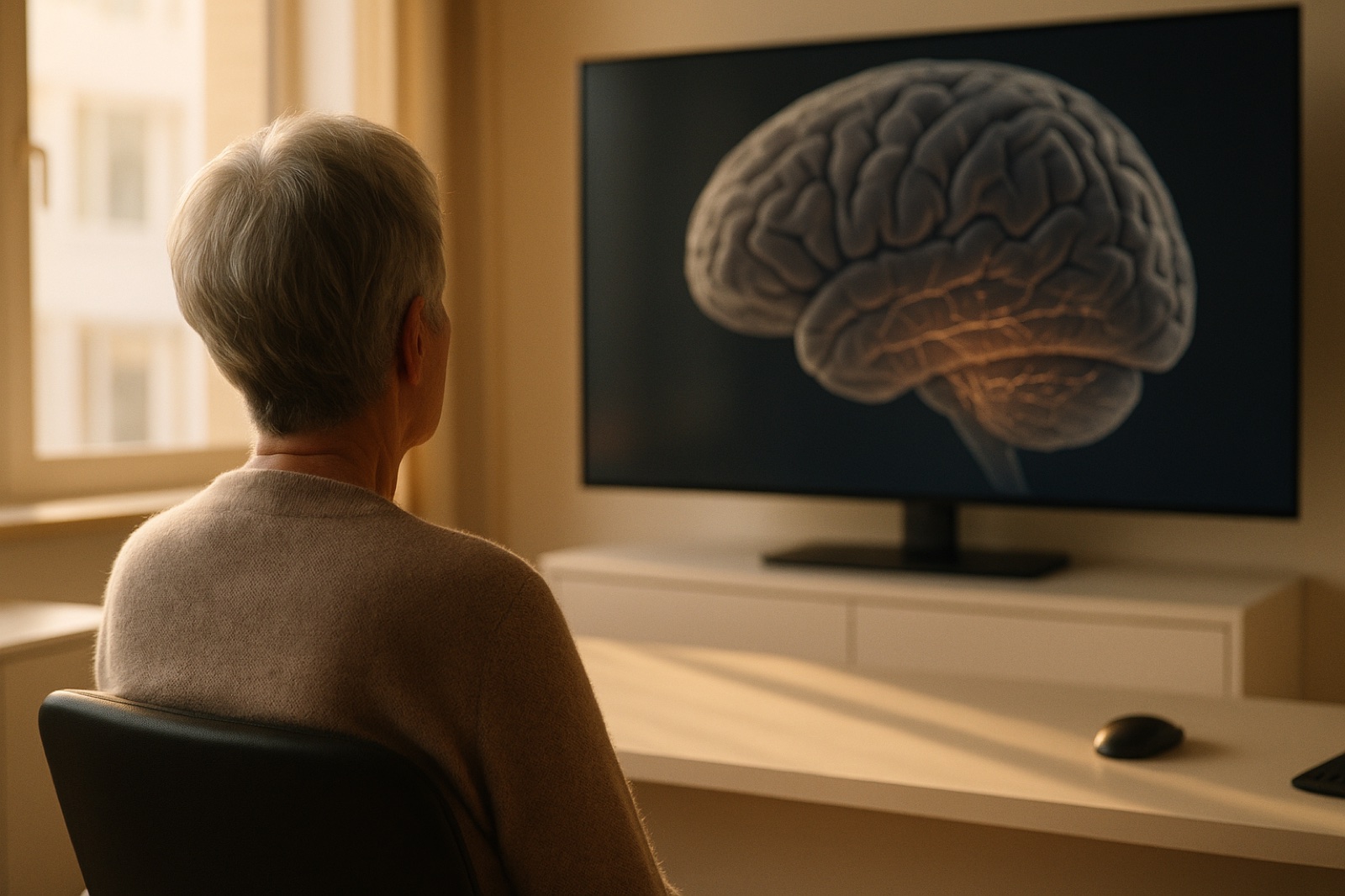
Picture two people, both in their late sixties, lying in the same brain scanner on the same afternoon.
Their scans come back looking almost the same. Both brains have thinned in the places brains usually thin with age. On paper, they have lost about the same amount.
But one of them still finds the right word quickly and follows a fast conversation with ease. The other keeps losing words halfway through a sentence.
Same loss. Different life. Why?
If you have ever worried about brain shrinkage with age, for yourself or for someone you love, a study published this summer offers a small, careful piece of that answer. It is not a cure, and it is not a promise. But it does suggest that what you lose is not the whole story.
Does Brain Shrinkage With Age Mean You Lose Your Mind?
Some thinning of the brain’s gray matter is a normal part of getting older. Gray matter is the outer layer where much of the brain’s information processing happens. For a long time, the simple picture was: less gray matter, less thinking.
That picture is not wrong. But it is not complete, either.
A team at the Keck School of Medicine of USC looked just underneath the gray matter, at something called superficial white matter. This is a thin layer of short nerve fibers sitting right below the surface. Its job is to link nearby areas of the brain to each other, like the short lanes that connect houses on the same street, rather than the long highways that connect cities.
First author Yingxu Liu, a postdoctoral scholar at USC’s Stevens Neuroimaging and Informatics Institute, put it simply: gray matter processes information, “while superficial white matter helps nearby brain regions communicate.”
The team’s question was this: when gray matter thins, does the health of those short, local connections change how much it matters?
If questions about getting older have you thinking about what really lasts, we made a free video guide and companion PDF about finding something deeper in the ordinary moments of everyday life. It is a quiet place to start.
What the Brain Wiring Study Actually Measured
The researchers studied 459 adults aged 60 and over, living in communities across India. Their average age was just under 69. They were part of a large national study of ageing and dementia in India.
Each person had a special kind of MRI scan that tracks how water moves through brain tissue. From that, the team estimated two things about the short, local fibers:
- How densely packed the nerve fibers were.
- How much loose, free-floating water had collected around them, which is usually read as a sign of wear.
Each person also took tests of four kinds of thinking: memory, language, planning and problem-solving (what scientists call executive function), and seeing and arranging shapes in space.
The results were published in the journal Alzheimer’s & Dementia (you can read the study here).
What They Found About Gray Matter and the Short Connections
Three findings stand out.
1. Healthier local wiring went with better language. People whose short fibers were more densely packed tended to do better on language tests. The clearest links were in areas toward the front and sides of the brain that help us recognize words, speak fluently and hold language in mind.
2. More loose water went with more trouble. People with more free water around those fibers had higher odds of cognitive impairment.
3. The local wiring seemed to soften the effect of gray matter loss. This is the headline finding. Gray matter was still the strongest predictor of how well people thought. That did not change. But when the short connections were healthier, gray matter loss was less tightly linked to poorer thinking. When the short connections were in worse shape, gray matter loss predicted more difficulty.
Senior author Leon Aksman, an assistant professor of research neurology at USC, summed it up carefully: “Two people with a similar degree of gray matter loss may not experience the same cognitive effects if the local connections surrounding that gray matter differ in health.”
Notice the word may. It matters, and we will come back to it.
There is also a finding that is easy to miss. The local wiring showed no clear link with memory, planning or spatial skills. The connection was mainly with language. So this is not a study showing that one layer of the brain protects everything. It points to one layer and one kind of thinking.
The Part That Didn’t Make the Headlines
Brain-scan research has rarely included people who cannot read or who live in rural communities. This study went looking for them.
According to USC, more than half of the wider group these volunteers came from have low literacy, and roughly 60% live in rural communities. The researchers describe the work as among the first to look at this layer of the brain in a community-based population from a low- or middle-income country.
And here is what they found: the link between the local wiring and language was stronger among people who could not read, had never been to school, or lived in rural areas.
In other words, among the very people brain science usually leaves out, the condition of those short, nearby connections seemed to matter more, not less.
The researchers are careful here too. They say plainly that the study “does not show that these social conditions directly caused brain changes.” In the paper, they note that differences in language can appear very early in childhood, while this layer of the brain keeps developing into a person’s late twenties. That is one possible piece of the explanation, not a proven one.
Still, it is a striking thought. The whole life a person has lived, including the chances they did or did not get, may be woven into how their brain holds up later on.
What This Study Can’t Tell You
This is where honest reporting has to slow down.
- It is a snapshot, not a film. Everyone was scanned once. So the researchers cannot say whether the wiring changes come before gray matter loss, happen alongside it, or follow it.
- It shows a link, not a cause. Healthier wiring went with better language. That does not prove the wiring caused it.
- It does not give you a way to protect this wiring. No exercise, food, supplement or brain game was tested. Anyone selling you one on the back of this study is going further than the science.
- Some pieces are missing. The team did not have genetic data on a well-known Alzheimer’s risk gene, and they say longer studies are needed to see how blood vessel health, inflammation and Alzheimer’s-related proteins fit in.
If you want to know what has actually been tested, a large two-year trial looked at lifestyle changes for brain health and what made them work better. And a separate brain-scan study found that speaking several languages was linked to younger-looking brains, which sits interestingly next to this study’s focus on language.
It is also worth knowing that changes in the brain can begin long before anyone notices. Researchers have found early signs of Alzheimer’s years before the plaques appear. That is part of why studies like this one look so closely at layers that used to be ignored.
You Are More Than What a Scan Can Measure
Underneath all the science is a fear most of us carry quietly. Not the fear of getting older. The fear of disappearing while you are still here.
This study does not take that fear away. But it does gently push against one of its hardest assumptions: that the amount you lose decides the amount of you that is left. Even in the researchers’ own careful words, two people with the same loss may not end up in the same place.
That idea is much older than any scanner. Nearly two thousand years ago, a man who had been beaten, shipwrecked and worn down by hard years wrote that while the outward self is wearing away, the inward self can be renewed day by day. He was not talking about brain fibers. He was talking about something a scan cannot see: that who a person is before God is not measured by what their body can still do.
For anyone watching a parent or partner slowly lose words, that is worth holding on to. The person is still there, and still loved, even on the days the words will not come.
What to Take With You
You do not need a scanner to do something with this.
Keep talking with the older people in your life. Ask them questions. Let them tell the long version of the story. Read out loud together, even if it is only a few lines. None of this has been proven to protect the brain, and nobody should promise you that it will. But language is how we reach each other, and this study is a reminder of how much it matters.
Getting older will bring losses. That part is real. But the story of an ageing mind is not only a story of what shrinks. It is also a story of what stays connected.
Let’s Talk About It
Do you think our culture focuses too much on what people lose as they age and not enough on what they keep? Tell us what you think in the comments. We read every one.
If this article stirred something in you about what really lasts, our free video guide and companion PDF is a gentle next step for finding something deeper in ordinary days.
Share This
- Two people can have almost the same brain shrinkage and not lose the same amount of thinking. A study of 459 older adults in India, published this summer, suggests the short, local wiring under the brain’s surface may be part of why.
- The part of this brain study that got me: the link was strongest among people who never went to school or couldn’t read. The people brain science has rarely studied turned out to be where the finding was clearest.
- Worried about brain shrinkage with age? This study doesn’t promise a cure. It just shows the amount you lose isn’t the whole story. That was worth reading today.
Questions People Ask About Brain Shrinkage With Age
Is brain shrinkage with age normal?
Some thinning of the brain’s gray matter is a normal part of getting older. Gray matter is the outer layer of the brain where much information processing happens. Normal age-related thinning is not the same thing as dementia, and research suggests that people with a similar amount of gray matter loss can differ in how well they think. Anyone noticing sudden or worrying changes in memory or language should speak to a doctor or health worker.
What is superficial white matter in the brain?
Superficial white matter is a thin layer of short nerve fibers that sits just beneath the brain’s gray matter. Unlike the long fibers that link distant parts of the brain, these short fibers connect nearby brain regions to each other. A 2026 study from the Keck School of Medicine of USC, published in Alzheimer’s & Dementia, found that healthier superficial white matter in older adults was linked to better language skills.
Can healthy brain wiring protect against gray matter loss?
A 2026 USC study of 459 adults aged 60 and over in India found that when the short, local nerve fibers under the gray matter were healthier, gray matter loss was less strongly linked to poorer thinking. Gray matter was still the strongest predictor of thinking ability. Because every participant was scanned only once, the study shows a link, not proof that healthy wiring protects the brain, and it did not test any way to strengthen that wiring.
Why did education and literacy matter in the USC brain study?
In the 2026 USC study of older adults in India, the link between superficial white matter health and language skills was stronger among people with no formal education, low literacy, or rural residence. The researchers stated that the study does not show that these social conditions directly caused brain changes. They noted that language differences can appear in early childhood while this brain layer keeps developing into a person’s late twenties, which may be part of the explanation.
Does this study mean I can prevent dementia?
No. The 2026 USC study on superficial white matter and gray matter did not test any prevention method, such as exercise, diet, supplements or brain training. It was a cross-sectional study, meaning each person was measured at a single point in time, so it cannot show cause and effect. The researchers said longer studies are needed to understand how this brain wiring changes over time and how it relates to blood vessel health, inflammation and Alzheimer’s-related proteins.



