 0
0
 0
0
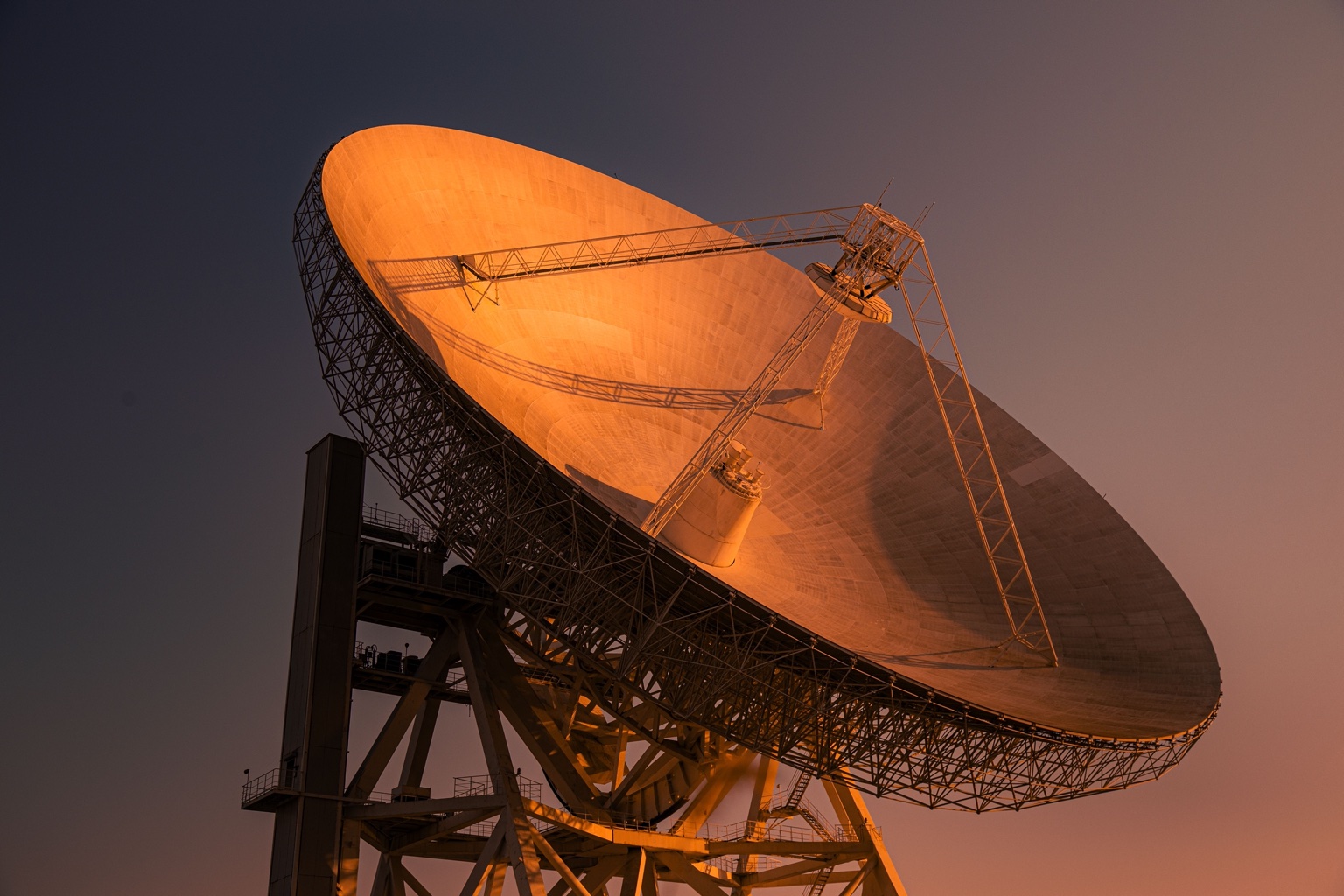
A woman sits alone in a monitoring room on a mountain in Inner Mongolia. She has been listening to the universe for eight years. Mostly it hisses.
Then the shape of a wave changes, very slightly. It is the kind of change only someone who has listened for eight years would catch. The computer tells her the signal can be deciphered. She opens the file.
Somebody out there has written to her, and what they have written is a warning. Do not answer, it says. Do not answer. Do not answer. Stay silent and we cannot find you. Reply, and your world will be taken.
She reads it. Then she walks to the transmitter and invites them to come.
Everything else runs from that keystroke. If you came looking for the Three-Body Problem ending explained, this is where it starts – not with the aliens, but with why she answered, and what the last page does to her for it.
What The Three-Body Problem Is Actually About
The Three-Body Problem is a science fiction novel by the Chinese writer Liu Cixin. It ran in the magazine Science Fiction World in 2006 and was published as a book in 2008. Ken Liu’s English translation came out in 2014, and the year after that it won the Hugo Award for Best Novel, the first novel by an Asian writer to take it. It is the first of three books.
The plot in one breath: physicists around the world are killing themselves. A nanomaterials researcher named Wang Miao is pulled in to find out why. He finds a strange virtual-reality game called Three Body, and behind the game an organisation of people who have been talking to an alien civilisation for decades and are helping it arrive.
That is the machinery. It is not what the book is about. The book is about a verdict.
Liu Waits a Hundred Pages Before He Lets an Alien Speak
Here is the choice that tells you what kind of novel this is. A first-contact story could open with the signal. Liu opens with a struggle session.
It is the Cultural Revolution. A physics professor named Ye Zhetai is put on a stage at Tsinghua University and told to recant. He will not. His colleagues and former students denounce him. His wife, Shao Lin, denounces him from the platform. Four teenage Red Guards beat him to death. When the crowd has drifted off, his daughter comes to the body and stays with it a long time.
The daughter is Ye Wenjie, an astrophysicist. She is the one who will answer the signal.
Liu does not rush her there. She is sent to a labour corps in Inner Mongolia and watches the forest come down around her. A journalist named Bai Mulin lends her a copy of Rachel Carson’s Silent Spring. When the book is discovered she protects him and says nothing. He protects himself and names her. She is locked up for it.
Watch the pattern, because it is built on purpose. Every time the novel hands Ye Wenjie a reason to hope in a person, it has that same person supply the counter-evidence. Not a system. Not history in general. A wife. A student. A friend who lent her a book.
By the time she reaches Red Coast Base – a military radio installation on a peak above a farming village called Qijiatun – the case against our species has been made to her almost entirely by individuals. (Han Kang does something similar with state violence in Human Acts: the bodies first, the meaning much later.)
The Sun as a Loudspeaker
At Red Coast she works something out that nobody else has noticed. The sun can amplify a radio signal. Aim a transmission into it correctly and it comes back out magnified, far louder than anything built on Earth could manage.
She tries it. Nothing comes back. Years pass. She marries an engineer at the base, Yang Weining. By the time a reply finally arrives she has been on that mountain for eight years.
Sit with the irony Liu builds and never once underlines. The star that makes life on Earth possible is the thing she uses to broadcast Earth’s address. The life support and the megaphone are the same object. You cannot have the one without handing somebody the other.
The Nobody Who Tried to Save Us
The reply is a warning, repeated three times with rising punctuation. The sender lays out the arithmetic plainly: his civilisation cannot yet tell how far away the first signal came from. Silence keeps Earth hidden. A reply gives them a bearing.
Ye Wenjie answers anyway. She tells them to come, because this civilisation can no longer solve its own problems and needs something from outside to step in. Then she hides the file.
Now here is the part most readers register as a plot beat and walk straight past.
Liu does not show us who sent that warning until chapter 32, near the end of the book. When he finally does, in a chapter called “Trisolaris: The Listener,” the man who tried to save the human race turns out to have a job and no name.
He is identified only by his post: 1379. The novel never gives him a name, not once. He monitors an empty sky for a living, which on his world is the lowest work there is. And his reasons are not noble in the way you would expect.
Reporting the signal would prove the listening posts worked. It would also make them pointless. He would lose the job, and on Trisolaris a man with no job and no mate is dehydrated and burned. So he thinks it through, and decides this is the one chance his small life will ever get to glow. Asked later why he did it, he says it was so his life would not be wasted.
Read that next to Ye Wenjie and the whole novel opens up.
Two people in dead-end monitoring jobs. Two people whose lives have been spent being nothing to anybody. Each one is handed, by accident, a lever over the fate of an entire species. And each one pulls it for the same reason: because it is the only moment in their life that is ever going to count.
One uses it to try to save a world of strangers. The other uses it to hand over her own.
That is the engine of the trilogy, and Liu never tells you which of them was right. He only shows you that the same wound makes either answer available. (If the question of whether a quiet life was wasted is the thread you want pulled, our reading of Stoner asks it of an ordinary man with no aliens involved.)
Then look at the sentencing. When the listener’s crime comes out, the princeps of Trisolaris does not execute him. He executes the consul in charge of the listening posts and all six thousand people who worked under him, and leaves the listener alive – specifically so he can live long enough to watch his mercy fail. Ye Wenjie gets the mirror image of that punishment. She also lives. She lives long enough to watch her verdict succeed.
Bugs
What arrives first is not a fleet. It is two protons.
Trisolaris sends sophons – protons rebuilt into computers – which can be anywhere on Earth instantly and which quietly wreck the experiments that would let human physics move forward. The fleet itself is four light-years out and will take roughly four hundred and fifty years to arrive. The whole point of the sophons is to make sure that when it gets here, we are still working with the physics we have now.
Meanwhile the movement Ye Wenjie’s answer created has split. The Adventists, funded by the businessman Mike Evans, want humanity wiped out. The Redemptionists want to save Trisolaris instead by solving the three-body problem that keeps destroying it. Ye Wenjie, who started all of it, ends up its spiritual figurehead rather than its commander. An operation called Guzheng takes their communications ship.
And then, in a military command room, the Trisolarans send one last message directly onto the retinas of everyone present. You’re bugs. After that they stop talking to us.
Chapter 34 is called “Bugs,” and it is the warmest thing in the book. Wang Miao and the physicist Ding Yi get drunk and toast the end of the world. The policeman Shi Qiang – Da Shi – finds them like that, refuses to accept it, puts them in a car and drives west into Hebei, where he stops beside wheat fields black with locusts.
He asks them one question. Is the gap between us and Trisolaris really bigger than the gap between us and these?
He does not argue the point. He just drives them to a field. The two scientists pour what is left of the wine onto the ground, a toast to the locusts, and go back to the city, because there is still much to do.
The Three-Body Problem Ending, Explained
The novel does not stop there. There is one more chapter, called “The Ruins,” and it belongs to Ye Wenjie.
She knows by now what Trisolaris actually is, and she has gone quiet. She asks to be taken back to Red Coast Base. She will not let anyone help her up Radar Peak, so she climbs it herself, resting at the abandoned sentry posts. The base has been dismantled so thoroughly that the roads are buried under tall grass. She digs out the rusted base of the antenna that sent the first message. Somebody finds a small stone tablet with the years the base ran on it: 1968 to 1987.
Then she walks to the cliff where she killed two men to keep her secret – Lei Zhicheng, the base’s political commissar, and Yang Weining, her own husband.
This is the detail I would put the whole article on.
From the top of that cliff there is a view out over the clouds. Open sky. The thing she spoke into. She does not look at it. She turns the other way and faces Qijiatun, the village down in the valley. Her heart begins to fail. She stays on her feet long enough to watch the sun go down, bloody red across the clouds, and she says: my sunset, and sunset for humanity.
There is one older story shaped exactly like that, and it is very short.
A man is sent to a city he is sure deserves to burn, and he has his reasons – his people have been on the receiving end of that city. He delivers the verdict. Then he climbs a hill outside the walls, puts up a little shelter, sits down and waits to watch it happen.
The book of Jonah does not end with him changing his mind. It does not end with an argument that Nineveh was secretly fine. It ends with a question put to the man on the hill, about the hundred and twenty thousand people inside who cannot tell their right hand from their left (Jonah 4:11). And then it simply stops. Jonah’s answer is never recorded.
Nothing suggests Liu had that book anywhere near him, and he does not need to have. What the two stories know is the same thing. A verdict on a whole species cannot be delivered from above it. Sooner or later the one who passed it has to stand there and look down at a particular valley, with particular roofs in it, where somebody is cooking dinner.
Ye Wenjie spent her working life speaking into the sky. Liu makes her last act a look at the village.
My Sunset First
Notice the order of her last words. Hers first. Then everyone’s.
She does not exempt herself. Whatever else is true about Ye Wenjie – and the next two books are largely about what she set moving – she never once presents herself as the exception to her own judgment. She signed up for the sentence she handed down. There is something almost clean in that, and it is the closest the novel comes to letting us like her. (A very different novel about a person who judges himself unfit and gets overruled by somebody else: No Longer Human.)
So the reader is left holding two endings that do not quite fit together. One is a dying woman on a mountain, watching a sunset she has named for all of us. The other is a middle-aged policeman standing in a wheat field in Hebei, pointing at locusts.
Da Shi never wins that argument. He does not have the physics for it. All he has is a field, and the observation that the things everybody agrees are worthless have been outlasting the people trying to exterminate them for a very long time.
The fleet is still four centuries out. The bugs are still in the wheat.
Your Turn
Which ending do you actually believe – Ye Wenjie’s sunset, or Da Shi’s locusts? And was the listener at Post 1379 brave, or just desperate for his life to mean something? Tell us in the comments. We would love to hear how you read it.
The Three-Body Problem: Questions and Answers
What does the ending of The Three-Body Problem mean?
The Three-Body Problem ends with two scenes placed against each other. In the chapter “Bugs,” the policeman Shi Qiang drives two despairing scientists to locust-filled wheat fields and asks whether the gap between humans and Trisolarans is really larger than the gap between humans and insects. In the final chapter, “The Ruins,” Ye Wenjie climbs back up Radar Peak to the dismantled Red Coast Base, turns to face the village below rather than the open sky she transmitted into, and dies watching the sun set, calling it her sunset and humanity’s. Liu Cixin does not say which of the two scenes is correct.
Why did Ye Wenjie answer the alien signal in The Three-Body Problem?
In The Three-Body Problem, Ye Wenjie answers because she has concluded that humanity cannot fix itself and needs an outside force to intervene. Liu Cixin builds that conclusion out of personal betrayals rather than abstract history: her father, the physicist Ye Zhetai, is beaten to death at a Cultural Revolution struggle session after his own wife denounces him, and later a journalist who lent her Rachel Carson’s Silent Spring saves himself by naming her. By the time the Trisolaran reply arrives at Red Coast Base, the case against people has been made to her by individuals she trusted.
Who warned Earth not to answer in The Three-Body Problem?
An unnamed Trisolaran at listening Post 1379 sent the “do not answer” warning in The Three-Body Problem. He never receives a name in the novel. Reporting Ye Wenjie’s signal would have made the listening posts obsolete and cost him his job, and on Trisolaris a person without work is dehydrated and burned, so he chose instead to warn Earth, telling himself it was the one chance his life had to matter. When the princeps discovers what he did, he spares the listener so he can watch the warning fail, and has the consul over the listening posts and six thousand of his staff put to death instead.
What are the sophons in The Three-Body Problem?
Sophons are protons that Trisolaris has rebuilt into computers and sent to Earth ahead of its fleet in The Three-Body Problem. They can reach anywhere on the planet almost instantly, spy on everything, and sabotage particle-physics experiments so human science stalls. That is why the novel opens with physicists taking their own lives: their results have stopped making sense. The sophons matter because the Trisolaran fleet needs about four hundred and fifty years to cross the four light-years to Earth, and the sophons make sure human physics has not moved on when it arrives.
Do you need to read the whole Three-Body trilogy?
The Three-Body Problem is the first of three novels by Liu Cixin and it works as a complete book on its own. It opens its own question – whether humanity is worth saving, decided by one person who had every reason to say no – and closes it on Radar Peak. The sequels widen the scale enormously and introduce the dark forest idea, but the first novel’s ending is not a cliffhanger. You can stop after it and have read a whole story.
Share This
The Three-Body Problem’s real hero is a man with no name and a dead-end job at listening Post 1379. He warned Earth because it was the one chance his life had to matter. Ye Wenjie answered for exactly the same reason.
Everyone remembers that Ye Wenjie answered the signal. Almost nobody notices what Liu Cixin does on the last page: she stands on the cliff and turns away from the open sky to look at the village.
“My sunset. And sunset for humanity.” Read the order of those two sentences again. She put herself first. The Three-Body Problem never lets her be the exception to her own verdict.