
 0
 0
Nearly every episode of Six Feet Under begins the same way. Somebody you have never met is doing something ordinary. Then they die. Then the screen goes white, and two numbers appear under a name.
Birth year. Death year. That is the whole card.
Over five seasons the show runs that card dozens of times, for strangers nobody in the story will mourn for long. Then, in the last ten minutes of the last episode, it runs the card for every single person you have spent five years with.
A lot of people call that a twist. It is the opposite of a twist. It is the show finally spending something it had been saving since its first minute.
Spoilers for the whole series follow, including the finale.
What Six Feet Under Is Actually About
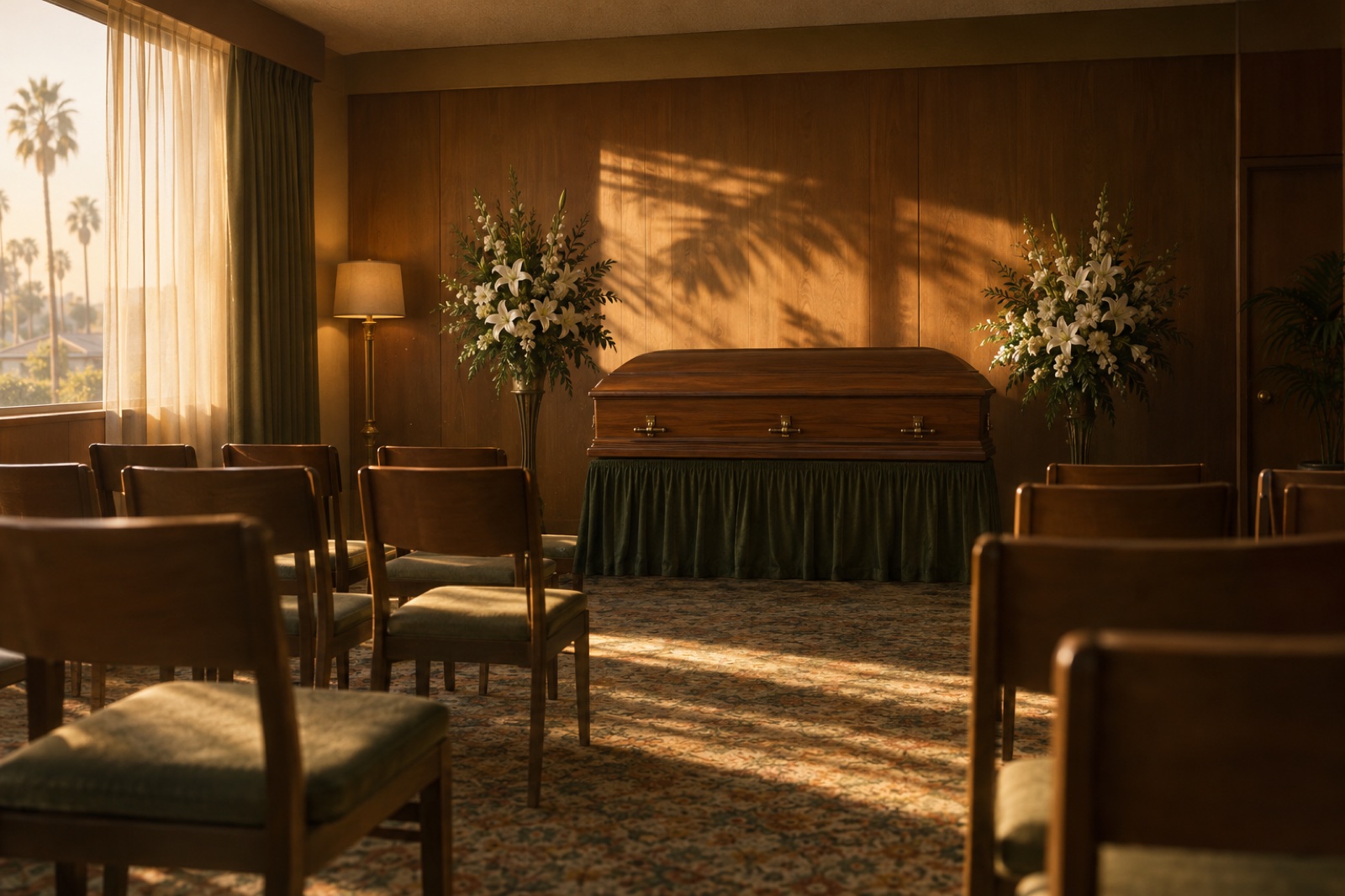
Six Feet Under is an HBO drama series created by Alan Ball. It ran five seasons and 63 episodes, from 2001 to 2005. The Fishers own a funeral home in Los Angeles — Fisher & Sons — and they live above the work. Bodies in the basement, family upstairs.
The pilot kills the father. Nathaniel Fisher Sr. is out in the funeral home’s brand-new hearse on Christmas Eve when a bus hits him. That leaves Ruth, the widow; Nate, the older son who had moved to Seattle and wanted none of this; David, the younger son who had quietly taken all of it; and Claire, the teenage daughter, who inherits the family business the way you inherit weather.
In an interview recorded for the show’s DVD collection, Ball said the question he started from was not about the dead at all. It was about the staff: who are these people, the funeral directors we hire to face death on our behalf? Ball has also said the title points at more than burial — at the primal feelings running under the surface, with the characters’ worst behaviour being “the life force trying to push up through all of that suffering and grief and depression.”
Which is worth knowing going in, because the show is much less interested in death than its premise suggests. It is interested in what death does to the schedule of an ordinary Tuesday.
The White Card Tells You Nothing, and That Is the Point
Here is the pattern worth noticing, because once you see it you cannot unsee it.
The deaths in those cold opens are rarely dramatic. People go mid-sentence, mid-errand, mid-swim. The causes run from heart attacks to murder to accidents to a crib that goes quiet. There is no sense of occasion about any of it. Nobody gets a warning.
Then the card. A name. Two years. A dash between them.
That card is about the most compressed summary of a human life ever used as a recurring television device, and it is also useless. The only part of a person that matters is the dash, and the dash is precisely what the card cannot hold.
So the episode spends the next fifty minutes filling it in — not for the dead stranger, but for the people in the chapel who have to make decisions about flowers while something enormous is happening to them. That is the show’s real engine, repeated sixty-odd times: a reduction, followed by a refusal of the reduction. It is also why the series is so unusually good on the mechanics of grief, the part where you are somehow still choosing a casket lining. If you are in that part now, our free What Stage of Grief Am I In? check is a two-minute, no-signup way to put a name to where you are.
And notice who got the very first card the show ever ran. Not a stranger. Nathaniel Fisher Sr., 1943 to 2000, in the opening minutes of the pilot. The strangers came afterwards. All of them were practice.
The Finale Breaks the Pattern at the Top, Not the Bottom
“Everyone’s Waiting” is the 63rd and final episode, written and directed by Ball. It is also the one that does not open with a death. It opens with a birth: Willa Fisher Chenowith, Nate’s second daughter, arriving early and frightening everybody.
That is the structural surprise, and it gets talked about far less than the ending does. After five years of training an audience to brace for a stranger’s last breath inside the first two minutes, the show hands you a first breath instead. The card gets its left-hand number and no right-hand one.
Nate himself is already gone by then. He dies three episodes before the end, of an arteriovenous malformation in his brain — the condition the show diagnosed him with back in season one and then let everyone, including the audience, quietly stop expecting. He collapses. He seems to be recovering. He dies in his sleep, with David beside him. 1965 to 2005. The show had been holding that right-hand number for four years.
Six Feet Under’s Ending Explained: The Card Comes Home
Then the last ten minutes.
Claire packs the car and drives away from Los Angeles. Sia’s “Breathe Me” starts. And as she drives, the show runs forward through the rest of everyone’s life and gives each of them the card.
Ruth goes in 2025, of old age, in a hospital, with David and Claire and George there. Keith is shot in 2029, outside the armoured truck belonging to the security company that carries his own name. David dies of a heart attack in 2044, at a family gathering, just after seeing a vision of a young Keith smiling at him. Rico has a heart attack on a cruise ship in 2049, beside his wife. Brenda goes at home in 2051, while her brother Billy sits talking to her about Claire and Ted. Claire outlives all of them and dies at 101, in 2085, in her own house, the walls covered in Fisher family photographs.
In an oral history of that final scene published by Vulture, Ball said the idea came from someone in the writers’ room and landed as a joke — kill everybody — before anyone realised it was the answer.
What makes the sequence work is not that it is sad, though it is. It is that the device has lost its power to flatten anyone. You have watched the dash. When Keith’s two years come up you do not read a statistic, you read a man who was afraid of exactly this and took the job anyway. When Claire’s arrive, the number is enormous and it still is not the point. The card has become the opposite of the thing it was in the pilot.
Which means the show kept its promise. It told you in its first minute what it intended to do to everyone, and then spent five years making sure that by the time it did it, you would know exactly what those numbers leave out.
Two Dates and a Dash
There is a very old prayer that does something odd with this same arithmetic. It does not ask for more days. It asks to be taught to count the ones that are there: “So teach us to number our days, that we may apply our hearts unto wisdom” (Psalm 90:12). The request is not for a longer dash. It is for the number to be allowed to mean something while you are still inside it.
That is a hard idea to put on screen, which is probably why almost nobody tries. Counting your days sounds either morbid or like a productivity system. Six Feet Under runs the experiment for five years and the result is neither. The Fishers do not get wise. They get specific. They fight about real things instead of nearby things. They say the sentence instead of saving it. They make their mess out loud, on the clock, in front of each other.
If you want the arithmetic rather than the idea, our free How Many Days Have I Been Alive? counter will hand you your own left-hand number in about four seconds. It is a stranger experience than it sounds.
The card was never wrong. It just was never the whole sentence.
Why the Ending Lands the Way It Does
Watch what the camera is doing underneath that montage. Claire is driving. She keeps driving. The deaths are not a place she arrives at — they are the road going past the window.
And what she takes out of Los Angeles with her is not a lesson. It is a box of photographs. Decades later they are on her walls, and the last thing the series shows you is a life that was long and specific and is also, now, two numbers and a dash.
Watch it a second time and you will notice the series has no twist in it anywhere. That is rarer than it sounds, and it is why people who finish Six Feet Under tend to stay quiet for a while afterwards. It showed you the format in minute one and then refused, for 63 episodes, to cheat. If you like endings that turn out to have been built from the first scene, the ending of The Three-Body Problem works the same way, backwards from a single decision.
A Question Worth Sitting With
If “Everyone’s Waiting” had ended with Claire simply driving — no montage, no cards, no dates — would that be a better ending or a smaller one?
Tell us where you land in the comments. We read them.
Share This
- “The ending of Six Feet Under is not a twist. The show gave a white card with two dates to a stranger every week for five years, then gave the same card to the people you loved. It was keeping a promise.” https://bgodinspired.com/index.php/entertainment/six-feet-under-ending-explained/
- “Nobody mentions that the Six Feet Under finale is the one episode that opens with a birth instead of a death. Five years of bracing, and then a first breath.” https://bgodinspired.com/index.php/entertainment/six-feet-under-ending-explained/
- “Rewatching Six Feet Under: the very first death card in the pilot belongs to a Fisher, not a stranger. Every stranger after that was practice for the last ten minutes.” https://bgodinspired.com/index.php/entertainment/six-feet-under-ending-explained/
Questions People Ask About Six Feet Under
What is Six Feet Under about?
Six Feet Under is an HBO drama series created by Alan Ball that ran for five seasons and 63 episodes, from 2001 to 2005. It follows the Fisher family, who own and live above Fisher & Sons, a funeral home in Los Angeles. The father, Nathaniel Fisher Sr., is killed in the pilot, leaving his widow Ruth and their three children — Nate, David and Claire — to run the business and each other. Nearly every episode opens with the death of a stranger, which is usually the funeral the family works that week.
What happens at the end of Six Feet Under?
In the final episode of Six Feet Under, “Everyone’s Waiting,” Claire Fisher drives away from Los Angeles, and the closing montage carries each remaining main character forward to the moment of their own death, using the same white name-and-dates card the show used for strangers all series. Ruth dies in 2025, Keith in 2029, David in 2044, Rico in 2049, Brenda in 2051, and Claire last of all at the age of 101 in 2085. It is not a twist: the show had been running that card since its first minute.
What song plays at the end of Six Feet Under?
The closing montage of Six Feet Under is set to “Breathe Me” by Sia. The series’ music supervisor had chosen the track for the final season’s promotional trailer first, and he and creator Alan Ball then decided to use it again over the last sequence of the finale.
How does Nate die in Six Feet Under?
Nate Fisher dies in the fifth season of Six Feet Under, three episodes before the end, from an arteriovenous malformation in his brain — a condition the series diagnosed him with back in season one. He collapses, appears to be recovering in hospital, and then dies in his sleep with his brother David beside him. His card reads 1965 to 2005.
Why does every episode of Six Feet Under start with a death?
Nearly every episode of Six Feet Under opens with a death because the Fishers are funeral directors, and that death is the work that walks through their door. Alan Ball has described the show’s starting question as being about the people we hire to face death on our behalf rather than about the dead themselves. The device sets each episode’s tone, and over five years it trains the audience to read a name and two dates as a whole life — which is exactly what the finale then does with the main characters. The one episode that breaks the pattern is the finale, which opens with a birth.



