 0
 0
On Christmas Day this year, a lot of households are going to do roughly the same thing at roughly the same time: sit down and watch a boy get a letter.
HBO Max has the new Harry Potter series arriving on Friday, 25 December 2026 — eight episodes, with the first season titled Harry Potter and the Philosopher’s Stone. Warner Bros. Discovery announced it as a Christmas 2026 debut back in March, alongside the first teaser, and the date has held.
A lot of the adults watching will have read the books themselves at about the age the new Harry is. Which means a lot of them have already read — and probably walked straight past — one short sentence that is quietly the most important line in all seven volumes.
It is carved on a gravestone. And it is not Rowling’s.
What the Harry Potter Gravestone Verse Actually Says
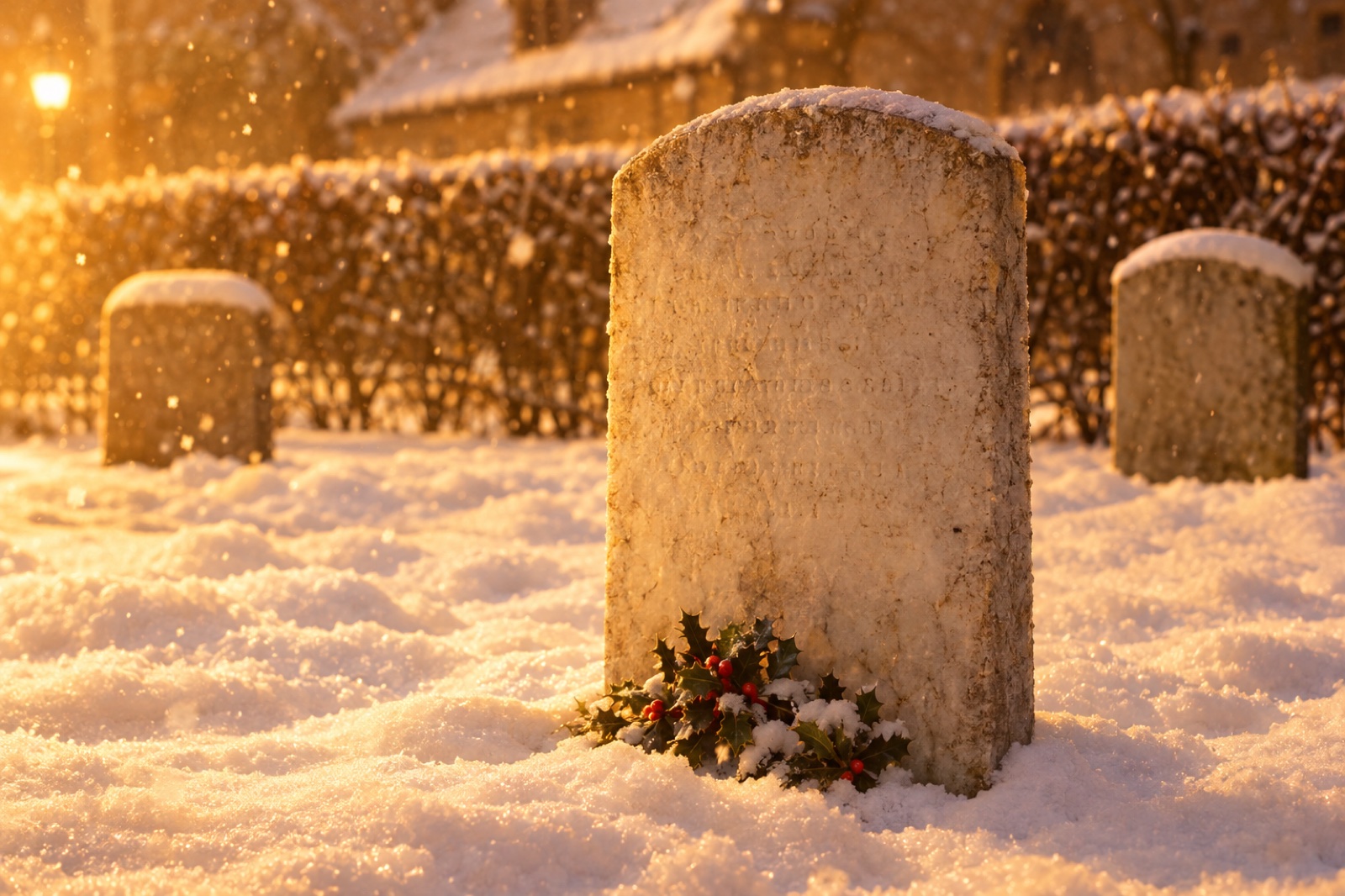
Near the end of the series, Harry and Hermione travel to the village of Godric’s Hollow and find the grave of James and Lily Potter. The words on the stone are these:
The last enemy that shall be destroyed is death.
That is chapter 16 of Harry Potter and the Deathly Hallows, the chapter titled “Godric’s Hollow.” And here is the part most readers never checked: it is not a line Rowling wrote. It is a sentence from the Bible — 1 Corinthians 15:26 — reproduced from the King James Version. Not adapted. Not reworded. The same nine words in the same order.
Where the Line Comes From
The letter it sits in was written to a young, quarrelling church in the Greek port city of Corinth, and the chapter it belongs to is an argument — a long, almost stubborn argument that death is temporary. The sentence Rowling borrowed is the hinge of it. Everything else is listed as an enemy that falls first. Death is named last, and it is named as something that gets destroyed rather than something you negotiate with.
Which is a strange thing to find on a headstone in a children’s book, if you stop on it. A gravestone normally tries to comfort. This one makes a claim.
The Second Stone, and the Word That Got Dropped
There is a second inscription in the same graveyard, on the grave of Dumbledore’s mother and sister:
Where your treasure is, there will your heart be also.
Also scripture. It is Matthew 6:21 — one of Jesus’s own lines — and the King James wording is identical except for one small thing. The Bible opens the sentence with “For.” The gravestone does not. Take the “For” off the front and the sentence stops being the end of somebody else’s argument and becomes an epitaph, which is exactly what it needed to be.
Two more details worth having, because this is where retellings go wrong. That same sentence appears twice in the King James Bible, word for word — at Matthew 6:21 and again at Luke 12:34. And the write-up that first reported Rowling’s comments on these inscriptions sent readers to Matthew 6:19, two verses early, where the passage is still talking about moth and rust. Verse 21 is the one on the stone.
Rowling Did Not Talk About It Until the Story Was Over
In October 2007, days after the final book was published, Rowling spoke to reporters at the start of her Open Book Tour and discussed these two inscriptions publicly for the first time. Her explanation started off completely practical:
They’re very British books, so on a very practical note Harry was going to find biblical quotations on tombstones.
And then it stopped being practical:
[But] I think those two particular quotations he finds on the tombstones at Godric’s Hollow, they sum up — they almost epitomize the whole series.
She also explained why she had said nothing about any of it for a decade. Not embarrassment. Plot. “To me [the religious parallels have] always been obvious,” she said, “but I never wanted to talk too openly about it because I thought it might show people who just wanted the story where we were going.” (Her remarks, as reported at the time.)
That is a remarkable thing for a novelist to admit. It means the ending of the series was sitting in plain sight, on a stone, in a graveyard, in a chapter most readers tore through in a single evening — and the only reason it stayed hidden is that she refused to point at it.
One related detail gets scrambled constantly, so it is worth separating out. At that same press conference Rowling said she had known since Chamber of Secrets was published that she would use two particular passages. She was talking about the book’s two epigraphs, which come from Aeschylus and from William Penn — not about the gravestones.
Harry Reads It Wrong First
Here is the part that makes the whole thing work, and it is easy to miss on a fast first read.
When Harry reads his parents’ gravestone, he does not find it comforting. He finds it sinister. Destroying death sounds to him like something his enemies would want — the people who have spent seven books trying to live forever by any means available. Hermione has to tell him he has read it backwards. It does not mean defeating death the way they mean it, she says. It means “living beyond death. Living after death.”
So the hero of the story misreads the central line of the story while standing in front of it, in the snow, on Christmas Eve. Because that chapter is set on Christmas Eve — the two of them arrive to find carols coming out of the little village church. The new series opens on Christmas Day. The timing is an accident, and it is a good one.
And it is worth sitting with what that sentence is actually doing, because it is not what stories usually say about death. Most of them ask you to accept it. Make peace with it. Find it beautiful, eventually. This one refuses. It calls death an enemy — the last one, the one still standing after everything else has fallen — and then says it loses.
That is not a comforting idea. It is a bigger one. Comfort asks you to lower your expectations of the world. This asks you to raise them, and it has been asking that of people for a very long time, in places with far more reason to be fatalistic than ours. Somebody looked at the one thing nobody beats and decided it was temporary. Whatever you make of where that confidence came from, it is not resignation — and the fact that it still lands as hopeful two thousand years later, in a children’s book about a wizard, is not nothing.
If the framing itself interests you, we looked at it on its own terms in what the Bible actually says about death — an enemy rather than a natural end, and what that changes.
And most people do not arrive at a graveyard scene as literary critics. They arrive carrying something. If that is roughly where you are at the moment, our free What Stage of Grief Am I In? walk-through takes a few minutes and asks better questions than “are you doing okay.”
What You’ll Know on Christmas Night
None of this changes what the show will be. It will be eight episodes, and the arguments about casting and pacing and whether it needed to exist will run for months either way.
But if you are watching on Christmas night next to somebody who read these books at eleven, you now know something they probably do not: that the sentence the whole series turns on was already ancient when Rowling found it, that it was carved on real stones long before it was carved on a fictional one, and that the boy in the story got it wrong the first time he read it too.
There is no way to count how many readers noticed. That is more or less the point. It was never announced. It was just there, on a stone, waiting for anyone who looked twice.
(If chasing threads like this through what you read is your idea of a good time, our free Books & the Bible assistant does exactly that with any book you name. It opens in ChatGPT.)
Questions People Ask About the Harry Potter Gravestone Verse
What verse is on Harry Potter’s parents’ gravestone?
The gravestone of James and Lily Potter in Harry Potter and the Deathly Hallows reads “The last enemy that shall be destroyed is death.” That sentence is 1 Corinthians 15:26, quoted word for word from the King James Version of the Bible. Harry and Hermione find it in chapter 16, when they visit the village of Godric’s Hollow.
What does “The last enemy that shall be destroyed is death” mean?
In its original setting, the line comes from a long argument in a first-century letter to the church at Corinth that death is temporary rather than final. The chapter lists the powers that are defeated in turn, and names death as the last one left standing — something to be destroyed rather than accepted. In Deathly Hallows, Harry first misreads it as something sinister, and Hermione corrects him: it means “living beyond death. Living after death.”
What is written on the Dumbledore family gravestone in Harry Potter?
The grave of Kendra and Ariana Dumbledore, in the same Godric’s Hollow churchyard, reads “Where your treasure is, there will your heart be also.” That is Matthew 6:21, a line spoken by Jesus, with the opening word “For” removed. The identical sentence also appears at Luke 12:34 in the King James Version.
Did J.K. Rowling confirm the Harry Potter gravestone quotes are from the Bible?
Yes. In October 2007, shortly after Deathly Hallows was published, Rowling discussed both inscriptions with reporters for the first time. She said “They’re very British books, so on a very practical note Harry was going to find biblical quotations on tombstones,” and added that those two particular quotations “sum up — they almost epitomize the whole series.” She also said she had avoided discussing the religious parallels earlier because doing so would have given away where the story was going.
When does the new Harry Potter series premiere?
The HBO Original series premieres on Christmas Day, Friday 25 December 2026, on HBO and streaming on HBO Max where the service is available. The first season has eight episodes and is titled Harry Potter and the Philosopher’s Stone. It stars Dominic McLaughlin as Harry, Arabella Stanton as Hermione, Alastair Stout as Ron and John Lithgow as Dumbledore.
One Question Before You Go
Here is the one we keep going back and forth on: when a writer lifts a line that old and gives it a second life in a story millions of people actually read, does the line belong more to whoever wrote it first or to whoever found it again? There is no right answer, which is why it is worth arguing about. Tell us what you think in the comments.
If You Want to Share This
- Read the Harry Potter books three times as a kid and never once looked up the line on his parents’ gravestone. Turns out it’s a direct Bible quote — word for word, not a paraphrase. https://bgodinspired.com/index.php/entertainment/the-bible-verse-on-harry-potters-parents-gravestone/
- “The last enemy that shall be destroyed is death.” Rowling didn’t write that. She borrowed it, and then said nothing about it for ten years in case it gave the ending away. https://bgodinspired.com/index.php/entertainment/the-bible-verse-on-harry-potters-parents-gravestone/
- The new Harry Potter series lands on Christmas Day. The chapter with the gravestone in it is set on Christmas Eve. Small thing, but I can’t stop thinking about it. https://bgodinspired.com/index.php/entertainment/the-bible-verse-on-harry-potters-parents-gravestone/