 0
0
 0
0
Some waiting feels like a waste. You pray for the same thing year after year. Friends move on, get married, get better jobs, get answers. You are still in the same place, doing the same small, faithful things, and a quiet voice asks: What is all this for?
If that voice sounds familiar, meet Anna the prophetess. She gets three verses in the whole Bible. Her marriage lasted seven years. Then she spent decades waiting in one place. And on one ordinary day, her waiting turned out to be the thing that let her see what almost nobody else in Jerusalem could see.
Who Was Anna the Prophetess?
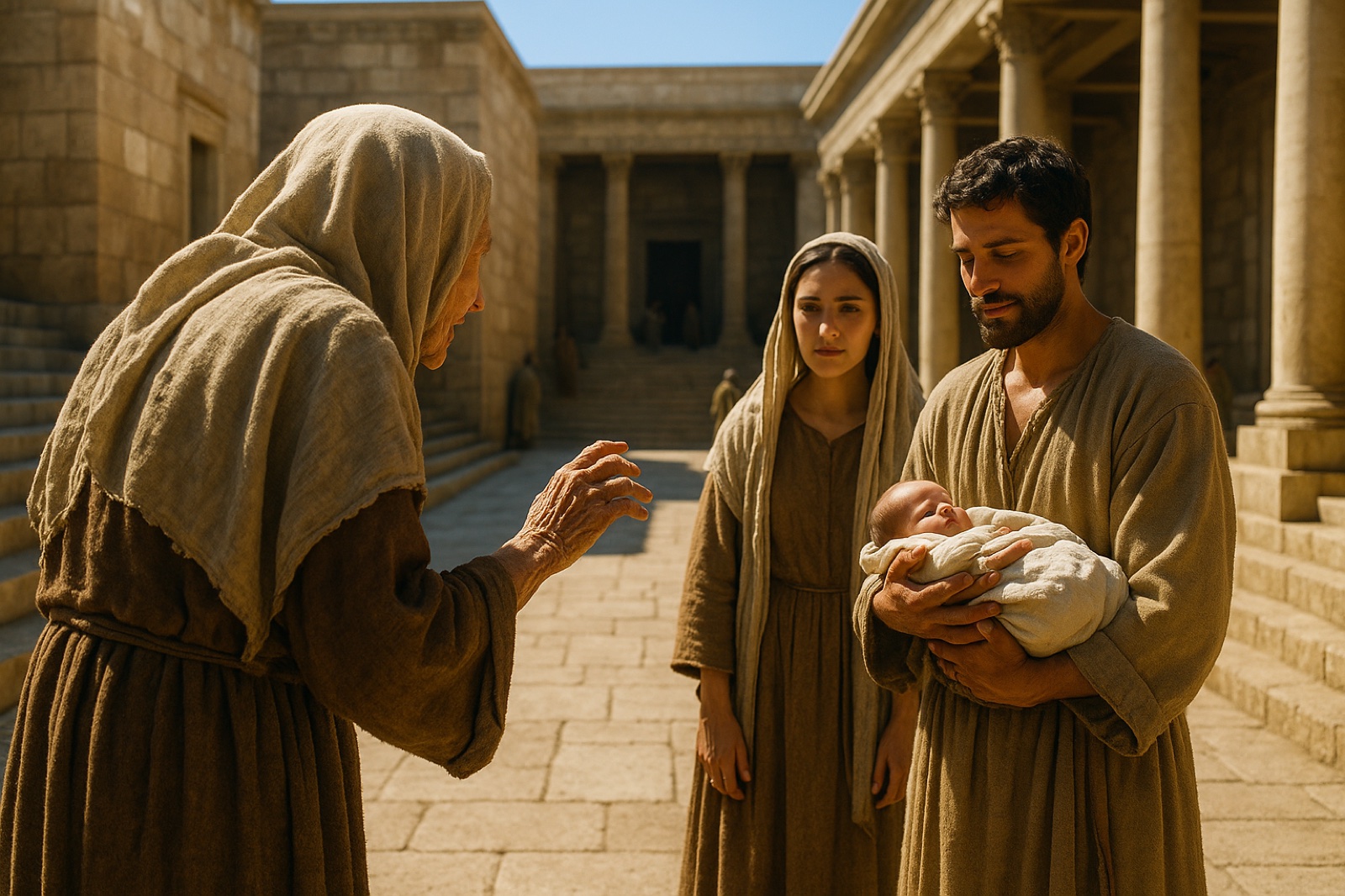
Anna shows up in Luke 2, on the day Mary and Joseph bring the baby Jesus to the temple in Jerusalem. Luke tells us a surprising amount about her in a very small space:
“And there was one Anna, a prophetess, the daughter of Phanuel, of the tribe of Aser: she was of a great age, and had lived with an husband seven years from her virginity; And she was a widow of about fourscore and four years, which departed not from the temple, but served God with fastings and prayers night and day. And she coming in that instant gave thanks likewise unto the Lord, and spake of him to all them that looked for redemption in Jerusalem.”
Luke 2:36-38 (KJV)
Here is what those lines tell us:
- Her name. Anna is the Greek form of the Hebrew name Hannah. It means grace, or favour.
- Her father. Phanuel is the same name as Penuel, the place where Jacob wrestled through the night and said he had seen God face to face. The name means “face of God.”
- Her tribe. Asher. Hold on to that one. It matters more than it looks.
- Her life. Married young, widowed after seven years, and then a very long life of prayer and fasting at the temple.
- Her title. Luke calls her a prophetess. That is rare. Only a handful of women carry that title anywhere in scripture.
A woman named “grace,” the daughter of “face of God,” spent her life waiting to see God’s promise with her own eyes. Luke doesn’t point that out. He just lets it sit there for anyone who notices.
A Woman From a “Lost” Tribe
Asher was one of the ten northern tribes of Israel. More than 700 years before Anna was born, the Assyrian empire conquered the northern kingdom and carried its people away (2 Kings 17). Those tribes are often called the “lost tribes,” because as whole tribes they never came back.
But not everyone was lost. When King Hezekiah invited the whole land to come to Jerusalem for the Passover, many people in the north laughed at his messengers. The Bible then says this:
“Nevertheless divers of Asher and Manasseh and of Zebulun humbled themselves, and came to Jerusalem.”
2 Chronicles 30:11 (KJV)
Some families from Asher turned toward Jerusalem and stayed connected. Centuries later, Anna’s family still knew which tribe they came from. That is a family that held on to who they were for hundreds of years, through empires and exile.
So when Anna stands in the temple and sees the baby Jesus, it isn’t just one old woman seeing him. It is a daughter of a tribe everyone had given up on, standing right there at the moment the promise arrives.
Was Anna 84, or Over 100?
This is where Luke’s wording gets interesting. The King James Version says Anna “was a widow of about fourscore and four years.” Fourscore and four is 84. But 84 what?
There are two ways to read it, and good Bible scholars land on both sides:
- Reading one: She was a widow until she was 84 years old. That is how many modern translations put it, such as the ESV and NIV.
- Reading two: She had been a widow for 84 years. That is closer to how the King James wording sounds.
Part of the reason is the old Greek copies of Luke themselves. The copies behind the King James use a small word meaning “about.” Many older copies that most modern translations follow use a different small word, usually translated “until.” Both are real readings, and the difference is only a letter or two.
Now do the math on reading two. Seven years of marriage plus 84 years as a widow is 91 years, and she was not a newborn when she married. On that reading, Anna was well past 100 when she finally saw the promise arrive. Some scholars point out that 105 would match another famous Jewish widow, Judith, whose story says she lived to one hundred and five. Luke’s first readers may have caught that echo.
Here is the honest answer: nobody knows for sure. And notice that Luke doesn’t seem to care much. He calls her “of a great age” and moves on. The exact number was never the point. The long wait was.
Seven Years, Then Decades of Waiting
Think about what Luke doesn’t say. He doesn’t tell us how her husband died. He doesn’t tell us if she had children. He doesn’t tell us whether she was lonely, or angry, or poor. Seven years of married life, and then a door closed.
What Luke does tell us is what she did next. She “departed not from the temple, but served God with fastings and prayers night and day.” Whether she lived in a room in the temple courts or simply came every day, the point is the same. Her life became a life of showing up.
That is not a picture of someone who got over her grief quickly. It is a picture of someone who took her grief somewhere. She brought it to the one place she knew to bring it, and she kept bringing it for most of a lifetime.
If you have ever waited a long time on God, you know this isn’t glamorous. It is mostly ordinary days. Prayers that feel the same as yesterday’s. Nobody writing any of it down. Anna had decades of those days. Luke covers them all in half a sentence.
The Prophetess With No Recorded Words
Here is the detail almost everyone reads past. Just before Anna arrives, an old man named Simeon takes the baby in his arms. Luke describes him as “waiting for the consolation of Israel” (Luke 2:25), and then gives us his whole prayer, word for word. Christians have been singing it for centuries.
Then Anna walks up. Luke calls her a prophetess, which is a person who speaks for God. And Luke records not one word she said.
We know she “gave thanks likewise unto the Lord.” We know she “spake of him.” But the actual words? Gone. The woman whose whole title is about speaking is the one whose speech didn’t make it onto the page.
That could feel like a slight. But look at who she spoke to: “all them that looked for redemption in Jerusalem.” Anna knew exactly who else was waiting. After all those years in the temple, she knew the other people who were still hoping, still praying, still watching. When the answer came, she didn’t give a speech to a crowd. She went and found the waiters, one by one, and told them.
Her words weren’t kept. Her faithfulness was. That is how Luke wanted her remembered.
Waiting That Wasn’t Wasted
Here is the Turn. We usually think of waiting as the empty space before the real thing happens. Anna’s story says something different.
Her waiting is what made her ready. Crowds passed through the temple courts every day. A young couple from the countryside with a small baby would not have stood out. The people who recognized who this child was were the two who had spent years looking. Simeon was “waiting.” Anna was praying “night and day.” The long wait trained their eyes.
And her waiting built something. All those years of showing up meant she knew the others who were also looking. So when the moment came, she didn’t just see it. She knew who needed to hear about it. A lonely wait turned into a network of hope.
If you are in a long wait right now, it may feel like your life is on pause. Anna’s story says your faithful, ordinary days may be doing quiet work in you: training your eyes to recognize God when God shows up, and connecting you to the other people who are waiting too.
Anna isn’t the only person in scripture whose life looked stuck on hold. Abraham was 99 and still waiting when God spoke the name El Shaddai to him. Another grieving widow, Naomi, was so hurt she asked her town to call her Bitter, and her story wasn’t over either. And just a few verses after Anna, in the same chapter, Luke tells how Mary and Joseph lost Jesus for three days on a later trip to that same temple.
Actions to Take Today
- Name your wait. Write down, in one sentence, the thing you have been waiting on God for the longest. Just naming it honestly is where Anna’s kind of prayer begins.
- Find one “fellow waiter.” Anna knew who else was looking. Think of one person who is waiting on something too. Send them a short message today: “Thinking of you. Still praying with you.”
- Pick your “temple.” Anna had one place she kept returning to. Choose one small, regular spot in your day (a chair, a walk, the bus ride) and give God two minutes there, every day this week, before you ask for anything.
Journaling Prompts
- Where have you been carrying your grief or disappointment, and what would it look like to bring it somewhere instead?
- Looking back, has a long wait in your life ever trained you to notice something you would have missed otherwise?
- If your words were never remembered but your faithfulness was, what would you want that faithfulness to have looked like?
A Prayer for When the Wait Is Long
God, I have been waiting a long time, and some days it feels like nothing is happening. Like Anna, I don’t want my waiting to turn bitter. I want it to turn into watching. Train my eyes to see you when you show up in ordinary places, and show me who else is waiting so I can stand with them. I’m still here, and I’m still looking. Amen.
Let’s Talk
Luke gives Simeon’s words in full but doesn’t record a single word Anna said. Why do you think Luke told her story that way? Share your thoughts in the comments below.
Share This
- Anna was married seven years, then spent decades waiting in prayer. When the promise finally came, she was one of the only people ready to recognize it. Long waits train your eyes.
- Luke calls Anna a prophetess and then doesn’t record a single word she said. Her words weren’t kept. Her faithfulness was. I needed that today.
- Anna came from Asher, one of the “lost” tribes of Israel. Everyone had given up on her people. She was standing in the temple the day the promise arrived.
Questions About Anna the Prophetess
Who was Anna the prophetess in the Bible?
Anna the prophetess was an elderly Jewish widow described in Luke 2:36-38. She was the daughter of Phanuel from the tribe of Asher, had been married for seven years before her husband died, and spent the rest of her long life praying and fasting at the temple in Jerusalem. When Mary and Joseph brought the infant Jesus to the temple, Anna gave thanks to God and spoke about the child to everyone in Jerusalem who was waiting for redemption.
How old was Anna the prophetess when she saw Jesus?
The Bible does not settle Anna the prophetess’s exact age. Luke 2:37 can be read as saying she was a widow until age 84, or that she had been a widow for 84 years. The King James Version’s wording (“a widow of about fourscore and four years”) leans toward the second reading, which would make her well over 100, since she had also been married for seven years. Many modern translations, such as the ESV and NIV, read it as age 84. Luke himself only says she was “of a great age.”
What tribe was Anna the prophetess from?
Anna the prophetess was from the tribe of Asher, called “Aser” in the King James Version of Luke 2:36. Asher was one of the ten northern tribes of Israel, often called the “lost tribes” after Assyria conquered the northern kingdom centuries earlier. However, 2 Chronicles 30:11 records that some people from Asher came to Jerusalem in King Hezekiah’s day, and Anna’s family had kept its tribal identity into the first century.
Does the Bible record what Anna the prophetess said about Jesus?
No. Luke 2:38 says Anna “gave thanks likewise unto the Lord, and spake of him to all them that looked for redemption in Jerusalem,” but Luke does not record her actual words. This is in contrast to Simeon, whose prayer over the infant Jesus appears in full in Luke 2:29-32, just before Anna’s account.
What does the name Anna mean in the Bible?
Anna is the Greek form of the Hebrew name Hannah, which means grace or favour. Anna the prophetess in Luke 2 shares her name with Hannah, the mother of the prophet Samuel in 1 Samuel, who was also known for her long, honest prayers at the house of God.