 0
0
 0
0
Most of us have someone at the family table who knew us before we were anyone. They remember the scraped knees and the bad haircut. And sometimes they are the very last people to believe in what you have become.
So when people ask, did Jesus have brothers?, there is more behind the question than trivia. The short answer is yes. The Gospels name four brothers and mention sisters too. And the most surprising part is not that they existed. It is what they thought of Him, and what happened to one of them after the cross.
Did Jesus Have Brothers? What the Bible Actually Says
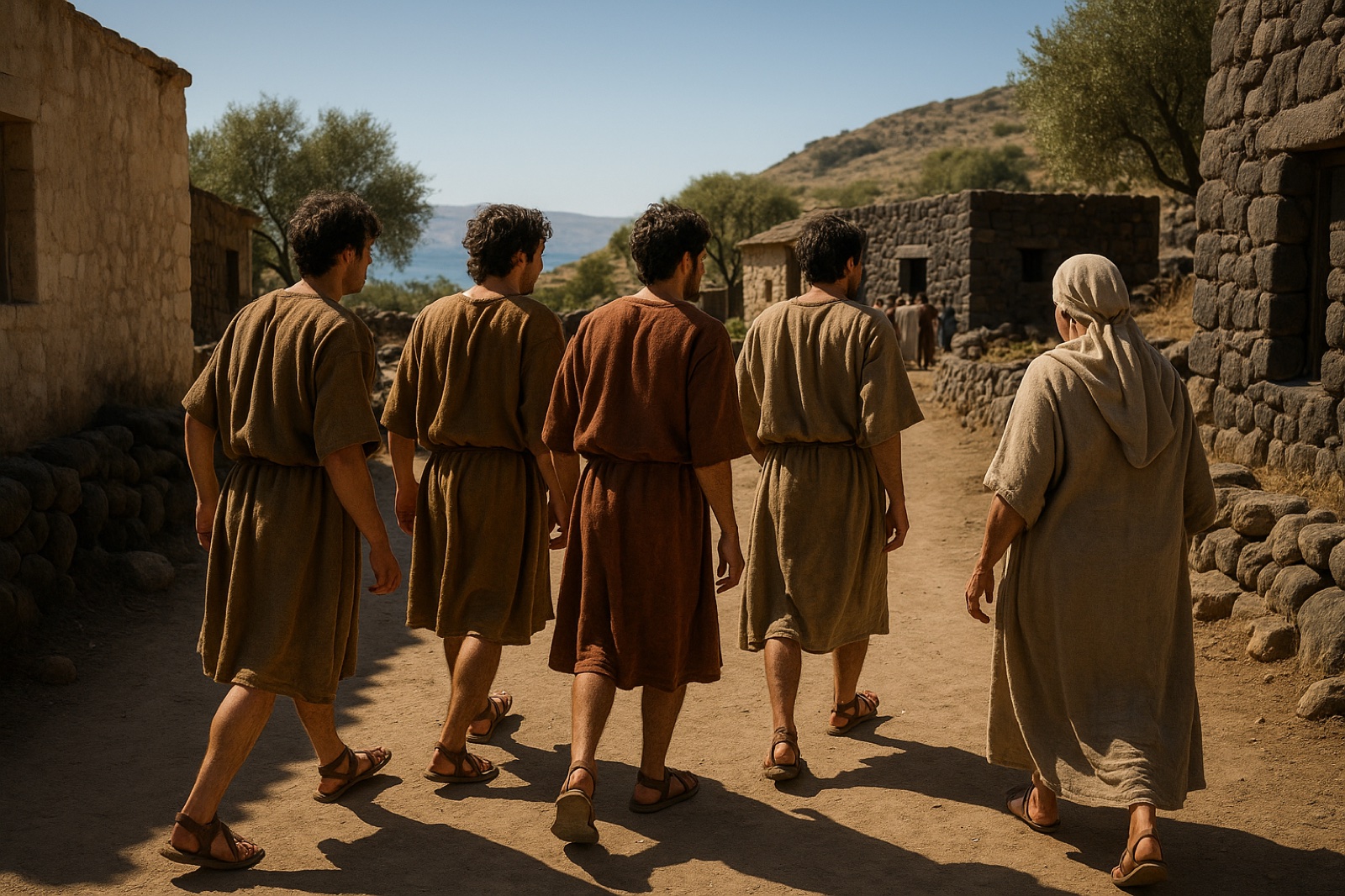
Mark’s Gospel gives us the names. Jesus had come home to Nazareth to teach, and the town could not get past the fact that they knew His family:
“Is not this the carpenter, the son of Mary, the brother of James, and Joses, and of Juda, and Simon? and are not his sisters here with us? And they were offended at him.” (Mark 6:3, KJV)
Matthew tells the same scene and lists the same four: “his brethren, James, and Joses, and Simon, and Judas” (Matthew 13:55). Then the townspeople add, “And his sisters, are they not all with us?” The sisters are never named.
So the Bible names four brothers:
- James (always listed first)
- Joses (many modern Bibles call him Joseph in Matthew’s list)
- Simon
- Judas, also spelled Juda, and better known today as Jude
Paul calls James “the Lord’s brother” (Galatians 1:19). He also mentions “the brethren of the Lord” traveling with their wives (1 Corinthians 9:5). This is not one stray line. It is all over the New Testament.
Were They Full Brothers? Three Honest Answers
Here is where Christians have disagreed for a very long time, and it is worth being fair to all sides.
The Greek word for brother, adelphos, usually means a sibling. But in the ancient world it could stretch wider, to a close relative. That small stretch is where three views come from:
- Younger brothers. These were sons of Mary and Joseph, born after Jesus. Most Protestants read the texts this way. A writer named Helvidius argued for it in the late 300s.
- Older stepbrothers. These were sons of Joseph from an earlier marriage. This is the usual Orthodox view, defended by Epiphanius in the 300s, and the idea is older still. It appears in a second-century writing called the Protoevangelium of James.
- Cousins. Jerome wrote against Helvidius in the 380s and argued the “brothers” were cousins. This became the common Catholic view.
Good, careful people hold each of these. And here is the part that matters for the rest of this article: all three views agree these men grew up close to Jesus. They were in the same family circle in a small village. Whatever the exact family tree was, these were people who knew Him before the crowds did.
That is exactly why what they said about Him matters so much.
His Own Family Thought He Was Out of His Mind
Early in Mark’s Gospel, the crowds around Jesus got so big that He and His followers could not even eat. Then comes this line:
“And when his friends heard of it, they went out to lay hold on him: for they said, He is beside himself.” (Mark 3:21, KJV)
The King James says “his friends.” But the Greek words mean something like “those from him,” meaning His own people. That is why most modern translations simply say “his family.” And Mark points to who he means. Ten verses later, the people who set out to fetch Jesus arrive:
“There came then his brethren and his mother, and, standing without, sent unto him, calling him.” (Mark 3:31, KJV)
Mark wraps a story in the middle of these two verses. While the family is on the road, religious teachers from Jerusalem are saying Jesus has a devil. So He is being called mad by His family and evil by the experts, all in one chapter.
When word reaches Him that His mother and brothers are outside, Jesus looks at the people sitting around Him and says, “Behold my mother and my brethren! For whosoever shall do the will of God, the same is my brother, and my sister, and mother” (Mark 3:34-35).
Later, back home in Nazareth, He says something only Mark records in full: “A prophet is not without honour, but in his own country, and among his own kin, and in his own house” (Mark 6:4). Matthew’s version of that sentence leaves out “among his own kin.” Mark keeps it. Jesus knew exactly where the doubt was coming from.
John says it even more plainly. The brothers pushed Jesus to go show Himself off in Judea, and then John adds one flat sentence:
“For neither did his brethren believe in him.” (John 7:5, KJV)
Think about that. They had eaten at the same table for years. They had watched Him grow up. And they did not believe. Even at the cross, Jesus handed the care of His mother to a disciple, not to these brothers (John 19:27). We wrote about that moment in what the Bible says about caring for aging parents.
Five Words That Changed James’s Life
Then something happened. And the Bible tells us about it in one short sentence that most people read right past.
In 1 Corinthians 15, Paul lists the people who saw Jesus alive after the resurrection. Peter. The twelve. More than five hundred at once. And then this:
“After that, he was seen of James; then of all the apostles.” (1 Corinthians 15:7, KJV)
That is it. No Gospel tells this story. We do not know where it happened, what was said, or how long it lasted. The most important meeting of James’s life gets a handful of words in a list.
But notice who is doing the moving. Paul does not say James went looking for Jesus. He says Jesus “was seen of” James. The risen Jesus showed up for His doubting brother.
And Paul was not passing along a rumor. He tells us that he went up to Jerusalem to see Peter, and while he was there, “other of the apostles saw I none, save James the Lord’s brother” (Galatians 1:18-19). Paul sat with the man himself.
Christians in later centuries wanted more of this story. A lost writing called the Gospel of the Hebrews, quoted by Jerome around the year 392, tells of James refusing to eat until he saw Jesus risen, and of Jesus breaking bread for him and saying, “my brother, eat your bread.” It is a lovely story, but it is a later legend, not scripture. All the Bible gives us is the five-word line from Paul. Somehow that is enough.
A good place to start:
The Book of Matthew – Immersive Storytelling Format
Hear the whole story of Jesus, the same one His brothers lived beside, as a free audiobook and PDF you can read or listen to anywhere.
Get the free guide
Free.
From Doubter to Leader of the Church
Here is how fast things turned. A few weeks after the crucifixion, the believers were praying together in Jerusalem. Luke lists who was in the room:
“These all continued with one accord in prayer and supplication, with the women, and Mary the mother of Jesus, and with his brethren.” (Acts 1:14, KJV)
His brethren. The same men who once set out to bring Him home were now praying in His name.
And James kept going. When Peter escaped from prison, his first message was “Go shew these things unto James” (Acts 12:17). When the early church faced its biggest argument, over whether non-Jewish believers had to keep the Jewish law, it was James who stood and spoke at the end (Acts 15:13). Paul called him one of the “pillars” of the church (Galatians 2:9). Years later, when Paul came back to Jerusalem, he went straight to James (Acts 21:18).
Two short letters in the New Testament carry the names of these brothers. One opens, “James, a servant of God and of the Lord Jesus Christ” (James 1:1). Another opens, “Jude, the servant of Jesus Christ, and brother of James” (Jude 1:1). Neither one opens by saying “brother of Jesus.” The man who grew up in the same house calls himself a servant.
Even a writer outside the Bible remembers James. The Jewish historian Josephus, writing near the end of the first century, records that a high priest had “the brother of Jesus, who was called Christ, whose name was James” stoned, around the year 62. Most scholars accept that passage as genuine, though a few argue the words “who was called Christ” were added later. Either way, early Christian tradition is united that James died for the faith he once doubted.
The Hardest Skeptic Is the One Who Knew Him Best
Here is what I never noticed until I put all these verses side by side.
If you wanted to invent a story about Jesus, you would never make His own brothers the doubters. It is embarrassing. It makes Him look like a man even His family would not vouch for. And yet Mark and John both tell it straight.
That is the first gift of this story: the people who knew Jesus best, the ones hardest to fool, started out as skeptics. And the second gift is quieter. Jesus never argued James into believing. He did not win him over at the dinner table. He let James walk away, kept loving him, and then came to him.
Maybe you are the one at your table nobody takes seriously about faith. The family remembers who you were and cannot see who you are becoming. Jesus knows that feeling from the inside. He lived it for years.
Or maybe you are James. You grew up around all of it, church and verses and family who believed, and it never quite landed. You have doubts and you feel like the odd one out. Look at where James ended up. His doubt did not disqualify him. It was the starting line.
And if you love someone who does not believe, this story takes a weight off you. You do not have to argue them in. The risen Jesus went to James Himself. Your job is to stay close, keep the door open, and trust God with the rest. If you have questions about this as you go, you can explore them with our free Bible Answers AI assistant (it opens in ChatGPT).
Doubt that turns around is a pattern in the Bible, not a one-off. We looked at another version of it in what cognitive dissonance gets wrong, through two followers of Jesus in Luke 24 who walked home from Jerusalem thinking it was all over.
Actions to Take Today
- Read the list out loud. Open to 1 Corinthians 15:3-8 and read it slowly. When you hit James’s name, stop. That is a doubting brother being met by the one he doubted. It takes two minutes.
- Write down one name. Think of one person you love who does not share your faith. Write their name on a piece of paper. Instead of planning what to say to them next time, pray for them by name, right now, for one minute.
- Send a message that is not about faith. Text or call that same person today with something kind that has nothing to do with church. Ask how they are. Tell them you thought of them. Stay close the way Jesus stayed close to James.
Journaling Prompts
- Who in your life knew you “before,” and how does their view of you shape the way you see yourself now?
- Where in your faith do you feel more like James before the cross than after it? What would it look like to stop hiding that?
- Who are you quietly trying to argue into belief? What might change if you trusted God with the part you cannot do?
A Prayer for the People Closest to You
God, You know the people at my table who do not believe, and You know the parts of me that still doubt too. Thank You that Jesus did not give up on James, even when James thought He had lost His mind. Help me stop pushing and start loving the people I care about, the way Jesus did. Meet them the way Jesus met James, in a way I could never arrange. And meet me there too. Amen.
What Do You Think?
Why do you think the Gospel writers kept the story of Jesus’s own family doubting Him, when it would have been easier to leave it out? Share your thoughts in the comments below. We’d love to hear from you.
Share This
- Jesus’s own brothers didn’t believe in Him at first. Then one of them, James, met Him after the resurrection and ended up leading the church in Jerusalem. Doubt was his starting line, not his ending.
- I never noticed this: in 1 Corinthians 15:7, Paul says the risen Jesus “was seen of James,” His doubting brother. No Gospel tells that story. Five words, and a skeptic became a pillar of the church.
- If someone you love doesn’t share your faith, the story of James is for you. Jesus never argued His brother into believing. He stayed close and then came to him.
Questions People Ask About Jesus’s Brothers
Did Jesus have brothers and sisters?
Yes. The Gospels of Mark (6:3) and Matthew (13:55-56) name four brothers of Jesus, James, Joses, Simon and Judas (Jude), and also mention that Jesus had sisters, though the sisters are never named. Paul also refers to James as “the Lord’s brother” in Galatians 1:19.
What were the names of Jesus’s brothers?
The four brothers of Jesus named in the Bible are James, Joses (also called Joseph), Simon, and Judas, who is usually called Jude today. James is always listed first, and he later became the leader of the early church in Jerusalem.
Did Jesus’s brothers believe in Him?
Not at first. John 7:5 says plainly, “For neither did his brethren believe in him,” and Mark 3 records Jesus’s family going out to take hold of Him because they said He was beside Himself. After the resurrection, Paul says Jesus appeared to James (1 Corinthians 15:7), and Acts 1:14 shows Jesus’s brothers praying with the first believers in Jerusalem.
Were Jesus’s brothers the children of Mary?
Christians answer this in three ways. Many Protestants believe the brothers of Jesus were younger sons of Mary and Joseph. The Orthodox tradition usually teaches they were sons of Joseph from an earlier marriage. The common Catholic view, going back to Jerome in the 380s, is that they were cousins, since the Greek word for brother can include close relatives. All three views agree they grew up close to Jesus.
Did the brother of Jesus write a book of the Bible?
Christian tradition holds that two New Testament letters come from brothers of Jesus. The Letter of James is traditionally credited to James, the brother of Jesus who led the Jerusalem church. The Letter of Jude opens with “Jude, the servant of Jesus Christ, and brother of James,” and is traditionally credited to another brother, Jude.