 0
0
 0
0
Pick up a new novel this year and you might find a small stamp on the cover that would have sounded strange five years ago. It does not say who published the book, or how many copies it sold. It says a human being wrote it.
Human-authored books now come with labels. There are several of them, in several countries, and this week a handful were on show at the Frankfurt Book Fair, the biggest trade fair in publishing.
Here is the odd thing about every one of those labels. Not one of them changes a single word inside the book. The story is exactly the same with the stamp as without it. And yet people clearly want the stamp. That gap, between what a book says and who made it, is worth following.
What Human-Authored Book Labels Actually Are
There is no single label. There are at least four different approaches, and they check very different things. According to AFP’s report from the Frankfurt fair, here is how they line up.
In the United States, the Authors Guild, a writers’ organisation, offers a “Human Authored” certification mark. About 6,500 titles have it so far. The author signs a licence agreement promising the text was written by a person. The Guild’s own wording is that “the text of the book was written by a human and not generated by AI.” Small uses are allowed, and the Guild gives examples: tools that “check spelling and grammar or for research.” Certified books go into a public database anyone can search by title or author. Members certify free; non-members verify their identity and pay a small fee per title.
In Britain, a programme called Books By People has had its certification mark registered by the UK’s Intellectual Property Office. It started with five independent publishers. Publishers pay to join and can then request the mark for their authors. Light AI help with spelling or grammar is allowed; the writing itself must come from the author.
In France, the self-publishing platform Librinova runs a programme that labels a book a “human creation” for a small fee. This one actually tests. The book goes through AI-detection software, and the author sits an interview with an auditor who also reads the book. About 200 works have the stamp.
In Germany, a labelling programme was also presented at Frankfurt, though few details have been reported.
So there is a promise, a trademark, a test, and a newcomer. They all go on a cover and look roughly alike. They do not mean the same thing.
The Part the Labels Cannot Do
Not everyone in the book trade is convinced. The sharpest doubt came from Sebastian Guggolz, head of the German Publishers and Booksellers Association. “There’s no simple ‘with AI’ or ‘without AI,'” he said, adding that “the question has to go deeper.”
He has a point, and it is worth being exact about why.
Every programme above allows a little AI. Spelling. Grammar. Research. Those are reasonable lines, but they are lines drawn by people, and critics worry they can be read loosely. AI-detection software exists, but nobody has shown it can reliably catch every machine-written page. And the largest programme, the American one with about 6,500 titles, does not test the text at all. It rests on the author’s word.
There have also been accusations this year against individual authors, which those authors deny. That is exactly the problem a label cannot settle on its own: when a writer says “I wrote this” and a reader is not sure, no stamp can look inside the writer’s head.
Which leads to the most interesting fact in the whole story. The biggest label in the world is, underneath, a signature. A person standing behind their work and saying: this is mine.
Why Human-Authored Books Matter to Readers
If a label cannot prove much, why do thousands of writers want one, and why are publishers paying for them?
Because readers do not only want words. They want to know there is somebody on the other end.
This is not new. For centuries, silver made in London has been taken to Goldsmiths’ Hall to be tested and stamped. That is where the English word “hallmark” comes from. The same piece of silver weighs the same before the stamp and after it. What the stamp adds is a story about where it came from and who vouches for it. People have always paid for that story.
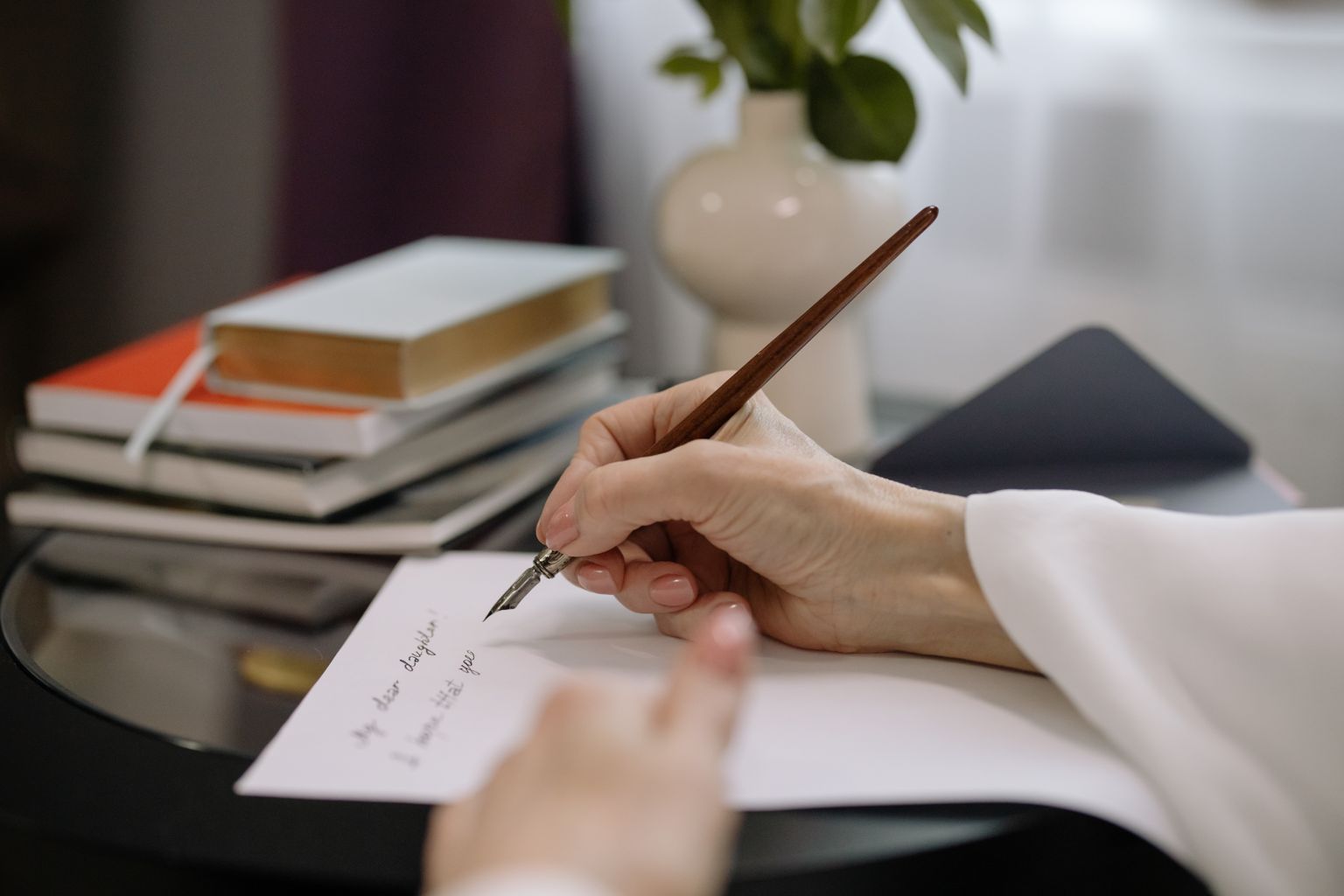
It shows up in small ways too. A letter from someone you love, in their own handwriting, means more than the same words typed. A meal cooked for you means more than the same meal bought. Nothing about the words or the food changes. The maker does.
There is a quieter fear underneath all this, and it is not really about books. A lot of people right now are wondering whether they, too, are about to be measured only by what they produce, and whether a machine that produces more will make them count for less. We looked at that worry closely in a piece on the 206 jobs at the top of the AI exposure list, and the honest answer there was more hopeful than the headlines. The book labels say something similar from a different angle. Even when a machine can produce the words, people still care who made them.
How to Check Whether a Book Is Human-Authored
If this matters to you as a reader, a few things genuinely help, and none of them cost money:
- Look for the mark, then check what it means. A “Human Authored” stamp from the Authors Guild is a signed promise. A French “human creation” label involved a test and an interview. Those are different levels of checking.
- Search the database. The Authors Guild’s certified titles are listed in a public database you can search by title or author name.
- Read the author, not just the book. Interviews, talks, older work and a recognisable voice across books are still some of the best signs of a real person behind the pages.
- Do not treat a missing label as guilt. These programmes are new, voluntary, and some cost money. Plenty of writers simply have not signed up.
If you love talking about what you read, you can also explore it with our free Books & the Bible AI assistant (it opens in ChatGPT).
A Very Old Word for a Made Thing
The publishers in Frankfurt are working on a modern problem, but the idea under it is old.
An early Christian letter, written in Greek, describes people with the word poiēma. It means a made thing, a crafted work. It is the word our “poem” comes from. Not a product off a line. A work, with a maker standing behind it.
That is the same instinct as the hallmark and the book stamp, turned toward a person. The claim is that your worth was never in your output. It comes from the hand that made you, and that hand already signed the work. If you want to see where that word sits and why it surprises people, there is a short look at the passage it comes from.
A good place to start:
The Beginner’s Guide to Feeling God’s Presence Every Day
A short video guide and companion PDF for noticing God in ordinary days — the commute, the kitchen, the waiting room. Get the free guide. Free.
Where This Leaves the Bookshelf
The labels will probably get better. Tests will improve, and the rules about how much AI is “a little” will get sharper. Some will fade. A few may become as familiar as a “best before” date.
But the thing they reveal will not change. A stamp that adds no words still adds value, because people want to know a real someone made what they are holding. That is not a weakness in readers. It might be one of the most human things about us.
Next time you see that little mark on a cover, it is worth a second look. It is not really telling you about the book. It is telling you about the reader.
Questions People Are Asking
What does “human-authored” mean on a book cover?
A “human-authored” label on a book cover means the author or publisher has certified that the text was written by a person rather than generated by artificial intelligence. Programmes differ in how they check. The Authors Guild’s US “Human Authored” mark is self-certified through a signed licence agreement, while France’s Librinova programme runs books through AI-detection software and interviews the author. Most programmes still allow minor AI help, such as spelling and grammar checks.
How many books are certified as human-authored?
The Authors Guild’s “Human Authored” certification had been given to about 6,500 titles as of October 2026, according to AFP reporting from the Frankfurt Book Fair. France’s Librinova “human creation” label had been awarded to about 200 works. Britain’s Books By People programme launched with five independent publishers and had its certification mark registered by the UK Intellectual Property Office.
Can a human-authored label prove a book was not written by AI?
No label can fully prove a book contains no AI-generated text. The largest programme, run by the Authors Guild in the United States, relies on the author’s signed promise rather than a test. AI-detection software exists but has not been shown to be fully reliable. Sebastian Guggolz of the German Publishers and Booksellers Association has warned that “there’s no simple ‘with AI’ or ‘without AI.'”
Is AI allowed at all in a human-authored book?
Most human-authored book labels allow limited AI use. The Authors Guild permits “minimal uses” such as tools that check spelling and grammar or help with research, but not text generated by AI. Britain’s Books By People programme similarly allows light AI help with spelling or grammar while requiring that the writing itself comes from the author.
Why do readers care whether a person wrote a book?
Readers often value a work partly for who made it, not only for what it says. A human-authored label adds no words to a book, yet writers and publishers are seeking it, which suggests the maker carries value of its own. The same instinct shows up in silver hallmarks, which have been stamped at Goldsmiths’ Hall in London for centuries, and in the extra meaning people find in a handwritten letter.
One Question Worth Arguing About
If you found out tomorrow that your favourite book had been mostly written by a machine, but every word was the same, would you love it any less? And if the answer is yes, what exactly were you loving? Tell us in the comments — this one splits people more than you would expect.
If You Want to Share This
- Books now get stamped “human-authored.” The stamp doesn’t change a single word inside. People want it anyway. Turns out we care who made a thing, not just what it says. https://bgodinspired.com/index.php/entertainment/books-entertainment/human-authored-books/
- The biggest “human-authored” book label in the world doesn’t actually test the text. It’s a signed promise. Which means the thing readers are really buying is someone’s word. https://bgodinspired.com/index.php/entertainment/books-entertainment/human-authored-books/
- A handwritten note means more than the same words typed. Silver has been hallmarked for centuries. Now books get a “human-authored” stamp. Same old instinct, new machine. https://bgodinspired.com/index.php/entertainment/books-entertainment/human-authored-books/