 0
0
 0
0
Somebody once told you that you came into the world empty. No ideas, no leanings, no story yet. Just a clean page waiting for life to write on it.
That is the idea of tabula rasa, the “blank slate.” It is one of the most famous ideas in philosophy. Tens of thousands of people look it up every month, often for a class, sometimes because something about it rings true and something about it doesn’t.
Here is the surprise. The man most people credit with the blank slate barely used the phrase. And in another book, he said something close to the opposite.
What Does Tabula Rasa Mean?
Tabula rasa is Latin. Tabula means a tablet or a board. Rasa means scraped or smoothed.
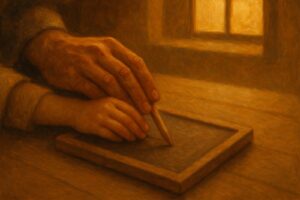
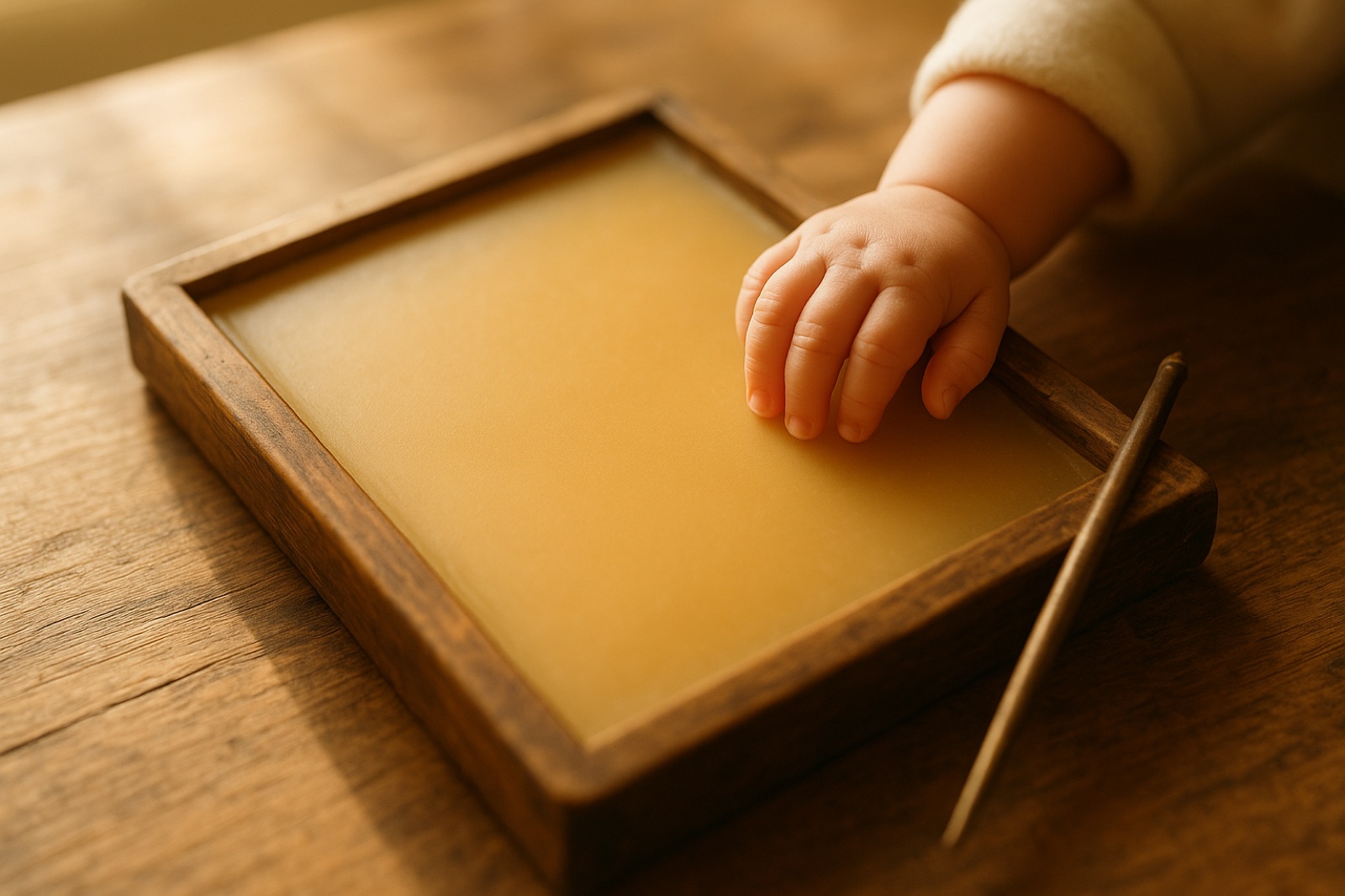
Picture a school in the ancient world. Students did not write on paper. They wrote on small wooden boards filled with a thin layer of wax. You pressed letters into the wax with a pointed stick called a stylus. When the lesson was over, you turned the stylus around and smoothed the wax flat with its blunt end. Now the board was ready again. It was a tabula rasa, a scraped tablet.
The image is old. The Greek thinker Aristotle compared the mind to a writing tablet that has nothing written on it yet. Medieval scholars who studied Aristotle in Latin picked up the picture and the phrase. By the time it reached modern English, “blank slate” had become the everyday version.
So the plain meaning is this: tabula rasa is the idea that a person starts life with a mind that has nothing in it, and that everything we know and are comes later, from experience.
Did John Locke Really Say Tabula Rasa?
The name you will see next to “tabula rasa” in almost every textbook is John Locke, the English thinker. His big book, An Essay Concerning Human Understanding, came out at the end of 1689.
But open the Essay and look for the Latin. You won’t find it. Locke used a different picture. In Book 2 he wrote:
“Let us then suppose the mind to be, as we say, white paper, void of all characters, without any ideas: How comes it to be furnished?”
White paper, not a wax tablet. The Latin phrase does show up once in an early private draft of the Essay from 1671. Then it drops out. The label “tabula rasa” got pinned to Locke later, by other people summing him up.
That matters, because the summary is blunter than what he argued. Locke was fighting one specific idea: that people are born already holding certain ideas or truths, stamped in ahead of time. He did not think a baby arrives with no abilities at all. A newborn can still feel, sense, and learn. His point was that the contents come later. The capacity was there from the start.
The Locke Quote Almost Nobody Repeats
Four years after the Essay, Locke wrote a practical book for parents called Some Thoughts Concerning Education. In it, he noticed what every parent of two children notices: they are not the same, and they were not the same from the beginning.
Some children, he wrote, are bold and some are timid. Some are curious and some careless, some quick and some slow. Then he wrote this:
“God has stamped certain characters upon men’s minds, which, like their shapes, may perhaps be a little mended; but can hardly be totally altered and transformed into the contrary.”
Read that again with “blank slate” in your head. The father of the blank slate believed each child arrives with a built-in character. You can shape it a little. You can’t swap it for a different one. His advice to parents was to watch closely, learn what a child is really like, and make the best of what is already there.
So Locke held two ideas at once. The mind starts without ideas. But the person does not start without a nature.
What Science Says About the Blank Slate Today
Modern research has mostly sided with the second Locke, the one who watched real children.
In 2015, a team led by Tinca Polderman published a review in the journal Nature Genetics. They gathered almost every twin study published over fifty years, covering more than 17,000 traits. Across all of them, the average heritability came out at 49%.
That number is easy to misread, so here is what it does and doesn’t mean. It does not mean half of you comes from your genes and half from your life. Heritability describes why people in a group differ from each other. It says nothing about how much of one person is “built in.” What the number does show is that people really do come into the world different, and those differences keep showing up.
In 2002, the psychologist Steven Pinker wrote a whole book on this called The Blank Slate. His argument was that the idea of a totally empty mind doesn’t match what we now know.
None of that means experience doesn’t matter. It matters enormously. It just means experience writes on something. It does not write on nothing.
Why “Clean Slate” Still Feels So Good to Hear
Here is the strange part. Most people who say “tabula rasa” or “blank slate” today aren’t talking about babies at all. They’re talking about themselves.
“I just want a clean slate.” “Let’s wipe the slate clean.” We say it after a bad year, a broken friendship, a mistake we can’t stop replaying. What we’re really asking for is to be scraped smooth. To have the old marks gone. To start again as if none of it happened.
That wish is honest, and it is very human. But notice what it costs. To get a perfectly blank slate, you’d have to lose the bad marks and the good ones. Your humor. The way you notice small things. The kindness you learned the hard way. Wiping the slate takes all of it.
There is a very old idea, far older than Locke, that sits right between his two books. It says you were never blank, not even at the start. You were known, and meant, before your first breath. And it says the fresh start people reach for is real anyway. Not by scraping you away, but by God making something new of the person who’s already there.
That’s a different kind of clean slate. The mistakes don’t define you. But you don’t have to disappear to be free of them.
A good place to start:
The Beginner’s Guide to Feeling God’s Presence Every Day
A short video guide and companion PDF for noticing that you’re not alone in the ordinary moments of your day.
Get the free guide
Free.
Starting Over Without Becoming Someone Else
If you came here wanting a blank slate for your own life, here is a gentler way to think about it. None of this costs money or needs a therapist. It only needs a quiet ten minutes.
- Name what you’d want to keep. Before you wipe anything, write down three things about yourself you would not want to lose. That list is your starting material, not your problem.
- Name the marks that hurt. Write the one or two things you most want to be free of. Be specific. “Everything” is too heavy to carry and too vague to change.
- Change the next line, not the whole page. A wax tablet was smoothed one stroke at a time. Pick one small thing to do differently this week.
- Get to know your own nature. Locke told parents to watch a child closely before trying to change them. Do the same for yourself. Our free What Is My Temperament? quiz is a simple place to start.
Philosophers have chewed on this “same person or new person?” question for a long time. The ancient puzzle of the Ship of Theseus asks whether a ship that has had every plank replaced is still the same ship. It turns out to be a very personal question. And if starting over feels like pushing the same rock up the same hill, the story of Sisyphus and what Camus made of it is worth ten minutes too.
You didn’t arrive blank. You arrived as someone. And that someone can still begin again.
Discussion Question
Locke said the mind starts empty, but he also said every child arrives with a character that can only be “a little mended.” Which do you think is closer to the truth: are people mostly shaped by what happens to them, or mostly by what they were from the start? Tell us what you think in the comments.
Share This
“Turns out John Locke, the ‘blank slate’ guy, also wrote that every child is born with a character that can only be ‘a little mended.’ Didn’t know that. https://bgodinspired.com/?p=118083”
“I always wanted a clean slate. This made me realize I don’t want to lose everything, just a few marks. Starting over doesn’t mean becoming someone else. https://bgodinspired.com/?p=118083”
“Tabula rasa literally means a scraped wax tablet. Students smoothed it with the back of the stylus. Good read on what the blank slate idea gets right and wrong: https://bgodinspired.com/?p=118083”
Tabula Rasa Questions and Answers
What does tabula rasa mean?
Tabula rasa is Latin for “scraped tablet.” It comes from the wax writing boards used in the ancient world, which were smoothed flat so they could be written on again. In philosophy, tabula rasa is the idea that a person is born with a mind that holds no ideas, and that all knowledge comes later from experience. In everyday English it is usually called the “blank slate.”
Did John Locke use the phrase tabula rasa?
John Locke did not use the phrase tabula rasa in his 1689 book An Essay Concerning Human Understanding. Instead he compared the mind to “white paper, void of all characters.” The Latin phrase appears once in an early private draft of the Essay from 1671. The label “tabula rasa” was attached to Locke’s theory later by people summarizing his ideas.
Did John Locke believe people are born with no personality?
No. John Locke argued that people are not born with ready-made ideas, but he believed children are born with different natures. In Some Thoughts Concerning Education (1693), he wrote that “God has stamped certain characters upon men’s minds,” which “may perhaps be a little mended; but can hardly be totally altered.” He advised parents to study each child’s natural temperament.
Is the blank slate theory true?
Most modern research does not support the idea of a completely blank mind at birth. A 2015 review in Nature Genetics by Polderman and colleagues pooled fifty years of twin studies covering more than 17,000 traits and found an average heritability of 49%. Heritability measures why people in a group differ, not how much of one person comes from genes, but it shows that people begin life with real differences. Experience still shapes people deeply.
Who came up with the idea of the mind as a blank tablet?
The image of the mind as an unwritten tablet goes back at least to the Greek philosopher Aristotle, who compared the mind to a writing tablet with nothing yet written on it. Medieval scholars carried the idea forward in Latin as “tabula rasa.” John Locke’s 17th-century work made the idea famous in modern philosophy, though he described it as “white paper.”