 0
0
 0
0
Paramount has a tagline for its new Dickens film, and it is six words long: The name you know, the story you don’t.
Ebenezer reaches cinemas on 13 November 2026, with Johnny Depp as Scrooge and Ti West directing. The trailers are gothic and strange — ghosts, snow, a man buried alive. This is not a cosy Christmas film.
But the tagline is more accurate than the marketing team probably intended. Because the part almost nobody knows is not the story. It is the name. The Ebenezer Scrooge name meaning has been sitting at the front of that title for more than 180 years, and most of us have never once stopped on it.
Nobody ever questions his first name
Try it on yourself.
You know what “Scrooge” means, because the man turned his own surname into a word. Call someone a scrooge and nobody asks you to explain.
Now say the first name out loud. Ebenezer. What does it mean?
Most of us file it under “old-fashioned” and move on. It sounds Victorian. It sounds like a cold house, a candle stub, a man counting coins at a desk. That feeling is doing all the work — and the feeling is wrong.
The gravestone story everybody repeats
There is a famous answer to where the name came from, and you may have heard it.
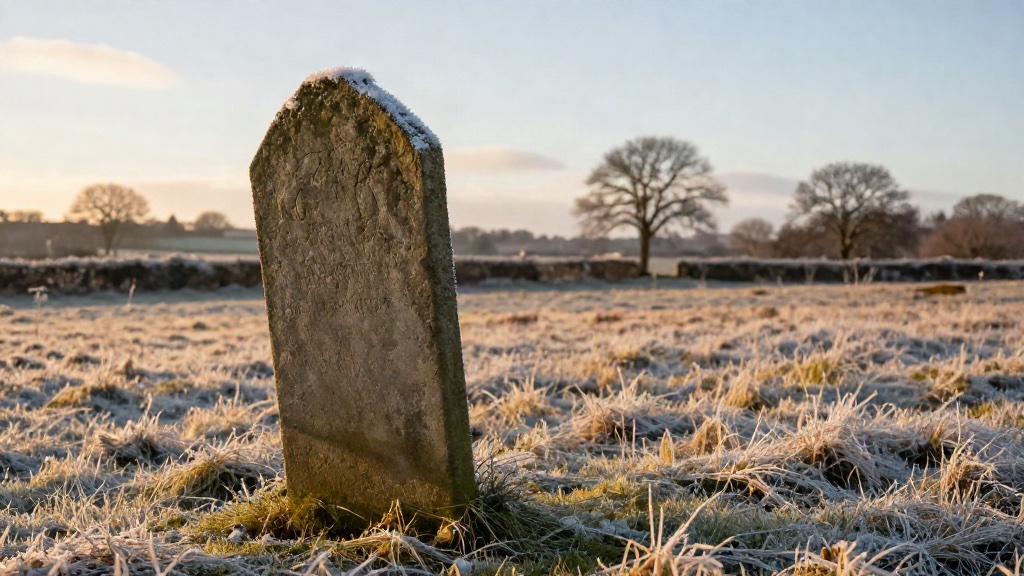
The story goes that Dickens was walking through a burial ground in Edinburgh when he stopped at the grave of a man called Ebenezer Lennox Scroggie. The stone described Scroggie as a “meal man” — a corn and grain merchant. Dickens, the story says, read it as “mean man”, was horrified that anyone would be remembered that way, and carried the idea home with him.
It is a wonderful story. It is also probably not true.
Researchers have never found anything to corroborate it. There is no record of anyone named Scroggie in the Edinburgh census returns of that period, and reference works now describe the whole thing as a probable hoax. The accounts cannot even agree on which year Dickens supposedly took the walk. And the one piece of evidence that would settle it — the stone itself — cannot be checked by anyone, because it was lost long ago, reportedly broken up during work on the burial ground in the 1930s. (The claim and the doubts about it are both catalogued here.)
So the most repeated explanation of the name is one that nobody can stand behind.
Which is a shame, because there is a plainer answer. And it does not need a graveyard at all.
The Ebenezer Scrooge name meaning is “stone of help”
Ebenezer is not a Victorian invention. It is ancient Hebrew, and it is built from two small words. Eben means stone. Ezer means help.
Stone of help.
It comes from an old account in which a leader sets up a single stone in open ground after a long, bad stretch finally breaks — and gives the stone a name that works as a whole sentence. Roughly: help has brought us this far.
That is the whole idea. Not a warning. Not a curse. A marker you put down on purpose, so that later, when things are hard again, you can look at it and remember that you did not get here on your own. (If you want the longer version, we pulled it apart in What Does Ebenezer Mean? A Receipt, Not a Lucky Charm.)
Which means Dickens hung that name on the one man in his fiction least able to read it.
The surname may have a plain root too. Commentators have pointed to scrouge, an early-1800s word meaning to crowd or to squeeze. Put the halves together and the full name reads something like: a stone of help — squeezed.
Dickens sends him backwards before he sends him forwards
Here is the detail almost everyone reads straight past.
When people picture A Christmas Carol, they picture the end: the silent hooded figure, the headstone, the terror. We remember it as a story about a man frightened into being good.
But look at the order Dickens actually chose. The future comes last. The first spirit takes Scrooge backwards — and the thing that breaks him open is not a grave at all. It is a schoolroom. He sees himself as a small boy, left behind at Christmas with nobody coming, and he weeps for that child.
Everything after that is Dickens walking him through help he received and never counted. The sister who finally came to fetch him home. The employer who threw a party for him and asked nothing back. The young woman who chose him before the money did.
Every one of those was a stone he walked past without ever setting it down.
And that is the quiet thing underneath the whole book, long before any ghost turns up. Scrooge’s problem is not really that he is mean. It is that he is completely convinced nothing was ever given to him. A man who believes he was never helped has no reason on earth to help anybody else.
Ancient wisdom keeps asking people to do one strange, practical thing about exactly this: mark the help. Put the stone down. Say out loud where it came from. Not because God needs the credit — but because a person who cannot remember being carried has nothing left to be grateful for, and gratitude turns out to be the entire mechanism of the story.
Dickens understood that the night he gave his miser that name, whether he meant to or not.
A good place to start
A good place to start: The Beginner’s Guide to Feeling God’s Presence Every Day. It is a simple guide to noticing God in ordinary moments — the help that is already in your week, before you have to be shown it by anything. Get the free guide. Free.
What the poster is actually telling you
On 13 November a great many people will buy a ticket to a film called Ebenezer and spend two hours watching a man get frightened into kindness. That is the story they know.
The story they don’t is sitting in the first word on the poster — and there is a small, strange symmetry in it. The origin tale everyone repeats is about a man misreading a stone. The name itself means a stone put down so that nobody would misread their own life.
You don’t need three ghosts for that part. You only need to count backwards, slowly, and notice who was actually there. (If you enjoy pulling films apart like this, our free Movies & the Bible assistant does it on request — it opens in ChatGPT.)
Questions people ask about the name Ebenezer
What does the name Ebenezer mean?
Ebenezer is a Hebrew name meaning “stone of help”, from eben (stone) and ezer (help). It originally referred to a literal stone set up in open ground as a memorial, named with a sentence meaning that help had brought the people that far. It was never a word for stinginess — that association comes entirely from Charles Dickens’s character.
Where did Charles Dickens get the name Ebenezer Scrooge?
Nobody knows for certain. The most repeated claim is that Dickens saw the grave of an Edinburgh merchant named Ebenezer Lennox Scroggie and misread “meal man” as “mean man”, but researchers have found no evidence to support it. Commentators have also suggested the surname was influenced by scrouge, an early-1800s English word meaning to crowd or squeeze, and that the first name was chosen for its meaning — “stone of help” — to reflect the help Scrooge is given to change his life.
Is the Ebenezer Scroggie gravestone story true?
Probably not. No corroborating evidence has ever been found, there is no record of anyone named Scroggie in the Edinburgh census returns of that period, and reference sources now describe the account as a probable hoax. The gravestone itself was lost long ago — reportedly broken up during work on the burial ground in the 1930s — so the inscription cannot be checked by anyone today.
When does the Johnny Depp Ebenezer movie come out?
Ebenezer is released in cinemas on 13 November 2026. It is directed by Ti West and distributed by Paramount, with Johnny Depp as Ebenezer Scrooge and Ian McKellen as Jacob Marley. It is a gothic, horror-leaning retelling of Charles Dickens’s 1843 novella A Christmas Carol rather than a traditional family Christmas film, and its marketing tagline is “The name you know, the story you don’t.”
Why would Dickens give a miser a name that means “stone of help”?
It fits the shape of the story. Scrooge is not shown a stranger’s life — he is walked back through his own, and shown the people who helped him and the kindness he stopped counting. A name meaning “help has brought us this far” sits on a man who is certain nothing was ever given to him, which is precisely the belief the story dismantles. Whether Dickens intended that irony is not documented, but the meaning of the name is not in dispute.
What do you think?
Here is the one we would genuinely like your answer to: does a name shape a character — or do we only notice what it means after we already know how the story ends? Think of a character whose name turned out to fit a little too well. Tell us in the comments; we read them.
Worth sharing
- Ebenezer means “stone of help”. Dickens gave the hardest man in English fiction a name that means somebody helped him, and in 180 years I never once looked it up. https://bgodinspired.com/index.php/entertainment/ebenezer-scrooge-name-meaning/
- That famous story about Dickens getting “Scrooge” from a misread gravestone in Edinburgh? Probably a hoax. No census record, no stone, and the accounts can’t agree on the year. The real answer is simpler and much better: https://bgodinspired.com/index.php/entertainment/ebenezer-scrooge-name-meaning/
- Rewatching A Christmas Carol this year and noticing the order: the past comes first, and he cries over his own childhood long before anyone shows him a grave. The whole thing is about counting help you forgot you got. https://bgodinspired.com/index.php/entertainment/ebenezer-scrooge-name-meaning/