 0
0
 0
0
There is a kind of alone that has nothing to do with being by yourself.
It is the meeting where nobody asks what you think. The family group chat that moves on without you. The job where you do the work and somebody else’s name goes on it. You are in the room. You are just not counted.
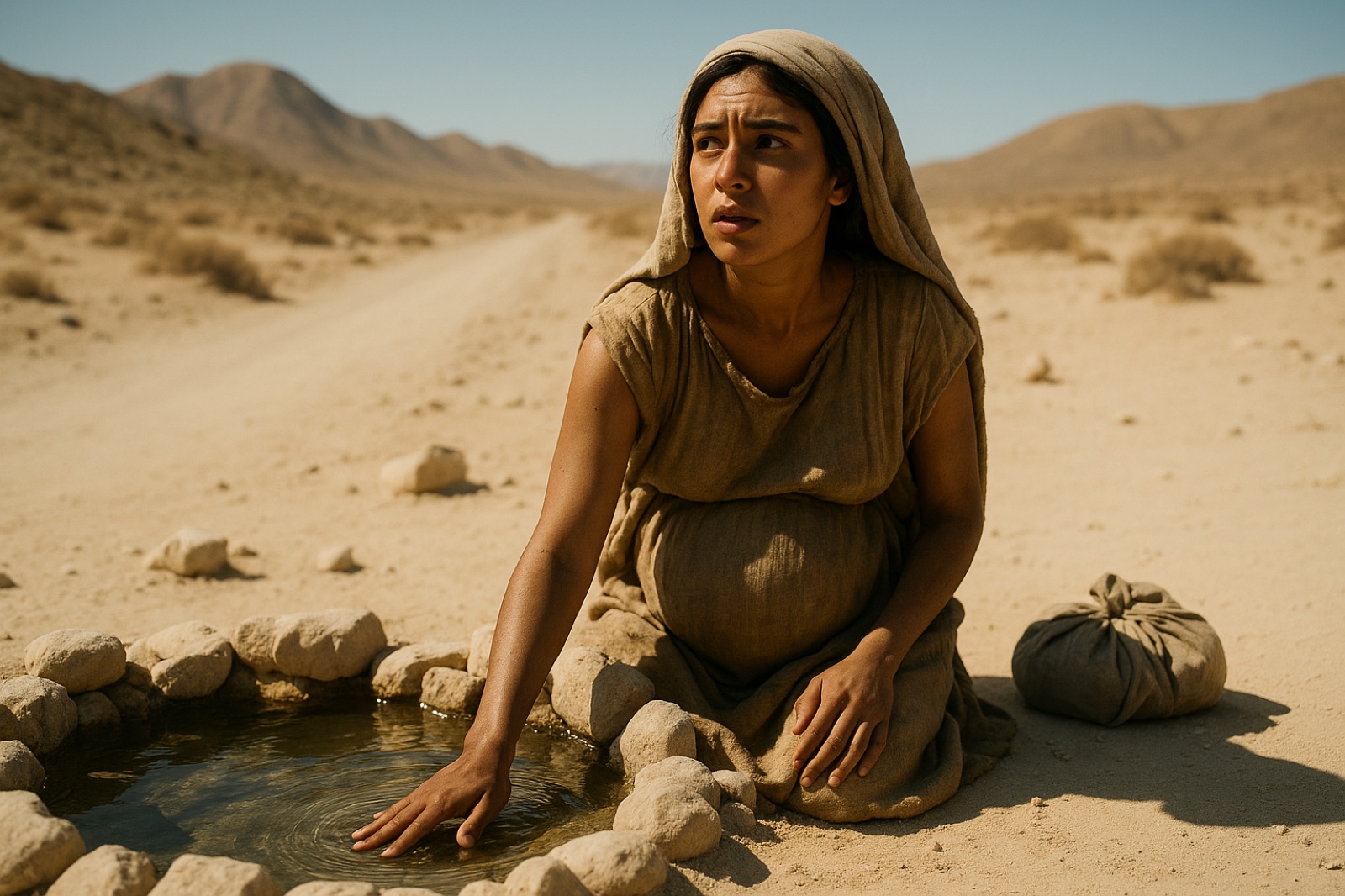
If you know that feeling, you already understand the woman at the center of one of the strangest moments in the whole Bible. Hagar in the Bible is a servant, a foreigner and a runaway. She owns nothing. She is protected by no one. She has no covenant, no promise and no plan.
And she is the only person in all of scripture who looks at God and gives God a name.
Not a king. Not a prophet. Not Abraham, who is standing a few verses away in the same chapter. Her.
Who Was Hagar in the Bible?
The story sits in Genesis 16, and it opens with a problem that is not hers.
Sarai and Abram had no children. So Sarai handed her Egyptian servant to her husband as a second wife. Hagar conceived. Then the household turned. Genesis 16:6 says that Sarai “dealt hardly with her, and she fled from her face.”
Read those verses slowly and notice how little Hagar says. She is given. She is used. She is treated harshly. Nobody in the chapter asks her a single question about what she wants.
Then she runs. And out on the road, somebody finally asks.
She Knew What She Was Running From. She Did Not Know What She Was Running To.
Genesis 16:7 says the angel of the LORD “found her by a fountain of water in the wilderness, by the fountain in the way to Shur.”
Shur lay out toward Egypt — the country she had come from. So this is not a woman escaping to a better life. She is on the road pointing back the way she came, back toward the place she was taken from, with a child on the way and nothing on her back.
Then comes the part that is easy to read straight past. The angel asks her two questions: “whence camest thou? and whither wilt thou go?”
She only answers one of them.
“I flee from the face of my mistress Sarai.”
She can name exactly what she is running from. She has no answer at all for where she is going. And God does not correct her for that, or wait for her to come up with a better plan first. The conversation simply continues.
If you have ever been able to describe your problem in perfect detail and had nothing to say about the way out, you have stood exactly where she stood.
The Detail Almost Everyone Reads Past
A few verses later, the angel tells her she will have a son and says to call him Ishmael, “because the LORD hath heard thy affliction.”
Heard it.
Now go back through the whole chapter and look for the moment Hagar prayed. Look for the moment she cried out, or asked God for anything, or even said God’s name.
It is not there. The text never records her saying one word to God before this.
God heard something she never said out loud.
God heard something she never said out loud.
That is not a small detail in a story about a woman nobody listened to. Everyone around her had a voice in her life except her. And the first one to respond to her responded to a sentence she had never managed to speak.
What Hagar Called God — and Why It Is Unique
Here is the verse the whole chapter has been walking toward. Genesis 16:13:
“And she called the name of the LORD that spake unto her, Thou God seest me: for she said, Have I also here looked after him that seeth me?”
In Hebrew, the name is El Roi — usually translated “the God who sees me.” The King James Version does not carry the Hebrew across; it simply translates the meaning: Thou God seest me. It is worth saying plainly that the second half of the verse is one of the harder lines in Genesis to put into English, and translations differ noticeably on it. The first half is not in doubt at all. She named God.
And that is what makes this moment stand alone.
Other people in scripture do give names after an encounter with God. But look carefully at what they name:
- Abraham “called the name of that place Jehovah-jireh” (Genesis 22:14). A place.
- Moses “built an altar, and called the name of it Jehovah-nissi” (Exodus 17:15). An altar.
- Gideon “built an altar there unto the LORD, and called it Jehovah-shalom” (Judges 6:24). An altar.
Every one of them named the ground where God showed up. Hagar named God.
The line in Genesis 16:13 is exact about it — “she called the name of the LORD.” She is the only person the Bible describes doing that. If you have ever wondered where the names of God actually come from, it is worth sitting with the fact that this one came from her. We looked at a related moment in what God actually said when Moses asked for a name — and it is striking how differently that conversation went.
There is one more quiet thing here. The angel told Hagar to call her son Ishmael. But when the birth finally comes, Genesis 16:15 says “Abram called his son’s name, which Hagar bare, Ishmael.” She was told to name her own child, and the credit went to somebody else. Even the well gets named in the passive voice — “the well was called Beer-lahai-roi.”
She never got to keep the naming of her son. Nobody could take from her the naming of God.
The Turn: Where God Was Willing to Be Found
We tend to assume God is most findable at the center of things. In the sanctuary. Among the people with standing, the ones who know the words, the ones whose names are in the family line.
This one verse quietly turns that around.
The first person in scripture to give God a name is a foreign servant with no rights, pregnant, unprotected, in a wilderness, on a road heading in the wrong direction, and not yet doing one single thing right. She had not repented. She had not returned. She had not prayed. She had not even decided where she was going.
God did not wait at the house for her to come back and get it right. God went out to the road.
And then comes the honest part, the part that keeps this from being a greeting card. Being seen did not end the hard thing. The very next instruction is Genesis 16:9: “Return to thy mistress, and submit thyself under her hands.” She walks back into the same house, with the same woman, under the same conditions.
Nothing about her circumstances changed. What changed was that she now knew she was not invisible inside them.
Years later it happens again. In Genesis 21 she is sent away for good, the water runs out, and she puts her son under a bush and sits a bowshot away because she cannot bear to watch him die. And the verse says: “And God opened her eyes, and she saw a well of water.”
Read that again. The woman who named God “the One who sees me” is now the one who cannot see. And the well was already there. It had been there the whole time. What she needed was not a new well. It was eyes.
That is often exactly where we are. Not short of help. Short of sight. If the feeling of being overlooked is familiar, this is the same thread we followed in why you can feel invisible in a room full of people.
What This Means for Your Monday
Most of us are waiting to be seen by the people who did not see us. The manager. The parent. The friend who stopped replying. And while we wait, we quietly agree with them about our own size.
Hagar’s story cuts that off. The God who runs the universe went out to a dirt road to find one person nobody was looking for, and asked her a question nobody else had bothered to ask.
You do not have to be found at your best. You do not have to know where you are going. You do not have to be on the right road. She was not, and God came anyway.
If you want to take stock of where you actually stand with God right now, our free How Close Am I to God? assessment takes about two minutes and is an honest place to start.
3 Things to Do Today
- Say it out loud where you are. Not where you hope to be one day. Right where you are sitting, say: “God sees me here.” Ten seconds. Say it in the kitchen, on the bus, in the stairwell at work.
- Write down both of Hagar’s questions. On paper or in your phone: What am I running from? and What am I running to? If the second one comes out blank, do not treat that as a failure. That is Genesis 16:8 exactly, and God met her there anyway.
- Look for the well that is already there. Before you ask God for something new, take two minutes and list what is already within reach that you have stopped seeing — one person who would answer if you messaged them, one meal, one door you could knock on. Then use one of them today.
Questions Worth Sitting With
- Where in your life are you counted on but not counted?
- What did you decide about yourself the last time you were overlooked — and who taught you to believe it?
- Hagar went back to the same house with nothing changed except what she knew. What would be different for you tomorrow if nothing changed except knowing God sees you in it?
A Prayer for When You Feel Unseen
God, I am tired of being the one nobody checks on. I have gotten used to being useful and invisible at the same time, and I think I have started to believe that is all I am. You found a woman on a road who had not even prayed, and you heard what she never said. Hear what I have not said either. And if the situation is not going to change tomorrow, then change what I know while I am standing in it.
One Question for You
Of everyone in the Bible who could have been the first to give God a name — the patriarchs, the prophets, the kings — why do you think scripture hands that moment to a runaway servant instead? Share your thoughts in the comments; we read every one.
Share This
- The only person in the whole Bible who gives God a name is a pregnant runaway servant in the middle of nowhere. Not a king. Not a prophet. Her. And God met her on the road before she got anything right.
- Genesis 16 says God heard her affliction — but the chapter never records her saying a word. God heard what she never managed to say out loud.
- She named God “the One who sees me.” Years later, out of water and out of hope, she was the one who could not see — and God opened her eyes to a well that had been there all along.
Common Questions About Hagar
Who was Hagar in the Bible?
Hagar was an Egyptian servant in the household of Abram and Sarai in the book of Genesis. Sarai, who had no children, gave Hagar to Abram as a wife, and Hagar conceived a son, Ishmael. After being treated harshly by Sarai, Hagar fled into the wilderness, where an angel of the LORD found her by a spring of water. Hagar returned, and years later was sent away a second time with her son.
What name did Hagar give God?
In Genesis 16:13, Hagar called God “Thou God seest me” in the King James Version. The underlying Hebrew name is El Roi, usually translated “the God who sees me.” Hagar gave the name after an angel of the LORD found her alone in the wilderness while she was fleeing from Sarai.
Is Hagar really the only person in the Bible who named God?
Hagar is the only person the Bible describes as calling the name of the LORD directly — Genesis 16:13 says “she called the name of the LORD that spake unto her.” Others did give names after encountering God, but they named a place or an altar rather than God: Abraham called a place Jehovah-jireh (Genesis 22:14), Moses called an altar Jehovah-nissi (Exodus 17:15), and Gideon called an altar Jehovah-shalom (Judges 6:24).
What does El Roi mean?
El Roi is a Hebrew name for God usually translated “the God who sees me” or “the God of seeing.” It appears in Genesis 16:13 and was spoken by Hagar, an Egyptian servant, in the wilderness. The King James Version translates the phrase rather than carrying the Hebrew across, rendering it “Thou God seest me.”
Where did the angel find Hagar?
Genesis 16:7 says the angel of the LORD found Hagar “by a fountain of water in the wilderness, by the fountain in the way to Shur.” Shur lay out toward Egypt, the land Hagar originally came from, which means she was on a road pointing back the way she had come rather than toward somewhere new.