 0
0
 0
0
You’ve probably thought about it at some point — what happens to your name after you’re gone. Maybe you’ve built something you hope outlasts you: a business with your name on the door, a family tradition, a reputation you spent years earning. Most of us want to matter beyond our own lifetime. It’s not vanity, exactly. It’s just human.
One of the most powerful men in the ancient world wanted that too — so badly that new research says he tried to build his own tomb inside someone else’s.
The King Who Wanted In
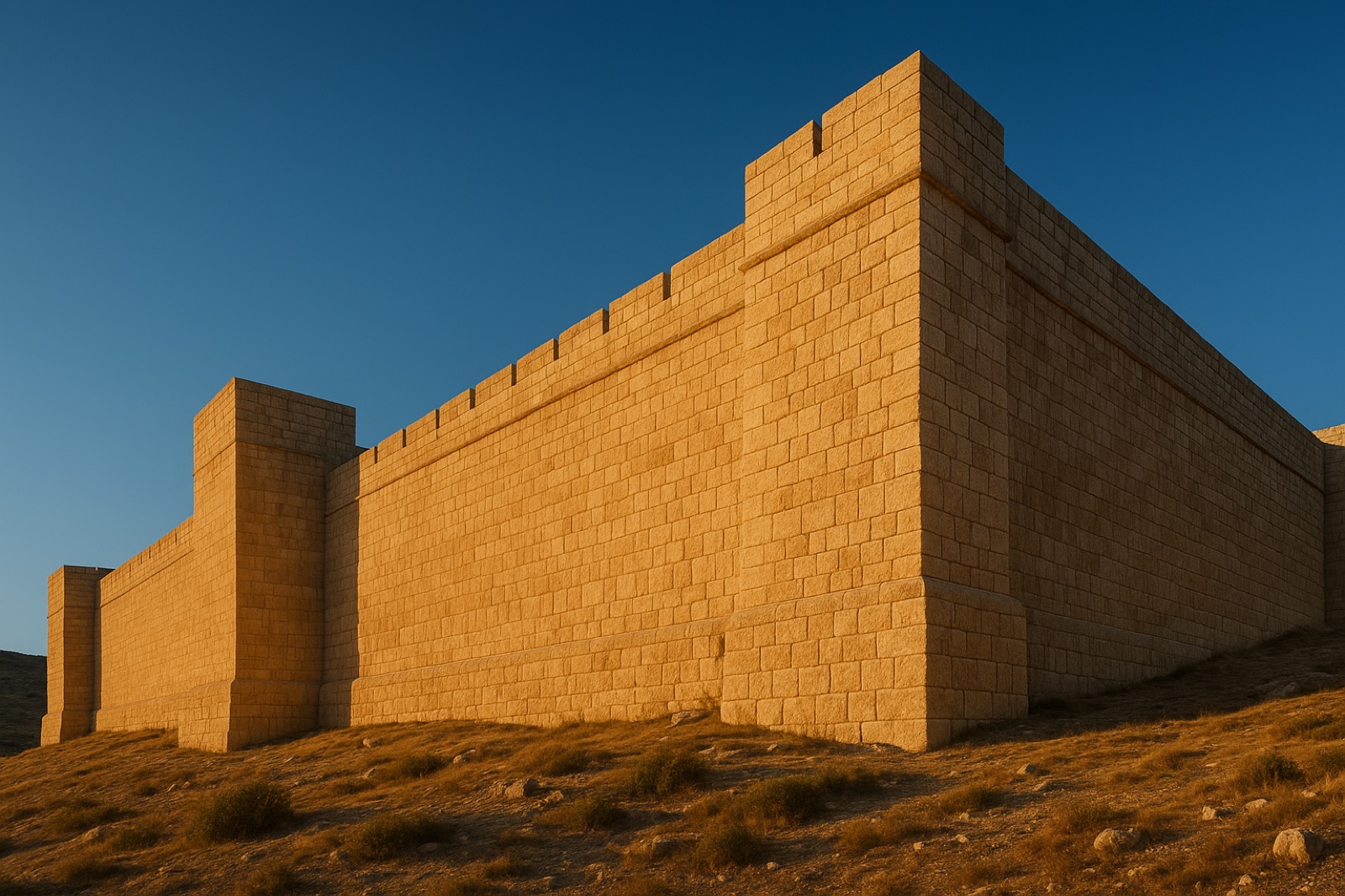
In June 2026, researchers from Israel’s COGAT Archaeology Unit announced something striking about the Cave of the Patriarchs in Hebron — the massive stone enclosure built over the traditional burial site of Abraham, Sarah, Isaac, Rebekah, Jacob, and Leah. Chaim Shakolnik and Dr. Gershon Bar-Kochva presented evidence for a concealed chamber inside the structure, and they’re proposing something bigger than a hidden room: that Herod the Great didn’t just build this complex to honor the patriarchs. He may have built it to eventually house himself.
Their term for it is a “heroön-temenos” — a Greek phrase for a sacred, walled precinct built around the tomb of a founding hero or ancestor. At roughly 2,000 square meters, researchers are calling it the largest structure of its kind anywhere in the Hellenistic world. To be clear, this is a proposed theory based on architectural and archaeological analysis, not a confirmed excavation finding — the kind of claim that will get debated and tested for years. But the shape of it fits everything else we know about Herod.
This was a king obsessed with being remembered. He rebuilt the Second Temple into one of the ancient world’s great architectural wonders. He carved an entire fortress-palace out of a mountaintop at Masada. He built himself a monumental tomb complex at Herodium that he could see from Jerusalem on a clear day. And this was also the same king who, according to Matthew’s Gospel, ordered the deaths of Bethlehem’s infant boys to eliminate a rival to his throne — a man so consumed with protecting his own name and power that he was willing to do almost anything to keep them.
So the theory tracks. If Herod built the grandest heroön-temenos in the Hellenistic world over the resting place of Abraham, Isaac, and Jacob, it wouldn’t be an act of reverence alone. It would be Herod trying to graft his own name onto the most sacred ground in the region — hoping some of that permanence would rub off on him.
Here’s what makes that almost tragic. Nearly two thousand years earlier, in that exact same cave, a much less powerful man had already shown the world what actual legacy looks like — and it looked nothing like a monument.
What Abraham Actually Bought
Genesis 23 opens with Abraham grieving. Sarah, his wife of decades, has just died at Kiriath-arba, “the same is Hebron in the land of Canaan.” Abraham needs to bury her, but there’s a problem most modern readers miss: he doesn’t own a single square foot of the land God had promised would belong to his descendants. He says it plainly to the local landowners, the sons of Heth: “I am a stranger and a sojourner with you: give me a possession of a buryingplace with you, that I may bury my dead out of my sight” (Genesis 23:4).
A wealthy local landowner named Ephron offers him a cave at Machpelah, in a field near Mamre — and he offers to just give it to him. Free. A grand, generous, public gesture in front of everyone at the city gate.
Abraham says no.
He insists on paying full price. Not a discount, not a gift, not a favor he’d owe someone later. Scripture records the exact moment: “And Abraham hearkened unto Ephron; and Abraham weighed to Ephron the silver, which he had named in the audience of the sons of Heth, four hundred shekels of silver, current money with the merchant” (Genesis 23:16). He counted it out, in public, witnessed by everyone. No strings. No ambiguity. No one could ever say later that the land wasn’t legitimately his. He wasn’t buying a monument. He was buying a modest cave, in a field, for one specific purpose — a place to bury the people he loved.
That cave became the resting place for the whole family line God had built His promise on. Abraham himself was buried there after Sarah. So was Isaac, and his wife Rebekah. So was Jacob, brought back from Egypt to be laid beside his grandparents, and his wife Leah. Six of the most significant people in the entire biblical story, all resting in the same small cave that one grieving widower had insisted on paying full, honest price for.
Abraham never saw the promise finished. He died owning exactly one piece of the land God said would belong to his family — a burial cave. He wasn’t building something to make his own name last. He was trusting a promise he would never live to see completed, and doing the next right thing in front of him: burying his wife with integrity, in ground that was honestly his.
The Legacy That Actually Lasted
Here’s the part that should stop you: it worked. Abraham’s name is still spoken in three major world religions, four thousand years later. People still travel to that same small cave to stand where he stood. Meanwhile Herod — who may have built the single largest sacred tomb-enclosure in the Hellenistic world specifically to secure his own place in history — is remembered today mostly as a footnote. A paranoid king. A man who, if this theory holds, spent enormous resources trying to sneak his name into someone else’s story, because he didn’t trust that his own would be enough.
That’s the trade every one of us is making, in smaller ways, all the time. There’s a version of building a monument available to you right now — the achievement you’re chasing so people remember you, the image you’re managing so no one sees the mess, the credit you’re quietly making sure you get. And there’s a version of Abraham’s cave available to you too — the quiet, honest, unglamorous thing done with integrity, trusted to God, with no guarantee you’ll see how it turns out.
I never used to read Genesis 23 as a chapter about legacy. It reads like a real estate transaction — verse after verse of negotiating and weighing silver. But that’s exactly the point. Real legacy doesn’t usually look impressive while it’s happening. It looks like showing up, paying what’s honest, and trusting God with everything you can’t control — including whether anyone remembers your name at all.
What This Looks Like Today
You don’t have to build anything grand to leave something that lasts. You just have to stop trying to build the monument, and start trusting the promise — today, in whatever’s actually in front of you.
Actions to Take
- Name it honestly. Think of one thing you’re currently doing partly to make sure people notice or remember you. Just name it to yourself. Awareness is the first honest step.
- Pass something on instead of building something up. Today, tell one person — a text is enough — something you’re grateful they’re carrying forward from you: a value, a habit of faith, a way of loving people. That’s the legacy that actually survives you.
- Choose the honest 400 shekels. Find one decision this week where you could take a shortcut for a bigger show, or do it quietly and honestly instead. Choose honest and quiet. Commit to it before the day ends.
Journaling Prompts
- Where in your life are you working hardest to be remembered — and what does that hunger tell you about what you’re afraid of losing?
- If no one ever found out and you never got credit, would you still do it? What does your honest answer reveal?
- What promise from God are you currently living inside of, even though you haven’t seen it finished yet?
A Prayer for Today
God, I want to matter. I want my life to count for something after I’m gone, and if I’m honest, sometimes that turns into me trying to build my own name instead of trusting You with it. Help me care less about being remembered and more about being faithful today, with what’s actually in front of me. I don’t know how the story ends or what anyone will say about me. I trust You with that part. Just help me do the next honest thing today. Amen.
A Question Worth Sitting With
Do you think legacy is something you build for yourself, or something you’re given by living faithfully? Tell us what you think in the comments.
Share This
- “Herod built a monument the size of a football field to make sure his name outlived him. Abraham just paid full price for a cave and trusted God with the rest. I know which one actually worked.”
- “One of the most powerful kings in history may have tried to build his own tomb into someone else’s burial cave. The guy actually being remembered just paid honest silver and trusted a promise. #Genesis23”
- “You don’t need a monument. You need 400 shekels of honesty and a promise you’re willing to trust past your own lifetime.”
Questions People Ask
What is the Cave of the Patriarchs?
The Cave of the Patriarchs, also called the Cave of Machpelah, is a burial site in Hebron traditionally believed to hold the graves of Abraham, Sarah, Isaac, Rebekah, Jacob, and Leah. The massive stone enclosure that stands over it today was built by Herod the Great in the first century BC.
Did Herod really build a secret tomb for himself there?
That’s a theory proposed by researchers from Israel’s COGAT Archaeology Unit in June 2026, based on architectural analysis pointing to a concealed chamber inside the complex. It’s a serious proposal from credentialed researchers, but it’s not a confirmed excavation finding, and it will likely be debated for years.
Who is actually buried in the Cave of Machpelah, according to the Bible?
Genesis and the rest of the Torah describe six people buried there: Abraham, his wife Sarah, their son Isaac, Isaac’s wife Rebekah, their son Jacob, and Jacob’s wife Leah.
How much did Abraham pay for the cave, and why does it matter?
Abraham paid 400 shekels of silver — full price, in public, after refusing Ephron’s offer to give it to him for free (Genesis 23:16). It mattered because it made the land legitimately, undisputedly his, with no favor owed and no ambiguity for future generations.
What’s the main takeaway from comparing Herod and Abraham?
Herod tried to build a legacy by attaching his name to something already sacred, on a massive scale. Abraham built his by quietly, honestly securing one small thing he actually needed and trusting God with everything he couldn’t control. Thousands of years later, it’s Abraham’s name that’s still spoken with reverence.
Two other recent finds add to this same thread of ancient ground still speaking today: archaeologists just reopened the 2,000-year-old pilgrimage road to Jerusalem’s Temple, and uncovered the actual room where Paul stood trial centuries after Abraham bought this cave. And if you want to meet the next name resting in that same Machpelah cave, here’s the surprising story behind Isaac’s name.