 0
0
 0
0
You’re kneeling by your bed at 11pm, or sitting alone in your car in a parking lot, or standing in the kitchen after everyone else has gone to sleep, praying about something you haven’t told anyone yet. And somewhere in the back of your mind, a verse shows up uninvited: “where two or three are gathered together in my name, there am I in the midst of them.” It sounds like an answer, except it isn’t the one you needed. It sounds like God is somewhere else right now — in the sanctuary full of people, in the Bible study with folding chairs and coffee — and you’re one person short of qualifying.
That reading of Matthew 18:20 is everywhere. It gets preached to explain why church attendance matters, printed on posters for small group sign-ups, quoted to nudge someone off the couch and into a pew. None of that is wrong, exactly. But it isn’t what Jesus was actually promising when He said it. The real context of “where two or three are gathered” tells a very different story — one aimed directly at the person who is completely, genuinely alone.
What Jesus Actually Said in Matthew 18:20
Here’s the verse in full, straight from the Gospel of Matthew: “For where two or three are gathered together in my name, there am I in the midst of them.” (Matthew 18:20)
Read by itself, it sounds like a formula — get two or three people together, pray “in Jesus’ name,” and God shows up, as if presence needed a headcount to activate. But Jesus never spoke in isolated one-liners. He was a rabbi in the middle of a longer conversation, and if you back up just a few verses, that conversation changes everything about how this promise actually lands.
The Verse Jesus Says Right Before This One
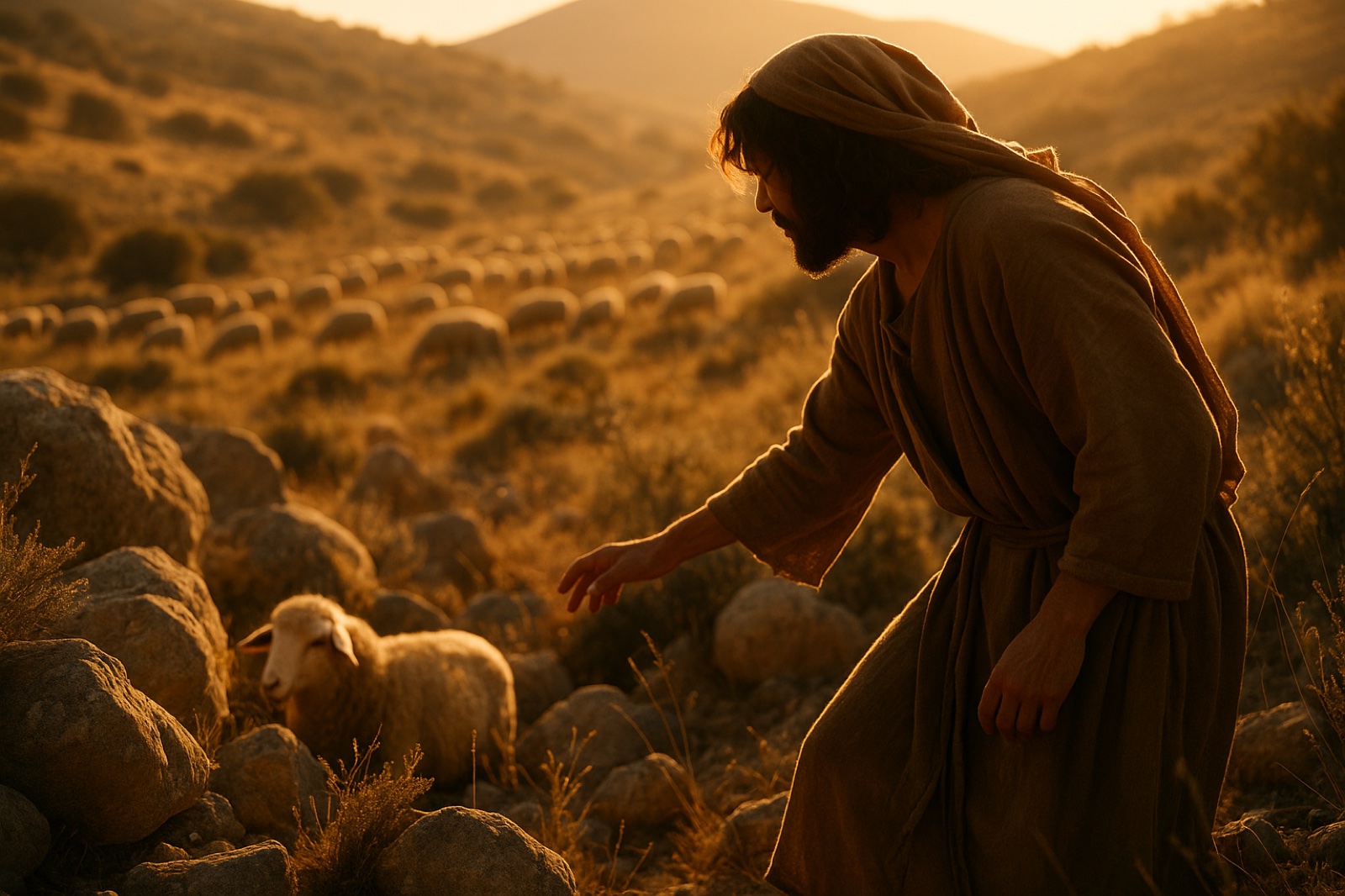
A few verses earlier in the same chapter, Jesus tells a story about a shepherd with a hundred sheep. One wanders off. Instead of shrugging it off as an acceptable loss — ninety-nine out of a hundred is a great success rate by any normal math — the shepherd leaves the ninety-nine exactly where they are and goes looking for the one. Jesus says plainly that this is what God is like: it is not the will of God that even one of these “little ones” should be lost, wandering, forgotten.
That parable is not a random preface. It is the emotional engine of the whole chapter. Matthew 18 opens with Jesus talking about becoming like a child, warns against causing “little ones” to stumble, tells the story of the shepherd who won’t accept losing even one sheep, walks through what to do when a relationship inside the church has broken down — and only then arrives at “where two or three are gathered.” The chapter has been building toward one idea the entire time: God does not walk away from the isolated one. God goes after them.
So What Does “Two or Three Gathered” Actually Mean?
Historically, this promise was spoken into a very specific moment. The early church Jesus described wasn’t meeting in buildings with steeples and sound systems. It was two or three people in someone’s home, sometimes meeting quietly, sometimes carrying real risk just for being there. “Two or three” wasn’t a minimum bar for legitimacy — it was Jesus reassuring the smallest, most vulnerable gathering imaginable that they were not too small to matter. Sometimes that reassurance still shows up as a person — the way Onesiphorus searched all of Rome until he found Paul when everyone else had given up on him. If Jesus is that committed to showing up for two or three people meeting in a back room with no name and no building, He was never in the business of making Himself scarce for the one.
Put the shepherd and the “two or three” side by side, and the verse people use to prove you need company to reach God actually proves the opposite. The chapter’s whole argument is that God’s presence was never rationed by headcount to begin with — which means a promise this generous to two or three people in a hidden room was never going to be withheld from the person alone in a parking lot, or a kitchen, or beside a bed, at 11pm. You wouldn’t be imagining that ache either — loneliness is showing up as the number one thing weighing on people right now, not just a private feeling you’re supposed to explain away.
The Moment the Verse Flips
Here’s the turn most people miss: if the “two or three” promise is really about how far God will go for the smallest, least official gathering — the version of “church” with no name on the door — then it was never designed to exclude the one. It was designed to include people the world would call too few to count. You, praying alone tonight about something real, are not a smaller version of what happens when two or three gather. It’s the same God, the same nearness, the same “there am I” — just with an audience of one, and the shepherd back in verse 12 already told you that one was worth leaving the ninety-nine for.
What To Do With This Tonight
Believing this is one thing. Actually letting it change how you pray tonight is another. Here are three ways to do that, starting with the easiest.
- Say tonight’s prayer out loud — even a whisper counts. Saying it instead of only thinking it is a small, physical way of acknowledging Someone is actually listening, not just you turning a worry over in your own head.
- Name the exact thing, not the vague version. Instead of a general “help me, God,” pray about the specific situation keeping you up tonight — by name, with the real details — the way you’d tell a friend the actual story instead of the summary.
- Tell one person tomorrow that you’ve been carrying this alone. Not because God’s presence needed backup — you already have that — but because Jesus valued twos and threes too, and this verse was never asking you to pick one or the other. There’s real evidence behind this one: a recent study found that reaching out to one real person eases loneliness more than any amount of talking it through alone.
Something to Sit With
- When was the last time you felt like you needed other people around before you could really talk to God? Where did that idea come from?
- What’s the “real version” of what you’re praying about right now — the one you’d tell a friend, not the summary you’ve been giving God?
- What would actually change if you believed God was as present in your kitchen alone tonight as in a room full of people singing on Sunday?
If you want a clearer read on where you stand right now, our free How Close Am I to God? assessment only takes a couple of minutes and meets you exactly where you are today.
God, I don’t always feel like You’re close when it’s just me. Tonight it’s just me, and I need You to be as real here as You’d be anywhere else. Thank You that You go after the one, not just the crowd — that You never needed a room full of people to make this count. Help me believe that You are already here, in the midst of me, before anyone else ever walks in. Amen.
Tell Us What You Think
Do you think church culture has quietly taught people they need a group around them before they can really reach God? Tell us in the comments.
Share This
- “Where two or three are gathered…” I always thought that verse meant I needed people around to really reach God. Turns out the whole chapter says the opposite.
- Read the verse right before “where two or three are gathered” today and it wrecked me — in the best way. Jesus was already talking about the ONE person, alone, that He won’t stop looking for.
- Praying alone tonight isn’t a smaller version of church. Matthew 18 talks about the ONE before it ever mentions the two or three. #WhereTwoOrThree
Questions People Ask About Matthew 18:20
What does “where two or three are gathered together in my name” mean?
It’s Jesus’ promise in Matthew 18:20 that His presence is with even the smallest gathering of believers. Read next to the rest of Matthew 18 — especially the parable of the lost sheep just before it — it shows God’s presence was never rationed by numbers to begin with, which means it was never withheld from the person praying completely alone either.
Does God still hear me if I pray by myself?
Yes. Matthew 18:20 doesn’t set a minimum headcount for prayer to “count” — it reassures the smallest gathering, two or three people meeting quietly, that they matter. The larger point of the chapter, starting with the parable of the lost sheep, is that God actively pursues the one who is alone or has wandered off, not just the group.
What is the context of Matthew 18:20?
Matthew 18:20 sits at the end of a chapter that opens with Jesus talking about becoming like a child, warns against causing “little ones” to stumble, and tells the parable of a shepherd who leaves ninety-nine sheep to find the one that wandered away. It’s followed immediately by instructions for restoring a broken relationship inside the church. The “two or three gathered” promise caps off a chapter about how far God goes for the one who is lost or isolated.
Why does Jesus mention “two or three” instead of a bigger number?
In the setting Jesus was speaking into, the earliest Christian communities were often tiny — two or three people meeting in a home, sometimes at real risk. Jesus wasn’t setting a minimum for God to show up; He was promising the smallest, least “official” gathering that they were not too small to matter.
Is Matthew 18:20 only about church attendance?
It’s often used that way, but the verse itself never mentions a building or a service. Read next to the parable of the lost sheep just before it, Matthew 18:20 is really about how completely God’s presence covers people — whether that’s two or three gathered quietly, or one person praying alone about something no one else knows about yet.