 0
0
 0
0
You’ve probably felt it without knowing what it was — a low rumble under your feet that lasted a second too long, a hanging light that swayed when nothing should have moved it, a dish that rattled in the cabinet for no reason you could find. If you live anywhere near the West Coast, that small unease sits quietly in the back of your mind: the ground under your house isn’t actually as still as it feels. It’s borrowed stillness, and everyone out there knows it.
That’s why a new piece of research out of Oregon State University landed with a thud this year. Scientists studying the Cascadia Subduction Zone — the fault line running from Northern California up through Washington — found new evidence that a major rupture there could put enough added stress on the nearby San Andreas Fault to trigger a second major earthquake within hours of the first. Two of the West Coast’s biggest fault systems, long treated as separate threats, may actually be able to set each other off.
The coverage has been picked up everywhere from National Geographic to local Pacific Northwest newsrooms, and for good reason. It’s the kind of finding that turns an abstract, someday fear into something a lot more specific.
And here’s the part almost nobody covering the story has mentioned: someone described this exact scenario roughly 3,000 years ago. Not in a science journal. In a psalm.
What Psalm 46 Actually Says About Earthquakes
Psalm 46 was written by the sons of Korah, a family of temple musicians in ancient Israel, most likely during a real season of national crisis — not as a comfortable, theoretical meditation, but as a response to actual upheaval happening around them. It opens like this, in the King James wording:
“God is our refuge and strength, a very present help in trouble. Therefore will not we fear, though the earth be removed, and though the mountains be carried into the midst of the sea; Though the waters thereof roar and be troubled, though the mountains shake with the swelling thereof.” (Psalm 46:1–3, KJV)
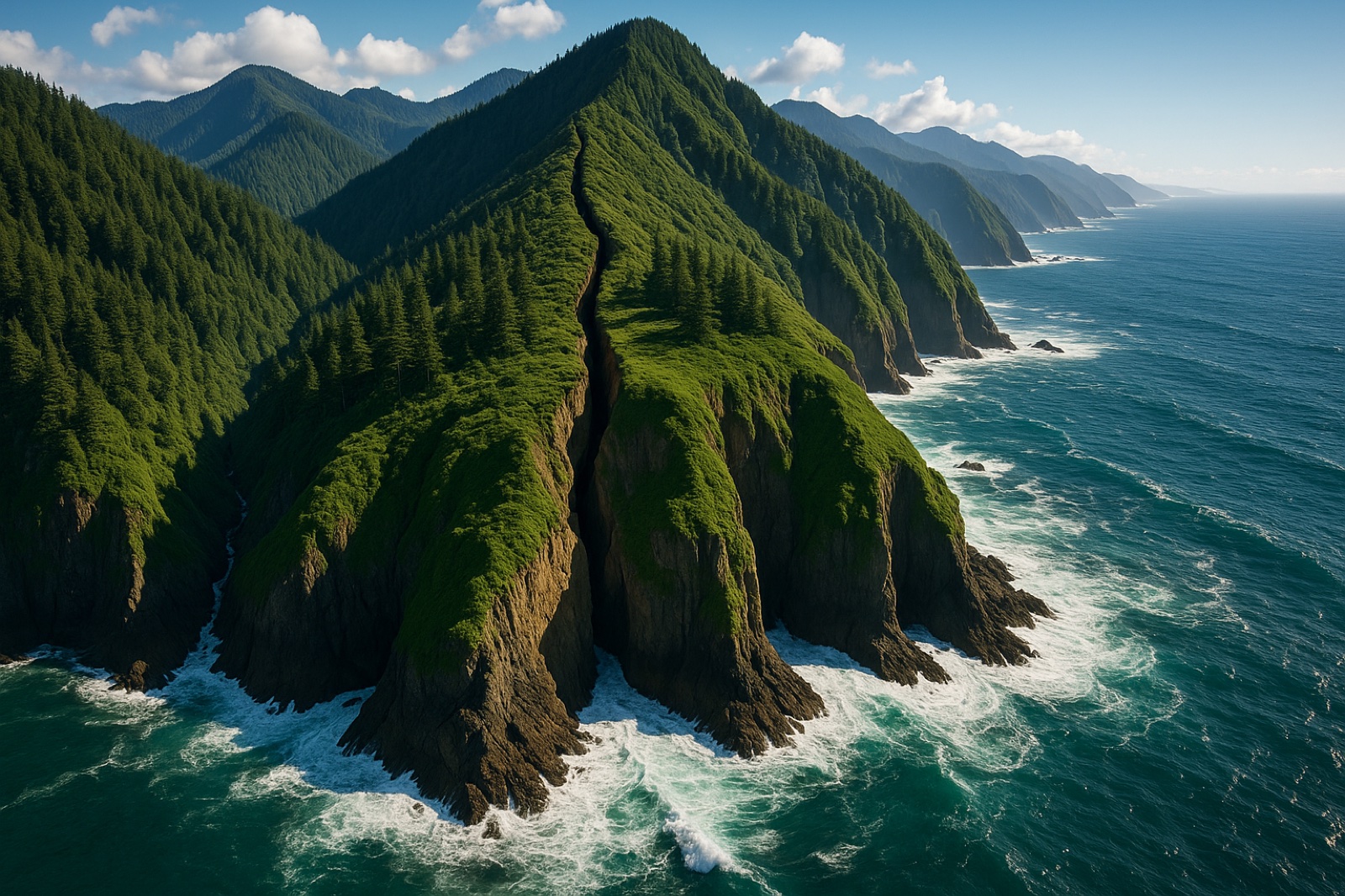
Read that slowly, and it stops sounding like poetic exaggeration. “The earth be removed.” “The mountains be carried into the midst of the sea.” “The waters thereof roar.” That is not vague, gentle language about hard times in general. That is a description of the ground failing and the ocean responding — which is precisely what a subduction-zone megathrust earthquake does.
It’s worth knowing that Cascadia has done this before. On January 26, 1700, the Cascadia Subduction Zone ruptured in a massive earthquake, estimated around magnitude 9.0. It sent a tsunami racing across the entire Pacific Ocean — one large enough to be recorded in Japanese port records that same year, without anyone in Japan knowing where it came from until modern geologists connected the dots centuries later. Coastal forests in the Pacific Northwest were drowned in salt water and killed almost instantly; their preserved stumps, still standing along the Washington coast, are called “ghost forests” today. The land didn’t just shake. In places, it dropped, and the sea moved in to take what had been solid ground.
Mountains carried into the sea. Waters that roared. That’s not a metaphor stretched to fit the evidence — it’s the plain, physical description of what these two fault systems have already done once, and what new research says they may be capable of doing together again.
The Turn: Ancient Words, Modern Mechanics
Here’s what’s easy to miss on a first read of Psalm 46: the psalmist isn’t describing this catastrophe and then changing the subject to something more comforting. The declaration of trust comes right in the middle of the shaking, not after it’s over. “Therefore will not we fear” isn’t the psalm’s conclusion once the ground has settled back down — it’s the psalm’s response while the ground is still moving. The fear and the trust are sitting in the same three verses.
That’s a very different posture than pretending nothing is wrong. The psalm doesn’t ask you to believe the earth can’t be removed or the mountains can’t shake. It names those things directly, in language specific enough that three thousand years later, a team of seismologists studying fault-triggering mechanics could read it and recognize their own findings. And then it says: even so, we will not fear, because our refuge was never the ground in the first place.
Verse 10 makes the same point from a different angle: “Be still, and know that I am God.” In Hebrew, that word for “be still” (raphah) carries the sense of letting your hands drop — releasing your grip on something you were straining to hold onto. It’s not a command to feel calm. It’s a command to stop gripping the thing that was never yours to hold steady in the first place.
What This Actually Looks Like Today
None of this means ignoring the science or skipping preparation — trusting God has never meant refusing to build the ark. If you live in earthquake country, having a real plan is simply wisdom, not a lack of faith. But there’s a specific, doable difference between researching a threat responsibly and marinating in dread about it, and that difference is where Psalm 46 actually does something for you.
The next time a headline like this one crosses your feed — or any headline that makes the ground under your life feel less stable, whether it’s about fault lines or your job or your health — try reading Psalm 46:1–3 out loud, slowly, twice. Not skimmed. Spoken. Notice that it doesn’t ask you to feel nothing. It gives you somewhere specific to put the fear instead of just carrying it.
Three things you can do in the next 10 minutes
- Read Psalm 46 start to finish, out loud. It takes about two minutes and it’s short enough to actually hold onto afterward.
- Write down verses 1–3 somewhere you’ll actually see this week — a sticky note, your phone’s lock screen, the notes app you already check ten times a day — next to whatever specific thing has your ground feeling unsteady right now.
- If you live somewhere prone to earthquakes, spend the rest of the ten minutes on one real preparedness step — check your household’s emergency kit, or write down your family’s meeting point if you ever got separated. Preparedness and trust were never opposites in this psalm; they’re both part of taking the ground under you seriously.
A prayer for when the ground feels less steady than it should:
God, I won’t pretend the ground under me always feels as solid as I want it to. Some days the news itself feels like the shaking. Help me remember You were my refuge long before I ever needed one, and You’ll still be my refuge on the day I actually do. Steady my breathing when I can’t steady the earth. Right now, I choose not to be afraid. Amen.
If you want to go deeper on what it means to actually rest in that kind of trust rather than just read about it, this prayer for protection and safety walks through it further, and this short Bible meditation on perfect peace is worth keeping close for the next time uncertainty shows up uninvited.
Discussion Question: When something completely outside your control threatens to shake your life — a diagnosis, a layoff, or literally the ground itself — what’s the first thing you reach for: information, control, or peace? Tell us in the comments.
Share this:
- Scientists just found evidence that two of the West Coast’s biggest fault lines could rupture together within hours of each other. Psalm 46 described that exact scenario — mountains carried into the sea — 3,000 years before seismology existed.
- “Though the earth be removed, and the mountains be carried into the midst of the sea… God is our refuge and strength.” Psalm 46:1–2. Turns out that might not have been poetry. It might’ve been prophecy.
- New West Coast fault research is unsettling to read. So is Psalm 46 — right up until the part that says “we will not fear.”
Common Questions About Psalm 46 and the Cascadia-San Andreas Study
Q: What does the new Cascadia-San Andreas earthquake study actually say?
A: Researchers at Oregon State University found evidence that a major rupture on the Cascadia Subduction Zone could increase stress on the San Andreas Fault enough to trigger a second major earthquake within hours — meaning the two fault systems may not be the fully independent threats they were long assumed to be.
Q: What does Psalm 46 say about earthquakes?
A: Psalm 46:2–3 (KJV) reads, “Therefore will not we fear, though the earth be removed, and though the mountains be carried into the midst of the sea; Though the waters thereof roar and be troubled, though the mountains shake with the swelling thereof.” It’s one of the most direct earthquake-and-tsunami descriptions found anywhere in the Bible.
Q: Who wrote Psalm 46, and why?
A: Psalm 46 is attributed to the sons of Korah, a family of temple musicians in ancient Israel. Most scholars believe it was written during a real period of national upheaval and crisis, not as an abstract or theoretical reflection.
Q: Has the Cascadia fault actually ruptured like this before?
A: Yes. On January 26, 1700, the Cascadia Subduction Zone ruptured in a massive megathrust earthquake estimated around magnitude 9.0, sending a tsunami across the Pacific that was documented in Japanese records that same year and preserved in Pacific Northwest oral histories.
Q: What does “Selah” mean in Psalm 46?
A: Selah appears three times in Psalm 46. Most scholars believe it functioned as a musical or liturgical pause — a cue to stop and let what was just said actually sink in, rather than rushing on to the next line. This deeper look at what Selah means is worth reading if that pause is exactly what you need right now.