 0
0
 0
0
Right now, somewhere above your head, a satellite parked 1.5 million kilometers from Earth is staring into the dark and catching light that left its source before the sun, the Earth, or a single atom of your body existed.
That light just arrived. It’s been traveling for 13 billion years. And when scientists finally decoded what it was showing them, the honest answer was: this shouldn’t be here yet.
In July 2026, the European Space Agency’s Euclid space telescope turned up 31 ancient quasars — the brightest, most violent objects the universe makes — including two that instantly became the oldest ever confirmed. They were already blazing when the universe was just 5% of its current age. And nobody can fully explain how they got so big, so fast.
What Euclid Actually Found
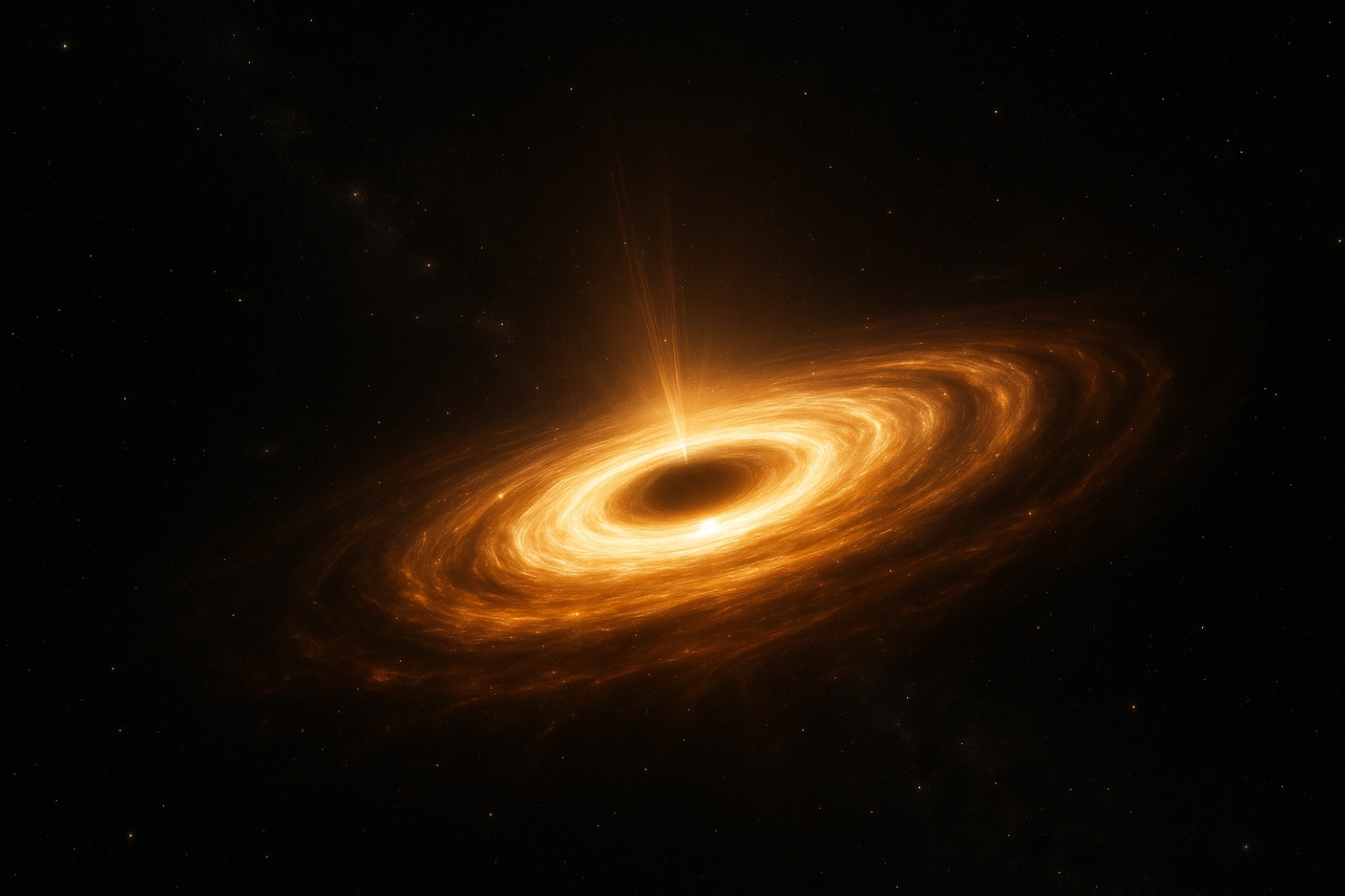
Quasars form when a supermassive black hole at the center of a galaxy pulls in gas and dust so violently that the material heats to millions of degrees before it falls in — throwing off more light than every star in that galaxy combined. They’re basically the universe’s floodlights, visible across billions of light-years because there’s nothing quieter about them.
Euclid, launched in 2023 on a six-year, $1.5 billion mission mostly built to study dark energy, wasn’t even hunting for quasars specifically. It found 31 of them anyway, hiding in the vast survey data it collects while mapping the shape of the cosmos. Twelve formed within the universe’s first 770 million years. Two — cataloged as EUCL J172902.75+641018.1 and EUCL J125308.55+705432.3 — go further back than that: to roughly 670 million years after the Big Bang, when the universe was about 5% of its current 13.8-billion-year age.
That beat the previous record by about 20 million years — a small margin in headline terms, but a big deal in a field where every additional confirmed object this old is genuinely rare. In just two years of operation, Euclid has doubled the total number of known ancient quasars.
Why Scientists Keep Using the Word “Perplexing”
Here’s the part that actually matters. A quasar’s black hole isn’t small. We’re talking billions of times the mass of our sun, packed into a single object. Physics gives us a rough speed limit for how fast a black hole can “eat” and grow — gas falling in generates its own light pressure, and past a certain point that pressure pushes back against more material falling in. It’s a natural brake.
Run the math on that brake, and a black hole this massive should need far longer than 670 million years to get there — even if it started growing the instant the universe existed. And yet, there it is.
“Every step further back in time makes the puzzle more perplexing,” said Daming Yang, the Leiden University researcher who led the study. His co-author, Joseph Hennawi, put it more bluntly: “These monsters — weighing billions of times the mass of our sun — somehow already existed when the universe was in its infancy. We don’t yet have a good understanding of how they grew so massive, so fast.”
That’s not a scientist being dramatic for a headline. That’s the actual state of the research. Nobody currently has a complete answer for how order and mass on this scale assembled itself this quickly. This isn’t the first time a telescope has turned up a black hole that arrived “too early” for the timeline — a starless monster black hole spotted by James Webb raised the exact same question a few years back. Euclid just confirmed the pattern is real, and it’s getting harder to explain, not easier.
The Best Guesses So Far
Astronomers aren’t out of ideas — they have several. Maybe some black holes were “born big,” collapsing directly from massive clouds of primordial gas instead of starting small and growing over time. Maybe early black holes merged with each other far more often than models assume, jumping mass in leaps instead of a steady climb. Maybe the light-pressure brake doesn’t apply as strictly in the chaotic, gas-dense conditions of the infant universe as it does today.
Each of those is a real, published hypothesis. None of them is confirmed. What’s true right now is simpler and stranger: the earliest complex, ordered, massive structures we can observe were already there, doing exactly what they do today, before the universe had time — by every model we currently trust — to build them the “normal” way.
A Universe That Keeps Arriving Complete
There’s a pattern showing up again and again as instruments get sharper. It isn’t just black holes. Researchers who recently built a living cell from scratch in a lab found the same thing at a completely different scale — every step revealed something in the original design they couldn’t actually construct themselves, only copy. And geneticists tracing the DNA switch behind human language found the mechanism, but not the reason it exists at all.
Zoom out far enough, in field after field, and the universe keeps handing scientists the same quiet surprise: things that “should” have taken a long, gradual buildup instead show up already finished. Long before telescopes existed, ancient wisdom described a universe that arrived complete rather than assembled piece by piece over eons — spoken into being, whole, in an instant. Nobody’s claiming that’s a physics paper. But it’s worth noticing that the deeper we look, the more the universe seems to behave less like something that slowly stumbled into order, and more like something that was ordered from the very first moment. That’s not a proof. It’s just an odd thing to sit with.
What Happens Next
Euclid isn’t done. The mission still has years left on its survey, and every pass through the sky turns up more of these faint, ancient signals. NASA’s upcoming Nancy Grace Roman Space Telescope is expected to add even more data on the earliest structures in the cosmos when it launches. Whatever the eventual explanation for the black-hole growth problem turns out to be — born big, merged fast, or something nobody has proposed yet — it’ll have to explain not just two quasars, but a pattern that keeps getting older and stranger the closer we look.
For now, 13 billion years after the light left, it’s sitting in a dataset on Earth, still asking the same question it always was: how did this get here so fast?
Discussion Question
If scientists eventually solve the “how did they grow so fast” problem completely, would that make the universe feel more explainable to you, or less amazing? Drop your take in the comments — we’d genuinely like to know where you land on it.
Share This
- Scientists just found the two oldest quasars ever seen — black holes so massive they shouldn’t have had time to exist yet. The universe keeps arriving more finished than the timeline allows for. 🔭
- Euclid just doubled the number of known ancient quasars in two years. The catch: the math says these black holes grew too big, too fast, for a universe only 5% of its current age. Scientists are calling it “perplexing” — and they mean it.
- Every time telescopes get sharper, the early universe looks less like something that slowly assembled itself and more like something that showed up already finished. Wild story about the oldest quasars ever found.
Quick Questions, Answered
What did the Euclid telescope actually discover?
The European Space Agency’s Euclid space telescope discovered 31 ancient quasars, including the two oldest ever confirmed. The two record-holders, EUCL J172902.75+641018.1 and EUCL J125308.55+705432.3, existed when the universe was only about 670 million years old — roughly 5% of its current 13.8-billion-year age. The findings were published in the journal Astronomy & Astrophysics in July 2026.
Why is it strange for these quasars to be this old?
Quasars are powered by supermassive black holes weighing billions of times the mass of the sun. Known physics puts a natural speed limit on how fast a black hole can grow, because the light and heat generated as material falls in pushes back against more material falling in. At the expected growth rate, a black hole this massive shouldn’t have had enough time to form within the universe’s first 670 million years — yet it did.
What is a quasar, in simple terms?
A quasar is an extremely bright, distant object powered by a supermassive black hole actively feeding on gas and dust at the center of a galaxy. The material heats to millions of degrees as it spirals inward, releasing more light than every star in that galaxy combined — making quasars visible across billions of light-years.
How does Euclid differ from the James Webb Space Telescope?
Euclid, launched in 2023, is primarily built to map the large-scale shape of the universe and study dark energy across huge swaths of sky. It found these ancient quasars as part of that broader survey work, rather than through a mission specifically designed to hunt for them. In just two years, it has doubled the total number of known ancient quasars — a pace that complements deep, targeted observations from telescopes like James Webb.
Do scientists know how these early supermassive black holes formed?
Not with certainty. Leading hypotheses include black holes that formed directly from massive collapsing gas clouds rather than growing gradually, more frequent black hole mergers in the early universe, or growth limits that behaved differently in the denser conditions shortly after the Big Bang. As of mid-2026, no explanation has been confirmed, and researchers describe the pattern as an open and deepening mystery.