 0
0
 0
0
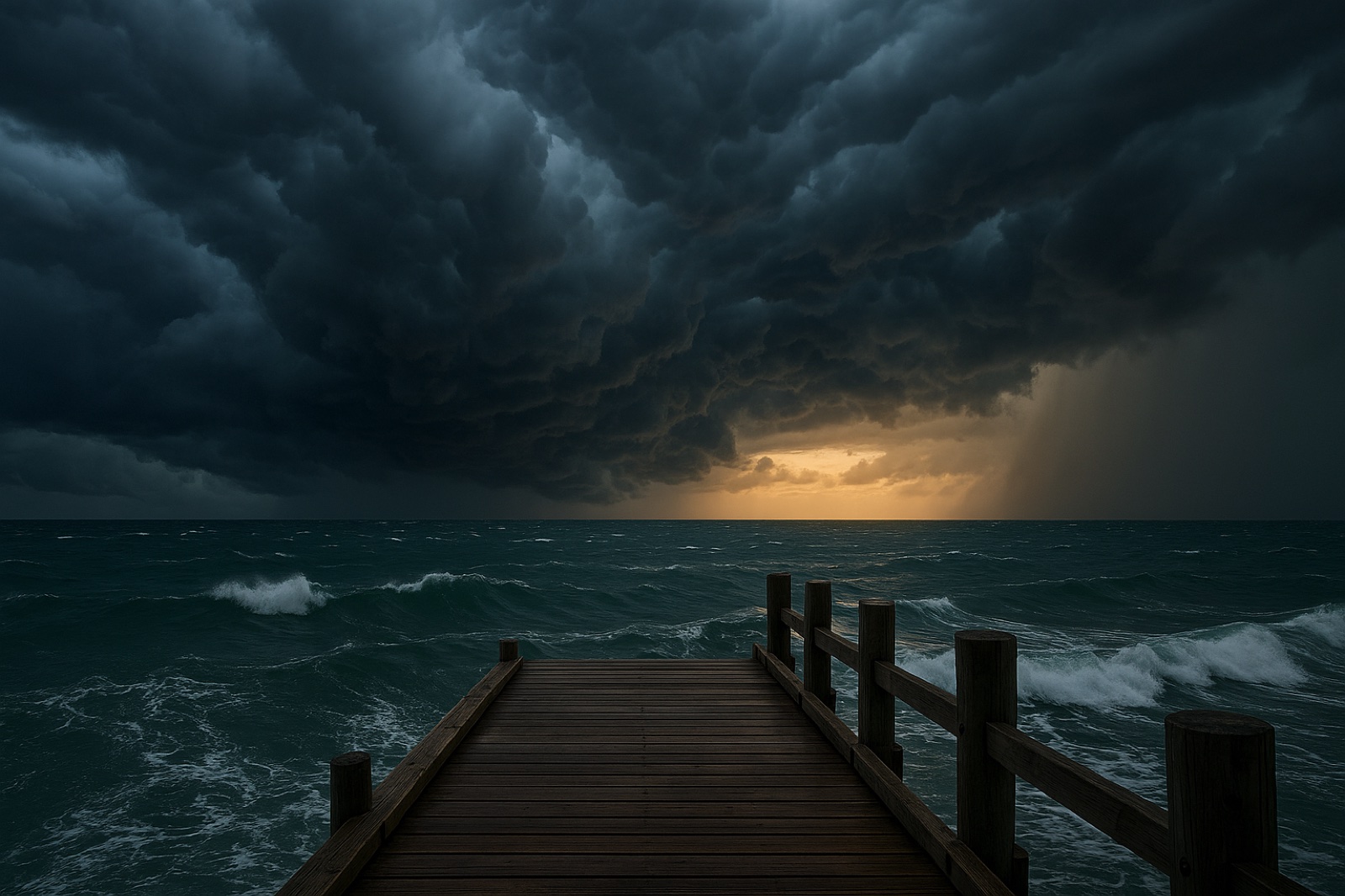
Tropical Storm Bertha is churning through the Gulf of Mexico right now, and if you live anywhere near the Gulf Coast, you already know the drill. You’ve checked the cone of uncertainty more times today than you’d like to admit. You’ve half-listened to a meteorologist explain wind shear while actually thinking about whether you have enough gas in the car, enough water in the pantry, enough charge on your phone.
News coverage from CNN and CBS this week has tracked Bertha’s path toward the Gulf Coast, with landfall expected mid-week somewhere near southeast Louisiana or southern Mississippi. The forecast cone will keep shifting until it doesn’t. That’s the strange purgatory of storm season — you prepare for a version of the future that keeps redrawing itself every six hours.
Why Storms Get Under Our Skin Differently Than Other Threats
There’s a reason a hurricane watch feels different from almost any other kind of warning. It’s not sudden, like a car accident. It’s not invisible, like a virus. You can watch it coming for days — a slow-motion approach that gives your imagination plenty of time to work.
Psychologists who study disaster anxiety point out that this “anticipatory” quality is exactly what makes tropical storms so mentally exhausting. Your body’s stress response doesn’t know the difference between an actual threat and the constant refreshing of a radar app. Every time you check the storm track, you get a small hit of adrenaline — and then you check again an hour later, and again before bed, and your nervous system never fully stands down.
Add to that the specific vulnerability of water. Fire, you can often outrun. Wind, you can shelter from. But storm surge — the wall of ocean water a hurricane pushes ahead of it — has been the single deadliest element of tropical storms for decades, precisely because it’s the hardest to visualize until it’s already at your door.
What Actually Helps When a Storm Is Bearing Down
If Bertha is anywhere near your part of the coast, the practical steps are the same ones emergency managers repeat every season because they work:
- Know your evacuation zone before you’re told to use it. Zones are usually listed by county or parish, not by neighborhood name — look yours up now, not when the roads are already backed up.
- Fill the car and the bathtub. Gas stations empty fast once an evacuation order drops. A full tub gives you flushing and cleaning water if the tap goes out.
- Photograph your home and belongings before, not after. Insurance claims move faster with dated proof of condition.
- Check on the person who won’t check on themselves. Elderly neighbors and people without a car are statistically the most likely to stay in a mandatory evacuation zone — a five-minute knock on the door can change that.
- Charge everything, then charge a battery pack too. Power loss usually outlasts the storm itself by days.
None of that makes the waiting easier. It just makes the waiting productive.
The Fear Bertha Is Stirring Up Isn’t New
Long before satellites and spaghetti models, people who made their living on open water had no way to know a storm was coming until the sky told them. No radar. No 72-hour warning. Just a sudden, violent shift in the wind and a crew realizing, all at once, that they were smaller than they’d let themselves believe.
One of the oldest surviving pieces of writing about that exact feeling comes from an ancient poem tucked into the middle of the Bible — sailors on a ship caught in a storm so violent that they lose all sense of balance, stumbling around the deck like they can’t tell up from down, mounting up toward the sky on one wave and dropping into the trough of the next, completely out of options. It’s not a polished, triumphant scene. It’s raw panic, written down by someone who understood exactly what it felt like to have the sea decide it wasn’t going to cooperate.
What’s striking isn’t just the fear — it’s what the sailors did with it. They didn’t pretend to be calm. They cried out, in the middle of the terror, before they knew how it would end. And the account doesn’t skip past that moment to get to the resolution. It sits in the panic first. Only after does the water go still.
That’s worth noticing, whether or not you’d call yourself a person of faith. Storms have always tested whether people can hold onto something bigger than the moment they’re in — and the honest answer, across thousands of years of people caught at sea, is that the ones who made it through weren’t the ones who felt no fear. They were the ones who kept reaching for something bigger than themselves in the middle of it.
Maybe that’s a prayer. Maybe it’s a phone call to someone who loves you. Maybe it’s just refusing to face it completely alone. Ancient wisdom and modern disaster psychology agree on this much more than you’d expect: fear shrinks when it’s not carried in isolation.
This isn’t the first time this year a natural threat has forced that kind of reckoning — wildfire smoke drifting over millions of people who couldn’t see the danger they were breathing asked a version of the same question: what do you do when the threat is bigger than anything you can control?
Where This Leaves You Tonight
If Bertha is heading your way, the forecast will keep updating and the uncertainty will hang around longer than anyone wants. That part doesn’t have a workaround. But you’re not the first person to sit with a storm on the horizon and feel small in front of it. People have been doing that for as long as there have been boats and coastlines — and the ones who got through it usually did two things: they prepared with their hands, and they didn’t try to carry the fear alone.
Watch the radar. Fill the tank. Check on your neighbor. And when the waiting gets loud in your head tonight, it’s alright to reach for whatever steadies you — that instinct is older than the storm itself.
A Short Prayer for Anyone in Bertha’s Path
If you’re in the storm’s path tonight, here’s something quiet to hold onto: Whatever is coming, let me not face it alone. Steady my hands to prepare, steady my mind to wait, and let calm find the people I love — wherever they are tonight.
Something to Think About
When you’re waiting on news you can’t control — a storm, a diagnosis, a decision someone else is making — what actually helps you get through the waiting? Is it information, distraction, connection, or something else entirely? Drop your answer in the comments — someone else riding out tonight’s uncertainty might need to hear it.
Share This
- Tropical Storm Bertha’s closing in on the Gulf Coast — and it turns out people have been afraid of exactly this for thousands of years. What sailors caught in ancient storms did with their fear. 🌊 Full story on BGodInspired.com
- Watching the storm track for the tenth time today? You’re not alone — and you’re not the first. People have been staring down storms since long before radar existed. Here’s what actually got them through it — read it on BGodInspired.com.
- Gas tank: full. Bathtub: full. Neighbor: checked on. Mind: still racing. Here’s a different way to sit with the waiting while Bertha closes in — on BGodInspired.com.
Questions People Are Asking About Tropical Storm Bertha
Where is Tropical Storm Bertha expected to make landfall?
As of this week’s forecasts from CNN and CBS News, Bertha is tracking toward the Gulf Coast with landfall expected mid-week, most likely near southeast Louisiana or southern Mississippi. Storm tracks can shift, so residents in the forecast cone should follow official National Hurricane Center updates rather than any single report.
What should I do to prepare for a tropical storm making landfall near me?
Know your evacuation zone in advance, fill your car’s gas tank and a bathtub with water, photograph your home and belongings for insurance purposes, charge all devices and a backup battery pack, and check on elderly or vehicle-less neighbors who may need help evacuating.
Why is storm surge so dangerous during a hurricane or tropical storm?
Storm surge — the wall of ocean water a storm pushes ashore — has been the leading cause of hurricane-related deaths for decades because it’s difficult to visualize or prepare for compared to wind damage, and it can arrive with little additional warning once a storm makes landfall.
Why do people feel so anxious watching a storm approach for days?
Disaster psychologists describe this as anticipatory anxiety — because a slow-moving storm gives the mind days to imagine worst-case outcomes, the body’s stress response stays activated far longer than it would for a sudden, unpredictable threat.
Is there a Bible passage about sailors caught in a storm at sea?
Yes — one of the Bible’s most vivid storm passages describes sailors caught in violent waves, reeling and at the end of their strength, crying out before the sea calms. It’s one of the oldest written accounts of the specific terror of being caught at sea in a storm.