 0
0
 0
0
Seventy-four countries. One garden. And by the end of the night, you couldn’t tell where one nation’s story stopped and the next one started.
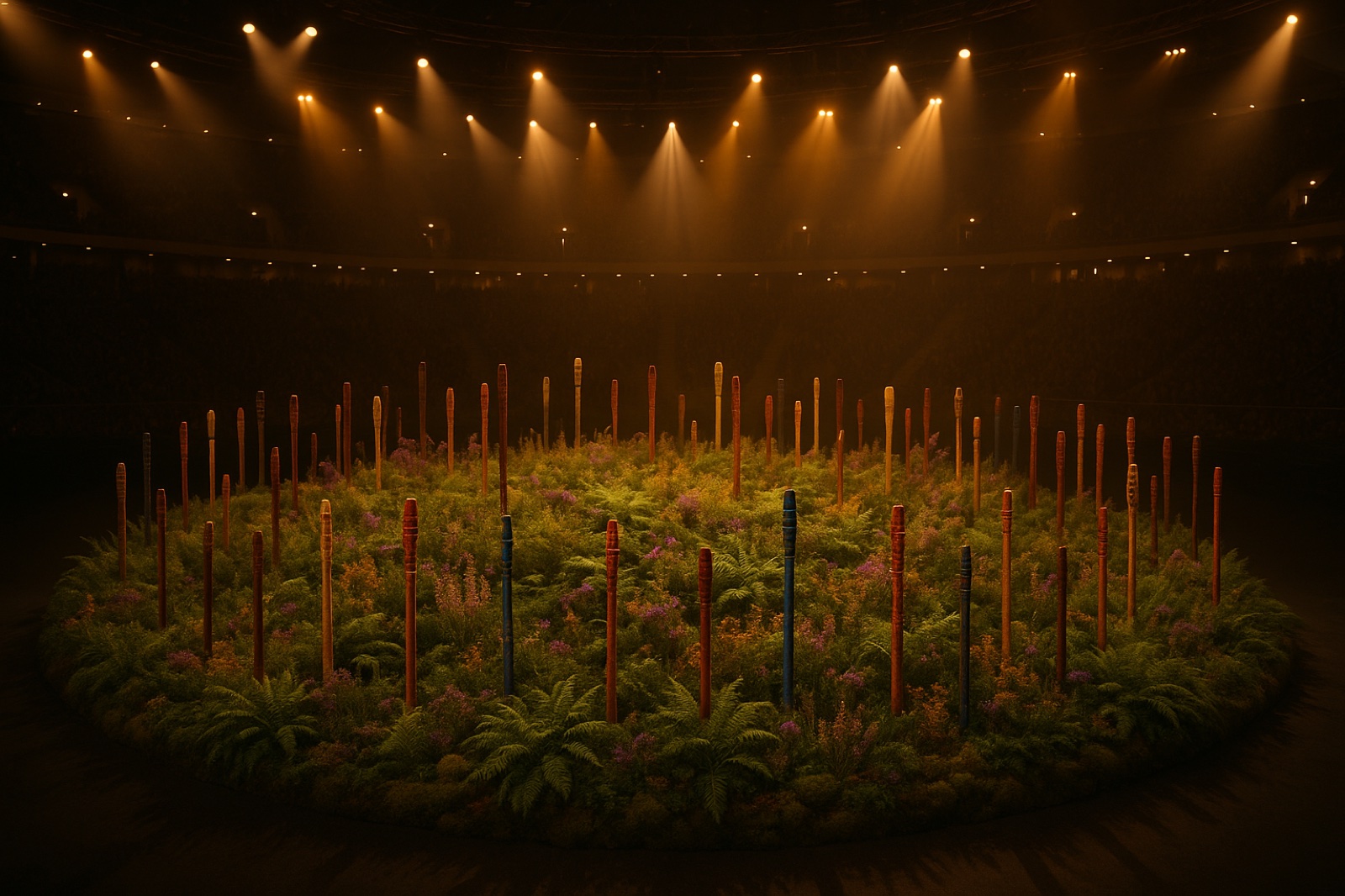
That was the image at the heart of the Commonwealth Games 2026 opening ceremony in Glasgow on Thursday night — not fireworks, not a mascot, not even King Charles III’s opening address, as good as that was. It was a 200-square-meter garden of native Scottish flora, built inside an arena, waiting to be filled with something that had traveled thousands of miles to get there.
What Actually Happened Inside the OVO Hydro
For the first time in the 96-year history of the Commonwealth Games, the opening ceremony wasn’t held under an open sky in a stadium built for it. It happened entirely inside the OVO Hydro, a 14,300-seat indoor arena on the banks of the River Clyde — a deliberate, and slightly risky, choice for a ceremony that usually leans on scale and spectacle to make its point.
It also flipped the usual order. Athletes from all 74 competing nations and territories didn’t wait until the end of the show to walk in, the way Olympic and Commonwealth ceremonies traditionally close. They came in first — right at the start, as if the point of the whole night was them, not the show built around them.
King Charles III and Queen Camilla were there in person to open it. Before the formalities, the pair made their entrance alongside Scottish cycling legend Sir Chris Hoy, in a nod to Glasgow’s own Doctor Who connection. When Charles finally spoke, he called the Commonwealth “a unique and extraordinary family of nations,” bound together by “shared values and friendship” rather than by geography or convenience. “As we gather,” he said, “we celebrate the dedication and talent of every athlete and team.”
Seventy-Four Journeys, One Garden
The detail that actually carried the night, though, wasn’t royal — it was botanical.
Each of the 74 competing nations and territories had spent months decorating its own ceremonial baton, a tradition unique to the Commonwealth Games. Every baton is different — carved, painted, beaded, or built to reflect something specific about the country that made it. Before Glasgow, each one had traveled its own long relay route through its home nation, carried by hand from town to town.
On Thursday night, all 74 of those separate journeys finally converged. As each delegation entered the Hydro, its baton was carried forward and planted into the center of the arena — into a single living garden, built from real Scottish ferns, heather, thistle, and moss, glowing under warm stage light while spotlit pipers circled the perimeter playing “Flower of Scotland.” One baton at a time, the empty garden filled in. By the time the last nation walked through, there wasn’t a gap left in it.
It’s a strange thing to watch 74 separate, competing delegations spend an entire ceremony building one shared object together, and somehow not lose anything of their own identity in the process. Each baton was still unmistakably its country’s. It just also, now, belonged to the garden.
Something Bigger Than a Ceremony
Here’s the part that’s easy to miss if you’re only watching for the spectacle: that image — every nation represented, every one distinct, all of them gathered in the same place without needing to compete for space — isn’t actually new. It’s one of the oldest hopes on record.
Long before anyone dreamed up an indoor arena or a garden built from a country’s own soil, there was already a vision described in Scripture of people from every nation, every tribe, every language, standing together in one place — not erased into sameness, but each one still fully themselves, still recognizably their own. Not competing for room. Just belonging, together, at the same time.
That’s the quieter reason a ceremony like this lands the way it does, even for people who couldn’t name a single athlete walking in. Something in us recognizes that image before we’ve thought about why. We’re wired to believe that “gathered, and still whole” is possible — that difference doesn’t have to mean division. Glasgow just gave 74 nations a garden to prove it, for one night, on purpose.
It’s the same instinct behind a packed stadium roaring for a team it’s never met, or a billion people staying up past midnight in time zones that make no sense, just to watch nations gather for something bigger than the score. We keep building these moments because some part of us already knows what they’re pointing at.
The Games themselves will spend the next ten days doing what Games do — medals, records, heartbreak, upsets nobody saw coming. But the garden stays planted the whole time. Every baton is still there, still rooted, still part of the same ground. That’s worth remembering on night one, before the scoreboard takes over the story.
A Question Worth Asking
When was the last time you felt like you truly belonged somewhere — not because you fit in perfectly, but because there was room for exactly who you are? What do you think it would take to build more of that, on purpose, in your own life? Tell us in the comments.
Share This
- 74 nations. One garden. Zero gaps by the time the last baton was planted. Glasgow 2026 just staged the most quietly profound opening ceremony in years. 🌿🏟️
- Every Commonwealth nation built its own baton, carried it thousands of miles, and planted it in the same garden as everyone else’s. Distinct, but never alone. That’s the whole story of belonging in one image.
- “A unique and extraordinary family of nations” — King Charles on the Commonwealth, opening the 2026 Games in Glasgow. Some gatherings are bigger than the medal count.
Common Questions About the Commonwealth Games 2026 Opening Ceremony
Where was the 2026 Commonwealth Games opening ceremony held?
The 2026 Commonwealth Games opening ceremony was held at the OVO Hydro in Glasgow, Scotland, on Thursday, July 23, 2026. It was the first Commonwealth Games opening ceremony ever held entirely indoors, inside a 14,300-seat arena rather than an outdoor stadium.
How many nations competed in the 2026 Commonwealth Games?
74 nations and territories took part in the 2026 Commonwealth Games, each entering the OVO Hydro at the very start of the opening ceremony — a first, since athletes traditionally enter at the end of Commonwealth and Olympic ceremonies.
What was the living garden at the Commonwealth Games ceremony?
The living garden was a roughly 200-square-meter installation built from native Scottish flora — including ferns, heather, thistle, and moss — placed at the center of the OVO Hydro. As each of the 74 nations entered, its uniquely decorated ceremonial baton was planted into the garden, reuniting all 74 batons after their individual relay journeys through their home countries.
Did King Charles attend the Commonwealth Games opening ceremony in person?
Yes. King Charles III and Queen Camilla attended in person and formally declared the Games open, with Charles describing the Commonwealth as “a unique and extraordinary family of nations” united by shared values and friendship.
When do the 2026 Commonwealth Games end?
The 2026 Commonwealth Games run through August 2, 2026, roughly ten days of competition following the July 23 opening ceremony in Glasgow.