 0
0
 0
0
Title: Bali’s Water Crisis: A Tipping Point for Agriculture and Community
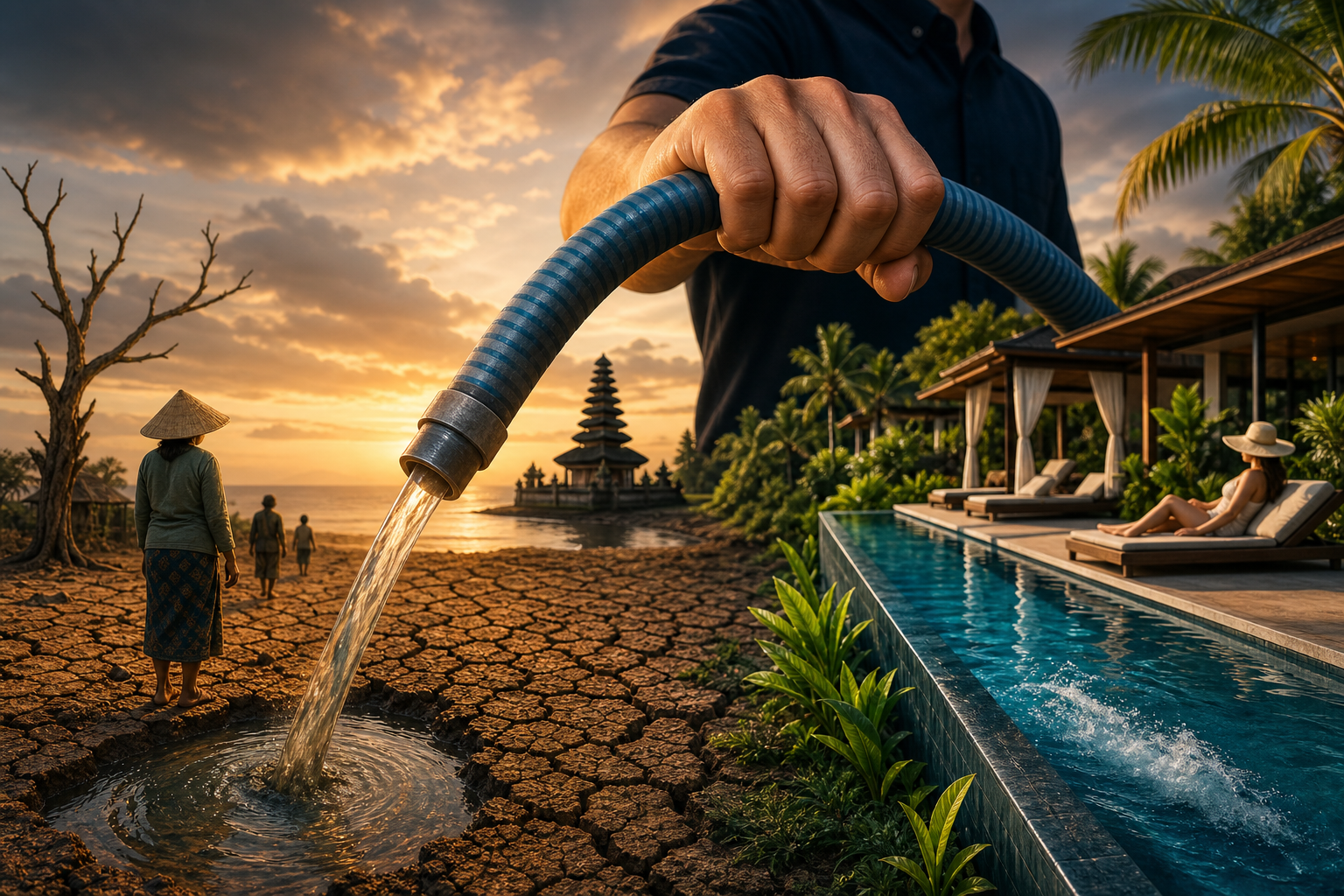
In a land renowned for its lush landscapes and vibrant culture, a troubling crisis is unfolding—one that threatens the delicate balance between its agricultural heritage and booming tourism. I Putu Partayasa, a 52-year-old farmer in Bali, captures this struggle poignantly as he digs his fingers into the dry soil of his rice terraces, exclaiming, “We have a big problem in the dry season.” With water resources dwindling, Parta represents a growing number of agriculturalists grappling with the impacts of industrial water extraction for tourism.
For centuries, Bali has relied on the subak system—an intricate water-sharing cooperative believed to have originated in the ninth century. This system is not just an irrigation model; it embodies a way of life that views water as a communal gift, rooted in respect for nature and spirituality. UNESCO recognized this unique framework in 2012 as a World Heritage site. However, as tourism grows rapidly (with visitors quadrupling to over 16 million annually), the transformative power of this influx has begun to overshadow traditional practices.
Groundbreaking research reveals that Bali has lost over 6,500 hectares of rice fields in the last five years, a decline that correlates directly with the 330% growth in tourism over 25 years. This paved path from agricultural land to tourist villas does not merely erase crops; it disrupts the natural water cycle, endangering local communities that depend on water for their livelihoods.
Groundwater extraction for tourism is not just a local issue; it poses ethical questions. As Parta poignantly observes, “Companies take our water and bring it to the tourism places.” In this modern age, an increasing number of farmers are selling their land, often left with no choice as their children seek opportunities beyond farming.
Reflecting on these circumstances invites deeper contemplation on stewardship, a principle reinforced throughout Scripture. In Genesis 2:15, we are reminded, "The Lord God took the man and put him in the Garden of Eden to work it and take care of it." This notion of stewardship implies a responsibility not only for ourselves but also for future generations—an ethos that Rudi Pak, a water priest in Northern Bali, embodies as he declines lucrative offers for his land. "We will keep this for the next generation," he insists. Such dedication to preservation connects to Christ’s teaching in Matthew 25:21, where we learn that faithful stewardship leads to greater responsibilities.
The juxtaposition of tourist luxury with the struggles of local farmers like Parta and Siska paints a stark picture: while profits soar, the degradation of local resources mars the landscape and the soul of Bali. As communities face the real effects of this crisis, the question arises: What can we learn from this situation?
In the spirit of collaboration and care, we are encouraged to reflect on our role in communities—whether near or far—and consider how our actions affect local environments and cultures. This crisis serves as a call to reevaluate our priorities, turning our focus from mere consumption to meaningful contributions that honor both our neighbors and the land.
As you ponder these themes, consider how you can embody stewardship and compassion in your own life, nurturing both flourishing communities and reverence for creation. In every choice, whether in our homes or across oceans, we are invited to remember that we are caretakers of this world, and our actions ripple far beyond what we can see.
If you want to want to know more about this topic, check out BGodInspired.com or check out specific products/content we’ve created to answer the question at BGodInspired Solutions
If positive Biblical wisdom matters to you, I’d love your support of the mission
Q&A about
Who is taking Bali’s water, and why should Christians care?
The water crisis in Bali is deeply rooted in tourism, where large resorts and businesses are extracting groundwater, impacting local communities. As Christians, we are called to be stewards of God’s creation, remembering that Jesus taught us to love our neighbors (Mark 12:31). Protecting resources like water aligns with our responsibility to care for those in need and the environment.
How does tourism affect the locals in Bali regarding water access?
Tourism in Bali often prioritizes profits over people, leading to inequitable access to clean water for locals. In Matthew 5:14-16, Jesus encourages us to let our light shine before others, which serves as a reminder to advocate for fairness and justice, ensuring that all families have access to essential resources like water.
What steps can Christians take to address water issues in places like Bali?
Christians can support sustainable tourism and local initiatives that focus on water conservation and equitable resource distribution. We can Be like Jesus, who fed the hungry and cared for the marginalized (John 6:35), by actively seeking solutions that help both the environment and the community, thereby embodying God’s love in action.
Is there a biblical perspective on the value of water as a resource?
Water is often seen in Scripture as a symbol of life and spiritual nourishment, such as when Jesus offers living water to the Samaritan woman (John 4:14). This aligns with the understanding that water is a precious gift from God, meant to sustain all of creation, reminding us to cherish and protect it for ourselves and future generations.