 0
0
 0
0
Astronomers Discover a Tiny Black Hole, Highlighting Precision of Modern Astronomy
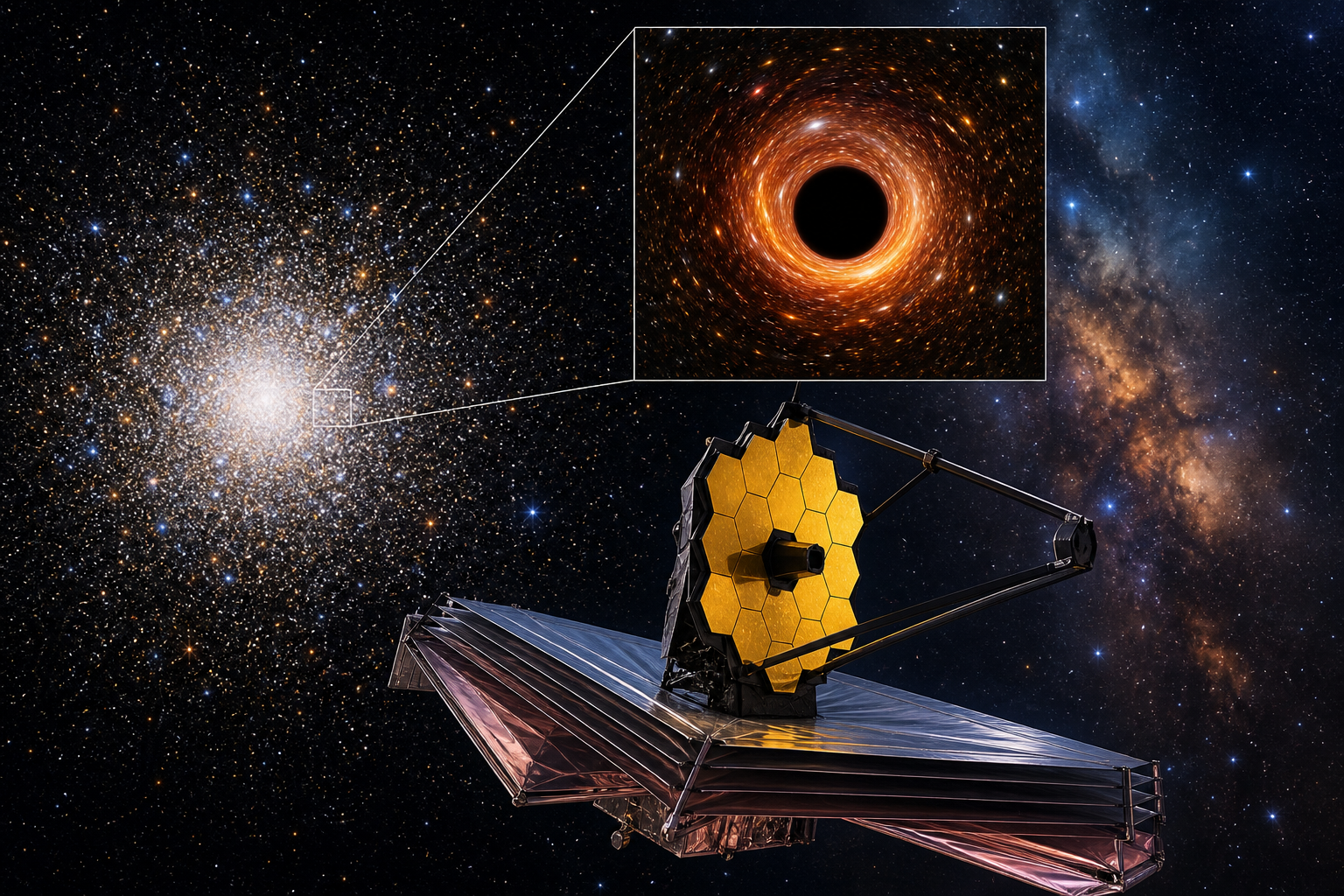
Astronomers have made a remarkable discovery within the star cluster Omega Centauri, revealing a tiny black hole that measures just 4.5 times the mass of our sun. While most black holes are famous for their vast scales—often weighing millions or even billions of suns—this miniature black hole named oMEGACat BH-2 offers new insights into the cosmos.
Located approximately 18,000 light-years away, its discovery underscores the advances in modern astronomy made possible by powerful tools such as NASA’s James Webb Space Telescope and Hubble. According to Matthew Whitaker, a researcher at the University of Utah, "the precision of these measurements is incredible, down to a fraction of a pixel," a testament to the extraordinary capabilities of contemporary telescopes.
Unlike the supermassive black holes that typically dominate headlines, oMEGACat BH-2 is a stellar black hole formed from the remnants of a dying star. It plays an important role in the ongoing study of black holes within dense clusters like Omega Centauri, where scientists suspect many more such objects remain hidden. This discovery raises intriguing questions about the nature of these black holes and their impacts on the surrounding stellar population.
The method used to uncover oMEGACat BH-2 involved meticulously analyzing 23 years of archival data. Scientists tracked a star, which is roughly three-quarters the mass of the sun, and noted its gentle wobbling—a behavior caused by the gravitational pull of the nearby black hole. This astrometric technique marks a significant achievement in the search for smaller black holes, which have proven elusive in previous studies.
Interestingly, this small black hole is not as massive as initial computer models had suggested, offering surprising insights into the formation of black holes in ancient star clusters. Researchers are now tasked with understanding how such a black hole could form from a metal-poor star.
As we marvel at these discoveries, a Christian perspective invites reflection on the intricacies and wonders of creation. Just as astronomers seek to uncover the mysteries of the universe, believers embrace the truth that "the heavens declare the glory of God; the skies proclaim the work of his hands" (Psalm 19:1, NIV).
This black hole’s elusive nature and hidden existence echo the biblical principle of seeking and finding deeper truths, both in nature and in our lives. Just as scientists inquire and discover, we are encouraged to seek understanding and wisdom in all things.
As you ponder this astronomical breakthrough, consider the deeper lessons it may hold: Sometimes, the most fascinating truths lie hidden, waiting to be uncovered. Each of us has the potential to explore the depths of our faith and the purpose that lies within us. Let this encourage you to seek and embrace the wonders of both the physical universe and your spiritual journey.
If you want to want to know more about this topic, check out BGodInspired.com or check out specific products/content we’ve created to answer the question at BGodInspired Solutions
If positive Biblical wisdom matters to you, I’d love your support of the mission
Q&A about
Can NASA’s discovery of a tiny black hole in an ancient star cluster challenge my faith?
Scientific discoveries like this can seem daunting, but they can also deepen our understanding of God’s creation. Romans 1:20 tells us that God’s invisible qualities and divine nature are evident in the world around us. Embracing scientific exploration can enhance our appreciation for the Creator and His magnificent universe.
How does a tiny black hole relate to God’s plan for the universe?
The existence of black holes reminds us of the complexity and vastness of God’s creation, reflecting His omnipotence. Colossians 1:16 states that “all things were created through Him and for Him,” indicating that everything, even mysterious phenomena like black holes, fits into His divine plan.
Should I be worried about black holes if they’re in ancient star clusters?
While black holes may sound threatening, we can trust in God’s sovereignty over all creation. Philippians 4:6-7 encourages us not to be anxious about anything, knowing that God is in control. Our focus should be on His promises and the eternal hope we have through Christ.
What can I learn about faith from NASA’s findings about black holes?
NASA’s findings can serve as a reminder of the vast power and wisdom of God. As we marvel at the universe, we might remember Matthew 19:26, where Jesus says that with God, all things are possible. Our faith can grow as we acknowledge His hand in all aspects of creation, even the most mysterious ones.