 0
0
 0
0
Ancient Roman Shipwreck Discovered off Sicily: A Window into Our Shared Heritage
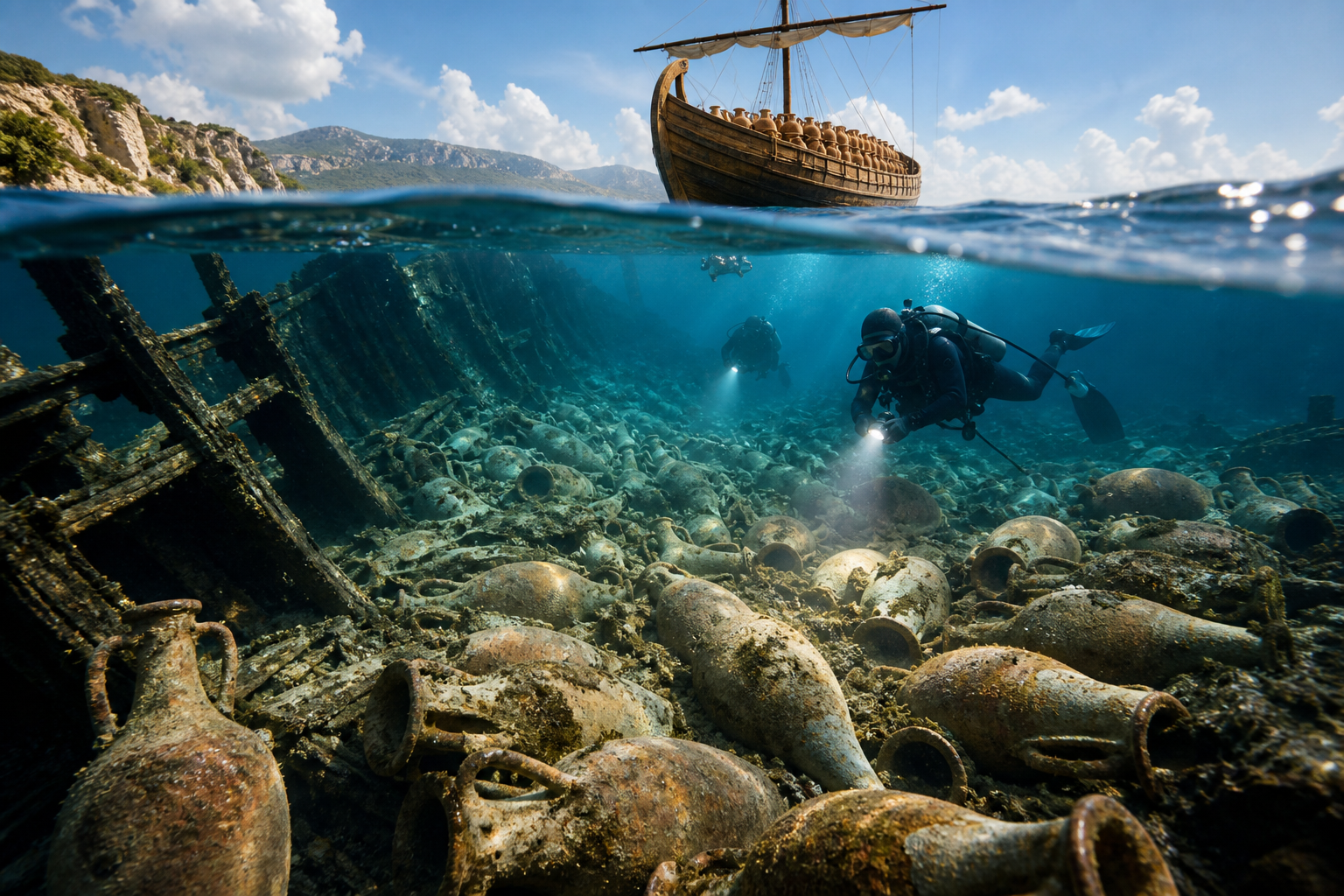
A remarkable archaeological find has emerged from the depths of the Mediterranean Sea as a 2,100-year-old Roman shipwreck was discovered approximately three miles off the coast of Mazara del Vallo in Sicily. Carrying around 500 amphorae—ancient ceramic jars traditionally used to transport goods, particularly wine—the ship reveals a fascinating glimpse into the past.
The discovery was made possible thanks to the keen eyes of local fishers who reported the site to Italy’s Carabinieri cultural heritage protection squad. Subsequent investigations by professional divers and underwater cameras led to the identification of the ship at a depth of about 46 meters (151 feet). Culture Minister Alessandro Giuli lauded it as “one of the most important underwater archaeological discoveries of recent years,” underscoring its significance in showcasing the trade routes that intertwined civilizations across the Mediterranean.
The figures involved in this discovery were awe-inspired by what they found. Diver Giacomo De Mola shared, "Visibility wasn’t the best … below me was a vast expanse of amphorae,” noting that he felt “among the first humans, in nearly 20 centuries, to see that place again." Such feelings of wonder often echo the biblical call to appreciate creation’s splendor, which can inspire us to be stewards of both history and the environment.
This shipwreck is part of a broader narrative of maritime archaeology in the region. Most of the amphorae found aboard the ship are of the Dressel 1A type, essential for understanding the commercial networks that existed between Italy and other Mediterranean regions between the second and first centuries BC.
What connects this ancient artifact to contemporary life? In the Bible, the concept of stewardship is vital. As one verse reminds us, “The earth is the Lord’s, and everything in it, the world, and all who live in it” (Psalm 24:1). This principle serves not only as a guide for how we engage with the earth itself but also how we treat the relics of our shared human history. Each discovery, like this shipwreck, offers precious fragments of stories waiting to be told and preserved.
In the coming months, the Sicilian superintendency of the sea intends to undertake thorough documentation and research to better understand the wreck’s history, its cargo, and the archaeological implications. Such initiatives not only preserve our past but also foster a sense of community around shared heritage.
As we reflect on this captivating find, let it inspire us to consider our role in preserving not only the past but the shared values that connect us. Each discovery can teach us patience, curiosity, and respect for the interconnectedness of all cultures—a reminder that we, too, are a part of a larger narrative. Let’s approach our lives with the same curiosity and reverence, recognizing that we belong to something much greater than ourselves.
If you want to want to know more about this topic, check out BGodInspired.com or check out specific products/content we’ve created to answer the question at BGodInspired Solutions
If positive Biblical wisdom matters to you, I’d love your support of the mission
Q&A about
Why is the discovery of 500 amphorae from a Roman shipwreck off Sicily significant for understanding early Christian trade?
The discovery highlights the extensive trade networks during the Roman Empire, which facilitated the spread of Christianity. Just as Paul traveled through cities spreading the Gospel (Acts 16:9-10), these trade routes were crucial for early Christian missionaries to share their faith across cultures and regions.
How does this shipwreck relate to biblical teachings on stewardship and resource management?
Finding a ship filled with amphorae can remind us of the importance of managing resources wisely. In the parable of the talents, Jesus teaches that we are to invest what we have responsibly (Matthew 25:14-30). The remnants of this ancient trade might inspire us to reflect on how we use our own resources for God’s work.
Can the story of this ancient shipwreck encourage faith in God’s providence during trials?
The shipwreck serves as a metaphor for the uncertainties in life, much like the storms faced by the disciples on the Sea of Galilee (Mark 4:35-41). Even in wreckage, there is hope; God can bring purpose from our struggles, leading us to deeper faith and reliance on His provision.
What can we learn about community and fellowship from the discovery of this shipwreck?
The presence of amphorae suggests a communal activity of trade and sharing goods, reflecting the early Christian community’s emphasis on fellowship (Acts 2:44-47). Just as the early believers gathered together to support one another, these findings remind us of our call to build and nurture community, displaying love for one another in tangible ways.