 0
0
 0
0
Unlocking Martian Mysteries: The Quest for Water and Its Implications for Humanity
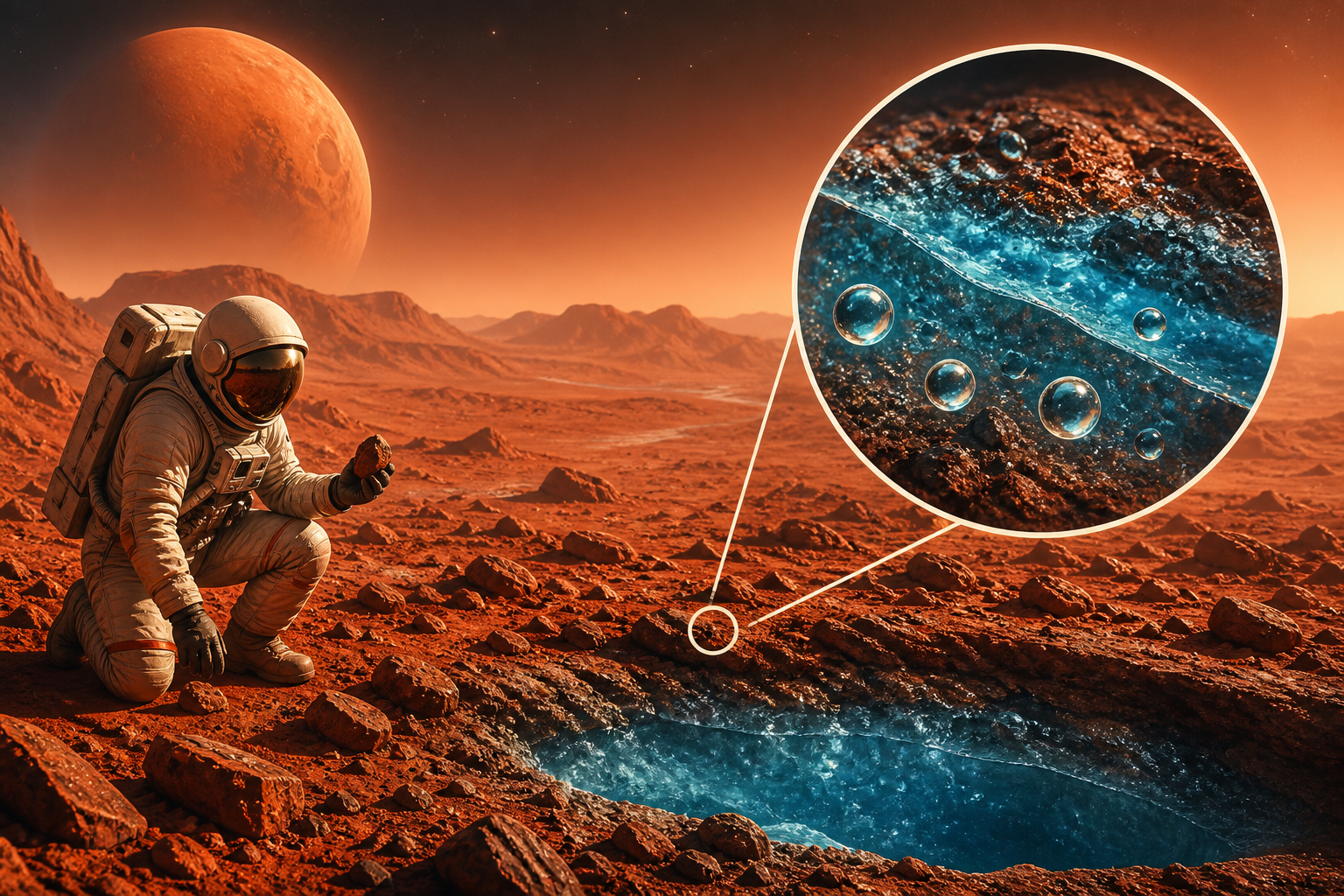
As humanity dreams of sending crewed missions to Mars, a pivotal question arises: where should astronauts land if they need to access water beneath their feet? This question isn’t merely academic; it speaks to the heart of in situ resource utilization (ISRU), a concept that could transform our ability to explore other planets. By producing drinking water and oxygen from Martian subsurface ice, astronauts could significantly ease the logistical burden of transporting these essentials from Earth.
However, challenges abound in locating this vital resource. Mars, with its polar ice caps, presents a tricky geography for prospective missions. While the poles hold ice, the Sun scarcely shines there, limiting the effectiveness of solar panels. Conversely, the equator—ideal for human habitation—has already seen its ice sublimated away into the thin atmosphere, as demonstrated by NASA’s Phoenix lander, which captured footage of ice disappearing shortly after uncovering it.
Despite these obstacles, hope remains in the Martian mid-latitudes, where new research is providing insights into the presence of subsurface ice. Two papers from the Planetary Science Journal, authored by Hanna Sizemore and Samuel Courville of the Planetary Science Institute, leverage data gathered by the SWIM project. This initiative operates by analyzing how the ground’s temperature changes in response to the presence of ice. Through various instruments orbiting Mars, scientists have been able to indirectly detect buried ice deposits.
Sizemore’s research urges caution against relying on a single data source. She emphasizes the value of consensus among different maps and instruments to isolate areas of agreement, thus creating a more reliable framework for exploration. Where data diverges, it uncovers regions that require further robotic investigation—potentially saving human crews from unfavorable conditions.
On the other hand, Courville’s work adds another layer of utility by converting observed data into probabilities. For mission planners, understanding that there is a 64% chance of finding ice in a specific location, rather than just a binary "yes or no," is invaluable for strategizing future missions.
Yet, this ambitious endeavor faces a significant limitation: current technologies only provide insight into the top meter of Martian soil. To delve deeper, high-frequency radar capable of penetrating below five meters is essential—an innovation yet to be realized.
These tantalizing revelations mirror a broader theme found in Scripture. Just as scientists use various methods to discern deeper truths about a seemingly inhospitable planet, individuals are encouraged to seek the deeper wisdom that lies within their own lives and the world around them. The Book of Proverbs reminds us, “It is the glory of God to conceal a matter; to search out a matter is the glory of kings” (Proverbs 25:2, NIV).
The exploration of Mars challenges us to consider our purpose and the essence of our journey. As we search for resources on another planet, let us also ponder the resources we have on Earth—the relationships, truths, and values that sustain and nourish us. There is beauty in both the pursuit of knowledge and the growth that comes from seeking understanding, whether it leads us to the depths of Martian ice or the depths of our own hearts.
In this quest for water on Mars, may we also find a reflection of our spiritual exploration. As we seek knowledge and truth, let us remember to extend grace and compassion, nurturing one another in our shared journey.
If you want to want to know more about this topic, check out BGodInspired.com or check out specific products/content we’ve created to answer the question at BGodInspired Solutions
If positive Biblical wisdom matters to you, I’d love your support of the mission
Q&A about
Are scientists really optimistic about finding water on Mars?
While there is growing optimism based on recent discoveries, it’s essential to remember that God’s creation is vast and mysterious. Just as Jesus taught us to look for signs of the Father in nature (like the lilies of the field in Matthew 6:28-30), we should approach the search for water on Mars with faith and awe, trusting in His design and purpose.
How does the idea of water on Mars connect with God’s creation?
The pursuit of water on Mars can remind us of the living water Jesus spoke about in John 4:14, which offers spiritual sustenance. Our exploration of the universe reflects a desire to understand God’s handiwork and can lead us to praise Him for His infinite creativity and the hope of life in various forms throughout creation.
What should Christians think about the potential for life on Mars if water is found?
If water is discovered and suggests the possibility of life, it’s a call to marvel at God’s creativity, understanding that life on Earth and potentially elsewhere is part of His divine plan. Romans 1:20 tells us that God’s attributes are clearly seen in creation, urging us to share the gospel story even beyond our planet.
Is it okay for Christians to support missions to Mars in search of water?
Supporting missions to Mars can be seen as a way to explore the wonders of God’s creation, aligning with the command to "fill the earth and subdue it" (Genesis 1:28). As we seek to uncover the mysteries of the universe, it’s important to remember our ultimate mission is to share God’s love, embodying the commandment of love from John 13:34 in every endeavor.