 0
0
 0
0
For about a hundred years, the deal with the adult brain looked simple and a little cruel. You get what you get. Damage a patch of it — a stroke, an injury, a disease that quietly eats away at tissue — and the brain can sometimes route around the hole. But it does not fill the hole back in. What was lost stayed lost.
A study published in Nature Neuroscience in July 2026 put a crack in that. A team at the University of Zurich watched living brains rebuild a damaged patch in real time, week after week, and found that the adult brain can repair itself in a way nobody had described before.
They were watching mice. That matters a great deal, and I will come back to it before the end. But what the mice did was strange enough to be worth understanding anyway.
What scientists believed about brain damage
Your brain is not only neurons. Neurons get all the attention. They are the cells that fire, that carry the signal, that everyone means when they say “brain cell.” But they share the place with a huge population of cells that never fire at all.
The biggest of those groups is called astrocytes. They help hold the barrier between blood and brain. They feed neurons. They clean up the chemical leftovers after a signal passes. They help decide which connections between neurons grow stronger and which fade out.
If neurons are the wiring, astrocytes are closer to the power grid, the plumbing and the maintenance crew all at once.
And the assumption was that if an adult lost a patch of them, that patch was gone. Neurons famously do not come back after most injuries. Astrocytes were thought to be in the same boat. Surviving cells could swell up and scar over the gap, but nobody expected the network itself to be rebuilt.
The cells everyone called glue
Here is the part of this story that surprised me most, and it has nothing to do with the new research.
These cells were dismissed before anyone had properly seen them.
In 1856, the pathologist Rudolf Virchow gave the non-neuron tissue of the brain a name: neuroglia. Glia is Greek for glue. That was the whole idea. A kind of connective filler, holding the important parts in place.
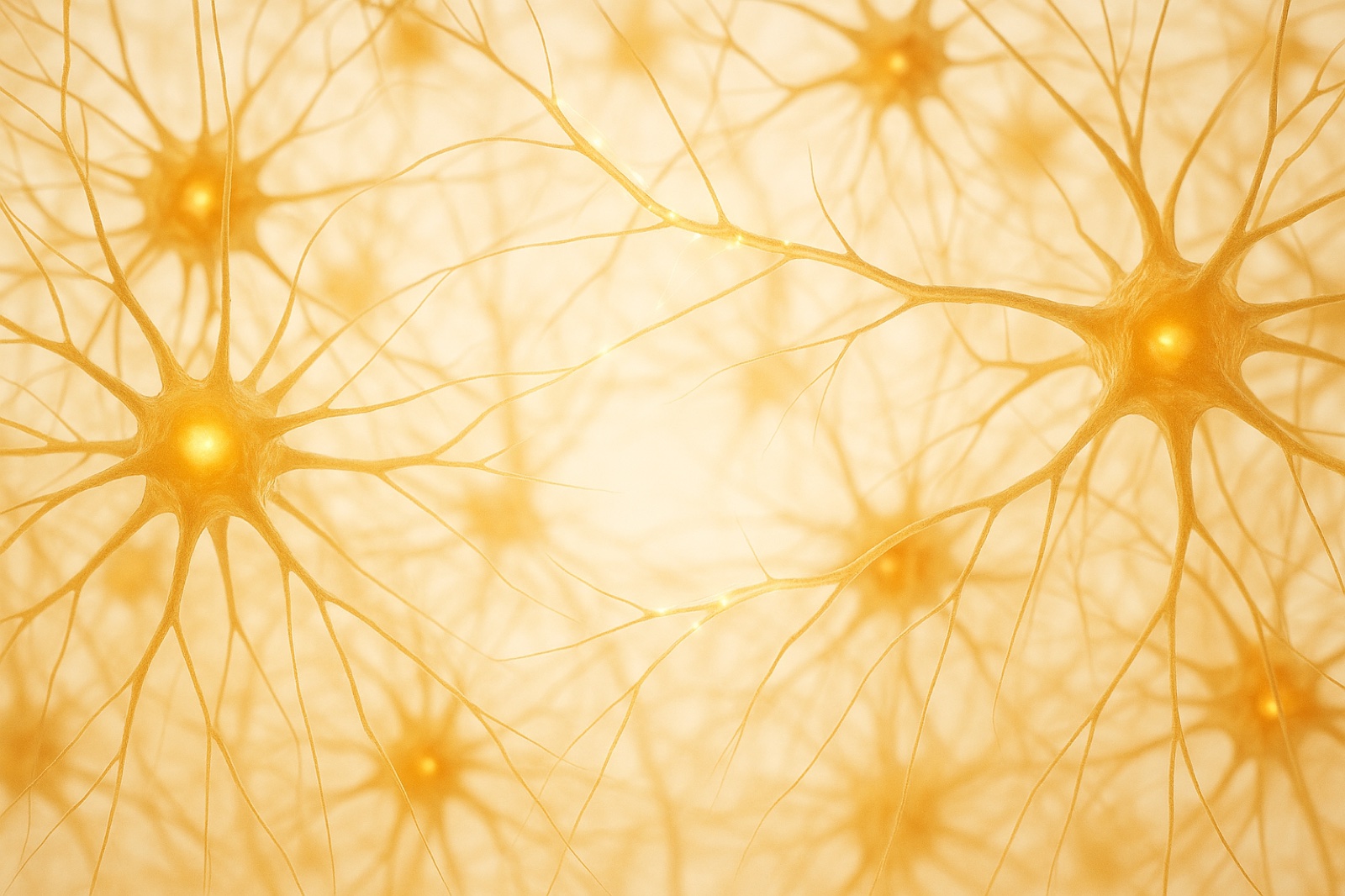
The name we use today came thirty-seven years later. In 1893, Mihály Lenhossék called them astrocytes, from astron, meaning star, because under a microscope that is exactly what they look like. A small body with long arms reaching out in every direction.
So the order went like this. Called glue first. Named for their shape second. Studied seriously a very long time after that. For decades the exciting work was all on neurons, and astrocytes were the packing material you looked past on the way to the signal.
That view has been quietly coming apart for years. It is the same shift behind the recent work on what happens to new brain cells in depression, and behind the findings on what changes in the brain when someone stops drinking. Over and over, the parts treated as background turn out to be doing something.
How the adult brain can repair itself, according to the new study
The Zurich team was led by Bruno Weber, with Marina Herwerth and Matthias Wyss as lead authors. They used a method called two-photon microscopy, which lets you look at living brain tissue inside a living animal, again and again, over weeks.
That is the quiet advantage here. Instead of a set of still photographs taken from different animals at different moments, they got something closer to a film of one small place healing.
They removed a precise patch of astrocytes. The damaged spot was tiny, just under half a millimetre across, smaller than the head of a pin. Then they watched.
What happened next had not been described before.
The surviving astrocytes at the rim of the wound did not crawl into the empty space. They stayed exactly where they were. Instead, they divided — and then pushed the nucleus of the new daughter cell down one of their own long arms, sliding it out across the gap into the empty ground.
The cell body held its post. It sent the nucleus.
For a stretch of time the researchers saw cells sitting in a drawn-out state with more than one nucleus inside them, carrying the new one before handing it along. Those nuclei travelled long distances through the star-shaped extensions to reach the emptied territory, and the astrocyte network was knitted back together.
The team also mapped which genes switched on while this was happening, and found a set of pathways that turn on for the repair and then go quiet again afterwards.
What this study does not prove
This is where being honest matters more than being excited.
This was done in mice. It is not a human finding. Nobody has watched this happen inside a person’s brain, and mouse biology and human biology part ways often enough that the gap is real, not a formality.
It is also not a cure for anything. What the researchers reported is that the cells repopulated the damaged area and the network was restored. They did not report that the animals got a lost ability back. Cells filling a gap and function returning are two different claims, and only the first one was shown.
The reason the team cared about astrocyte loss in the first place is a human illness called neuromyelitis optica spectrum disorder, an autoimmune condition in which the body attacks astrocytes specifically. The hope stated in the work is modest and specific: if these repair mechanisms could be switched on deliberately, that might one day help recovery. Might. One day.
So the honest version is this. The adult brain has a repair mechanism nobody knew about, shown in mice, at a small scale, with no promise attached to your injury or anyone else’s. That is still remarkable. It simply is not a miracle cure, and the researchers never claimed it was.
The trouble with calling anything filler
Still, think about what had to happen for this to be found at all.
Someone had to point the most careful instrument they had at the cells that were sorted, a century and a half earlier, into the pile marked not the important part. The glue. The packing. And the packing turned out to be running the repair crew.
There is an old idea, much older than microscopes, sitting underneath a lot of what people have believed about how the world is put together — that nothing God made was placed there only to take up space. That the parts which look like background are usually load-bearing, and the stretches of a life that seem to be there for no reason are often the ones doing work you cannot see from where you are standing.
It is a strange thing to find that idea holding up inside a mouse’s brain. But here we are.
And notice which direction the mistake runs. We almost never overestimate the quiet parts. We look straight past them for a hundred and fifty years, and then act surprised.
What to do with this
Honestly, there is nothing to do with it. Not every piece of knowledge comes with an instruction attached.
But it does adjust something. If you have been told that some part of you is permanently finished — a damaged part, a wasted stretch of years, a capacity you assume is not coming back — it is worth knowing that the confident version of that story has been wrong before. Recently. In the exact place people were most sure about.
If that lands somewhere personal, we built a free What Is My Purpose? assessment for that question. It takes a few minutes and it does not pretend to have a tidy answer waiting.
The cell at the edge of the wound does not abandon its post. It just quietly sends something across.
A Question Worth Sitting With
Science spent a century and a half treating these cells as packing material. What do you think makes an entire field look past something for that long — the tools they had, or the story everyone had already agreed on? Leave a comment below. I would genuinely like to know which one you would bet on.
Share This
Found this interesting? Here are a few ways to pass it along:
- The brain cells science called “glue” for 150 years turn out to be the ones that rebuild damaged brain tissue. They don’t even move in — they stay put and send a nucleus down their own arm. https://bgodinspired.com/index.php/bgodinspired-news/bgodinspired-science-news/adult-brain-can-repair-itself/
- In 1856 someone looked at these brain cells and named them after glue. In 2026 someone watched them repair the brain. A good reminder that “unimportant” is usually just a guess nobody rechecked. https://bgodinspired.com/index.php/bgodinspired-news/bgodinspired-science-news/adult-brain-can-repair-itself/
- New study in Nature Neuroscience: the adult brain can rebuild a damaged patch of tissue, at least in mice. The repair crew is the cell type everyone spent a century ignoring. https://bgodinspired.com/index.php/bgodinspired-news/bgodinspired-science-news/adult-brain-can-repair-itself/
Questions People Ask About Adult Brain Repair
Can the adult brain repair itself?
A study published in Nature Neuroscience in July 2026 by researchers at the University of Zurich found that the adult mouse brain can rebuild a damaged patch of support cells called astrocytes. Using two-photon microscopy on living mice over several weeks, the team watched surviving astrocytes at the edge of a small lesion divide and send new cell nuclei into the emptied area, restoring the astrocyte network. This was demonstrated in mice, not in humans, and the study showed cells repopulating the damaged region rather than lost function returning.
What are astrocytes and what do they do?
Astrocytes are star-shaped cells in the brain and spinal cord that do not fire electrical signals the way neurons do. They help maintain the barrier between the bloodstream and the brain, supply neurons with energy, clear away chemical byproducts after signalling, and influence which connections between neurons strengthen or weaken. They were long treated as passive support tissue, and are now understood to take an active role in how the brain works and repairs itself.
How do astrocytes repair brain damage?
In the 2026 University of Zurich study, astrocytes at the perimeter of a small brain lesion in mice did not migrate into the damaged zone. They stayed in place, divided, and then moved the nucleus of the newly formed daughter cell along one of their own long star-shaped extensions and into the empty area. Researchers observed cells holding more than one nucleus during this process, and identified genes and signalling pathways that switch on temporarily while the repair is underway.
Does this study mean brain damage in humans can be reversed?
No. The 2026 Nature Neuroscience findings on astrocyte repair come from mouse models, and no equivalent process has been observed in a human brain. The study also documented cells repopulating a damaged area, not the recovery of lost abilities. The researchers described it as a possible starting point: if the repair mechanisms could be activated deliberately, that might eventually support recovery in conditions involving astrocyte loss, such as neuromyelitis optica spectrum disorder.
Why were astrocytes originally called glue?
In 1856, the German pathologist Rudolf Virchow named the non-neuronal tissue of the brain neuroglia, from the Greek word for glue, because he understood it as connective filler holding the important cells in place. The term “astrocyte” came later, coined in 1893 by Mihály Lenhossék from astron, meaning star, after the cells’ branching shape. The original framing as inert packing material shaped how these cells were studied for well over a century.