 0
0
 0
0
Somewhere out in deep space, from a moment just 660 million years after the universe began, there is an object breaking the rules. It’s shining far brighter than it has any right to. Astronomers have a name for it now: a black hole star. And nobody expected to find one this early, or this bright.
For years, the James Webb Space Telescope has been photographing the deepest, oldest slice of sky humans can reach — a place so far away that looking at it is like looking back in time, almost to the beginning of everything. Scattered across those images, astronomers kept spotting strange little smudges of red light. They nicknamed them “little red dots.” Too small to be galaxies. Too bright to be ordinary stars. Too red to fit anything on the books. For a while, nobody quite knew what they were looking at.
A Black Hole Wearing a Costume
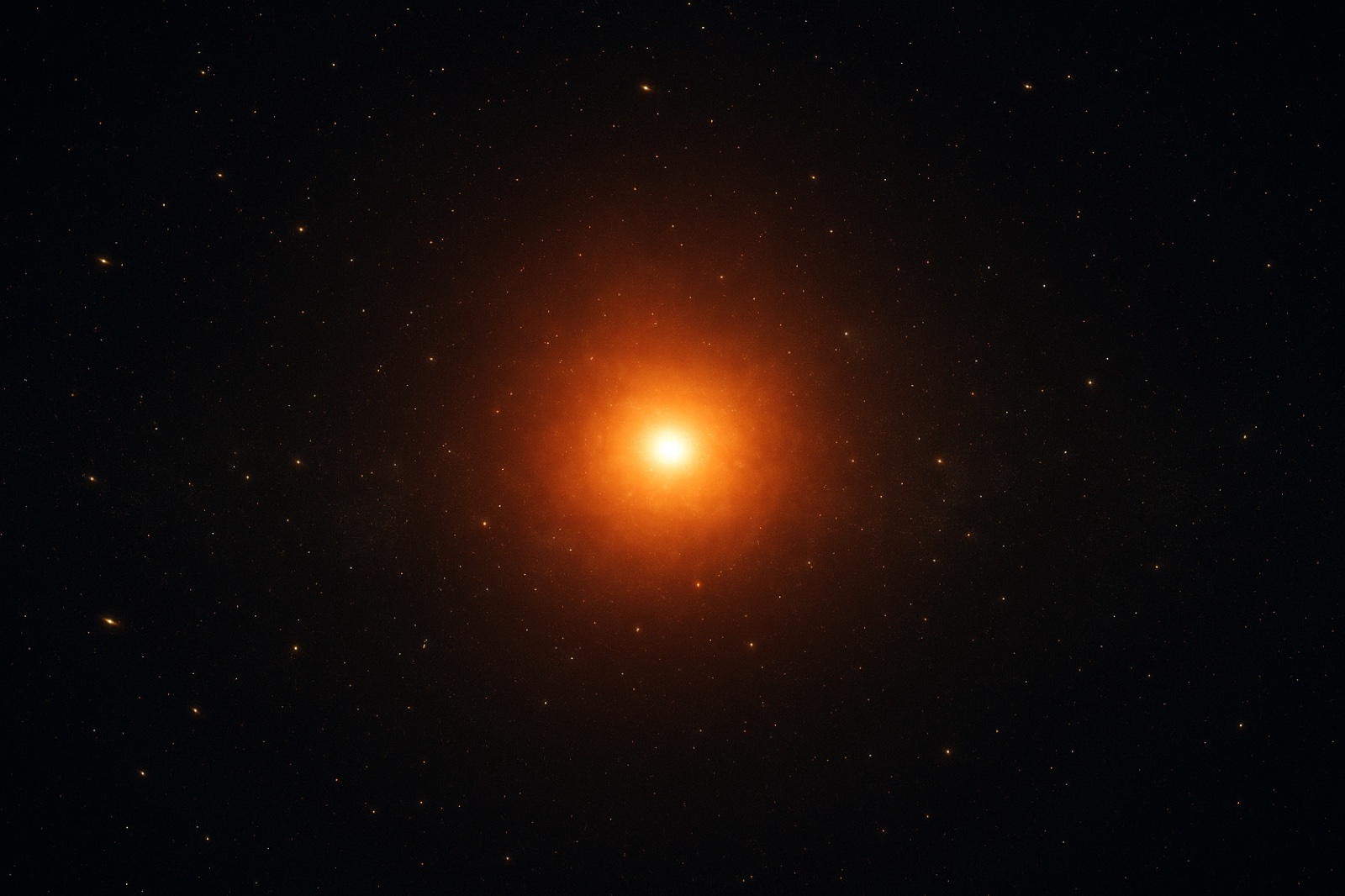
A new study, led by astronomer Rohan Naidu at the University of Hawaii and published in the journal Nature this month, says it has found the answer hiding inside one of them. And the explanation sounds like something out of a science fiction script: a black hole, wrapped in a thick cocoon of hydrogen gas, glowing so intensely from within that cocoon that from a distance, across billions of light-years, it looks exactly like a star.
Black holes themselves don’t glow. What glows is the material spiraling into one — gas and dust heating up as it falls, throwing off light before it crosses the point of no return. Normally, that light flickers and varies as the black hole feeds unevenly. But wrap that whole feeding process in a dense enough shell of hydrogen, and the light gets trapped, scattered, and re-radiated outward in a steadier, more star-like glow. That’s what researchers believe is happening 660 million years after the Big Bang, at a moment astronomers call cosmic dawn — when the first stars and galaxies were only just beginning to take shape.
Why “Little Red Dots” Confused Everyone Since 2022
James Webb has been finding these little red dots since it started scanning the early universe in 2022, and they’ve been a genuine puzzle ever since. They’re compact — far smaller than a galaxy should be at that age. They’re intensely red, partly because their light has been stretched across billions of years of cosmic expansion, and partly because whatever produces that light seems to run hotter and stranger than a normal young galaxy full of stars. And there are a lot of them. Enough that astronomers couldn’t just wave them off as a rare fluke.
The leading guess for a while was that these were simply very early, very compact galaxies, packed unusually tight with newborn stars. This new research points somewhere else: that at least some — maybe many — of these little red dots aren’t galaxies full of stars at all. They’re black holes, still swaddled in the gas they’re feeding on, doing an extremely convincing impression of a star.
The Part That Shouldn’t Be Possible
Here’s where it gets genuinely strange, even to the astronomers who found it. There’s a well-known ceiling in physics for how brightly an object powered by a black hole’s feeding can shine — a point where the object’s own light pushes back against the material trying to fall in, choking off its own fuel supply. It’s one of the more reliable limits in astrophysics. This object appears to be shining past it. Brighter than a black hole its estimated size should be physically capable of producing, at a point in cosmic history when nothing this massive, this bright, or this early was supposed to have had time to form yet.
That’s the detail that makes this discovery matter beyond just solving one visual mystery. If black hole stars like this one turn out to be common across the early universe, they may help explain something astronomers have quietly wondered about for years: how the enormous black holes sitting at the centers of galaxies today got so big so fast. A head start this early, shining this impossibly bright, might be exactly the kind of jump-start those black holes needed.
Scientists who study black holes closer to home already know how good these objects are at hiding until something forces them into view. This one just happened to announce itself from the edge of everything, brighter than the rules said it should be able to.
There’s an old, old story — maybe the oldest cosmology many of us ever hear — that opens on almost the same image. In the beginning, the account goes, everything is formless. Empty. Dark. And then, before there’s a sun, before there’s a moon, before a single star has been placed anywhere in the sky, there is light. Light comes first, ordering the darkness, arriving before there’s any source anyone could point to and fully explain. Scientists spent years staring into the deepest, oldest sliver of the universe they could reach, hunting for whatever was throwing off light that shouldn’t have been possible yet at that age. And what they found waiting there, right at the edge of everything, 660 million years into existence, was — light. Early light. Impossible light, arriving ahead of schedule and burning brighter than the physics textbooks allow. Maybe that’s coincidence. Or maybe some patterns just keep showing up at the beginning of things, no matter who ends up telling the story.
What Happens Next
Naidu’s team and others are already combing back through James Webb’s catalog of little red dots, checking which ones might be more black hole stars in disguise. Every one they confirm adds another data point to a much bigger question astronomers have been chasing for decades: how a universe that started as close to nothing at all ended up, so quickly, so full of light. If a piece of Caltech-confirmed stardust older than our own sun can turn up inside a 1969 meteorite, it’s a safe bet the early universe still has plenty more surprises like this one left to hand over.
For now, there’s a black hole out past almost everything else we can see, still wearing its borrowed starlight, still shining brighter than it’s supposed to. Nobody fully knows why yet. But somewhere in figuring that out, scientists keep bumping into the same old idea: that light shows up first, and it shows up on purpose. If wondering how far back that pattern goes is the kind of thing that keeps you up at night in a good way, our How Old Is the Universe? Explorer is a fun place to keep pulling that thread.
Discussion Question
Does knowing the universe seems to keep producing “impossible light” at its earliest moments change how you think about how it all got started? Tell us in the comments.
Share This
- Astronomers just found a black hole disguised as a star from 660 million years after the Big Bang — and it’s shining brighter than physics says it’s allowed to.
- Turns out some of James Webb’s mysterious “little red dots” might be black holes wrapped in glowing hydrogen cocoons, putting on a convincing impression of a star. Wild.
- The earliest “impossible light” astronomers have ever found just showed up 660 million years after the Big Bang. Scientists are still working out why it’s so bright.
Questions People Are Asking
What is a “black hole star”?
A black hole star is a black hole wrapped in a thick, dense cocoon of hydrogen gas. As material falls into the black hole, the surrounding gas traps and re-radiates the light produced, creating a steady, star-like glow bright enough that from a distance it can look like an ordinary star rather than a black hole.
What are James Webb’s “little red dots”?
“Little red dots” are compact, unusually bright, reddish objects that the James Webb Space Telescope has been spotting in the early universe since it began operating in 2022. They are smaller than typical galaxies of their age but far brighter than expected, and astronomers have debated what they actually are ever since they were first noticed.
Why is this object “too bright” according to physics?
There is a known physical limit, related to how a black hole’s own radiation pushes back against the material falling into it, that caps how bright an object powered by a feeding black hole should be able to shine. This newly identified object appears to shine beyond that limit for its estimated size, which is part of why researchers describe it as defying expectations.
How old is the universe in this discovery, and what does “660 million years after the Big Bang” mean?
The object was observed at a point in cosmic history just 660 million years after the Big Bang, during what astronomers call cosmic dawn — the era when the universe’s first stars and galaxies were still forming. Because light takes time to travel, observing an object this far away means seeing it as it looked at that early moment in the universe’s history.
Who discovered this and where was it published?
The research was led by astronomer Rohan Naidu at the University of Hawaii and published in the journal Nature in August 2026. The findings may help explain the nature of the “little red dots” James Webb has been photographing in the early universe since 2022.