 0
0
 0
0
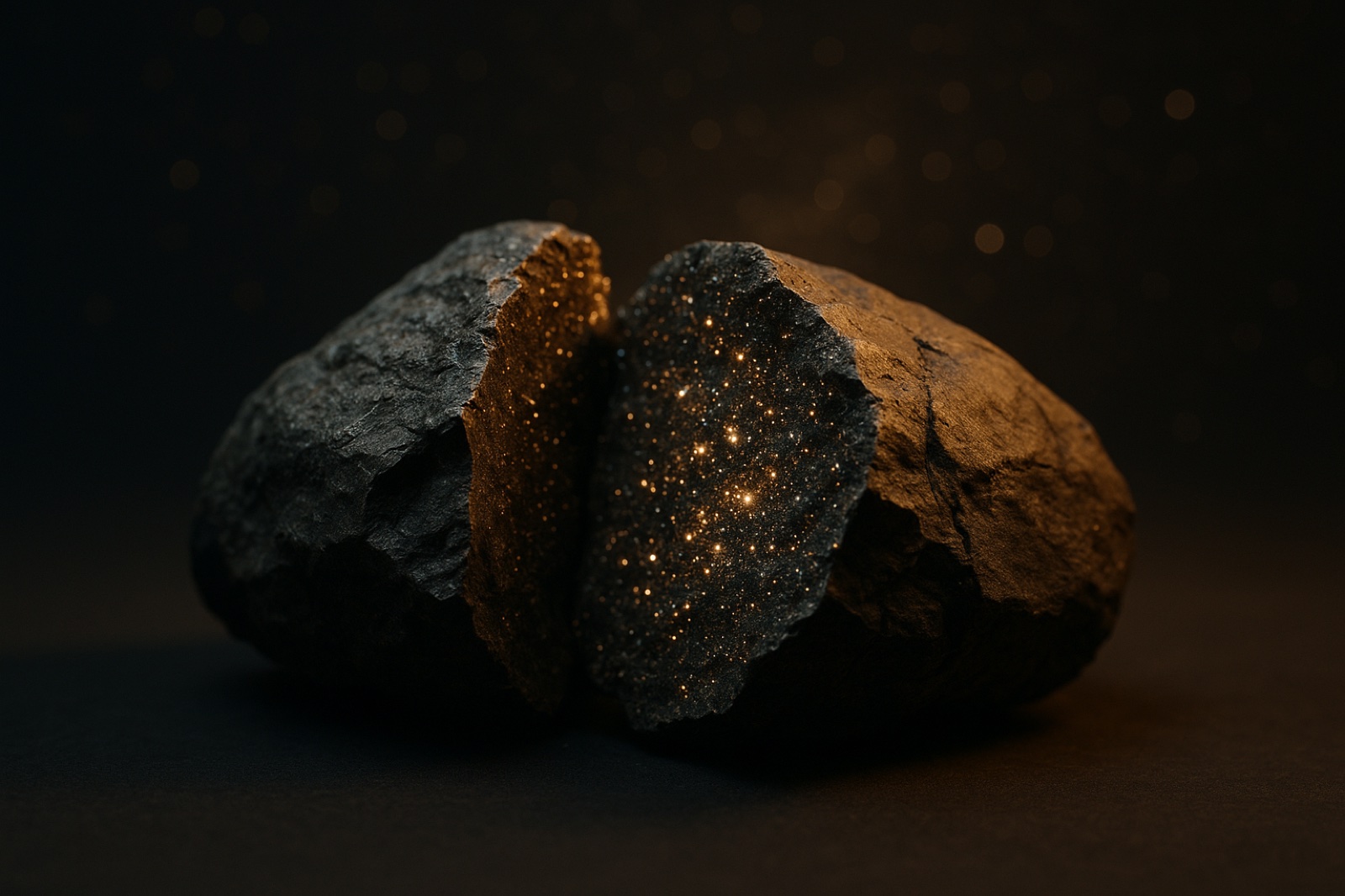
In 1969, a fireball tore across the sky over northern Mexico and shattered over the town of Pueblito de Allende, raining down thousands of dark rock fragments onto the desert floor. Locals gathered pieces before scientists even arrived. It turned out to be one of the most important space rocks ever to land on Earth — and more than fifty years later, it’s still giving up secrets.
In late July 2026, a team of Caltech researchers announced something that stopped even seasoned astronomers: buried inside that meteorite are microscopic grains of stardust that formed around a star that lived and died before our own sun ever existed. Not older than Earth. Older than the sun itself.
The Rock That Fell Before Recorded Space History
The Allende meteorite is what scientists call a carbonaceous chondrite — a type of space rock that formed in the very early solar system and has barely changed since. It’s essentially a time capsule. Chunks of it have been sitting in labs for decades, sliced paper-thin and studied under electron microscopes, because chondrites like Allende hold material that predates the planets, the sun, and almost everything we can see in the sky.
What researchers were hunting for this time were tiny mineral grains — some no bigger than a speck of flour — known as presolar grains. And what they found reframes how we think about the words “beginning” and “before.”
What “Presolar” Actually Means
Most of the material in our solar system, including the atoms in your own body, was forged inside stars and scattered into space when those stars died. Our sun and planets then formed out of a cloud of that recycled stardust roughly 4.6 billion years ago. Almost all of the original grains from that cloud were melted down, mixed, and reprocessed into the sun, the planets, and everything on them — including us.
But a small number of grains survived that entire process untouched. They’re called presolar grains because they’re literally older than our solar system: leftover dust from a star that existed and exploded before the sun was born, drifting into the cloud that became our solar system and never getting melted down with everything else. Finding them is rare. Dating them precisely enough to prove they predate the sun is rarer still.
How Scientists Proved These Grains Are Actually That Old
Using isotope analysis — measuring the specific ratios of elements trapped inside grains a fraction of the width of a human hair — the Caltech team, publishing in Science Advances, was able to trace some of Allende’s grains back to a stellar origin that had to have existed and died before our solar system’s own raw material ever came together. In other words: these particular specks of dust watched an entire star live its whole life span, collapse, and scatter itself across space — and that story had already finished before our sun’s story even started.
It’s the kind of finding that’s easy to read past in a headline and hard to actually sit with. A grain of dust in a box in a Caltech lab is physical proof that there was a “before” our solar system’s before — a stretch of time and stellar history that existed with no sun, no Earth, no us, watching at all.
The Universe Keeps Finding Older “Befores”
This isn’t the first time science has pushed the idea of “the beginning” further back than we assumed. It happened again just this year, when astronomers pointed the James Webb Space Telescope at two distant stars looking for one kind of answer and came away with something older and stranger instead. Every few years, a new telescope or lab technique reveals an older galaxy, an earlier star, a more ancient light than the one before it. Each discovery quietly does the same thing to our imagination: it makes “the start of everything” recede a little further into the distance, always one layer beyond what we can currently measure. If you’ve ever wondered exactly how far back “old” actually goes, our free How Old Is the Universe? Explorer walks through the timeline step by step.
It’s a strange thing to notice, if you slow down long enough to actually notice it. Long before modern telescopes, long before anyone knew what a star was even made of, one of the world’s oldest sacred texts was already describing a God with no “before” at all — not simply earlier in time than everything else, but standing entirely outside of time altogether. Scientists have spent decades pushing the starting line further and further back. That ancient text never needed to, because it never put a starting line on what it was pointing to in the first place — the same puzzle our explainer on why every analogy for God eventually breaks down runs into from a completely different angle.
Still Looking Up
Nobody who picked up a piece of the Allende meteorite off the Mexican desert floor in 1969 could have known what was locked inside it. It sat in careful storage for over fifty years before anyone had the tools to read what it was actually saying. That’s usually how it goes with the oldest things — they don’t announce themselves. They just wait to be noticed.
Maybe that’s worth carrying with you the next time you’re outside after dark. Somewhere above you is light and dust older than the star that keeps you warm every day — and, if you let yourself sit with it, maybe something older still.
A Question Worth Sitting With
If scientists confirmed tomorrow that something in the universe existed before the “beginning” we always assumed was first — would that change how big you think the universe actually is, or just how far back the tape measure goes? What’s the oldest thing you’ve ever actually held in your hands? Tell us in the comments.
Share This
A meteorite that fell in 1969 just turned out to be holding stardust older than the sun itself. Wild to think about. 🌌
Scientists just confirmed grains of stardust inside a meteorite formed before our sun even existed. The universe keeps finding an older “before.”
Every time we think we’ve found the beginning of something, the universe hands us an older beginning. The 1969 Allende meteorite just did it again.
Common Questions About the Stardust Discovery
What did scientists actually find in the 1969 meteorite?
In July 2026, Caltech researchers confirmed that microscopic “presolar” grains inside the Allende meteorite — which fell over Mexico in 1969 — formed around a star that lived and died before our own sun existed. That makes the grains older than the entire solar system.
What is the Allende meteorite?
The Allende meteorite is a large carbonaceous chondrite that fell to Earth in fragments over Pueblito de Allende, Mexico, in February 1969. It’s one of the most studied meteorites in history because it preserves material from the earliest days of the solar system, largely unchanged since it formed.
What are presolar grains?
Presolar grains are microscopic mineral particles that formed inside or around a star that existed before our sun. Almost all of the original dust that built the solar system was melted and reprocessed as the sun and planets formed, but a small number of grains survived that process intact, preserving a chemical record of a star that came before ours.
How did scientists know the grains were older than the sun?
Researchers measured the specific isotope ratios trapped inside the grains — a kind of chemical fingerprint. Those ratios only make sense if the grains formed around a star with a distinct nuclear history from our sun, one that had already lived out its life span before our solar system’s raw material came together roughly 4.6 billion years ago.
Why does this discovery matter?
Beyond helping scientists map how the solar system formed, it’s a tangible reminder that the universe’s timeline stretches further back than any single “beginning” we can currently measure — every layer of “first” we find seems to have an older layer sitting behind it.