 0
0
 0
0
What does the Bible say about laughter? Ask Sarah. She laughed at a promise she’d stopped believing — and years later, named her own son after that exact laugh, on purpose.
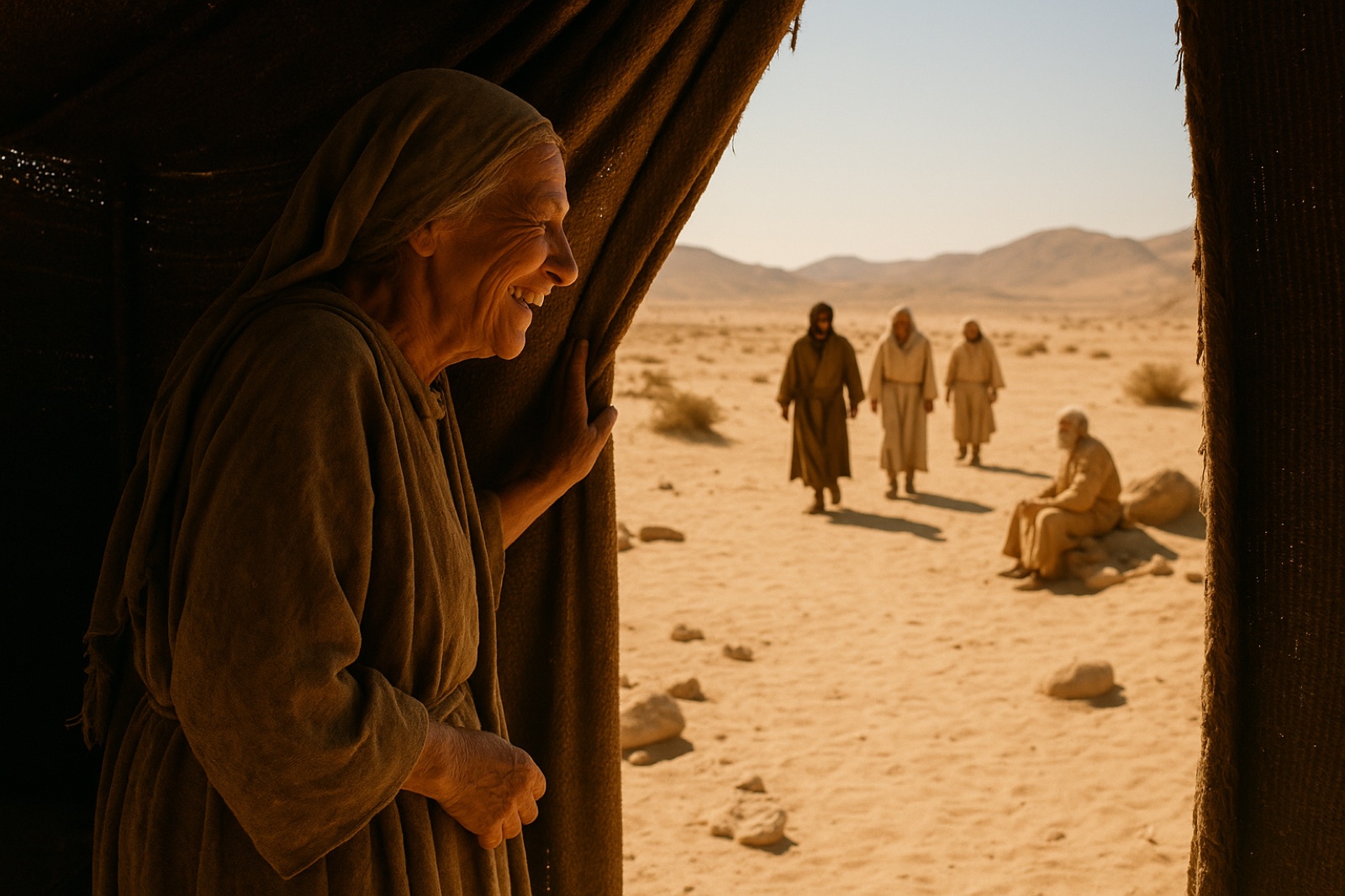
You’ve probably done this too: someone tells you something wonderful you want desperately to be true, and instead of hoping, you laugh — not cruelly, just done. A laugh that says “I stopped letting myself believe that a long time ago.” That’s exactly the laugh Sarah lets out from behind a tent flap in Genesis 18, listening to three visitors tell her 90-year-old husband she’s going to have a son. What happens to that laugh over the next three chapters of Genesis might be one of the most encouraging things Scripture ever does with someone’s doubt.
What Does the Bible Say About Laughter? It Starts With a Tent Flap in Genesis 18
Back up one chapter. In Genesis 17, God tells Abraham — 99 years old, married to Sarah, who is 90 and has been barren her entire life — that they will have a son within the year. God even tells Abraham what to name the boy before he’s born: Isaac, which means “he laughs” (Genesis 17:19).
Then in Genesis 18, three visitors — one of them speaking as the LORD himself — arrive at Abraham’s tent and repeat the promise out loud, this time with Sarah listening from just inside the tent door. Scripture doesn’t soften what happens next: “Therefore Sarah laughed within herself, saying, After I am waxed old shall I have pleasure, my lord being old also?” (Genesis 18:12, KJV).
It isn’t cruelty. It’s math. She’s decades past childbearing, and she’s likely spent years grieving a body that never did what she hoped it would. So when the promise comes again, older and more impossible-sounding than ever, laughter is what comes out — the sound of a woman who has been disappointed enough times to stop letting herself hope out loud.
God’s response is worth sitting with: “Is any thing too hard for the LORD?” (Genesis 18:14). Not a rebuke. A question. He doesn’t shame her laugh — He simply asks her to consider whether her math is the only math that matters.
The Same Word, Given Back to Her
Fast forward to Genesis 21. The impossible happens. Sarah, at 90, holds a son. And what she says next is the whole reason this story matters: “And Sarah said, God hath made me to laugh, so that all that hear will laugh with me” (Genesis 21:6, KJV).
Same word. Same woman. Completely different laugh. And she names her son after it — not by accident, but because God told Abraham to call him that before he ever existed. Every time anyone in that family said their son’s name for the rest of his life, they were saying “laughter.” The very word that once marked Sarah’s doubt became the sound of her joy, spoken out loud, on purpose, forever.
This is the detail that gets skipped in the shorter version of the story — the one where Sarah laughs, gets gently corrected, and the scene just moves on. But Genesis doesn’t erase her doubt to get to the miracle. It keeps the word. It just changes what the word means.
It’s worth noting Sarah isn’t the only woman in this story whose faith gets tested in the waiting. Her servant Hagar was caught in the same promise from a very different angle — proof God was already at work in this family’s story in more places than the one everyone remembers.
What This Means for the Promise You’re Still Laughing Off
You probably have your own version of Sarah’s tent flap. A prayer you stopped praying out loud because you got tired of it not being answered. A promise from Scripture you quietly reclassified as “true for other people.” A hope you laugh off before anyone else can, just so it doesn’t hurt as much when it doesn’t happen.
Here’s the turn: God didn’t ask Sarah to pretend she never laughed. He didn’t erase the doubt from the record. He let it stand — and then He built something on top of it that redeemed the exact same word. Your doubt, your tired laugh, your “I’ve stopped hoping for that” — none of it disqualifies you from the promise. It might just be the raw material God is planning to use.
Scripture actually has more room for wit and unexpected humor than most people give it credit for — the Bible’s real sense of humor shows up in places you wouldn’t expect, and this is one of them: a baby literally named “laughter,” a joke God was in on the whole time.
Two Things You Can Do Today
- Name the laugh. Take 60 seconds and finish this sentence out loud, alone: “The promise I’ve quietly stopped believing is ___.” Just naming it — the way Sarah’s laugh got named, then redeemed — is the first honest step.
- Write today’s date next to it. Not because the promise will be fulfilled today. Because dating your doubt is how you’ll be able to look back later and see exactly how long God was working while you’d stopped expecting Him to.
- Say it to one other person. Text or tell someone the “impossible” thing you’re still waiting on. Sarah’s laugh was private, hidden behind a tent flap. Saying yours out loud, to a real person, is one small way to stop hiding it.
If waiting is the hard part right now, this look at trusting God’s timing is a good next stop — Sarah’s story only makes sense once you see how long she actually waited.
A Prayer for When the Promise Feels Impossible
God, I have a laugh like Sarah’s — the kind I don’t say out loud, the kind that’s really just tired hope wearing a disguise. I don’t fully believe you can still do the thing I stopped asking you for. I’m not asking you to fix my math. I’m asking you to be bigger than it. If you’re still working on the promise I gave up naming, help me name it again today — and help me actually mean it this time. Amen.
A Question Worth Sitting With
If you had to name your own “Isaac” — something you once laughed off as impossible before watching God do it anyway — what would you call it, and what would that name remind you of every time someone said it? Tell us in the comments.
Share This
- “God didn’t erase my doubt. He just built something better on top of it.” — on Sarah’s laugh becoming her son’s name
- Sarah laughed at the promise. Then she named her son after the laugh — on purpose. Genesis 18 and 21 tell the fuller story. #FaithOverFear
- Your tired laugh at an old promise doesn’t disqualify you. It might be exactly what God redeems.
Common Questions About Sarah’s Laughter
What does the Bible say about laughter?
The Bible treats laughter as complicated and honest — it can come from doubt (Genesis 18:12, Sarah laughing at an impossible promise) or from overflowing joy (Genesis 21:6, Sarah laughing after Isaac’s birth). Scripture doesn’t demand laughter always mean one thing; it shows the same person moving from one kind of laugh to the other.
Why did Sarah laugh in Genesis 18?
Sarah laughed because the promise — that she’d have a son at 90, married to a 99-year-old man — seemed physically impossible. Her laugh was quiet disbelief rather than open mockery, born from years of disappointment more than defiance.
What does the name Isaac mean?
Isaac (Yitzchak in Hebrew) means “he laughs.” God instructed Abraham to give him this name before he was even conceived (Genesis 17:19), which means the name was chosen specifically to connect back to Sarah and Abraham’s doubtful laughter at the promise.
Did God punish Sarah for laughing?
No. When Sarah denied laughing out of fear, God simply corrected her (“Nay; but thou didst laugh,” Genesis 18:15) — there’s no recorded punishment. Her doubt didn’t cancel the promise; Isaac was born as planned.
What can Sarah’s story teach me about waiting on God?
That doubt and eventual faith aren’t opposites that cancel each other out — they can be part of the same story. Sarah’s honest disbelief didn’t disqualify her from the miracle, and the same can be true for whatever promise you’re still waiting to see fulfilled.