 0
0
 0
0
You’ve prayed the same prayer so many times it stopped feeling like words. Maybe it’s a child you’re waiting for. Maybe it’s a marriage, a job, a diagnosis, a person to come home. You’ve said it in the car, in the shower, in the dark at 2 a.m. when nobody was watching — and some days it feels like the words just evaporate into the ceiling. Nobody sees the waiting. Nobody sees the prayer. You start to wonder if God does either.
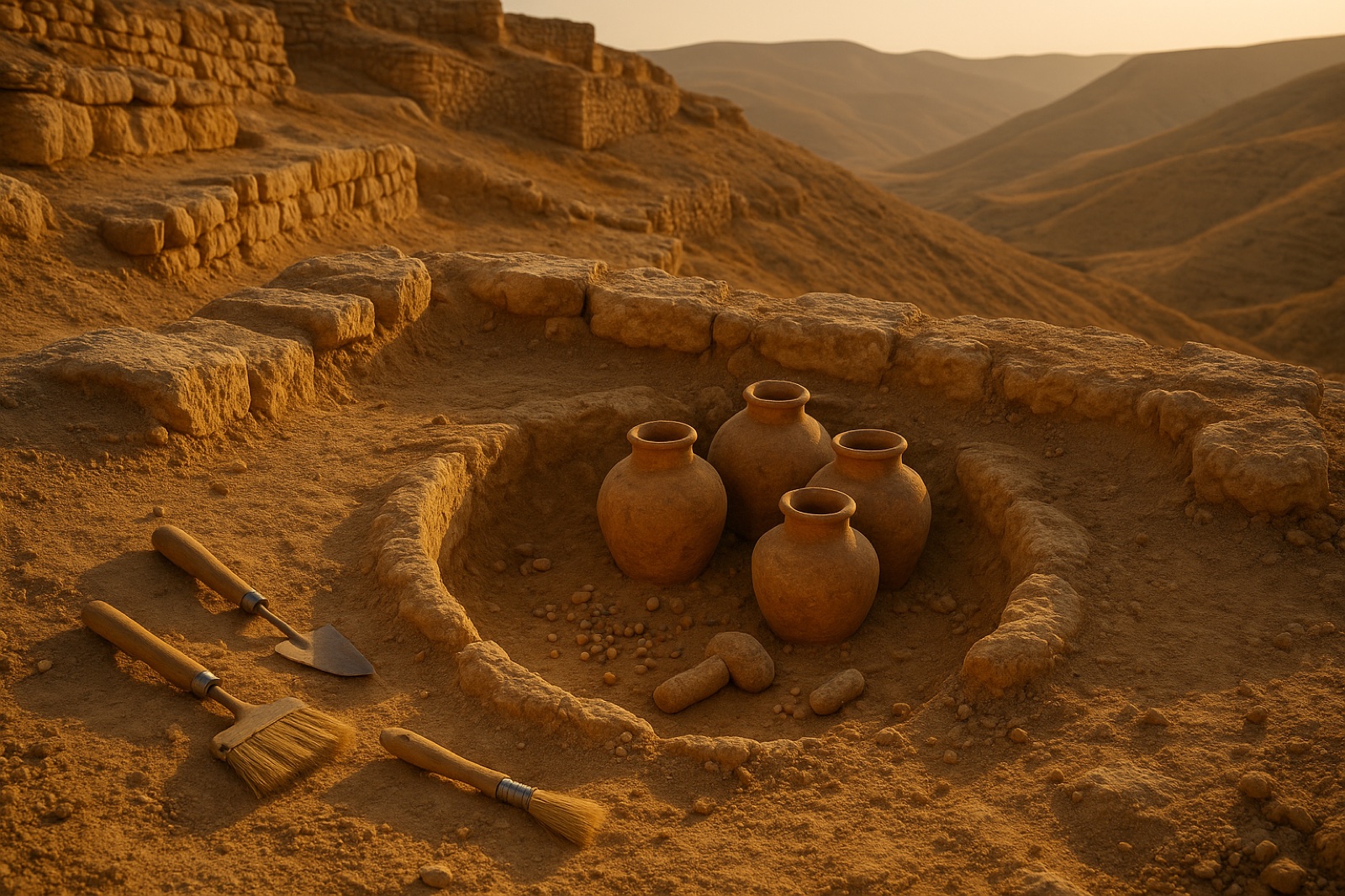
A woman named Hannah knew exactly that silence. Hannah’s prayer at Shiloh is one of the rawest in all of Scripture — and this month, archaeologists digging at the actual site where it happened pulled ordinary jars, beads, and hand tools out of the ground: the kind of everyday clutter a real family would have owned. It’s a small thing. But it does something unexpected. It makes a 3,000-year-old prayer feel like it happened last week.
Hannah’s prayer at Shiloh: the woman nobody understood
Hannah’s story is tucked into the very first chapter of 1 Samuel, and it doesn’t open like a hero’s tale. It opens with a woman who couldn’t have a child, married to a man who loved her but couldn’t fix it, provoked year after year by a second wife who could. Every year, the family made the trip to Shiloh to worship — and every year, Hannah’s grief came due right on schedule, in public, in front of everyone.
One year, she couldn’t hold it anymore. Scripture says it plainly: “And she was in bitterness of soul, and prayed unto the LORD, and wept sore” (1 Samuel 1:10). She wasn’t composed. She wasn’t quoting a psalm. She was undone, at the entrance of the tabernacle, pouring out years of disappointment with no script and no filter.
Then she made a vow — one of the rawest, most specific prayers in the entire Old Testament: “O LORD of hosts, if thou wilt indeed look on the affliction of thine handmaid, and remember me, and not forget thine handmaid, but wilt give unto thine handmaid a man child, then I will give him unto the LORD all the days of his life” (1 Samuel 1:11). She wasn’t just asking for a child. She was promising to hand back the very thing she wanted most.
Here’s the detail that makes this story sting a little: she prayed so hard, so silently, with her lips moving and no sound coming out, that the priest sitting nearby assumed she was drunk. Eli — a priest, a spiritual leader, someone who should have recognized desperate prayer when he saw it — told her to sober up. The one place she should have felt safest, she got misjudged instead. (If you want to sit with that moment a little longer, this look at Hannah’s silent prayer walks through exactly what was happening in her heart when Eli mistook her for drunk.)
She corrected him — gently, without demanding an apology — and went back to her seat. And Scripture says something quietly remarkable happened next: “the woman went her way, and did eat, and her countenance was no more sad” (1 Samuel 1:18). Nothing had changed yet. No child. No promise fulfilled. Just a woman who had finally said the whole truth to God, and felt the weight lift before she had any proof He’d heard her.
Shiloh wasn’t a myth. It was somebody’s Tuesday.
Shiloh was Israel’s worship center for roughly 300 years before Jerusalem ever held that role — the place where the tabernacle stood, where families like Hannah’s traveled every year to bring offerings. For a long time, a site like this can start to feel more like a setting in a story than an actual place where actual people lived out actual lives.
That’s what makes the recent dig at Shiloh land differently. Archaeologists working the site have been pulling ordinary household items out of an old cistern — pottery jars, small beads, pieces of copper jewelry, and stone tools used for grinding and mortar work. Nothing dramatic. Nothing that belongs in a museum’s headline case. Just the kind of things a family unpacked, used, dropped, and lost without a second thought.
That’s exactly the point. Hannah wasn’t a character in a stained-glass window. She was a woman who owned jars like the ones coming out of that cistern. She likely wore beads or jewelry not so different from what’s now sitting in an archaeologist’s tray. She walked on the same ground, breathed the same dusty air, and carried a decades-long ache through a place that, until recently, existed mostly as a name in a book. Pottery doesn’t preach. It just quietly insists: this was real. She was real. The waiting was real.
For a story that’s been retold in Sunday school for generations, that’s not nothing. It’s easy to let familiar Bible stories flatten into fable — comforting, but distant. An ordinary clay jar pulled out of the actual dirt where Hannah once knelt does something a hundred sermons can’t: it closes the distance between “once upon a time” and “this happened, here, to someone real.” (If archaeology-meets-Scripture is your kind of rabbit hole, the recently uncovered room where Paul stood trial and the 2,900-year-old stone confirming King David was a real king are cut from the same cloth — physical ground catching up to what Scripture already said.)
The Turn: God was already in the ordinary part
Here’s what’s easy to miss reading Hannah’s story fast: the miracle isn’t the only thing that mattered. Notice where God actually shows up in this account. It’s not in the moment Samuel is born. It’s earlier — in the ordinary, unremarkable moment when a woman goes back to sit down, eats a meal, and simply isn’t sad anymore. Verse 18 comes chapters before verse 20, where she actually conceives. God met her in the waiting, not just at the finish line.
That’s the same thing this archaeology quietly confirms about the setting. Nothing in that cistern is dramatic — no golden ark, no burning bush. Just jars and beads and tools, the props of an unremarkable, waiting-filled life. And that’s where Hannah’s story actually took place. Not in a spectacular moment engineered for effect, but in the middle of years of ordinary disappointment, at a worship site full of ordinary families doing ordinary things.
If you’re in a waiting season right now, that’s the detail worth sitting with. You may be tempted to believe God is distant until the answer arrives — that He’s waiting somewhere off to the side until your prayer gets resolved. Hannah’s story, and the very dirt it happened in, says otherwise. He was present in the unremarkable middle. He was present while she was still praying without words, still being misjudged, still going home with an empty womb and a lighter heart for no visible reason at all. The answer came later. The presence came first.
What this looks like on your Monday
You probably aren’t standing at a tabernacle door. But you know exactly what it feels like to pray the same ache so many times the words go quiet — and to wonder if anyone noticed. Hannah’s example isn’t “pray harder and you’ll get your miracle.” It’s simpler, and it’s actually doable: stop editing your prayer for other people’s comfort, say the whole true thing to God once, out loud or silently, and let yourself feel whatever lifts afterward — even if nothing else has changed yet.
That’s not a metaphor. It’s a specific, practical shift you can make today, in the next ten minutes, before anything about your situation is resolved.
Three things you can do today
- Say the unedited version once. Find five quiet minutes and pray the request you’ve been softening for other people — the raw, specific version, the way Hannah did. Not the polished version you’d say in front of others. The real one.
- Name what you’d be willing to give back. Hannah’s vow wasn’t just a request — it was an offering. Ask yourself honestly: if this prayer were answered, what would you actually do with it for God, not just for yourself?
- Notice if your countenance lifts before your circumstances do. Tonight, after you pray, pay attention to whether anything shifts inside you — even slightly — before anything outside you has changed. That shift is worth naming, not dismissing.
Questions worth sitting with
What prayer have you been quietly rewording so it sounds more “acceptable” to whoever might hear it?
Where in your life right now do you most need to believe God is present in the waiting, not just at the answer?
A prayer for the waiting
God, I’m tired of praying the same request over and over and wondering if it’s landing anywhere. I don’t want to say the polished version anymore — You already know the raw one. I’m not asking You to fix everything today. I’m asking You to be as present in this middle part as You were with Hannah, before anything changed for her. Help me notice You here, in the ordinary, unresolved part of my life, not just in the answer I’m still waiting for. Amen.
One question worth answering honestly
If you knew, for certain, that God was already present in whatever you’re waiting on right now — even though nothing has changed yet — would that be enough to change how you pray tonight? Why or why not?
Share this
- Hannah prayed so hard the priest thought she was drunk. And archaeologists just dug up the jars her family actually used, at the exact spot it happened. My prayers have never felt more real. #HannahsPrayer
- I keep forgetting Bible stories happened to real people in real dirt. This week that got a lot harder to forget.
- God met Hannah in the waiting, not just the answer. Verse 18 comes two chapters before her miracle — she felt peace before anything changed. Still thinking about that.
Questions people are asking
What did archaeologists actually find at Shiloh?
Recent excavation work at the site of ancient Shiloh has uncovered everyday household items — pottery jars, beads, pieces of copper jewelry, and stone tools used for grinding and mortar work — recovered from an old cistern at the site.
Why does Shiloh matter in the Bible?
Shiloh was Israel’s central place of worship for roughly 300 years before Jerusalem took on that role, home to the tabernacle. It’s where Hannah prayed for a son in 1 Samuel 1, and where the boy she later dedicated — Samuel — grew up serving under the priest Eli.
What is Hannah’s prayer in the Bible?
In 1 Samuel 1:10-11, Hannah prays in bitter anguish for a son, vowing that if God gives her a child, she will dedicate him to the Lord’s service for his entire life. God answered that prayer with the birth of Samuel, one of Israel’s most significant prophets.
Why did the priest Eli think Hannah was drunk?
Hannah prayed silently, with her lips moving but no sound coming out — an unusual way to pray at the time. Eli, watching from nearby, mistook her silent, emotional prayer for drunkenness and told her to stop drinking, until she explained she was pouring out her grief to God.
Does archaeology confirm Bible stories are historically real?
Discoveries like the recent Shiloh dig don’t prove every detail of a biblical account, but they consistently confirm that the places, cultures, and everyday settings Scripture describes were real, inhabited locations — not invented backdrops for a story.