 0
0
 0
0
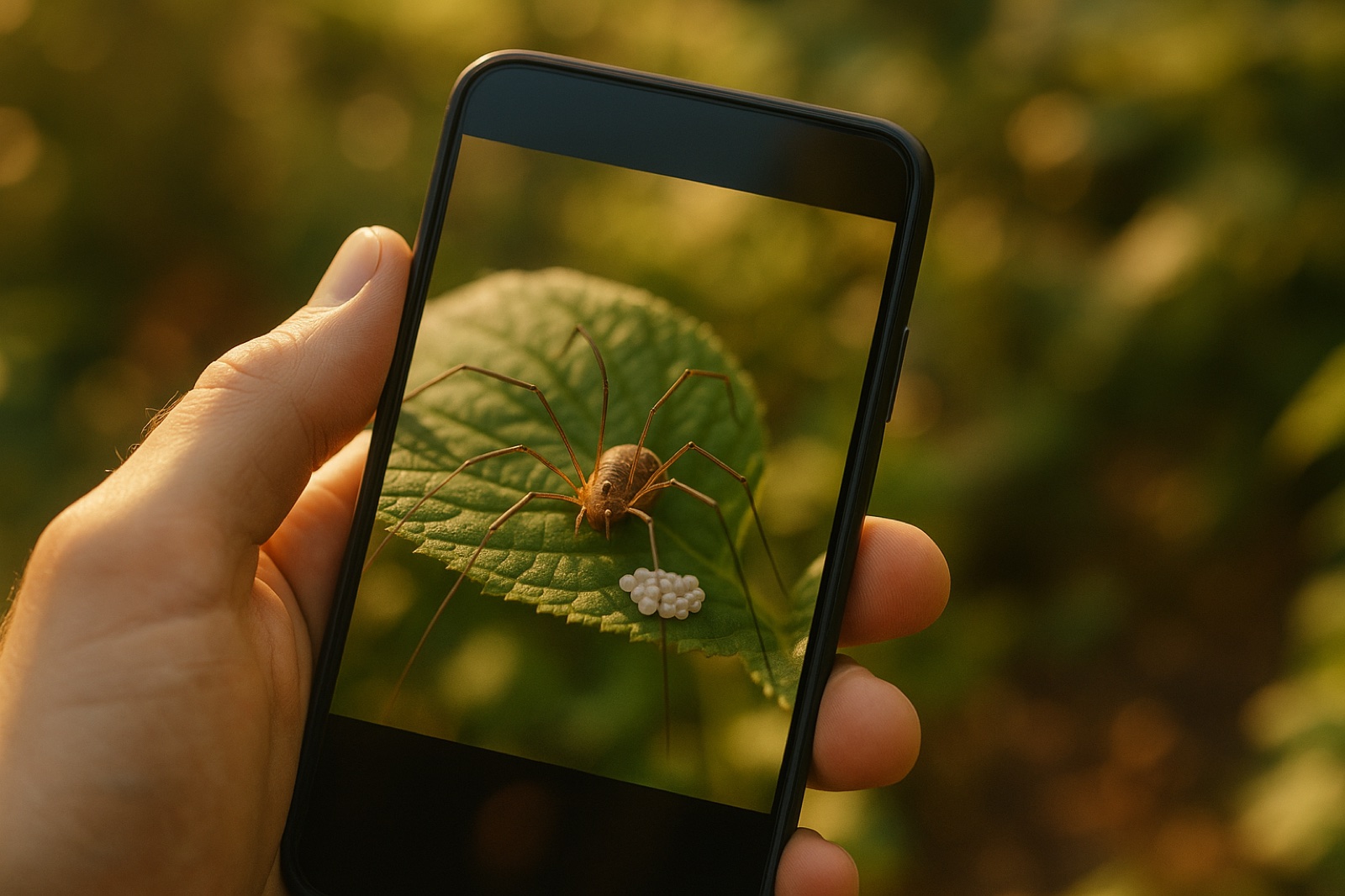
Somewhere in your backyard, there is probably a small, spindly creature most people call a daddy longlegs. You’ve seen one a hundred times and thought about it for exactly zero seconds. It’s not a spider, technically — it’s a harvestman, a distant cousin — and for decades, it sat at the center of a scientific mystery that trained researchers could not crack.
Then, without meaning to, thousands of ordinary people solved it. With their phones.
The Mystery That Stumped the Experts
Here’s the puzzle. Some species of harvestmen stick around after laying their eggs. A parent — sometimes the mother, sometimes the father, depending on the species — will guard the eggs from predators and mold, sometimes for weeks. Other, closely related species lay their eggs and simply walk away, never looking back.
Why would evolution produce both behaviors in the same family of animals? Which came first — guarding or abandoning? And what conditions push a species toward one strategy over the other? Researchers have chased these questions for years, and kept hitting the same wall: harvestmen are small, secretive, and scattered across forests, gardens, and leaf litter all over the world. No single research team, no matter how well-funded, can be in enough backyards at once to gather the range of real-world observations needed to answer the question properly.
Enter the People With Phones
While scientists were stuck, something else was quietly happening. Everyday people — hikers, gardeners, curious kids, retirees who like bugs — had been photographing harvestmen they stumbled across and uploading the pictures to iNaturalist, a free app where anyone can log a photo of a plant or animal they’ve spotted in the wild.
Nobody uploading those photos was trying to solve a scientific mystery. They just thought the little creature on their porch railing was interesting enough to snap a picture of.
But multiply that small act of noticing by thousands of people, over years, across dozens of countries, and something remarkable builds up: a dataset no research grant could have purchased. When scientists finally combed through the public photo archive, they could see, species by species, which harvestmen were photographed guarding eggs and which weren’t — real-world evidence gathered one unpaid, unasked observation at a time. That evidence is what finally let researchers piece together how parental care evolved across the harvestman family tree, a puzzle that had outlasted entire academic careers.
It’s not even the first time this has happened. Citizen volunteers combing through public data have pinpointed 10,000 eclipsing star pairs that professional astronomers hadn’t gotten to yet. Different field, same pattern: the breakthrough didn’t come from a bigger telescope or a bigger grant. It came from more attention, spread across more ordinary people.
Why This Actually Matters
It’s easy to hear “someone solved a bug mystery” and shrug. But sit with what actually happened here: the answer to a real scientific question, one credentialed experts spent decades failing to reach, arrived because a lot of unqualified people happened to be paying attention.
Nobody vetted these observers. Nobody required a degree to submit a photo. The only qualification was noticing something and caring enough to point a camera at it.
It’s an Old Pattern, Not a New One
This keeps happening, in every field, in every era, and it’s worth asking why. Ancient wisdom has always pointed to the same quiet truth: the breakthrough rarely comes from the person everyone expected it from. It comes from whoever was actually paying attention when it counted. God, if you trace the pattern far enough back, seems to have a habit of working through exactly the people nobody was watching.
You saw a smaller version of this same feeling not long ago, watching a goalkeeper who never won a World Cup finally get the ovation he’d quietly earned over sixteen years nobody was applauding. The people who change things aren’t always the ones holding the trophy, or the microscope, or the telescope. Sometimes it’s whoever showed up, kept showing up, and paid attention when nobody was keeping score.
Two thousand years before iNaturalist, a person history gives only two verses to was trusted to carry someone else’s most important letter across the ancient world. No title, no fanfare — just someone reliable, in the right place, willing to carry something forward. The pattern is older than any of us.
What You Do With an Ordinary Day
Maybe you’re not going to solve a scientific mystery this week. But the next time you notice something — a strange bird, an odd cloud, a small kindness nobody else clocked — it’s worth remembering that noticing has never been a small thing. It’s just usually the first step nobody bothers to name.
The daddy longlegs on your porch railing isn’t going anywhere. Neither is the chance that paying attention, today, quietly matters more than you think.
Something to Think About
Do you think ordinary, everyday attention can genuinely uncover things trained experts miss — or does real discovery still ultimately require the professionals to confirm it? We’d love to hear where you land — tell us in the comments.
Share This
- Scientists spent decades stuck on a mystery about daddy longlegs. Regular people with phone cameras solved it in a few years. Wild what happens when enough of us just… pay attention.
- A mystery that stumped professional researchers for decades? Solved by ordinary people uploading photos from their backyards. There’s something almost poetic about that.
- This story about spiders and citizen science made me think about how often the “unqualified” person turns out to be exactly who was needed. Worth a read.
Quick Questions
What mystery did citizen scientists help solve about harvestmen (daddy longlegs)?
For decades, researchers couldn’t explain why some harvestman species evolved parental care — a parent staying to guard eggs — while closely related species abandon their eggs entirely. Photos submitted by everyday people gave scientists enough real-world observations, species by species, to finally piece the pattern together.
What is iNaturalist and how did it help with this discovery?
iNaturalist is a free app that lets anyone photograph and log plants or animals they spot in the wild. Thousands of people uploaded harvestman photos simply because they found the creature interesting, unknowingly building a dataset researchers could later use to answer a question professional fieldwork alone couldn’t reach.
Why couldn’t professional researchers solve this mystery on their own?
Harvestmen are small, secretive, and scattered across gardens and forests worldwide. No single research team has the reach to gather that scale of real-world sightings on its own — which is exactly the gap thousands of ordinary observers filled without trying to.
Has citizen science solved other scientific mysteries like this before?
Yes. Volunteers combing through public astronomical data previously helped pinpoint 10,000 eclipsing star pairs that professional astronomers hadn’t yet identified — a different field, but the same pattern of ordinary attention producing a professional-grade discovery.
What does this story suggest about the value of paying attention to everyday things?
It suggests that noticing something ordinary and caring enough to record it can matter more than it seems in the moment. The people who end up changing what we know are rarely the most credentialed — they’re simply the ones who were paying attention when it counted.