 0
0
 0
0
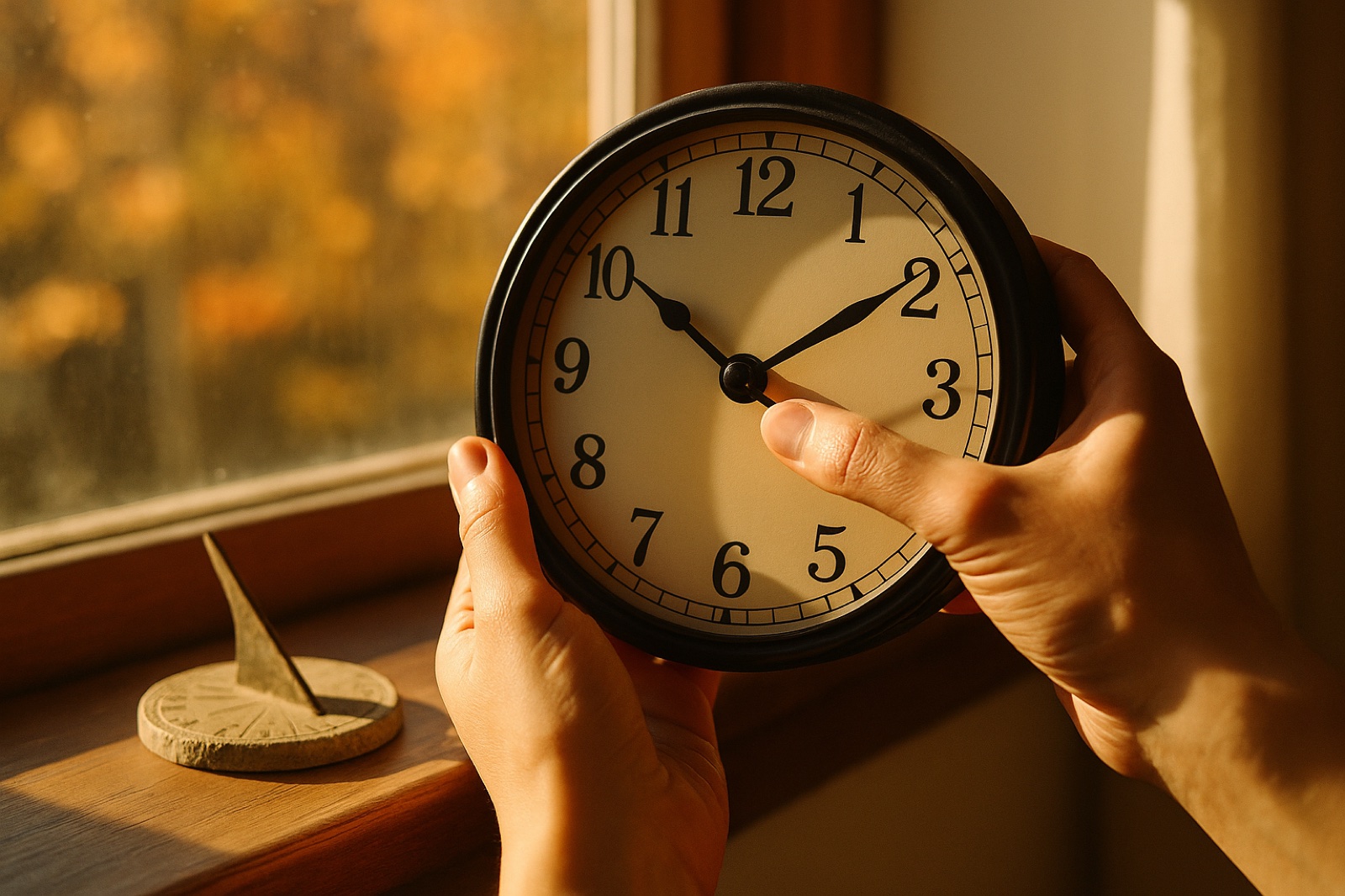
This Sunday, 1 November 2026, at 2:00 in the morning, the clocks in most of the United States go back one hour. You get the hour back. One extra hour of sleep, or one extra hour of lying there wondering why your body woke up anyway.
Every autumn, millions of people type the same three words into a search bar: daylight saving time. When does it end? Why do we do this? Is this the last year?
Here are the real answers. And at the end, one story about the only time the Bible describes a clock running backward on purpose. It is not the story most people expect.
What Daylight Saving Time Actually Is
Daylight saving time is simple once you strip the name away. In spring, we move the clocks forward one hour, so the sun seems to set later in the evening. In autumn, we move them back, so the morning gets its light back.
The sun does not change. The day is exactly as long as it was going to be. We just slide the numbers on the clock so that the daylight lands at a different point in our schedule.
“Spring forward, fall back” is the whole trick. This weekend is the “fall back” half. At 2:00 a.m. the clock becomes 1:00 a.m., and that hour happens twice.
Where Daylight Saving Time Came From
Most people have heard that Benjamin Franklin invented it. He did not. In 1784, while living in Paris, he wrote an anonymous essay for a French newspaper joking that Parisians could save a fortune on candles if they simply got out of bed when the sun came up. It was satire. He suggested waking earlier, not changing the clocks.
The real push came from an English builder named William Willett. In 1907 he published a pamphlet called “The Waste of Daylight,” arguing that whole summer mornings of sunlight were being slept through. He campaigned for years and did not live to see it happen.
The first country to actually do it was Germany, in 1916, in the middle of the First World War. The goal was to burn less coal for lighting. Britain followed within weeks. The idea spread because it was a wartime saving, not because anyone loved changing clocks.
In the United States, the rules were a mess for decades. Towns and states picked their own dates, which made train and bus timetables a headache. The Uniform Time Act of 1966 finally set one national schedule, though it let states opt out entirely. That is why Hawaii and most of Arizona still do not change their clocks at all.
And here is a fact that surprises many readers in the US: most of the world does not do this. Countries like Japan, China and India keep one time all year. Near the equator, the length of the day barely changes between June and December, so there is nothing to “save.” If you are reading this in Nairobi or Manila, your clocks are staying exactly where they are.
Will the Clocks Still Change in 2026? What Congress Did
Yes, they will change this year. But this is the first autumn in a long time where that was a real question.
On 14 July 2026, the US House of Representatives passed the Sunshine Protection Act by a vote of 308 to 117. The bill would end the twice-a-year clock change and keep the country on daylight saving time all year round. It then went to the Senate, where it was sent to a committee. As of late September, no Senate vote had been scheduled.
So the law has not changed. Unless the Senate acts and the president signs it before Sunday, which is not expected, the clocks go back as usual. If it does eventually pass, the change people search for every autumn would simply stop happening.
Whichever side of that debate you are on, there is something honest in how far the idea has come. A proposal that began as a joke in a Paris newspaper is now one vote away from being the permanent clock of a whole country.
How to Handle the Extra Hour
The spring change is the hard one, because you lose an hour. The autumn change is gentler, but it still catches people out. A few things that cost nothing and help:
- Keep your normal bedtime on Saturday. Do not stay up late “because you get an hour back.” Sleep at your usual time and let the morning be the gift.
- Get outside in the morning light on Sunday and Monday. Even ten minutes. Morning light is the fastest way to tell your body which hour it is now.
- Expect the evenings to feel darker. Sunset will suddenly land an hour earlier on the clock. If you notice your mood dipping in the first week, that is normal. A short walk at midday helps more than people expect.
- Remember that small children and pets do not read clocks. They will wake and want breakfast at the old time. Shifting them by fifteen minutes a day for a few days is kinder than one big jump.
- Check your phone, then check everything else. Phones update themselves. The oven, the car, the old clock on the kitchen wall, and anything that runs on a battery usually do not.
And one more. For a single hour this weekend, you will have time you did not earn. Decide in advance what you want to do with it, or it will quietly disappear into a screen.
A good place to start:
The Beginner’s Guide to Feeling God’s Presence Every Day (Free)
A simple way to notice God in ordinary moments, including the quiet ones a slow Sunday morning gives you.
Get the free guide. Free.
The Only Time a Clock Ran Backward on Purpose
Here is the story I promised. It is about 2,700 years old, and it is the one place in the Bible where something that measured time went backward.
A king named Hezekiah ruled in Jerusalem. He got sick, badly, and a prophet came to tell him plainly that he would not recover. Put your affairs in order. You are going to die.
Hezekiah did not argue. He turned his face to the wall and cried. He prayed a short, honest prayer, the kind people pray when there is nothing left to try.
Before the prophet had even left the palace grounds, he was sent back with a different message. The prayer had been heard. The tears had been seen. Hezekiah would get fifteen more years.
Then came the strange part. Hezekiah asked for a sign that it was true. The prophet gave him a choice. There was a great sundial in the palace, known by the name of Hezekiah’s father, King Ahaz. Its shadow could move forward ten steps, or it could move backward ten steps. Which did he want?
Hezekiah said that a shadow moving forward was nothing. Shadows do that all day. He asked for the hard one. And the shadow on his father’s sundial went back ten steps.
Two details make this better than the version most people half-remember. First, it happened on the sundial of Ahaz, the one king in the Bible who had been offered any sign he wanted and refused to ask. The son asked on the father’s clock. Second, the extra time was not perfect. Hezekiah later made a serious mistake with some of those fifteen years, showing foreign visitors everything he owned, which cost his descendants dearly. Extra time is a gift. It is not a guarantee of wisdom.
I find it hard to read that story this week without noticing the contrast. We turn our clocks back by law, to save energy or to line up the daylight with the workday. The one time an ancient text describes a clock going back, it was because a dying man asked for more time, and the answer was yes. The hour we get this Sunday is a bookkeeping entry. That one was mercy.
What to Do With an Hour You Did Not Earn
So the clocks go back on Sunday. The Senate may or may not make this the last time. Either way, you will wake up with an hour in your hands that was not there on Saturday.
You could sleep it. That is a fine answer. You could sit with a cup of something warm and not look at your phone. You could call the person you keep meaning to call. You could just notice it, which is more than most people do.
If you are curious how many hours you have already been given, our free How Many Days Have I Been Alive? calculator will tell you in seconds, and the number tends to stop people for a moment.
Hezekiah got fifteen years. You get sixty minutes. The question for both is the same. What will you do with it?
Discussion Question
Should countries stop changing their clocks twice a year, or is the twice-yearly switch worth keeping? Tell us which side you are on in the comments below.
Share This
- “We turn clocks back by law to save energy. The only time the Bible describes a clock going backward, it was because a dying man asked for more time. That reframed my Sunday. https://bgodinspired.com”
- “Benjamin Franklin did not invent daylight saving time. It was a joke in a Paris newspaper. Germany did it first in 1916 to save coal. Did not know any of this.”
- “The clocks go back this Sunday. Instead of letting the hour vanish into my phone, I am deciding in advance what to do with it.”
Questions About Daylight Saving Time
When does daylight saving time end in 2026?
In the United States, daylight saving time ends on Sunday, 1 November 2026, at 2:00 a.m. local time, when clocks go back one hour to 1:00 a.m. In the United Kingdom and the European Union, summer time ends a week earlier, on Sunday, 25 October 2026. US clocks are scheduled to spring forward again on the second Sunday in March, which is 14 March 2027.
Why do we have daylight saving time?
Daylight saving time was adopted to shift an hour of daylight from the early morning to the evening, when more people are awake to use it. Germany was the first country to introduce it, in 1916, to save coal during the First World War, and Britain followed weeks later. In the United States, the Uniform Time Act of 1966 set a single national schedule, while allowing individual states such as Hawaii and most of Arizona to opt out and keep standard time all year.
Is daylight saving time going to become permanent?
Not yet. On 14 July 2026, the US House of Representatives passed the Sunshine Protection Act, H.R. 139, by a vote of 308 to 117. The bill would keep the country on daylight saving time year-round and end the clock changes. As of late September 2026, the bill was in the Senate Committee on Commerce, Science, and Transportation with no vote scheduled, so clocks will still fall back on 1 November 2026.
Where does the Bible say the sun went backward?
The Bible describes the shadow on a sundial moving backward in 2 Kings 20 and Isaiah 38. King Hezekiah of Judah was dying, prayed, and was told he would live fifteen more years. As a sign, the shadow on the sundial built by his father, King Ahaz, went back ten degrees. Isaiah 38 says the sun itself returned ten degrees. This is the only place in the Bible where a time-measuring device is described as running backward. The other famous time event, in Joshua 10, describes the sun standing still, not going back.
Which countries do not use daylight saving time?
Most countries in the world do not change their clocks. Japan, China and India keep one standard time all year, and so do nearly all countries in Africa and most of Asia. Daylight saving time is mainly used in North America, Europe, and a few countries in the Southern Hemisphere such as Australia (in some states), New Zealand and Chile. Near the equator the length of the day barely changes across the year, so there is little daylight to shift.