 0
0
 0
0
Say the word “saint” and most of us picture the same thing. A face in coloured glass. A golden ring of light. Someone calm, someone finished, someone who lived a long time ago and never once lost their temper in a queue.
And if you are honest, you picture someone who is not you.
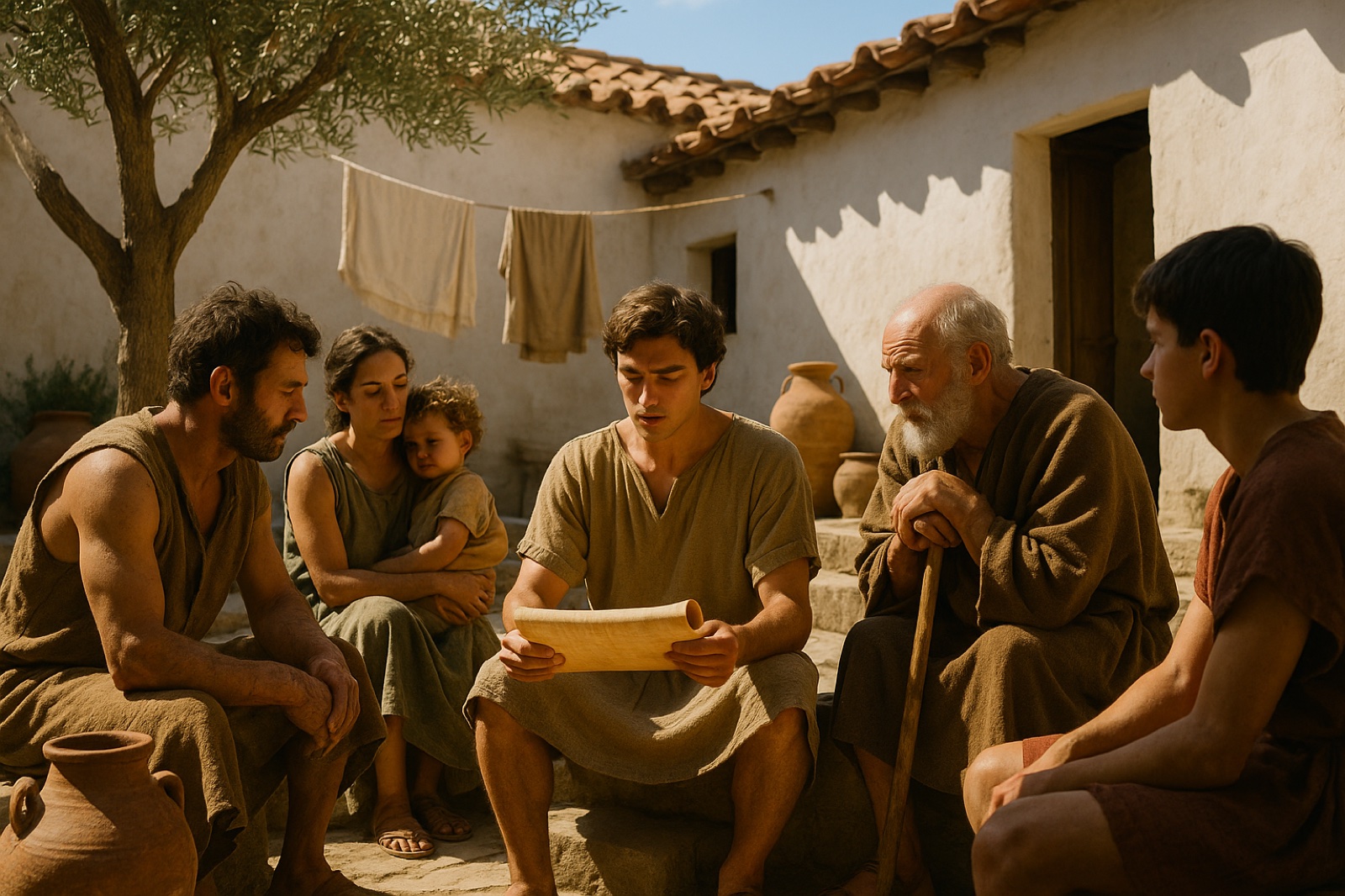
All Saints’ Day falls on 1 November, and every October a lot of people go looking for what it means. That is a good question. But the Bible has a surprise waiting inside it. When the New Testament says “saints,” it is almost never talking about heroes in a window. It is talking about ordinary people, in ordinary towns, who were still alive, still learning, and still getting things wrong.
What Is All Saints’ Day?
All Saints’ Day is a Christian day of remembrance held on 1 November. It honours all of God’s holy people, especially those who have died in faith, including the many whose names nobody remembers.
The day grew slowly. In the 700s, Pope Gregory III dedicated a chapel in St Peter’s in Rome to all the saints. Over the following century the 1 November date spread across the churches of the West. The night before became “All Hallows’ Eve,” because “hallow” is an old English word for a holy one. That is where the name Halloween comes from. (We looked at that history in Is It a Sin to Celebrate Halloween? Start With the Name.)
Different traditions keep the day in different ways:
- Catholic churches honour the saints in heaven, both the famous and the unknown.
- Anglican, Lutheran and Methodist churches often read out the names of church members who died that year, and give thanks for all believers who have gone before.
- Orthodox churches keep their own All Saints Sunday, on the Sunday after Pentecost.
Each of these has its own reasons and its own beauty. And all of them share something old: a word the first Christians used for each other while they were still breathing.
If you have ever wondered whether you really belong with God’s people, or whether you are somehow on the outside looking in, keep reading. And if you want help noticing God in your ordinary days, this free guide was made for you:
Who Paul Called “Saints”
Open almost any of Paul’s letters and look at the very first lines. Paul does not write “to the church members” or “to the believers who are doing well.” He writes to the saints.
“Paul, an apostle of Jesus Christ by the will of God, to the saints which are at Ephesus, and to the faithful in Christ Jesus.” Ephesians 1:1 (KJV)
“Paul and Timotheus, the servants of Jesus Christ, to all the saints in Christ Jesus which are at Philippi, with the bishops and deacons.” Philippians 1:1 (KJV)
Notice the addresses. Saints “which are at Ephesus.” Saints “at Philippi.” These are not people in heaven. They are people with street addresses. People with jobs, debts, neighbours and cooking to do.
The book of Acts talks the same way. Peter “came down also to the saints which dwelt at Lydda” (Acts 9:32). The saints lived in Lydda. You could visit them.
And then there is this one line at the end of Philippians:
“All the saints salute you, chiefly they that are of Caesar’s household.” Philippians 4:22 (KJV)
Caesar’s household was not Caesar’s family. It was the huge staff that ran the emperor’s affairs: clerks, servants, and many enslaved workers. Paul calls some of those workers saints. People who spent their days serving the most powerful man in the world were, in God’s eyes, holy ones.
The Greek word behind all of this is hagioi. It means “holy ones,” or more simply, “people set apart for God.” It is the same word family as “holy” and “sanctified.” In the New Testament, it is used again and again for the whole body of believers, not for a few stand-outs.
The Saints at Corinth Were a Mess
This is where it gets surprising.
If you wanted proof that “saint” in the Bible did not mean “perfect person,” you would go to Corinth. And Paul’s first letter to them opens like this:
“Unto the church of God which is at Corinth, to them that are sanctified in Christ Jesus, called to be saints, with all that in every place call upon the name of Jesus Christ our Lord, both theirs and ours.” 1 Corinthians 1:2 (KJV)
Saints. Set apart. Now read just nine verses later:
“For it hath been declared unto me of you, my brethren, by them which are of the house of Chloe, that there are contentions among you.” 1 Corinthians 1:11 (KJV)
Contentions. Fighting. Some of Chloe’s people had brought Paul a report, and it was not good. The church had split into camps. Later in the same letter, Paul has to deal with believers taking each other to court:
“Dare any of you, having a matter against another, go to law before the unjust, and not before the saints?” 1 Corinthians 6:1 (KJV)
Read that slowly. The people suing each other are the saints. Paul does not take the name away from them because they are behaving badly. He uses the name to call them back. In effect he says: this is who you are, so why are you acting like this?
That is the order the whole letter runs on. Not “behave, and then you will be saints.” But “you are saints, so now live like it.”
The Two Little Words That Were Added
Here is a detail most readers walk straight past.
In many printed King James Bibles, look closely at 1 Corinthians 1:2 and Romans 1:7. The words “to be” in “called to be saints” are printed in italics. The King James translators used italics to mark words they added to make the English read smoothly. Those words are not in the Greek.
What Paul actually wrote is closer to klētois hagiois, which simply means “called saints,” or “saints by calling.”
That small change matters. “Called to be saints” can sound like a goal you are working toward, something you might reach one day if you try hard enough. “Called saints” is a name. It is what God already calls you.
“To all that be in Rome, beloved of God, called to be saints: Grace to you and peace from God our Father, and the Lord Jesus Christ.” Romans 1:7 (KJV)
Look at what sits right next to it: “beloved of God.” Before Paul says one word about how the Romans should live, he tells them two things about who they are. Loved. And called holy. The naming comes first. The growing comes after.
What All Saints’ Day Means for You
So here is the turn.
Many of us carry a quiet fear that we are not really “in.” That our standing with God depends on how this week went. That real Christians are calmer, kinder, and more together than we are. That the word “saint” belongs to someone else.
But the people Paul called saints were in the middle of their worst arguments. They were enslaved clerks in a palace. They were a church so divided that Paul had to write them a long and painful letter. And God still called them holy ones, because their holiness was never their own achievement. It came from being “sanctified in Christ Jesus,” from belonging to Jesus.
That changes how All Saints’ Day can feel. It is not only a day to look up at the great names of the past. It is also a day to look around. The person beside you at work. The tired mother at the clinic. The old man who prays every morning and never tells anyone. And, yes, you.
Hebrews gives us a picture of how the two fit together:
“Wherefore seeing we also are compassed about with so great a cloud of witnesses, let us lay aside every weight, and the sin which doth so easily beset us, and let us run with patience the race that is set before us.” Hebrews 12:1 (KJV)
The “cloud of witnesses” are the faithful who went before us, the heroes listed in Hebrews 11. And the chapter before ends with a stunning line: God provided “some better thing for us, that they without us should not be made perfect” (Hebrews 11:40). The saints of the past are not finished without the saints of the present. You are part of the same story. Still running. Still carrying weights you need to set down. And still named holy.
If you want to see where you are with God right now, honestly and without judgment, try the free How Close Am I to God? tool. It is a gentle place to start.
It is also worth knowing that the day before All Saints’ Day has its own story. On 31 October 1517, Martin Luther sent out his 95 theses, and much of that argument was about how people stand before God. You can read about that in What Is Reformation Day?
Actions to Take Today
- Read one greeting out loud, with your town in it. Take Philippians 1:1 and replace “Philippi” with the name of your town or village. Say it once. Notice how it feels to hear yourself named.
- Name one living saint. Think of one ordinary person whose quiet faith has helped you. Send them a short message today: “I’m thankful for you. Your faith has helped mine.”
- Set down one weight. Hebrews 12:1 says to “lay aside every weight.” Write down one thing that keeps making you feel like you are not good enough for God. Then write next to it, “Called a saint. Beloved of God.” Keep the paper somewhere you will see it.
Journaling Prompts
- When you hear the word “saint,” whose face comes to mind first? Why do you think it is not your own?
- Where in your life are you waiting to “become” someone before you believe God accepts you?
- If you truly believed God already calls you a holy one, what is one thing you would stop doing, and one thing you would start?
A Prayer for Today
God, I have always thought saints were other people. Better people. People who had it figured out. But You called the fighting, tired, ordinary people at Corinth holy, and I think You are calling me that too. Help me believe it on the days I feel like I don’t belong. Thank You for everyone who walked this road before me, and help me run my part with patience. Amen.
Let’s Talk About It
Do you think Christians today would act differently if they believed the word “saint” described them right now, not just after they die? We would love to hear your thoughts in the comments below.
And if this helped you, you don’t have to stop here. This free guide will help you feel God’s presence in the ordinary moments of your day:
Share This
- “I always thought saints were people in stained glass. Then I read that Paul called a fighting, messy church in Corinth ‘saints.’ Maybe God sees me the same way.”
- “All Saints’ Day reminder: in the Bible, saints had street addresses. Ephesus. Philippi. Lydda. Yours too.”
- “In ‘called to be saints,’ the words ‘to be’ were added by translators. Paul just wrote ‘called saints.’ It’s not a goal. It’s a name.”
Questions and Answers About All Saints’ Day
What is All Saints’ Day?
All Saints’ Day is a Christian day of remembrance held on 1 November. It honours all of God’s holy people, especially believers who have died in faith, including the many whose names are not known. Catholic, Anglican, Lutheran and Methodist churches keep it in the West, while Orthodox churches keep All Saints Sunday on the Sunday after Pentecost.
Who does the Bible call saints?
In the New Testament, the word “saints” (Greek hagioi, meaning “holy ones”) is used for ordinary living believers. Paul addresses his letters “to the saints which are at Ephesus” (Ephesians 1:1) and “to all the saints in Christ Jesus which are at Philippi” (Philippians 1:1). Acts 9:32 says Peter visited “the saints which dwelt at Lydda.” In the Bible, saints are all of God’s people, not only a few famous ones.
Were the Corinthians really called saints even though they had problems?
Yes. In 1 Corinthians 1:2, Paul writes to the church at Corinth as people “sanctified in Christ Jesus, called to be saints.” Just nine verses later he mentions “contentions” among them, and in 1 Corinthians 6:1 he rebukes believers for taking each other to court. Paul did not remove the title “saints” because of their behaviour. He used it to remind them who they already were.
What does “called to be saints” mean in the original Greek?
In 1 Corinthians 1:2 and Romans 1:7, the Greek phrase is klētois hagiois, which means “called saints” or “saints by calling.” The words “to be” were added by the King James translators and are printed in italics in many KJV editions. The phrase describes an identity God gives, not a rank a person earns.
Why is Halloween the night before All Saints’ Day?
Halloween comes from “All Hallows’ Eve,” meaning the evening before All Hallows’ Day. “Hallow” is an old English word for a holy one or saint, and “All Hallows” is an older name for All Saints’ Day on 1 November.