 0
0
 0
0
It is the middle of the day. Nothing is wrong. You have things you could do, and some of them even matter to you.
But you cannot settle. You check the time. You check your phone. You stand up, walk to the window, and come back. The room you are in feels small. The work in front of you feels pointless. And a quiet voice keeps saying the same thing: life would be better somewhere else.
That feeling has an old name. It is called acedia (say it ah-SAY-dee-ah). About 8,100 people a month look up the word, and most of them have just found out there is a name for the thing they have been living with.
So what is acedia? Put simply, it is a restless boredom that makes you want to be anywhere but here. And the people who named it did not only describe it. They found it in a psalm, and the same psalm quietly holds the answer.
What is acedia? The short answer
Acedia comes from a Greek word, akēdia, which roughly means “not caring.” Early Christian monks living in the Egyptian desert in the 300s used it for a very specific state. It was not tiredness. It was not sadness. It was a restless, itchy dislike of where you are and what you are doing, joined to a strong belief that the answer is somewhere else.
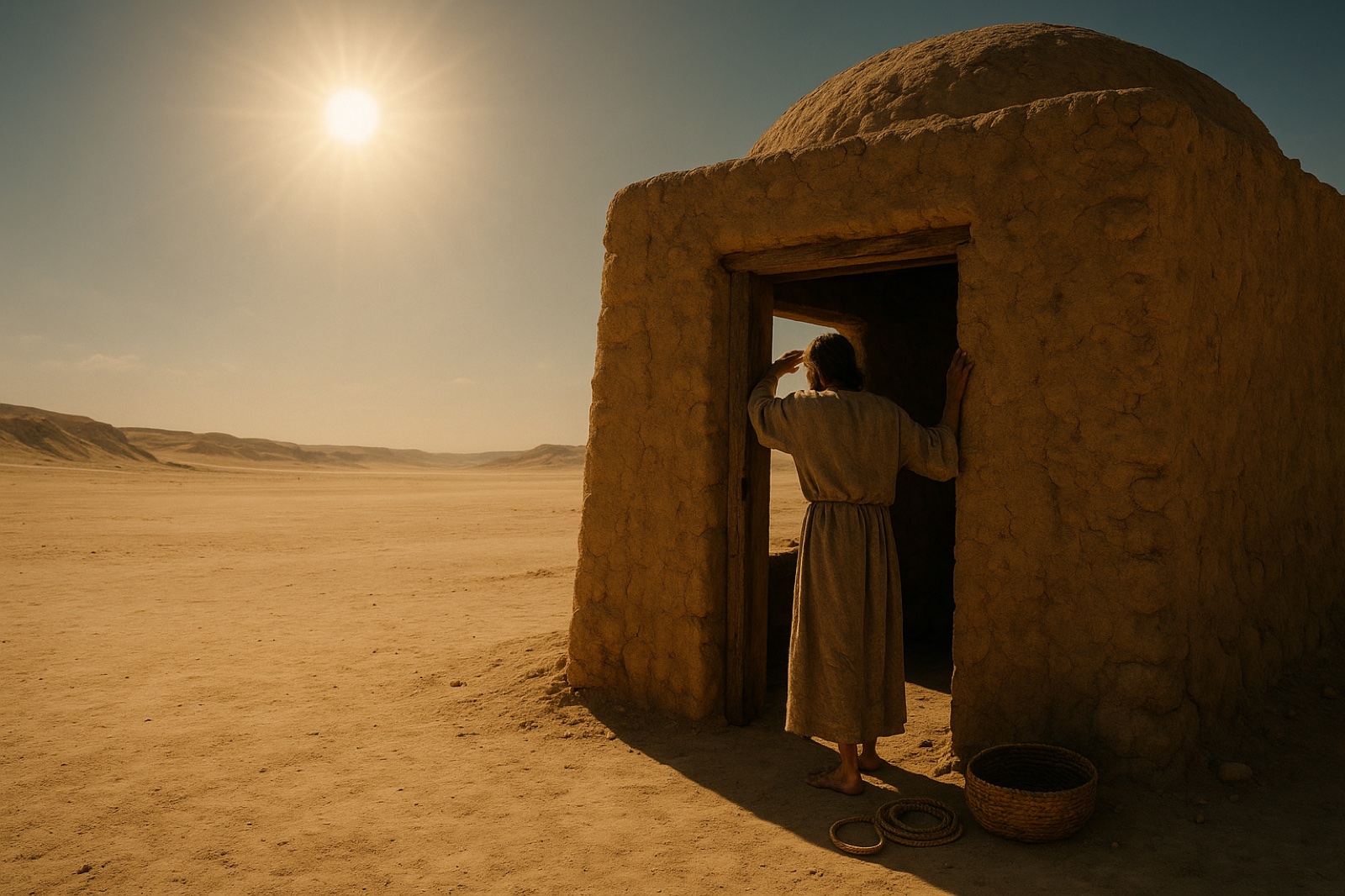
A monk named Evagrius Ponticus wrote the best-known description of it in a short book called the Praktikos. He called acedia “the most burdensome of all the demons.” He said it tends to arrive in the late morning and hang around until the early afternoon. The day seems to stop moving. You keep looking out the window. You hope someone will visit. You start to hate your place, your work, and the people around you.
If that sounds painfully familiar, you are not strange. You are in very old company. We looked at the everyday, modern side of this feeling in why you can feel bored all the time even with endless entertainment. This article goes somewhere different: back to the verse the monks took the name from.
Why acedia is called “the noonday demon”
Evagrius gave acedia a nickname: the noonday demon. He did not make that up. He took it from Psalm 91.
But here is the part almost nobody mentions. If you open a King James Bible to Psalm 91, you will not find a demon there at all. This is what it says:
“Thou shalt not be afraid for the terror by night; nor for the arrow that flieth by day; Nor for the pestilence that walketh in darkness; nor for the destruction that wasteth at noonday.”
— Psalm 91:5-6 (KJV)
“The destruction that wasteth at noonday.” No demon. So where did the demon come from?
It came from translation. Long before Jesus was born, Jewish scholars translated the Hebrew Bible into Greek. That Greek version, called the Septuagint, was the Bible most early Christians read. In it, the end of Psalm 91:6 became something like “mishap and a demon at noon.” Later, the Latin Bible carried it on as daemonium meridianum, the midday demon.
The King James translators went back to the Hebrew, which speaks of a destruction or plague that strikes at noon. So both readings are real. They just come from different doors into the same verse. The desert monks read the Greek door, and it gave them a name for the enemy they met every day around lunchtime.
The phrase has never really gone away. In 2001, the writer Andrew Solomon borrowed it for the title of his book about depression, The Noonday Demon. And in 2008, the poet Kathleen Norris wrote a whole book about her own long fight with this feeling, called Acedia & Me.
Why noon, of all times?
Think about it for a moment. We expect trouble at night. Night is when fear lives. But noon is supposed to be safe. It is bright. Everything is visible.
That is exactly why acedia is so sneaky. It does not feel like an attack. It feels like a very reasonable opinion about your life. In full daylight, with nothing obviously wrong, it simply tells you that where you are is not worth being.
How acedia turned into “sloth”
You have probably never heard the word acedia before today. There is a reason for that.
Evagrius had a list of eight troubling thoughts. Over the next few centuries, church writers reshaped that list into the seven deadly sins we know today. Along the way, acedia got folded in with sadness and, later, with what English speakers call sloth.
That is a bit of a loss. Sloth sounds like lying on the couch. Acedia is often the opposite. A person under acedia can be full of energy, plans, and big ideas. They are just certain that all of it belongs somewhere else. Later, Thomas Aquinas described acedia as a kind of sorrow about spiritual good: being weighed down by the very good things that should bring you joy.
It also helps to say what acedia is not. It is not the same as depression, and it is not the same as anhedonia, when nothing feels good anymore. Those are real health conditions, and they deserve real care. (More on that in the questions at the end.)
The desert father who had it too
Here is a story that surprises people. Antony, often called the father of all monks, is the first name in the old collection called the Sayings of the Desert Fathers. And the very first story told about him is about acedia.
Antony was sitting in the desert, weighed down and flooded with bad thoughts. He said to God, in effect, “I want to be saved, but these thoughts will not leave me alone. What should I do?”
Then he got up and went outside. He saw a man like himself, sitting and working, plaiting a rope. The man stood up to pray. Then he sat down and plaited more rope. Then he stood up and prayed again. The story says it was an angel, and the angel said to Antony: “Do this and you will be saved.”
Look at what the answer was. Not a new place. Not a big spiritual experience. Not a better life somewhere else. Just a rhythm: a little work, a little prayer, a little work, a little prayer. In the same spot.
Evagrius gave similar advice. When acedia comes, he wrote, do not leave your cell, whatever good-sounding excuse you come up with. Stay, and keep going. He also suggested something beautiful: let one part of your soul encourage the other part, and plant good hopes in yourself. That is exactly what the psalmist does:
“Why art thou cast down, O my soul? and why art thou disquieted in me? hope thou in God: for I shall yet praise him for the help of his countenance.”
— Psalm 42:5 (KJV)
The psalmist talks back to their own restless heart. You are allowed to do that too.
The answer was in Psalm 91 all along
Now go back to the psalm the monks took the name from. Before it ever mentions noonday, the psalm opens like this:
“He that dwelleth in the secret place of the most High shall abide under the shadow of the Almighty.”
— Psalm 91:1 (KJV)
Look at those two verbs: dwelleth and abide.
The Hebrew word behind “dwelleth” is yashab. It is an everyday word. It means to sit down, to stay, to live somewhere. The word behind “abide” is lun, which means to lodge, to stay the night, to not move on.
Acedia says: get up, go, anywhere but here.
Psalm 91 opens by saying: sit down. Stay the night. Remain.
The same psalm that names the noonday trouble begins with the cure for it. The promise of protection in verses 5 and 6 belongs to the person described in verse 1: the one who stays. And notice where they stay. Not in a perfect place. Under a shadow. And at noon in the desert, a shadow is exactly what you need.
That is the part of the monks’ advice that is easy to miss. “Stay in your cell” was never about being stuck in a boring room. It was about believing that God is not somewhere else. God is in the place you want to leave. The cell was not a prison. It was the secret place of the most High, hiding in plain sight.
This is why a change of scenery never cures acedia. You would just take the restlessness with you. But if God is present right here, in this ordinary afternoon, then here is enough to meet God in. If you have felt far from God for a while, you may also find it helpful to read what spiritual dryness means when prayer feels empty.
What to do when the noonday demon shows up
None of these cost anything or need special equipment. Each one takes less than ten minutes.
- Name it out loud. The next time you feel the “anywhere but here” pull, say quietly: “This is acedia. It is noon in my heart, not the truth about my life.” Naming it takes away some of its power to sound like good advice.
- Do Antony’s rhythm once. Pick one small, real task in front of you: washing a few dishes, folding clothes, answering one message. Do it for five minutes. Then stop and pray one honest sentence. Then do five more minutes of the task. That is the whole thing.
- Talk back to your soul with Psalm 91:1. Write the verse on paper or in your phone notes. When the urge to leave hits, read it slowly, then say: “I will sit here. I will stay. God is in this place too.” If you want help finding a verse for a different feeling, try our free Bible Verse for How I Feel tool.
Journaling prompts
- When the restless, anywhere-but-here feeling comes to you, what time of day is it usually, and what are you usually doing?
- What “somewhere else” does your restlessness keep pointing you toward? What do you imagine you would finally have there?
- If God were already present in the exact place you most want to escape, what might you notice there that you have been walking past?
A prayer for the noonday hours
God, it is the middle of the day and I want to be anywhere but here. I am tired of this room, this work, and honestly, a bit tired of myself. Help me believe that you are not waiting for me somewhere else, but that you are right here, in this ordinary hour. Give me the courage to sit down, to stay, and to do the small thing in front of me. Be my shade when the day feels long. Amen.
“The answer to ‘anywhere but here’ is that God is here.”
What do you think?
Evagrius believed acedia was the heaviest of all the struggles a person faces, heavier even than anger or greed. Do you think he was right, or is there another struggle you would put above it? Share your thoughts in the comments below.
Share this
- Just learned the restless “anywhere but here” feeling has a name: acedia. Monks 1,600 years ago called it the noonday demon.
- Psalm 91 names the trouble that “wasteth at noonday.” But it opens with the cure: the one who dwells and abides. Sit down. Stay. God is here too.
- I always thought restlessness meant I was in the wrong place. The desert fathers said it usually means the opposite. Stay, do the small thing, pray, repeat.
Questions people ask about acedia
What does acedia mean?
Acedia comes from the Greek word akēdia, which roughly means “not caring” or “lack of care.” Early Christian monks in the Egyptian desert, especially Evagrius Ponticus in the late 300s, used the word for a restless, listless boredom joined with a strong dislike of one’s surroundings and work, and a conviction that life would be better somewhere else. Over time the idea was folded into the list of seven deadly sins, usually under the name sloth.
Why is acedia called the noonday demon?
Acedia is called the noonday demon because Evagrius Ponticus took the phrase from Psalm 91:6 in the Greek Septuagint, which speaks of a “demon at noon,” and because acedia usually struck monks in the late morning and early afternoon. The King James Version translates the same verse from the Hebrew as “the destruction that wasteth at noonday,” so the word “demon” does not appear in the KJV reading.
Is acedia the same as depression?
Acedia is not the same as depression. Acedia is a spiritual and moral term from early Christian monasticism describing restlessness, boredom, and a desire to be somewhere else, and the person experiencing it can have plenty of energy. Depression is a medical condition that often involves long-lasting low mood, loss of pleasure, changes in sleep or appetite, and low energy. Anyone whose low mood or loss of interest has lasted more than two weeks, or who has thoughts of self-harm, should speak with a doctor, a local health service, or a crisis line.
What is the difference between acedia and sloth?
Sloth usually suggests laziness or physical idleness, while acedia describes a restless inner state that can include plenty of activity. Acedia was one of eight troubling thoughts listed by the monk Evagrius Ponticus in the 300s, and later church writers merged it with sadness and eventually with sloth when the list became the seven deadly sins. Thomas Aquinas described acedia as a kind of sorrow about spiritual good.
What did the desert fathers say to do about acedia?
The desert fathers taught staying in place and keeping a simple rhythm of work and prayer. Evagrius Ponticus advised not leaving one’s cell during temptation, whatever excuse seemed reasonable. The first story about Antony the Great in the Sayings of the Desert Fathers tells of an angel who plaited rope, stood to pray, and sat to work again, saying, “Do this and you will be saved.” Abba Moses told a younger monk, “Go, sit in your cell, and your cell will teach you everything.”