 0
0
 0
0
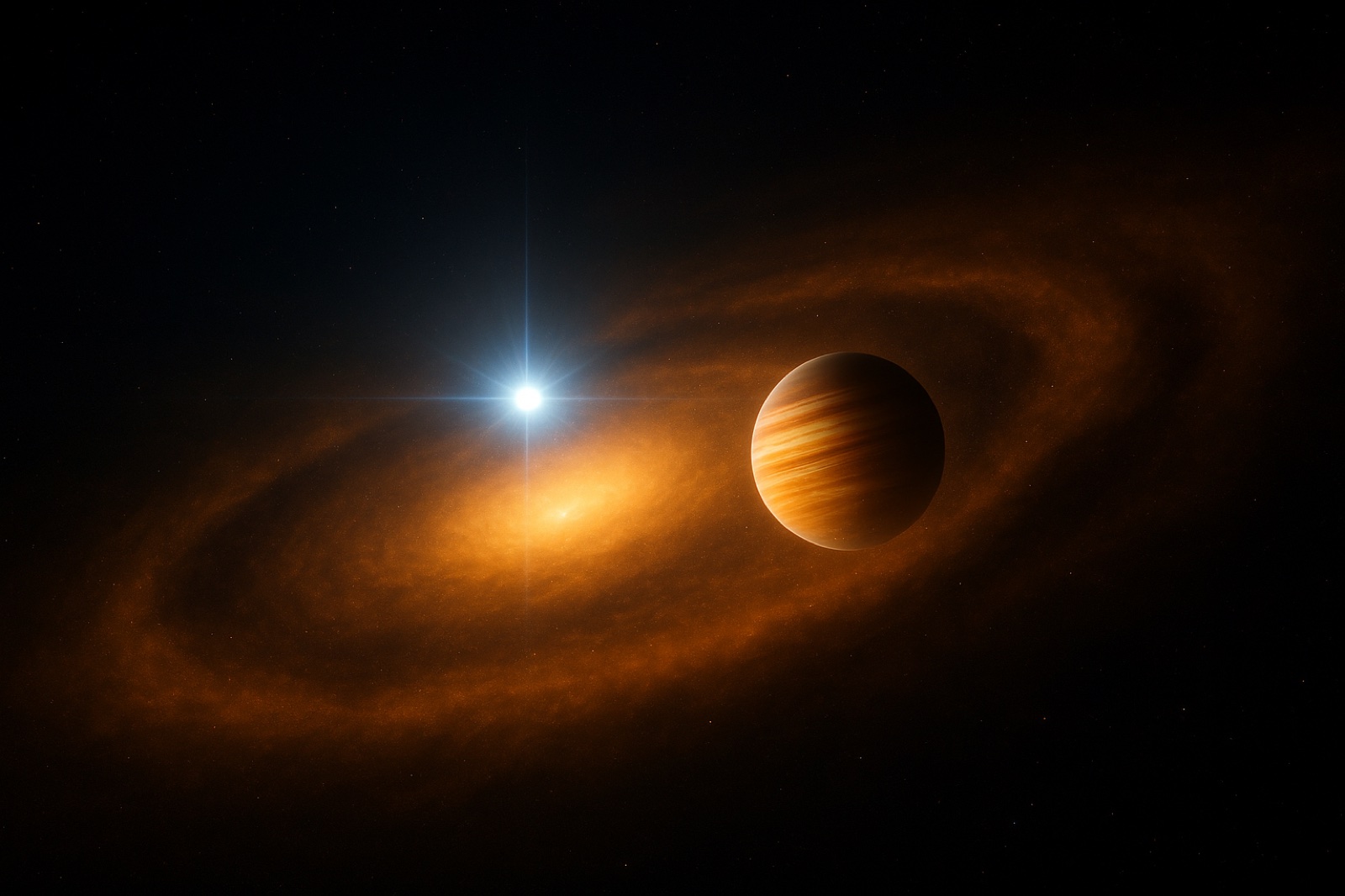
For more than a decade, some of the most powerful telescopes on Earth pointed directly at a nearby solar system and never noticed anything unusual sitting right in the frame. Then in July 2026, astronomers announced they had found a planet hiding in plain sight the entire time — a giant world now named Beta Pictoris d, sitting inside images they had already collected years earlier. Nobody had missed a blurry photo somewhere. They had been looking at the right picture the whole time and reading it wrong.
It is one of those stories that makes you sit back and ask: what else have we been staring right at without actually seeing?
A Famous System With One More Secret
Beta Pictoris is not an obscure star. It is one of the most photographed young solar systems in astronomy, located about 63 light-years away, and it already had two confirmed giant planets on the books — Beta Pictoris b and Beta Pictoris c. Both were found the traditional way: astronomers pointed a telescope at the system and directly imaged the faint light bouncing off the planets themselves.
So when a team using NASA’s James Webb Space Telescope went back to study the atmosphere of Beta Pictoris b in more detail this year, nobody expected to find a third planet in the same data. But that is exactly what happened. A separate team, working independently with the European Southern Observatory’s Very Large Telescope in Chile, went digging through archival images of the same system and found the same object — sitting in photographs dating back eleven years.
Two teams, two different instruments, and the same undiscovered planet had been sitting in plain view the entire time.
How Astronomers Found a Planet Hiding in Plain Sight
Here is the part that makes this discovery different from a normal “we found a new planet” headline: nobody actually saw Beta Pictoris d, not in the way you would expect.
Beta Pictoris is surrounded by a bright, wide disk of leftover dust and debris — the raw material still swirling around from when its planets formed. That disk scatters an enormous amount of starlight in every direction, which means anything faint sitting near or inside it gets buried in glare. Trying to spot a small, dim planet against that backdrop is a little like trying to notice a single candle held up next to a stadium floodlight, through fog. The light is technically there. It is just impossible to separate from everything blazing around it.
So instead of chasing a clearer picture, astronomers changed the question entirely. Rather than asking “what does it look like,” they asked “what is it made of.” Webb’s instruments picked up faint chemical fingerprints buried in the light from that part of the system — specific traces of carbon monoxide, water vapor, and methane. By matching that exact combination against models of what a planet’s atmosphere should look like, they were able to isolate a real, solid world from the star’s overwhelming glare and the disk’s scattered light around it.
They did not find Beta Pictoris d by how it looked. They found it by what it breathed.
Why This Method Changes the Search
This matters for more than just one planet around one star. Astronomers now have a working method for finding worlds that were always considered too difficult to catch — planets too faint, too close to their star’s glare, or too buried inside a dust disk to ever photograph directly. If a planet’s atmospheric chemistry can be teased out of light that already exists in an archive, that means observatories may not need a single new photograph to find it. The data might already be sitting there, waiting to be asked a better question.
Scientists studying Beta Pictoris d describe it as a young, still-warm gas giant, glowing faintly with the leftover heat of its own formation — not unlike its two known siblings in the same system. It was never actually invisible. It was only ever invisible to the kind of looking that depends on surface brightness alone.
What Was Really Hidden
There is an idea older than telescopes that says something similar about people, and it has stuck around this long because it keeps turning out to be true: what shows up on the surface and what is actually there are not always the same thing. Glare has a way of making us miss what matters — in a distant star system, and just as easily in a person standing right in front of us. It is easy to judge something by what it looks like from a distance. It takes closer, more patient attention to notice what is actually happening underneath.
Ancient wisdom has long pointed at something bigger than us that was never fooled by glare in the first place — something that was never confused about what it was looking at, because it was never really looking at the surface to begin with. Being hidden from view and being unseen, it turns out, were never quite the same thing.
A Planet That Was There All Along
The next time Beta Pictoris comes up in an astronomy headline, there will be a third confirmed planet in that system on the record — one that was sitting in the data the entire time, waiting for someone to ask the right question of it. It is a strange kind of comfort, in a way. Being hard to see is not the same as not being real. Somewhere out there, in data we already have, something we have been staring right at is probably still waiting to be found.
Join the Conversation
Do you think there are more hidden worlds like Beta Pictoris d sitting in old telescope data right now, just waiting for someone to ask the right question? Tell us what you think in the comments below.
Share This Story
- Astronomers stared at this planet for 11 years and never saw it — turns out they were looking for the wrong thing entirely. Wild story: https://bgodinspired.com/index.php/bible-resources/bible-and-science/beta-pictoris-d-hidden-planet-11-years/
- A giant planet hid inside data astronomers already had for over a decade. They found it by what it “breathed,” not what it looked like. One of those stories that makes you rethink what “hidden” even means: https://bgodinspired.com/index.php/bible-resources/bible-and-science/beta-pictoris-d-hidden-planet-11-years/
- New Webb telescope discovery: a planet nobody could see was there the whole time, glowing behind a wall of star-glare — found not by sight, but by chemistry. https://bgodinspired.com/index.php/bible-resources/bible-and-science/beta-pictoris-d-hidden-planet-11-years/
Frequently Asked Questions
What is Beta Pictoris d?
Beta Pictoris d is a newly confirmed giant exoplanet orbiting the young star Beta Pictoris, located about 63 light-years from Earth. It joins two previously known planets in the same system, Beta Pictoris b and c, and appears to be a large, young gas giant still glowing with leftover heat from its formation.
Why did it take 11 years to find Beta Pictoris d?
Beta Pictoris is surrounded by a bright disk of dust and debris left over from its planet formation, and that disk scatters enough starlight to bury faint planet signals in visual images. Telescopes had already captured Beta Pictoris d in photos going back more than a decade, but the planet’s reflected light was too faint and too close to the disk’s glare to be recognized as a planet.
How did astronomers finally detect it?
Instead of relying on direct images, astronomers using NASA’s James Webb Space Telescope and Europe’s Very Large Telescope studied the chemical fingerprints in the faint light coming from that part of the system — specifically signs of carbon monoxide, water vapor, and methane. Matching that chemical signature against atmospheric models let them isolate a real planet from the surrounding glare, rather than trying to see it directly.
Why does this discovery matter for finding other planets?
This method — detecting a planet’s atmospheric chemistry rather than depending purely on catching its faint reflected light — gives astronomers a new way to find planets that are too dim, too close to their star’s glare, or too well-hidden in dust disks to photograph directly. Scientists expect it to reveal more hidden worlds already sitting in existing telescope data.
Is Beta Pictoris visible from Earth without a telescope?
Beta Pictoris itself is a relatively bright star, but at 63 light-years away, its planets — including Beta Pictoris d — are far too faint to see without professional-grade telescopes. The discovery relied on some of the most advanced space and ground-based instruments currently in operation.
Related Reading
- The Stars That Were Hiding in Plain Sight the Whole Time
- Two Superconductors Hiding in Plain Sight Since Creation
- Scientists Just Found a Planet Made Entirely of Lava. Here’s Why Earth Isn’t One.