 0
0
 0
0
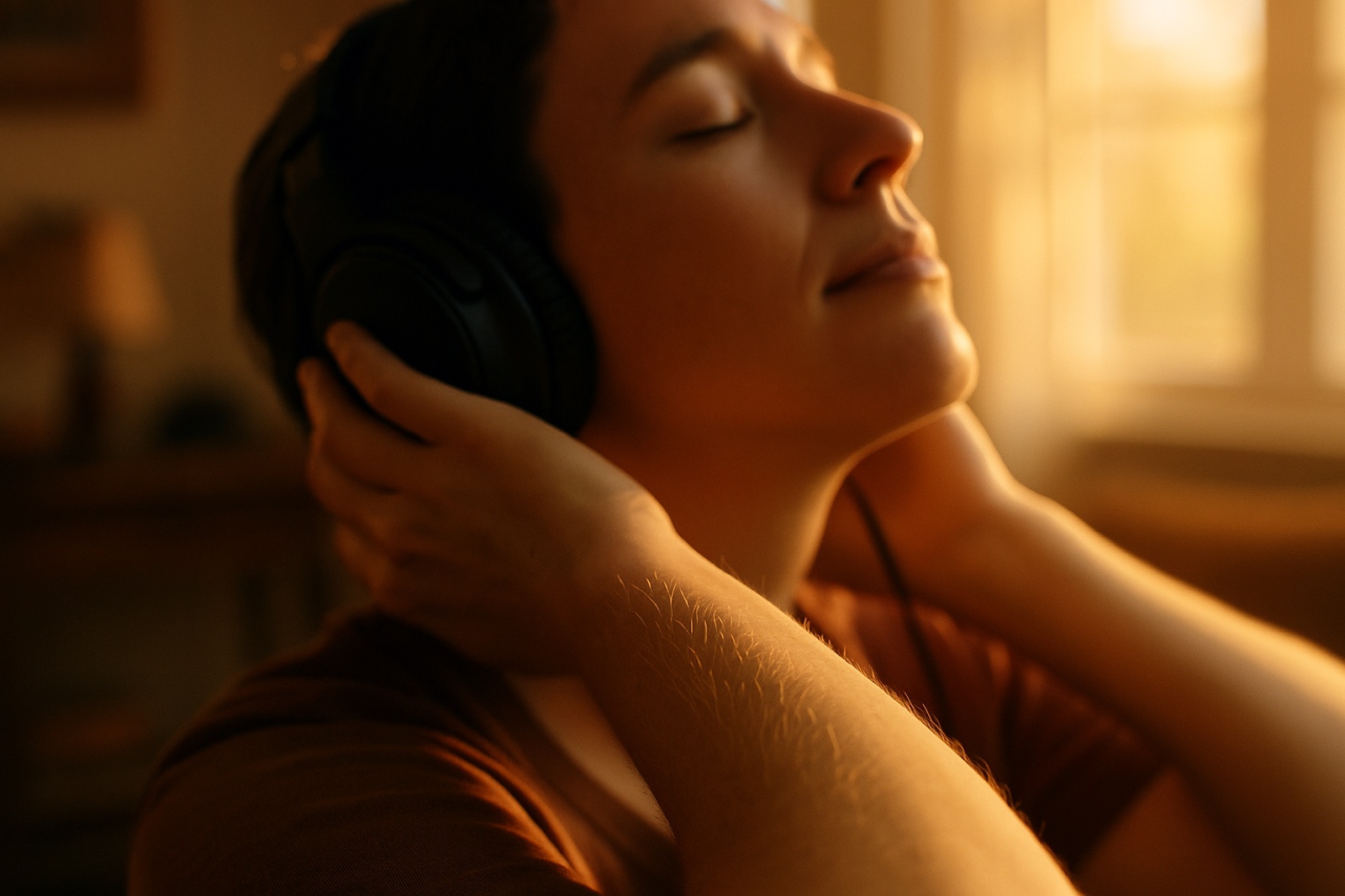
You know the moment. A song is building. The drums drop out, a single voice comes in, and something runs up the back of your neck and down your arms. For a second or two your skin feels electric. Then it is gone.
That feeling has a name. It is called frisson. So what is frisson, exactly, and why does it only happen at one moment in a song and not the other three minutes around it?
The short answer is that your brain is not just hearing the music. It is guessing where the music is going. And it starts rewarding you before the moment even arrives.
What is frisson?
Frisson is the rush of chills, tingles or goosebumps that some people feel during a powerful moment in music. Scientists also call it “aesthetic chills” or “musical chills.” It is usually short, often just a few seconds, and it tends to travel: up the spine, across the scalp, down the arms.
The word comes from French, where it simply means “a shiver.” English writers were borrowing it for an emotional thrill as early as 1777.
The history of the word has a small surprise in it. Trace it back far enough and it comes from the Latin for “friction,” from a verb that means “to rub.” At some point people mistakenly linked that word to a different Latin verb, the one for “to be cold.” So the name for the shiver music gives you is built on an old mix-up between rubbing and cold. Which is fitting, because the feeling itself is a kind of mix-up too. Your body reacts as if something physical just touched you, when all that happened was a sound.
The body part of it is the same machinery as ordinary goosebumps. A tiny muscle at the base of each hair tightens and the hair stands up. We covered why we get goosebumps, and why that little muscle is not as useless as it looks, in an earlier piece. This one is about the other half: what the brain is doing when a song sets it off.
Why does music give you chills? The brain is predicting
In 2011, a team at McGill University in Montreal, led by Valorie Salimpoor and Robert Zatorre, published a study in the journal Nature Neuroscience. They brought in people who reliably got chills from music, and they measured what happened in their brains while they listened.
They found dopamine, the brain chemical tied to reward and wanting. That part was expected. Dopamine shows up for food and other things we crave. The surprise was the timing.
Dopamine was released in two different places at two different moments:
- Before the peak. In the build-up, while the listener was waiting for the moment they knew was coming, a region called the caudate was most involved.
- At the peak. When the chills actually hit, a different region called the nucleus accumbens took over.
In other words, the brain has one response for wanting the moment and another for getting it. The wanting starts first. Your body is already leaning in before the chord ever lands.
That is why frisson does not happen at random. It happens where a song sets up an expectation and then answers it, or bends it.
What kind of moments set it off
Researchers who study frisson keep finding the same kinds of triggers:
- A harmony or chord you did not expect
- A sudden change in volume, very loud or very quiet
- A new voice or instrument coming in, especially a single singer after a big sound
What these have in common is that they break a pattern your brain was quietly following. Not in a jarring way. In a good way. You were expecting one thing, you got something slightly better, and your body answers before your mind can put it into words.
That is also why the same song can lose its power if you play it too much. The surprise gets used up. And it is why a song you have never heard can still hit you, because your brain has spent your whole life learning how music usually goes. If you have ever wondered about the flip side of this, why some songs get stuck in your head comes down to a similar thing: the shape of the tune and how easy it is for the brain to predict.
Why some people feel it and others don’t
Not everyone gets frisson. Different studies give very different answers for how common it is, partly because they ask the question in different ways and play people different music. So be careful with any single confident number you see online. What researchers agree on is that plenty of people feel it, and plenty of people rarely or never do.
Two findings help explain the difference.
The first is about wiring. In 2016, Matthew Sachs and colleagues published a small brain-scan study. People who got chills from music had stronger connections between the part of the brain that handles sound and the parts that handle emotion and feeling. The signal simply has a better road to travel on.
The second finding is the one most people miss. Mitchell Colver, a researcher at Utah State University, looked at personality and frisson in a 2016 study published in Psychology of Music. People who got chills tended to score high on a trait called “openness to experience.” That part gets repeated a lot.
But the detail underneath it is more interesting. It was not mainly the emotional side of openness that went with frisson. It was the thinking side. Colver’s conclusion was that people who actively get inside the music, following it and imagining where it is going, seem to feel frisson more often and more strongly than people who let it wash over them in the background.
That fits the dopamine study perfectly. Frisson rewards anticipation. And you cannot anticipate something you are not paying attention to.
So frisson is not only something that happens to you. It is partly something you make room for.
What frisson says about the way we listen
Most of the music in a normal day is background. It plays in a shop, in a car, in one ear while we do something else. That kind of listening almost never gives chills. Not because the music is bad, but because nobody is waiting for anything.
Frisson needs a certain kind of attention. Leaning forward. Expecting something. Being ready to be moved.
There is a very old story about exactly that. A prophet was called before a king he did not respect. He was angry and unsettled, and he was being asked to hear from God on the spot. Before he tried to answer, he asked for one thing: someone to play music. The story says that as the musician played, the hand of the Lord came on him. It does not explain why. It just records that the music came first and the listening came after.
People have been noticing for a very long time that music can do something to us that argument cannot. It can get underneath the noise in our heads and turn us toward something bigger, if we let it.
How to notice frisson more
You cannot force chills, and you should not try to. But you can make room for them. None of this costs anything:
- Listen to one song with nothing else going on. No scrolling, no chores. Just the song.
- Pick music that builds. Songs with a long rise, a quiet section, or a big return tend to give the brain something to anticipate.
- Follow one part. Pick a single voice or instrument and stay with it the whole way through. That is the “getting inside the music” kind of listening Colver’s work points to.
- Do not overplay your favourites. Give a song that moves you some rest, so the surprise can come back.
If you like thinking about the songs that move you and what they are really saying, you can explore that with our free Music & Faith AI assistant (it opens in ChatGPT).
The next time a song sends that shiver up your back, you will know what happened. Your brain saw something coming, wanted it, and got it. It is a small moment. But it is proof that you are still able to be surprised by beauty, and that you were listening when it arrived.
Questions People Ask About Frisson
What is frisson?
Frisson is a brief rush of chills, tingles or goosebumps that many people feel during an emotionally powerful moment in music, and sometimes during films, speeches or art. It is also called aesthetic chills or musical chills. The word comes from French for “a shiver.” Physically, it is the same reflex as ordinary goosebumps: tiny muscles at the base of the hairs tighten and the hairs stand up. What makes it different is that the trigger is emotional rather than cold.
Why does music give me chills?
Music gives people chills because the brain is constantly predicting where a song is going and rewarding itself when the prediction pays off. A 2011 study in Nature Neuroscience by Valorie Salimpoor, Robert Zatorre and colleagues at McGill University found that dopamine is released in the caudate during the build-up before a musical peak, and in the nucleus accumbens when the peak arrives. Chills tend to come at unexpected harmonies, sudden changes in volume, or when a new voice or instrument enters.
Is it rare to get frisson from music?
Frisson is not rare, but not everyone experiences it. Studies give widely different estimates of how common it is, depending on how people are asked and what music is played, so no single percentage should be treated as settled. Research has linked frisson to stronger brain connections between sound-processing and emotion-processing areas, and to a personality trait called openness to experience.
Does the kind of listener you are affect whether you get chills from music?
Research suggests it does. A 2016 study by Mitchell Colver at Utah State University, published in Psychology of Music, found that people who get frisson tend to score high on openness to experience, and specifically on its intellectual side. People who actively follow and imagine the music as it unfolds appear to experience chills more often and more intensely than people who treat music as background sound.
Is frisson the same as goosebumps?
Frisson uses the same physical reflex as goosebumps, called piloerection, in which small muscles attached to hair follicles contract and raise the hairs. Ordinary goosebumps are usually caused by cold or fear. Frisson is the name for the version caused by an emotional or aesthetic moment, most often in music, and research has linked it to dopamine release in the brain’s reward system.
Something to Think About
Here is a question with no wrong answer. Do the songs that give you chills do it because of the music itself, or because of the moment in your life you first heard them? Tell us which song does it for you, and which side you land on. We read every reply.
If You Want to Pass This On
Take any of these:
- Learned today that the chills you get from a song start before the big moment. Your brain releases dopamine while it is still waiting for it. https://bgodinspired.com/index.php/entertainment/music/what-is-frisson/
- The word “frisson” goes back to the Latin for friction, which people once mixed up with the word for cold. So the name for music chills is an ancient mix-up. Kind of perfect. https://bgodinspired.com/index.php/entertainment/music/what-is-frisson/
- Apparently people who really follow a song, instead of letting it play in the background, get chills more often. I am putting my phone down for the next one. https://bgodinspired.com/index.php/entertainment/music/what-is-frisson/