 0
0
 0
0
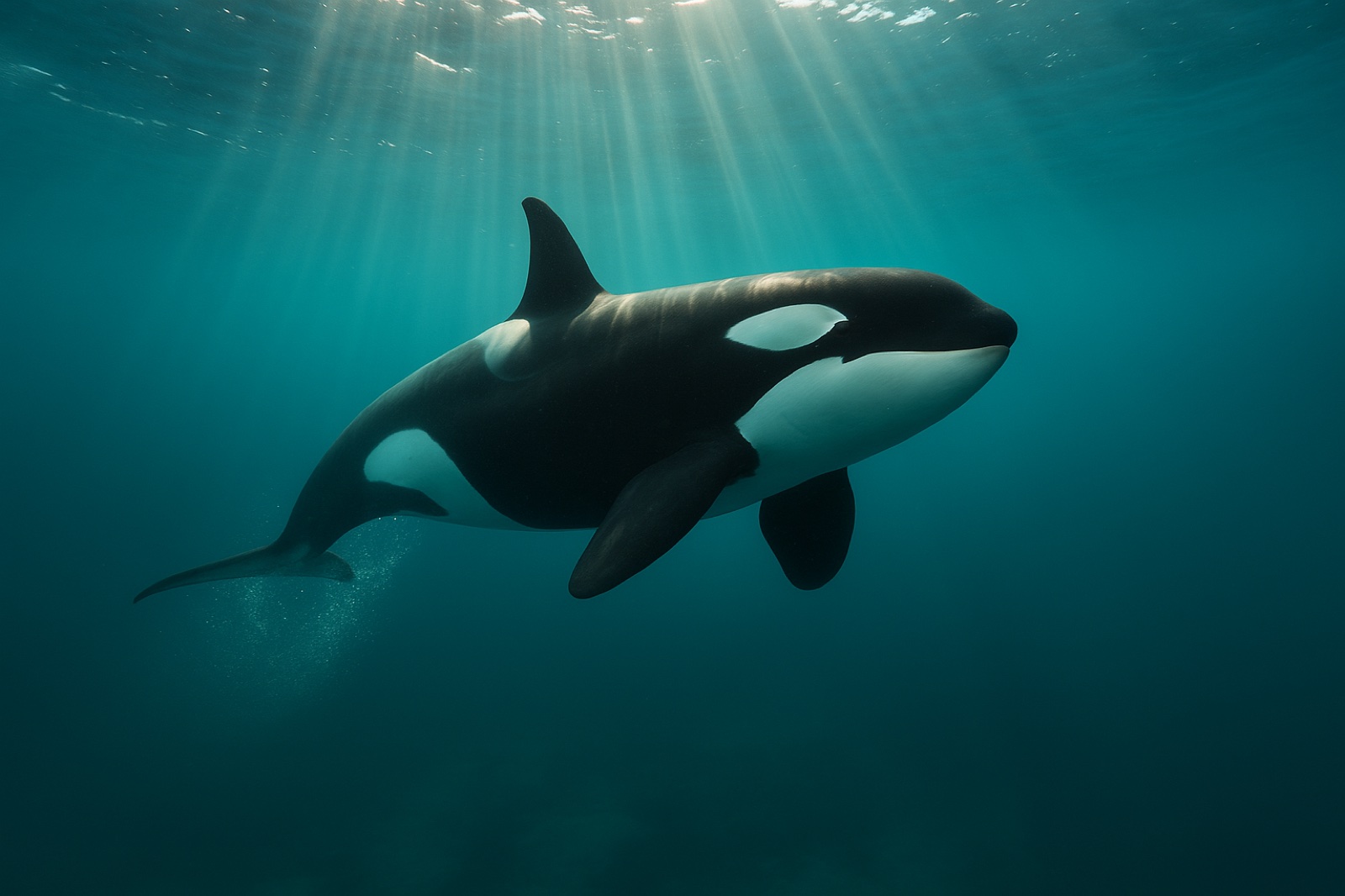
Off the coast of Baja California Sur, a group of divers watched something happen that no scientist had ever recorded before. A pod of orcas surrounded a giant sunfish — one of the heaviest bony fish in the world — and did something no textbook described. One orca clamped onto the sunfish’s fin and held it steady in the water. Then, right as it let go, a second orca came in at full speed and rammed the carcass so hard it burst into thousands of pieces.
The footage looked less like a hunt and more like a demolition. And when researchers finally studied it closely enough to publish their findings this July, they had to admit something rare for a field that has tracked orcas for over sixty years: they had never seen orcas do this before, and they still aren’t entirely sure why they do it.
A Behavior Scientists Had Never Documented
The orcas smashing a sunfish weren’t hunting it in the moment the cameras caught them. The sunfish was already dead, killed by the pod earlier. What came next — the hold, the release, the high-speed collision — is what caught scientists off guard. One whale grips. One whale lets go on cue. Another whale explodes the body into fragments small enough to share.
The behavior was first filmed near San José del Cabo in the summer of 2024, then documented again since, giving researchers enough footage to describe it formally in the journal Frontiers in Ethology this year. Giant sunfish, or Mola mola, can weigh over a ton, with tough, gelatinous flesh that isn’t easy for a predator to tear into. A coordinated, full-speed impact solves that problem the way nothing else does — but “solving a problem” doesn’t fully explain why a species this intelligent would choose theater over simplicity.
Why Would Orcas Do This?
Researchers have floated a few theories, and none of them cancel each other out. One is practical: this is food processing, a way of breaking down a difficult meal into pieces small enough for the whole pod — including calves — to actually eat. Another is developmental: this could be a teaching moment, older orcas showing younger ones a technique they’ll need for the rest of their lives. And a third theory is one that keeps showing up in orca research again and again — this might simply be play. Orcas have been documented tossing seals in the air for no clear survival reason, balancing prey on their heads, and chasing objects that offer no food value at all. Intelligence, it turns out, tends to come with curiosity, and curiosity doesn’t always need a reason.
One More Page in a Catalogue That’s Still Being Written
What makes this discovery land differently is what it says about how much is still unknown. Orcas are among the most studied animals on Earth. Researchers have already catalogued dozens of regional feeding techniques — orcas in Norway herding herring into tight balls before slapping them with their tails, orcas near Antarctica tipping ice floes to wash seals into the water, orcas off Argentina intentionally beaching themselves to snatch sea lion pups off the shore. Each population appears to carry its own culture, passed down and taught across generations, the way a family passes down a recipe.
And after sixty years of watching, cataloguing, and tagging, the ocean still produced something nobody had written down yet — the same way the discovery that our oceans are quietly losing oxygen caught researchers off guard just months ago. The sea keeps a lot of its own secrets on its own schedule.
Even After Decades of Watching, the Ocean Still Surprises Us
There’s something humbling in that. Not because the science failed — the science is exactly why we know about this now — but because it’s a reminder of how much confidence can outrun actual knowledge. We map coastlines, tag migrations, and build entire careers around a handful of ocean species, and the sea still has moves nobody has catalogued yet.
It isn’t a new thought. Some of the oldest writing we have about the natural world makes the same point — that the deep holds creatures and behavior no human observer fully controls or predicts, no matter how confident he’s become. It wasn’t written as a science lesson. It was written as a question aimed at a man who thought he had things figured out: can you really say you understand what lives down there? It’s not so different from how a 3,000-year-old passage about the earth shifting under our feet keeps lining up with what seismologists are only now able to measure. Thousands of years later, with drones and dive teams and peer-reviewed journals, the honest answer hasn’t changed all that much. Something bigger than our best research budget is still writing the rules the ocean plays by — we’re just now and then lucky enough to catch a glimpse of one.
Maybe that’s the part worth sitting with longer than the video itself. Not that orcas do something strange and violent-looking to a sunfish. But that in a century full of satellites and sensors, the natural world can still hand us something we’ve never seen and say, in effect, there’s more where that came from. It’s the same quiet lesson buried in questions people have long asked about creatures the earth used to hold — we were never promised a full inventory. Just enough wonder to keep looking up, and down.
What Do You Think?
Do you think humans will ever fully catalogue how wild animals like orcas behave — or will the ocean always be one step ahead of the research? Tell us what you think in the comments.
Share This
- “Orcas were just filmed doing something scientists have literally never documented before. Sixty years of research and the ocean still has surprises left.”
- “Turns out even the most-studied predator in the ocean can still shock the people who’ve spent their whole careers watching it. Humbling, honestly.”
- “Orcas smashing a sunfish to pieces sounds brutal until you learn the leading theory is… they might just be teaching their kids. Or playing. Nobody’s fully sure yet — and that’s the interesting part.”
Common Questions About the Orca Sunfish Discovery
What did the orcas actually do to the sunfish?
One orca held the dead sunfish steady by its fin while a second orca rammed it at high speed, breaking the body into thousands of small pieces. Researchers call it a “hold-and-ram” technique, and it had never been formally documented before this study.
Where was this filmed?
The behavior was recorded by divers near San José del Cabo, in the Gulf of California off Baja California Sur, Mexico. The first known footage was captured in the summer of 2024, with additional documented incidents since.
Were the orcas hunting the sunfish when this happened?
No. The sunfish had already been killed by the orca pod before the hold-and-ram behavior began, which is why researchers believe this is a food-processing or social behavior rather than a hunting strategy.
Why do scientists think orcas do this?
The leading theories are that it breaks tough sunfish tissue into pieces the whole pod, including calves, can eat; that it’s a way of teaching younger orcas a technique; or that it’s simply a form of play, something orcas have been documented doing with other prey as well.
Is this the first time orcas have shown a totally new behavior?
No — orcas around the world have distinct regional hunting techniques, from herding herring in Norway to washing seals off ice floes near Antarctica. This is simply the newest technique added to a list that researchers are still actively expanding.