 0
0
 0
0
You get the call, or you read the results, or you sit across the table for the conversation you’ve been dreading — and somewhere underneath the fear, there’s a prayer you haven’t said out loud yet. Not the polished one. The real one. Please let this go a different way.
Then, right behind it, comes the guilt. Shouldn’t you have more faith than that? Shouldn’t you just trust God and let it go?
Here’s something that might surprise you: the night before He was crucified, Jesus prayed the exact prayer you’re afraid to pray. Not once. Three times. And what He did next teaches more about surrender to God’s will than any verse about “letting go” ever could — because Jesus didn’t let go of what He wanted. He said it plainly, and then He trusted anyway.
What Actually Happened in Gethsemane
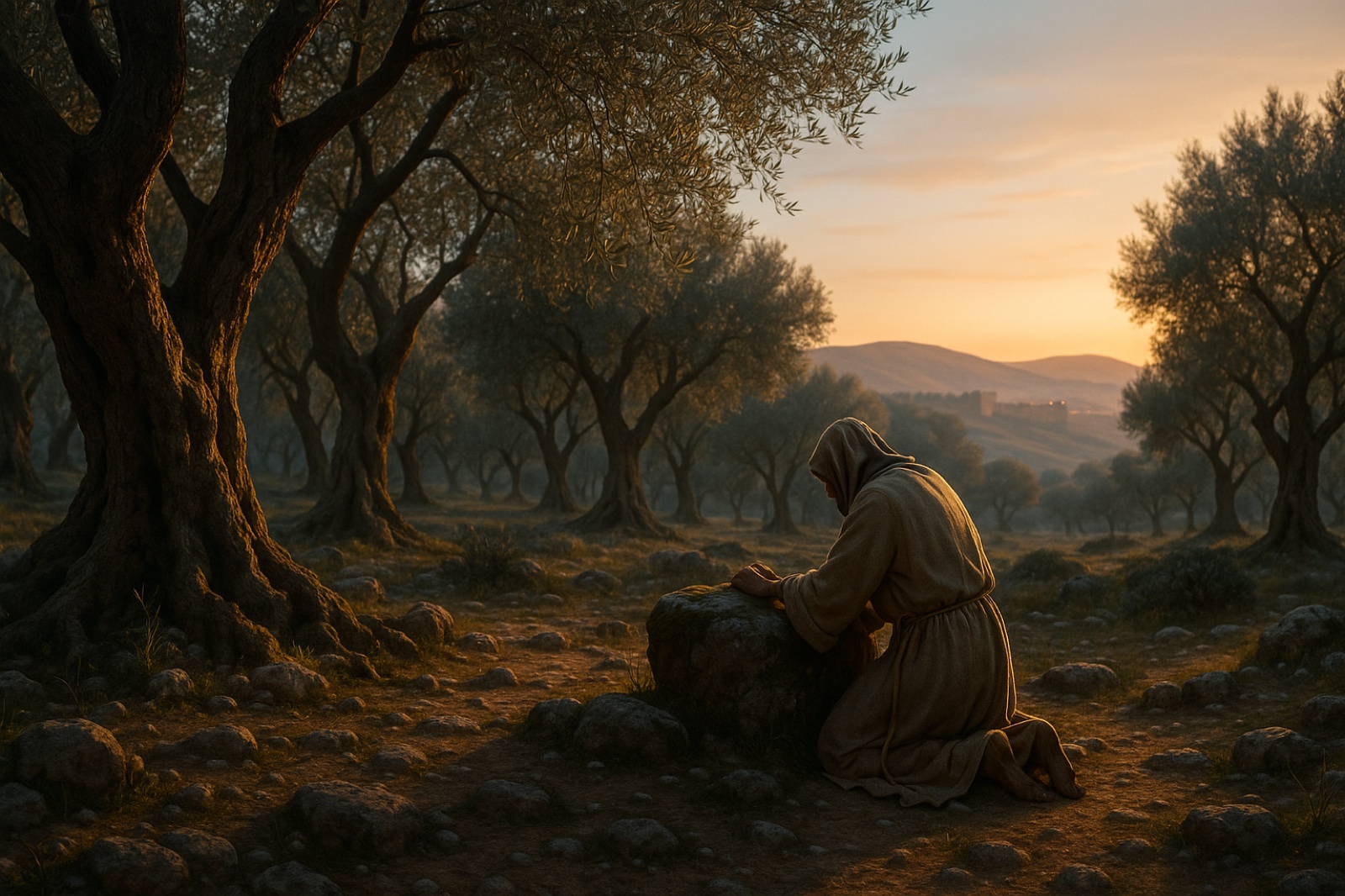
After the Last Supper, Jesus walked with His disciples to a place called Gethsemane — the name means “oil press,” a garden of ancient olive trees on the slope of the Mount of Olives, just across a small valley from Jerusalem. It was the middle of the night. He knew, with total clarity, what the next twenty-four hours held.
He brought Peter, James, and John further in with Him and told them plainly, “My soul is exceeding sorrowful, even unto death” (Matthew 26:38). Then He went a little further alone, and did something a respected Jewish teacher almost never did in public prayer — He fell facedown on the ground. Not kneeling. Not head bowed. Face to the dirt. That posture alone tells you this wasn’t a composed, dignified moment of acceptance. This was a man undone.
And here is exactly what He said: “O my Father, if it be possible, let this cup pass from me: nevertheless not as I will, but as thou wilt” (Matthew 26:39, KJV).
“The cup” wasn’t a random image. Throughout the Old Testament, a cup is shorthand for a judgment a person has to drink to the bottom — Isaiah 51:17 and Jeremiah 25:15 both use it that way, a cup of God’s wrath poured out. Jesus wasn’t just afraid of physical pain. He was asking to be spared bearing the full weight of what the cross actually meant. And He asked for it directly. Not “if it’s in Your will,” full stop, no follow-up. He named the specific thing He wanted — a different outcome — and asked God for it.
Luke’s account adds a detail worth sitting with: His sweat became like great drops of blood falling to the ground, and an angel had to come strengthen Him (Luke 22:43-44). This is not a man performing composure. This is real anguish, in real time, with no certainty yet of how it would end.
He Didn’t Ask Once. He Asked Three Times.
This is the part most retellings skip past. Jesus went back to check on the disciples, found them asleep, and returned to pray “the second time, saying, O my Father, if this cup may not pass away from me, except I drink it, thy will be done” (Matthew 26:42). Then Matthew tells us plainly: “he left them, and went away again, and prayed the third time, saying the same words” (Matthew 26:44).
Three times. Same request. Same honest ask.
If surrender were a switch you flip — decide once, move on — Jesus would have prayed it once and stood up settled. He didn’t. He kept returning to the same prayer, the same want, the same honest plea. That’s not weak faith. That’s what real surrender actually looks like when the thing at stake is enormous: not a single clean moment, but staying in the asking long enough that trust has room to grow stronger than the fear.
What Gethsemane Actually Teaches About Letting Go
Here’s where it clicks. “Letting go and letting God” gets preached like it means going numb — stop wanting the outcome, stop asking, just accept whatever happens with a peaceful smile. But that’s not what happened in that garden. Jesus wanted a different ending. He said so, specifically, three separate times.
What changed wasn’t the want. What changed was where He put His trust. By the third prayer, He wasn’t negotiating anymore — He was present with the Father, still holding the same request, but no longer needing an answer before He could stand up and walk toward what came next. He never got a “yes, there’s another way.” He got up anyway, woke the disciples, and went to meet the very outcome He’d just asked God to change (Matthew 26:45-47).
That’s the posture Gethsemane models for you tonight, whatever your version of the cup is: pray honestly for the outcome you actually want — not the sanitized, acceptable-sounding version — and then trust God’s character enough to keep moving before you know how the story ends. Surrender isn’t the absence of the ask. It’s the ask, plus trust that outlasts not getting an answer yet.
Two Ways to Actually Do This Today
- Say the real prayer, out loud, right now. Not the churchy version. One sentence, naming the exact outcome you want — the thing you’ve been afraid to ask for because it feels like it means you don’t have enough faith. Jesus named His. Name yours.
- Add the second half, in your own posture. Kneel, or put your face in your hands for sixty seconds, and finish with, “not what I will, but what You will.” Notice that it doesn’t erase what you just asked for — it just gets added after it. That’s the whole model.
And if it feels too big to carry alone: tell one person, today, the actual outcome you’re hoping for, and ask them to pray that specific thing with you. Getting it out of your head and into the open is its own small act of trust.
Something to Sit With
- What is the outcome you keep asking God for, but have stopped saying out loud because it feels like you should already be over it?
- Where have you confused “surrender” with “stop caring”? What would it look like to keep caring, and trust anyway?
- If you knew — the way Jesus didn’t yet know about Sunday — that this hard chapter has an ending you can’t see yet, what would you do differently today?
A Prayer for the Waiting
Father, I’m not going to pretend I don’t want this to go a different way. You already know what I’m hoping for — I’m not hiding it from You anymore. But I don’t want to hold it so tight that I miss You in the waiting. Like Jesus in that garden, I’m asking You to change what I don’t think I can carry — and I’m choosing, even now, before I know how this ends, to trust that Your will is safe. Stay close to me tonight. Amen.
Here’s a question worth sitting with, and maybe talking through with someone this week: where’s the line, for you, between still praying for the outcome you want and truly trusting God with how the story ends? There’s no wrong answer — but naming it usually helps more than avoiding it. If this stirred something in you, we’d love to hear where you land — leave a comment or share this with someone who’s in their own Gethsemane right now.
Share This
- “Jesus asked God to change the plan. Three times. I used to think surrender meant you stop asking. Turns out it means you ask honestly — and trust anyway.”
- “I keep thinking ‘let go and let God’ means going numb to what I want. Gethsemane says otherwise. Jesus wanted a different outcome and said so — out loud, more than once.”
- “Not my will, but Yours. Three words that took Jesus three prayers to fully mean. Maybe that’s normal for me too.”
Questions People Ask About Gethsemane
Did Jesus actually not want to die on the cross?
Yes. Matthew 26:39 records Him asking directly, “if it be possible, let this cup pass from me.” He wasn’t performing acceptance — He genuinely asked God for another way, while still trusting the Father’s plan even before He knew the answer would be no.
What does “let this cup pass from me” mean?
In the Old Testament, a cup was often shorthand for God’s judgment that a person had to drink — see Isaiah 51:17 and Jeremiah 25:15. When Jesus asked for the cup to pass, He was asking to be spared bearing that judgment on the cross.
Why did Jesus pray the same prayer three times instead of once?
Matthew 26:44 says He prayed a third time, “saying the same words.” It wasn’t a formality — it shows real, ongoing wrestling. For Jesus, surrender wasn’t one instant decision; it was something He returned to and kept choosing.
Is it wrong to ask God to change your circumstances?
No. Jesus modeled asking directly and specifically for what He wanted. Surrender isn’t refusing to ask — it’s asking honestly, and then trusting God’s answer even when it isn’t the one you were hoping for.
What happened right after Jesus finished praying in Gethsemane?
He got up, woke the disciples, and went to meet Judas and the soldiers who arrested Him (Matthew 26:45-47) — walking directly toward the very outcome He had just asked God to change, having settled it in prayer first.
If this passage is opening something up for you, two more pieces go deeper: the actual Greek words Jesus’s terror is written in unpack just how real His fear was that night, and a look at the same prayer from Luke’s account sits with the surrender itself a little longer. And if what you’re really wrestling with is trusting an outcome you can’t see the end of yet, this look at what Romans 8:28 actually promises in the original Greek is worth reading next.