 0
0
 0
0
The Greek Words for What Jesus Felt in Gethsemane Are the Strongest Language for Terror in the New Testament — and That Changes Everything
It’s 2am and your heart won’t stop racing.
You’ve tried the deep breaths. You’ve quoted the verses. You’ve told yourself that God is in control and you believe it — you really do — but your hands are still shaking and your chest is still tight and something in you feels like it’s about to break apart.
And underneath all of it, there’s this other voice. The one that says: Real Christians don’t feel like this. If your faith were stronger, you wouldn’t be so afraid. This dread you’re carrying? It’s proof that something is wrong with you spiritually.
You’ve heard “fear not” appears 365 times in the Bible. One for every day. People say it like it’s supposed to help.
But your body keeps shaking anyway.
I need to show you something in the original Greek that might change how you understand your own fear — and how you understand Jesus.
The Night in the Garden We Think We Know
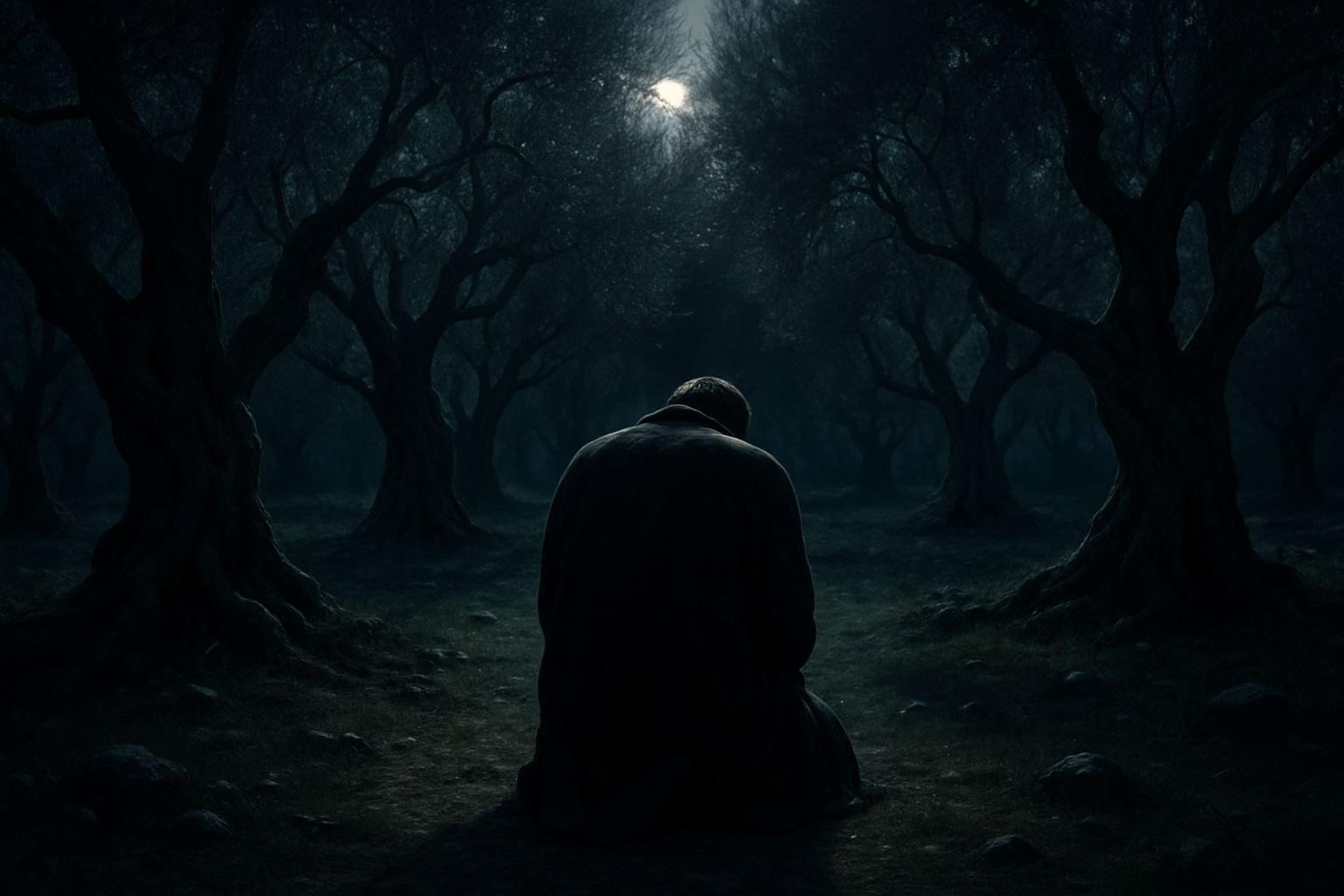
Most of us have a picture of Gethsemane in our heads. Jesus kneeling. Moonlight filtering through olive trees. A quiet moment of prayer before what comes next. Solemn. Composed. Maybe sad, but in control.
The text tells a different story.
Mark 14:33-34 says: “He took Peter, James and John along with him, and he began to be deeply distressed and troubled. ‘My soul is overwhelmed with sorrow to the point of death,’ he told them.”
That phrase “deeply distressed and troubled” is where everything changes. Because in the original Greek, Mark uses two words that appear almost nowhere else in the entire New Testament — words so intense that translators have struggled for centuries to capture what they actually mean.
Ekthambeo: A Word Reserved for Terror
The first word is ekthambeo. If you want to understand the ekthambeo meaning, you have to see where else it shows up in Scripture — because it’s rare. Only four times in the entire New Testament.
One of those times? When the women arrive at the empty tomb on Easter morning and see a young man in white sitting where Jesus’ body should have been. Mark 16:5 says they were ekthambeo — alarmed, astonished, struck with terror at what they were seeing.
Another time? When the crowds saw Jesus after he came down from the Mount of Transfiguration, still carrying some visible trace of glory. Mark 9:15 says they were ekthambeo.
This word isn’t “concerned.” It isn’t “worried.” It’s not even regular fear.
The ekthambeo meaning carries the sense of being struck with alarm, amazed with terror, overwhelmed with dread. Greek scholars describe it as a shuddering horror, the kind of instinctive recoil you feel in the presence of something overwhelming.
And Mark uses it to describe what Jesus began to feel in the garden.
Not what he thought. What he felt. In his body.
Ademonein: Distress That Has No Home
The second word is ademonein. This one appears only three times in the entire New Testament. It’s even rarer than ekthambeo.
Ancient Greek writers used this word to describe someone who was restless, troubled, in such anguish that they didn’t know what to do with themselves. Some scholars trace the root to a word meaning “away from home” — a distress so acute that you feel displaced from everything familiar, cast out into a place where nothing makes sense.
Ademonein is the kind of distress that has no floor beneath it.
It’s the feeling of falling and not knowing when you’ll land.
Jesus felt this. Mark says so in the plainest terms the Greek language had available.
What Jesus Actually Said About It
Then Jesus speaks. And what comes out of his mouth is just as intense.
“Perilypos estin he psyche mou heos thanatou.“
My soul is perilypos — grieved, encircled by sorrow, surrounded on all sides by anguish — heos thanatou — to the point of death.
Jesus wasn’t using soft language. He was saying: This grief is killing me. This is the kind of sorrow that ends people.
Think about that. The one who would soon say “It is finished” — who would willingly lay down his life — is telling his closest friends that right now, in this moment, the weight of what he’s feeling is itself deadly.
Three Prayers, Sweat Like Blood, and Sleeping Friends
What happens next is not a calm acceptance of God’s will.
Jesus prays three times. Three times he asks the Father if there’s any other way. “Take this cup from me.” He doesn’t pray it once and move on. He returns to it again and again.
Luke adds a detail that stops me every time: “And being in anguish, he prayed more earnestly, and his sweat was like drops of blood falling to the ground” (Luke 22:44).
There’s a medical condition called hematidrosis. Under extreme psychological stress — the kind that floods the body with stress hormones — capillaries near the sweat glands can rupture, mixing blood with sweat. It’s rare. It’s documented. It happens when fear reaches a level most humans will never experience.
Jesus experienced it.
And where were his friends during all this? Sleeping. Three times he came back to them. Three times they had drifted off. He faced the worst night of his life surrounded by people who couldn’t stay awake for one hour.
What Tradition Has Smoothed Over
Here’s what we’ve done with this scene: we’ve cleaned it up.
Sermons often frame Gethsemane as Jesus demonstrating obedience. Accepting the Father’s will. Modeling the right posture of submission. All of which is true — “Not my will but yours” is genuinely in the text.
But we’ve rushed past the terror to get to the resolution.
We’ve turned ekthambeo into “concerned.” We’ve translated ademonein as “troubled.” We’ve made the sweat like blood into a metaphor instead of a medical crisis.
We’ve domesticated the garden.
And in doing so, we’ve accidentally told everyone who feels real terror that their experience is outside the bounds of holy.
Fear and God’s Presence Have Already Coexisted
Here’s what the Greek makes impossible to deny:
Jesus — fully God, fully human, perfectly sinless, completely aligned with the Father — experienced genuine terror. Not pretend fear for our benefit. Not a performance of humanity while remaining secretly calm underneath. Real dread. The strongest words for terror that Mark had available.
Which means your fear and God’s presence are not mutually exclusive.
They have already coexisted in the same body.
If terror were incompatible with God’s presence, it couldn’t have happened in Jesus. If shaking hands and racing hearts and 2am dread were signs of failed faith, then Jesus failed in the garden. And we know he didn’t fail.
So something else must be true.
Your fear is not a faith failure. Your dread is not proof that God has left. The shaking you can’t stop is not evidence that you’re outside the bounds of what God can hold.
You’re in the garden. With him.
What This Doesn’t Mean (and What It Does)
This isn’t permission to wallow. It’s not a theological excuse to avoid dealing with anxiety or to skip the therapy appointment.
But it is permission to stop adding shame to your fear.
The fear is hard enough. The dread is exhausting enough. You don’t need to also carry the weight of believing it makes you a spiritual failure.
Jesus felt ekthambeo. Jesus felt ademonein. Jesus prayed three times for another way while sweating blood.
And the Father didn’t abandon him in it. The angels came (Luke 22:43). The strength to stand up and walk toward what was next — that came too. Not because the fear went away, but because the presence stayed.
That’s what’s available to you. Not the absence of fear. The presence that stays in the middle of it.
Actions to Take
1. Name your fear out loud. Not to fix it — just to stop it from being a secret. Say to someone (or even to an empty room): “I’m afraid of _____.” Jesus told Peter, James, and John what he was feeling. He named it before he prayed it.
2. Read Mark 14:32-42 slowly, once. Don’t study it. Just read it. Notice the words “deeply distressed” and “troubled” and “overwhelmed.” Let them land.
3. The next time the dread hits, say this: “Jesus felt terror in the garden. I’m not outside God’s presence.” Out loud if you can. It’s not a magic formula — it’s a truth you’re reminding your body of.
Journaling Prompts
What do you believe about yourself when you feel afraid? What story do you tell yourself about what the fear proves?
When has fear felt most like spiritual failure to you? What was happening, and who (or what) was telling you the fear was wrong?
Prayer
God, I didn’t know Jesus felt that kind of terror. I’ve been treating my fear like evidence against my faith. But if he could be that afraid and still be in your presence, maybe I can too. I’m not asking for the fear to disappear tonight. I’m asking you to stay in it with me. That’s enough for right now. Amen.
Discussion Question
How do you think knowing the actual Greek words for what Jesus felt changes how we talk about fear in our faith communities? Share your thought below.
Share This Article
Post 1 (Twitter/X): “Jesus used the strongest terror language in the New Testament to describe what he felt in Gethsemane. Your fear isn’t a faith failure. It’s the garden.”
Post 2 (Facebook/Instagram): “I always thought my 2am dread was proof something was wrong with my faith. Then I learned the Greek word ‘ekthambeo’ — the same word used for people seeing the risen Christ — is what Mark uses to describe Jesus in Gethsemane. Fear and God’s presence have already coexisted in the same body. That changes everything.”
Post 3 (Short): “Your shaking hands don’t mean God left. Jesus’ hands were shaking too.”
Quote Graphic
“Fear and God’s presence have already coexisted in the same body.”
Q&A
Q: What does ekthambeo mean in Greek?
A: Ekthambeo is one of the strongest words for terror in the New Testament, appearing only four times. It describes being struck with alarm or shuddering horror — the kind of instinctive recoil in the presence of something overwhelming. Mark uses this word to describe what Jesus felt in the Garden of Gethsemane.
Q: Did Jesus actually feel afraid before the crucifixion?
A: Yes. Mark 14:33-34 uses two extremely rare Greek words — ekthambeo (terror, alarm) and ademonein (overwhelming distress) — to describe Jesus’ emotional state in Gethsemane. He also told his disciples his soul was “overwhelmed with sorrow to the point of death.” This wasn’t calm acceptance — it was genuine, intense fear.
Q: What is hematidrosis and did Jesus experience it?
A: Hematidrosis is a rare medical condition where extreme psychological stress causes capillaries near sweat glands to rupture, mixing blood with sweat. Luke 22:44 describes Jesus sweating “drops of blood” during his anguished prayer in Gethsemane, which many scholars and physicians believe refers to this documented condition.
Q: Does feeling fear mean I have weak faith?
A: No. Jesus was sinless, perfectly aligned with the Father, and fully God — yet he experienced what the Greek text calls terror in Gethsemane. If fear were incompatible with faith or God’s presence, it couldn’t have happened in Jesus. Fear and God’s presence have already coexisted in the same body.
Q: How should Christians respond when they feel overwhelming dread?
A: Rather than adding shame to your fear by treating it as spiritual failure, recognize that Jesus himself experienced extreme dread and brought it to the Father in prayer — three times. You can name your fear honestly to God and trusted people, knowing that God’s presence doesn’t require the absence of fear.