 0
0
 0
0
You know the verse. It is on a mug somewhere, or a bracelet, or the back of a phone case. God is within her, she will not fall. Someone gave it to you at exactly the right moment, and for a while it held.
Then something actually fell. A job. A marriage. A diagnosis. A place you could no longer stay. And the verse started to feel like a promise that had not been kept.
If that is why you went looking for the Psalm 46:5 meaning, here is the good news: the verse is stronger than the version on the mug. It is just not saying quite what the mug says. Read in its own place, inside its own psalm, it is much harder to break — and much more honest about how long the night lasts.
What Psalm 46:5 Actually Says
Here is the King James wording:
God is in the midst of her; she shall not be moved: God shall help her, and that right early.
Psalm 46:5, KJV
The wording most people know — God is within her, she will not fall — comes from a modern translation, the NIV. It is a fair rendering. But shortened onto a bracelet and lifted away from the four verses in front of it, it quietly turns into a different promise: that if God is in you, nothing in your life will collapse.
That is not what the psalm says. And the psalm’s actual claim is the one that survives a hard year.
The Verse Before It Tells You Who “She” Is
Verse 5 never introduces anybody. It opens with a pronoun — her — which means whoever “she” is, she has already been named. So look up one line:
There is a river, the streams whereof shall make glad the city of God, the holy place of the tabernacles of the most High.
Psalm 46:4, KJV
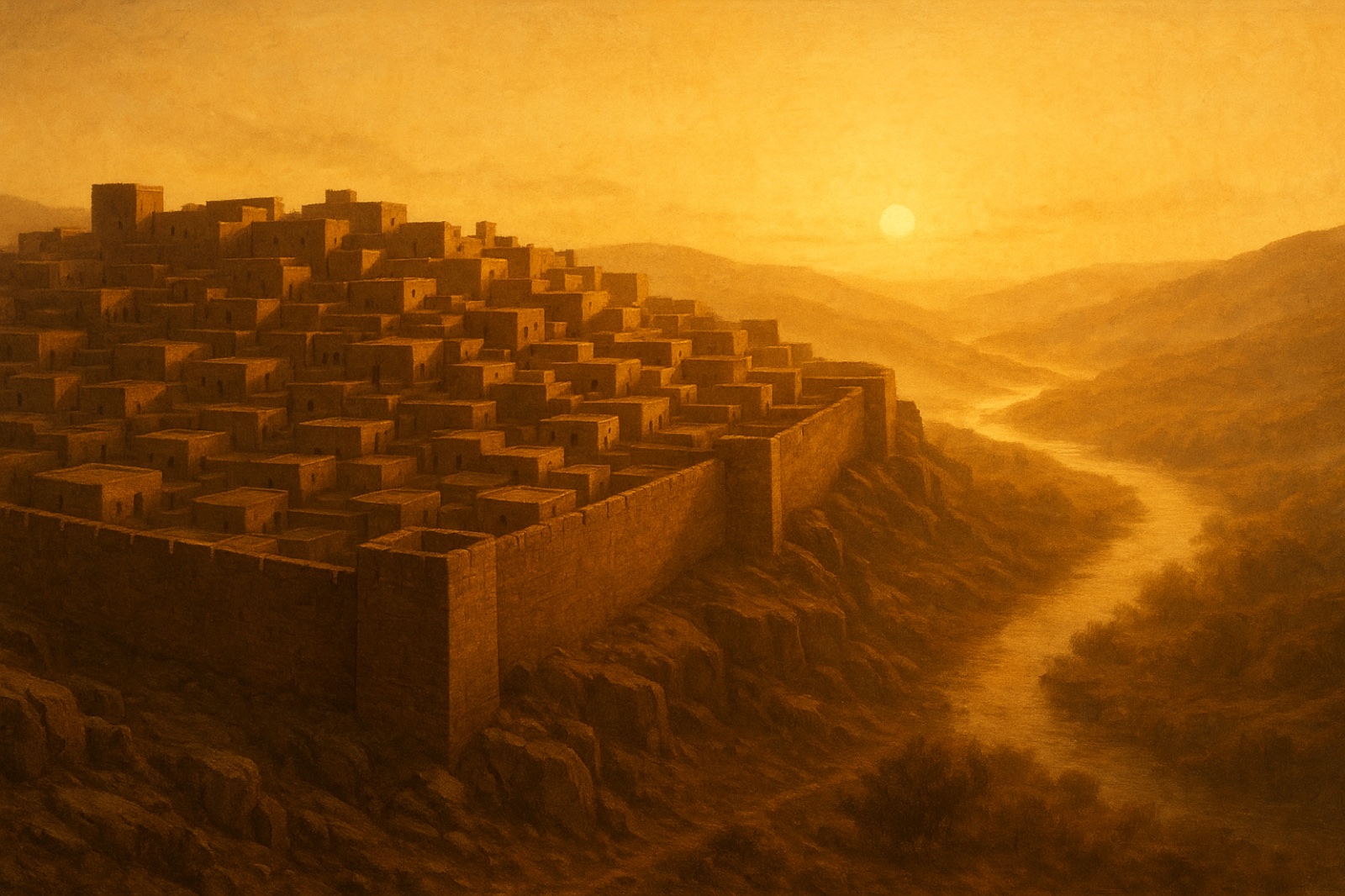
The “her” of verse 5 is the city. In Hebrew the word for city is grammatically feminine, so the psalm keeps calling it “she” — much the way English speakers once called a ship “she.” Verse 5 is not, in the first place, a verse about a woman. It is about a place under siege with God living inside the walls.
This is worth saying gently, because it is easy to turn into a gotcha, and that is not the point. Nothing is being taken away from anyone. The verse is being handed back bigger.
The Same Word That Topples Kingdoms
Psalm 46 opens with the world coming apart on purpose:
Therefore will not we fear, though the earth be removed, and though the mountains be carried into the midst of the sea; Though the waters thereof roar and be troubled, though the mountains shake with the swelling thereof.
Psalm 46:2-3, KJV
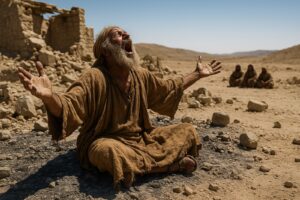
Mountains in the sea. Water roaring. Nobody writes that from a calm season. Someone wrote this while everything solid was behaving like it was not.
Then verse 5 says the city shall not be moved. One line later, the psalm says of the nations: the kingdoms were moved. That is the same Hebrew verb — mot, a word for tottering, slipping, giving way underfoot. The psalm uses it twice in two verses and sets them next to each other on purpose.
Kingdoms totter. The city does not. Not because the city is sturdier — it is a walled town on a hill, and the psalm has just described mountains dropping into the sea. It holds because of who is living in the middle of it.
“Right Early” Means at Daybreak
This is the half of the verse almost nobody quotes, and it is the half doing the real work.
The Hebrew phrase behind the King James “right early” is literally something close to at the turning of the morning — first light, the moment night flips over into day. Most modern translations render it “at break of day.”
So the promise comes with a clock on it. Not “God will help her instantly.” Not “God will help her before it gets bad.” At daybreak. Which means, unavoidably, that there was a night.
Ancient cities were attacked in the dark and relieved at dawn. That is simply how a siege worked — you held the wall through the night and you looked east. The psalm is not reaching for a poetic image here. It is naming the hour help actually turned up.
The Psalm 46:5 Meaning That Changes How You Hold It
Put the pieces together and the verse says something the mug version cannot.
You are not promised that nothing will fall. The psalm has already told you that mountains fall. You are promised that the thing God is living inside of does not give way — and that help arrives at daybreak, after a night you will have to be genuinely awake for.
That is a harder promise. It is also one that does not shatter the first time your life does. If you have been quietly wondering why a good God lets the night run its full length at all, that question deserves its own honest answer, and Scripture gives one in the longest reply it ever makes to human suffering.
And here is where the verse does come back to you personally — by a sturdier road than the bracelet took. The New Testament picks up the city language and moves it:
Know ye not that ye are the temple of God, and that the Spirit of God dwelleth in you?
1 Corinthians 3:16, KJV
The dwelling place moved. What Psalm 46 said about a walled city on a hill, Paul says about a person. So the verse really does end up being about you. It is just that the promise you inherit is the psalm’s whole one, not the shortened one: God in the middle of it, not moved, help at daybreak.
Four verses later, the same psalm says Be still, and know that I am God. People quote that line as though it means calm down. Inside a psalm about a city holding a wall through the dark, it reads far more like stop trying to hold the wall by yourself — which is clearer still once you have read the line that comes immediately before it.
What to Do With This Today
- Read all eleven verses out loud, once. It takes about ninety seconds. Reading verse 5 inside its psalm instead of on its own is most of the work of this article, and you cannot really do it silently — the roaring and the shaking need to be said.
- Write down what your night actually is. One sentence. Not “everything.” The specific thing you are holding the wall against this week. The psalm never pretends the siege is imaginary, and neither should you.
- Name one thing that would count as first light. Not the whole rescue — the first visible sign of it. A test result. A reply. One night of real sleep. Write it next to your sentence. When it comes, you will recognise it, which is most of what “right early” is for.
Questions to Sit With
- Which promise have you actually been holding — that nothing in your life would fall, or that God would be in the middle of it while it did? Be honest about which one you signed up for.
- What have you been treating as evidence that God left, which the psalm would call simply “night”?
- If help came at daybreak rather than now, what would you need in order to keep standing until then — and who could give you some of it?
A Prayer for a Night That Is Still Going
God, I have been reading this verse like a guarantee that nothing would break, and things have broken. I am tired of pretending otherwise. If you are in the middle of this the way you were in the middle of that city, then be in the middle of it — I am not asking you to move the night, I am asking you to be here inside it. Help me hold the wall until first light. And when daybreak comes, let me have the sense to notice it, and to say it was you.
One Question Worth Talking About
Do short verse quotes on mugs, bracelets and phone cases do more good than harm — bringing Scripture into ordinary places where it would never otherwise turn up, or setting people up to feel let down by a promise that was never made? Tell us where you land in the comments.
Share This
- “God shall help her, and that right early.” Right early means at daybreak. Which means there was a night. I find that more comforting than the version on the mug, not less.
- Psalm 46:5 says “God is in the midst of her.” I always read that as a woman. It’s the city from verse 4 — a walled town under siege with God living inside it. Somehow that’s a bigger promise, not a smaller one.
- The psalm doesn’t promise nothing will fall. It literally opens with mountains falling into the sea. It promises God is in the middle of the thing while it shakes, and that help comes at first light.
Questions People Ask About Psalm 46:5
Who is the “her” in Psalm 46:5?
The “her” in Psalm 46:5 is the city of God, named one verse earlier in Psalm 46:4: “There is a river, the streams whereof shall make glad the city of God, the holy place of the tabernacles of the most High.” The Hebrew word for city is grammatically feminine, so the psalm refers to the city as “she” throughout. Psalm 46:5 is therefore first of all a promise about a place where God dwells, not about an individual woman — though the New Testament later applies the same dwelling language to people in 1 Corinthians 3:16.
What does “right early” mean in Psalm 46:5?
“Right early” in the King James Version of Psalm 46:5 translates a Hebrew phrase meaning something close to “at the turning of the morning” — that is, at daybreak or first light. Most modern translations render it “at break of day.” It indicates when the help arrives rather than how quickly: relief comes at dawn, after the night, which is also the hour a besieged ancient city would expect to be relieved.
Is Psalm 46:5 a verse about women?
Psalm 46:5 is widely shared as a verse for women, usually in the New International Version wording “God is within her, she will not fall.” In its original context the verse is about the city of God described in Psalm 46:4, referred to as “she” because the Hebrew noun for city is feminine. The verse can still be applied personally, since 1 Corinthians 3:16 says the Spirit of God dwells in believers, but the promise it makes is the psalm’s — that what God dwells in will not be toppled, and that help comes at daybreak — rather than a guarantee that nothing in a person’s life will go wrong.
What does “she shall not be moved” mean in Psalm 46:5?
“She shall not be moved” in Psalm 46:5 uses the Hebrew verb mot, which carries the sense of tottering, slipping or giving way underfoot. The same verb appears in the very next verse, Psalm 46:6, where the psalm says “the kingdoms were moved.” The contrast is deliberate: kingdoms totter and give way, while the city God dwells in does not — not because the city is stronger, but because of who is present inside it.
How does Psalm 46:5 relate to “Be still, and know that I am God”?
“Be still, and know that I am God” is Psalm 46:10, four verses after Psalm 46:5, in the same psalm. Because Psalm 46 describes a world in upheaval — mountains carried into the sea, waters roaring, kingdoms toppling — and a city that holds because God is in its midst, the command to be still reads less like an instruction to feel calm and more like an instruction to stop trying to hold everything up alone.
If the night you are in has gone on long enough that you need words for it, there is a prayer for strength in difficult times you can borrow tonight.