 0
0
 0
0
MIT’s Automated AI Optimization System Promises Revolutionary Efficiency in Deep Learning Technology
In an era where artificial intelligence (AI) is transforming industries and everyday life, the energy consumption and computational demands of deep-learning models are becoming pressing concerns. Researchers at the Massachusetts Institute of Technology (MIT) have developed an innovative automated system that could significantly reduce these challenges, potentially increasing processing speeds by nearly 30 times. This breakthrough not only makes AI more efficient but also aligns with a thoughtful approach to stewardship in technology—a principle echoed in many spiritual teachings.
Deep-learning models that power applications ranging from medical image processing to speech recognition rely on highly complex data structures, often requiring substantial energy and computation. A major breakthrough by MIT researchers introduces a system that allows developers to leverage two key types of data redundancies: sparsity and symmetry. While current optimization techniques typically focus on one redundancy at a time, the new automated approach promises enhanced efficiency without compromising performance.
"Capturing these data redundancies has required a lot of implementation effort. Instead, a scientist can communicate with our system in a more abstract way, without needing to code every detail," stated Willow Ahrens, postdoc and co-author of the work. This user-friendly design not only empowers AI experts but also opens avenues for scientists unfamiliar with deep learning to optimize algorithms for diverse applications.
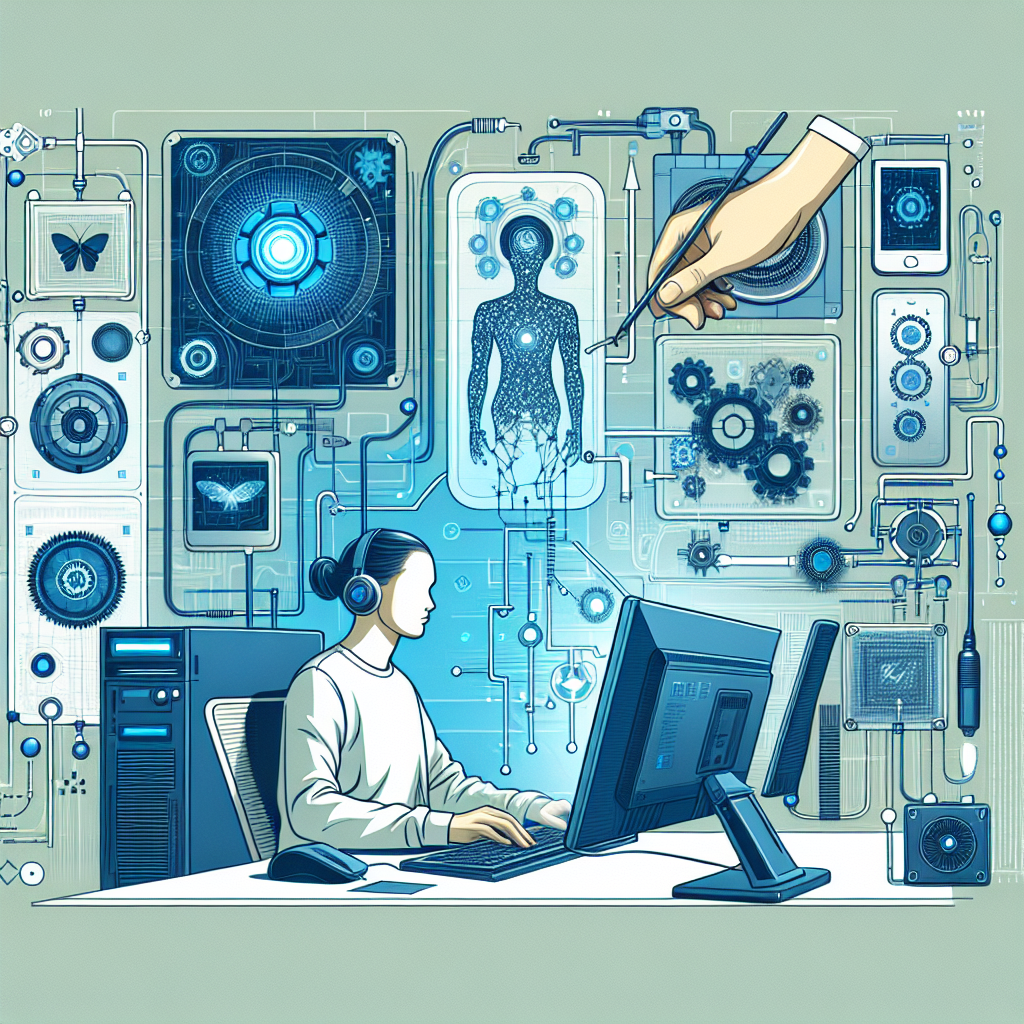
The crux of this innovation lies in how it manipulates multidimensional arrays known as tensors—structures that can be notoriously complex. By identifying and optimizing redundant computations in tensor operations, the MIT team developed a compiler known as SySTeC. This system performs simultaneous optimizations that cut down on unnecessary calculations, thus saving valuable resources.
The implications are profound: As efficiency advances in AI, so does the potential for more sustainable practices in technology. It echoes the biblical principle of stewardship, urging us to be responsible with our resources, including the environment. In Luke 16:10, it is stated, "Whoever can be trusted with very little can also be trusted with much." This belief not only applies to personal integrity but also extends to how we handle the tools and technologies at our disposal.
Furthermore, as society grapples with the ethical implications of AI, using innovative methods like those developed by MIT researchers can be seen as a step towards responsible technological development. By considering the impact of our creations on the world, we reflect on our responsibility to care for our environment and communities, akin to the teachings of Jesus about serving others selflessly.
As we contemplate the intersection of faith and technology, consider this: how can each of us leverage our skills and resources—be they in our professions or personal lives—to foster a more efficient and caring world? With advancements like SySTeC paving the way for smarter applications, we are reminded of our calling to be mindful stewards.
In closing, take heart in the progress being made in AI and its potential to enhance our capabilities in a responsible manner. Embrace the opportunity to reflect on your role in the stewardship of our technological future—after all, every step toward efficiency and care can make a difference.
Explore and dig up answers yourself with our BGodInspired Bible Tools! Be careful – each interaction is like a new treasure hunt… you can get lost for hours 🙂