 0
0
 0
0
Somewhere in eastern Germany there’s a mine that hasn’t operated since before the Berlin Wall came down — and it still isn’t finished with the world.
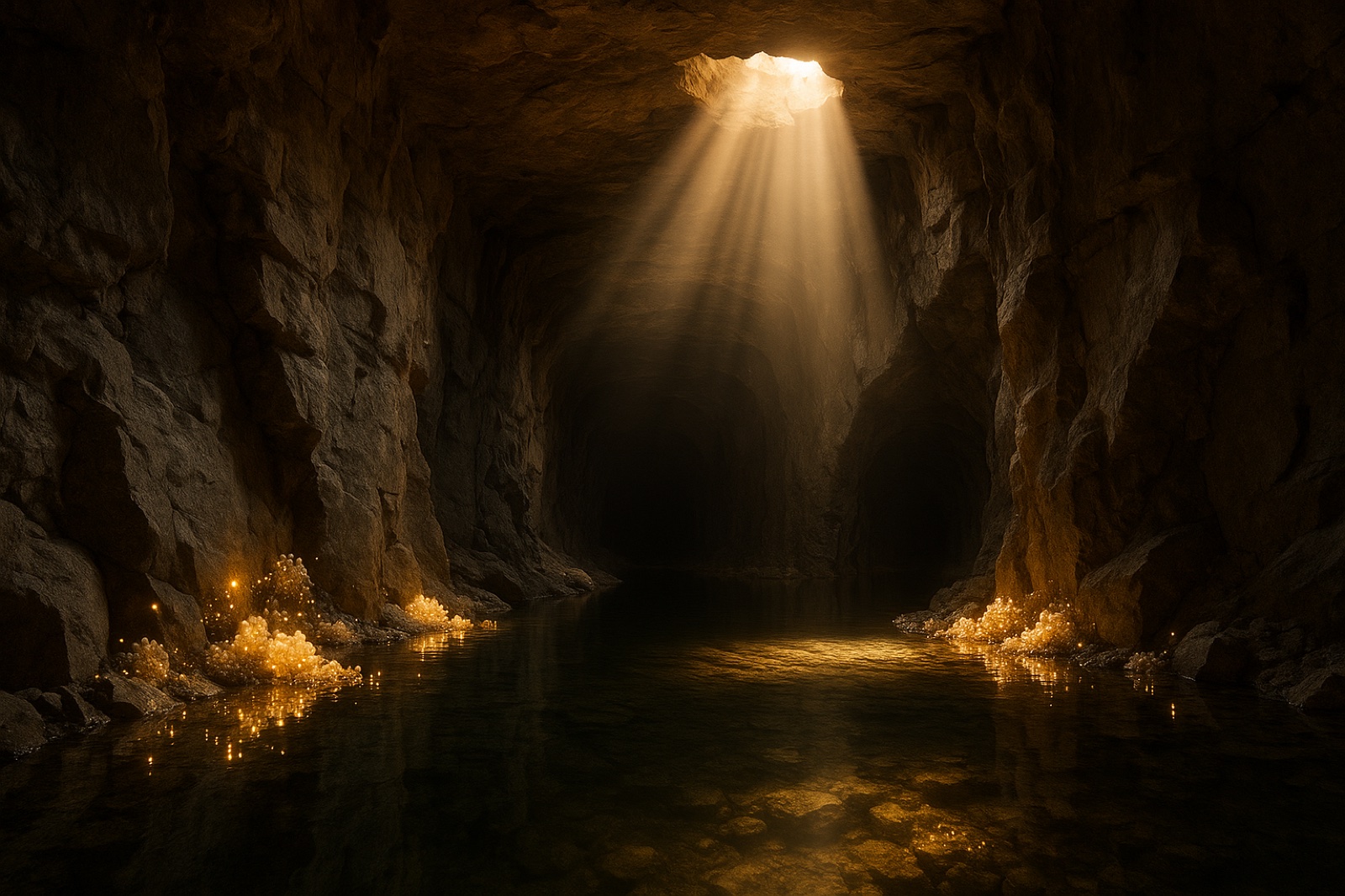
From 1946 to 1990, the Schlema-Alberoda mine near the Czech border pulled more uranium out of the ground than almost anywhere else on Earth, feeding the Soviet nuclear program during the Cold War’s most anxious decades. The mine closed. The miners left. But the water never stopped moving through the old tunnels, picking up dissolved uranium as it went, carrying it toward the groundwater that people still live near today.
For decades, the fix has mostly been mechanical: pump the contaminated water out, treat it, pump it back, repeat, forever, at enormous cost. Cleanup at the site has run for over 30 years and still isn’t finished.
Then researchers found something the mine had been quietly doing on its own the whole time.
The Water That Wouldn’t Stop Carrying Poison
Uranium doesn’t sit still once it’s dissolved. In its most common dissolved form, it moves through groundwater almost like salt does — invisible, tasteless, spreading wherever the water goes. That mobility is exactly what makes it dangerous long after mining stops. You can’t fence off water.
That’s the real, unglamorous problem with legacy uranium mining sites like Schlema-Alberoda: it’s not the rock that’s the ongoing issue, it’s what’s already dissolved and moving. Engineers have spent three decades and enormous sums just keeping that movement contained, not solving it.
The Bacteria That Had Been There the Whole Time
Researchers from the Helmholtz-Zentrum Dresden-Rossendorf and the University of Granada went looking at the microbial life already living in the mine’s water — and found bacteria that do something remarkable as part of their own natural metabolism. Much the way we pull energy from oxygen, these microbes pull energy from uranium, and in doing so, they convert it from its dissolved, mobile form into a solid mineral.
In about 130 days, this entirely natural process locked up roughly 95% of the dissolved uranium in the water studied — turning something spreading and dangerous into something solid and contained, without a single pump or chemical treatment involved.
Why This Time It Might Actually Stick
Scientists have known for a while that certain bacteria can pull uranium out of water this way. The problem has always been permanence: the solid form these microbes typically produce tends to dissolve right back into the water the moment it’s exposed to oxygen again — quietly undoing the fix.
What’s different here, and why the study — published in Nature Communications in the first week of August 2026 — is drawing attention, is that this particular bacterial process produced a rarer, unusually stable uranium compound. One that resists that reoxidation and stays locked up even when oxygen returns. That distinction is the whole ballgame. It’s the difference between hiding a problem and actually solving it.
Scientists have recently made a similar kind of discovery with “forever chemicals” — compounds once assumed permanent, until researchers found a way to actually break them down. There’s a pattern showing up across very different fields lately: things we assumed could only ever be managed are turning out to be genuinely changeable, given the right process and enough time.
If this bacterial process holds up at larger scale — which researchers still need to confirm — it points toward something legacy mining sites around the world have needed for a long time: a passive, low-cost way to actually resolve contamination instead of managing it indefinitely.
Not Removed. Transformed.
There’s something almost uncomfortable about that mine, if you sit with it. For decades, everyone treated the contamination like something to be pumped out, hidden, and managed from a distance — because the underlying assumption was that whatever touched the poison stayed poisoned. You separate it, you contain it, but you never actually undo it.
What the researchers found says something different. The organisms already living inside the mine — inside the toxic water itself — were quietly doing what decades of engineered pump-and-treat systems couldn’t: not removing the uranium, but changing what it fundamentally was. Turning something unstable and spreading into something stable and inert. Not erased. Transformed.
It’s not a bad way to think about whatever you’re carrying that still feels contaminated — a mistake, a season, a version of yourself you’d rather not have been. Something bigger than us doesn’t always operate by removal. Sometimes what changes isn’t that the past disappears. It’s that the thing itself gets turned into something that can no longer poison anything it touches. Ancient wisdom has been saying some version of that for a lot longer than anyone’s been mining uranium: what looks permanently ruined isn’t always beyond being made new.
Still Being Monitored, But the Direction Changed
The mine at Schlema-Alberoda is still being watched closely. It will take years, maybe decades, before anyone calls the site fully clean. But for the first time, the direction changed — not managed forever, but actually, permanently, changing.
Maybe that’s worth remembering the next time something in your own life feels like it’s just going to need managing forever. Not everything gets erased. Some things get turned into something that can’t hurt you anymore. That’s still worth calling good news.
Discussion Question: Do you think most of the things we call “problems” in life need to be removed — or transformed? Tell us what you think in the comments.
Share This
- Scientists found bacteria quietly turning toxic uranium waste into something stable and harmless — not by removing it, but by changing what it actually is. Wild story: https://bgodinspired.com/index.php/nature-and-creation/bacteria-turning-toxic-uranium-mine-safe/
- A former Soviet uranium mine has been leaking radioactive water for 80 years. Bacteria living in it just did in 130 days what 30 years of engineering couldn’t fully solve. https://bgodinspired.com/index.php/nature-and-creation/bacteria-turning-toxic-uranium-mine-safe/
- “Locked up, not cleaned up.” This uranium mine story got me thinking about the stuff in my own life I assumed could only ever be managed, never actually changed. https://bgodinspired.com/index.php/nature-and-creation/bacteria-turning-toxic-uranium-mine-safe/
Common Questions
What did scientists discover about bacteria and uranium at the Schlema-Alberoda mine?
Researchers from the Helmholtz-Zentrum Dresden-Rossendorf and the University of Granada found that native bacteria living in the water of a former Soviet uranium mine in Saxony, Germany, convert dissolved, mobile uranium into a rare, stable mineral form. Within about 130 days, this natural process locked up roughly 95% of the uranium in the water studied, and unlike earlier bio-based approaches, the resulting compound stayed stable even when exposed to oxygen. The findings were published in Nature Communications in the first week of August 2026.
Why is it a big deal that the uranium stays stable even with oxygen present?
Earlier research had shown bacteria could convert dissolved uranium into a solid form, but that solid form tended to dissolve back into the water once exposed to oxygen, undoing the cleanup. This discovery is different because it produces a rarer, more stable uranium compound that resists that reoxidation, meaning the uranium stays locked up instead of re-entering the groundwater later.
Where is the Schlema-Alberoda uranium mine and why does it matter?
Schlema-Alberoda is a former Soviet-era uranium mine near Aue in Saxony, Germany, close to the Czech border. It operated from 1946 to 1990 and was one of the largest uranium mining sites in the world during the Cold War, feeding the Soviet nuclear program. Decades after closing, water still moves through the old tunnels, dissolving uranium and carrying it toward groundwater, which is why the site has needed active remediation for over 30 years.
Could this bacteria-based method replace current uranium cleanup methods?
It’s still early. Cleanup at sites like Schlema-Alberoda currently relies mainly on pumping contaminated water out for treatment — an expensive, ongoing process. This discovery points toward a much cheaper, passive alternative: letting naturally occurring bacteria do the work. Researchers would still need to confirm the process holds up at full site scale and over longer timeframes before it could replace current methods.
What’s the connection between this discovery and faith or God?
The story offers a picture worth sitting with: the mine’s bacteria didn’t erase the uranium, they transformed it into something stable and harmless. That mirrors how God is often described as working with whatever has contaminated a life — not by deleting the past, but by changing what the very thing that caused the harm is able to do going forward. If you want to think through where forgiveness fits into that picture in your own life, our free Am I Ready to Forgive? assessment is a gentle place to start, and our piece on how forgiveness fuels real love goes deeper on the idea.
A Few Small Starting Points
- Name one thing you’ve been treating as “permanently contaminated” — a mistake, a relationship, a season — instead of something that could actually change.
- Notice the difference between managing something and letting it be transformed. They’re not the same move, even if both look like progress from the outside.
- Give yourself the same 130 days the bacteria got. Real change is rarely instant, even in nature.