 0
0
 0
0
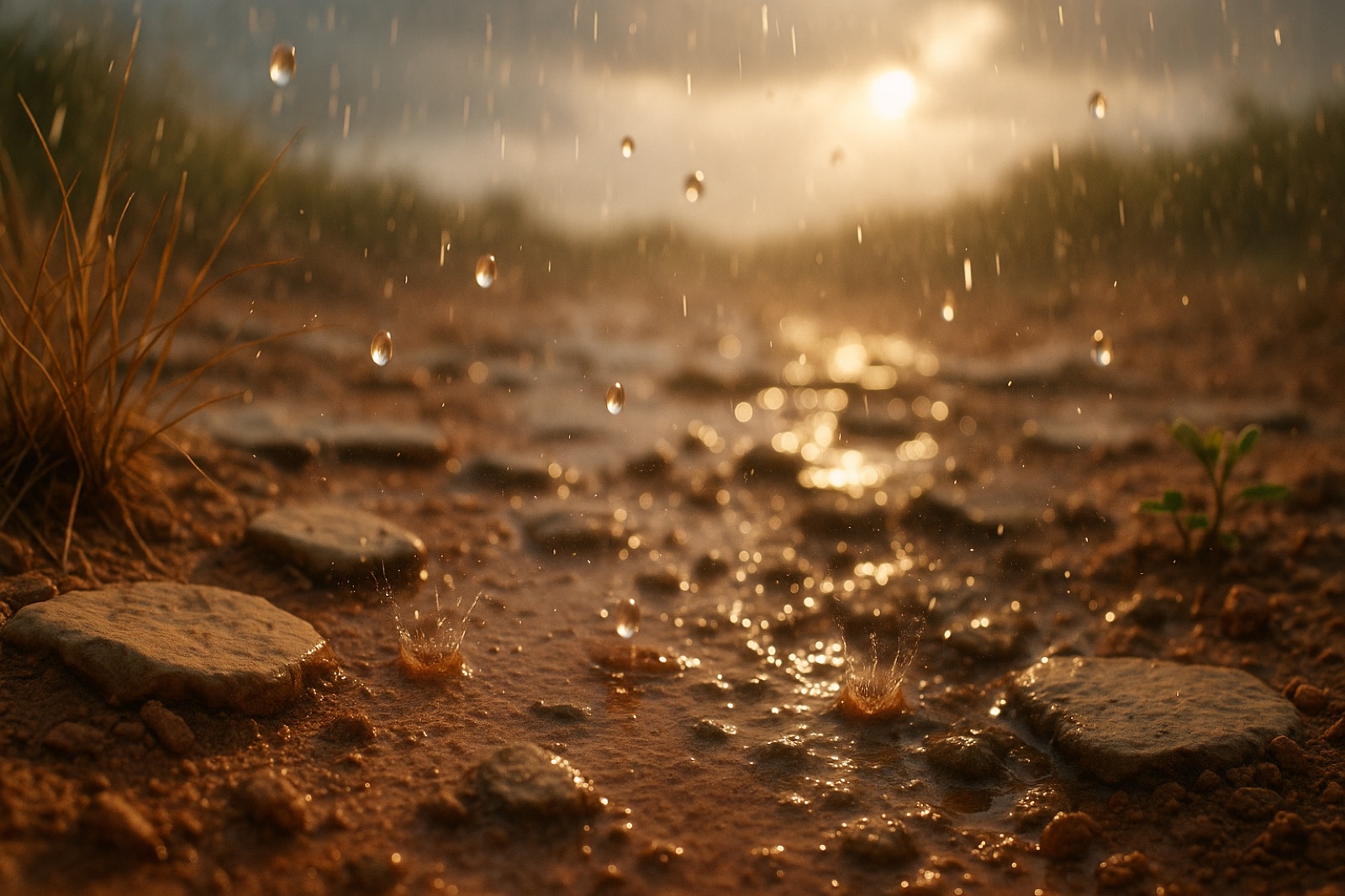
You know the smell. The sky goes grey after a long dry spell, a few fat drops hit the dust, and before the ground is even wet, the air smells like something good is about to happen.
That smell has a name: petrichor. The petrichor meaning is simple. It is the word for the earthy smell that rises when rain falls on dry ground.
But the story behind the word is stranger and kinder than most people know. It involves two scientists in Australia, a perfume maker’s trick from India, a tiny insect, and one surprise about seeds that nobody expected.
What Does Petrichor Mean?
Petrichor (say it PET-ri-kor) is the pleasant, earthy smell that comes with the first rain after dry weather.
The word is built from two old Greek words:
- Petra means “stone” or “rock.”
- Ichor is the golden fluid that, in the old Greek myths, flowed in the veins of the gods instead of blood.
So petrichor means, roughly, “the blood of the stone.” It is a poetic name. The people who chose it wanted the word to feel the way the smell feels: like the ground itself is alive.
If you love words for feelings that are hard to name, you may also like the story of hiraeth, the Welsh word for longing.
Who Coined the Word Petrichor?
The word is younger than you might think. Two Australian scientists, Isabel Joy Bear and Richard G. Thomas, coined it in 1964. They worked for CSIRO, Australia’s national science agency, and they published their work in the journal Nature under the dry title “Nature of Argillaceous Odour.” (“Argillaceous” just means clay-like.)
Australia is a good place to wonder about rain. Long droughts are part of life there, and so is the rush of relief when the rain finally comes.
Bear and Thomas found that during dry weather, some plants give off oils. Those oils soak into clay soil and rocks and just sit there, collecting, sometimes for a long time. When rain hits, the oils are set free into the air. That is a big part of what you smell.
India got there first
Here is a lovely detail. In their paper, Bear and Thomas noted that perfume makers in Kannauj, in northern India, were already capturing this scent. They baked discs of clay, steamed them, and caught the vapour in sandalwood oil. The perfume is called mitti attar, or “earth perfume.”
So the scientists gave the smell its English name. But people in India had already bottled it.
What Are You Actually Smelling When It Rains?
The smell of rain is not one thing. It is a mix, and scientists have untangled a few parts of it.
1. Plant oils in the ground. These are the oils Bear and Thomas found, stored up in dry soil and stone.
2. Geosmin. This is the big one. Geosmin is made by tiny soil bacteria, especially a kind called Streptomyces. The name means “earth smell.” Our noses are very, very good at picking it up. Different studies give different numbers, but people can notice geosmin at tiny traces, in the range of parts per billion or even lower. That is part of why one light shower can fill a whole street with the smell.
3. That sharp, clean smell before a storm. Some people notice a crisp smell in the wind before the rain arrives. That is often put down to ozone, which storms can carry down from higher up. It is a different smell from petrichor, but the two often arrive together.
Why does the soil make that smell at all?
For a long time, nobody knew why bacteria would bother making geosmin. In 2020, a team led by Paul Becher published a study in Nature Microbiology that gave a surprising answer.
Geosmin attracts springtails, tiny soil creatures smaller than a grain of rice. The springtails follow the smell, eat the bacteria, and carry the bacteria’s spores to new places on their bodies and in their droppings. In other words, the smell you love after rain may be an invitation. It is the soil calling out, “Come here.”
Why Does Light Rain Smell Stronger Than Heavy Rain?
This is the part most people never hear. You might think a huge downpour would bring the strongest smell. It usually doesn’t.
In 2015, two engineers at MIT, Youngsoo Joung and Cullen Buie, filmed raindrops hitting soil with high-speed cameras. They published the work in Nature Communications.
They saw that when a drop lands on dry, porous ground, tiny air bubbles rise up through the drop and pop out the top, like the fizz in a glass of soda. Each pop throws a fine mist into the air. That mist can carry the scent up to your nose.
And here is the surprise: light and moderate rain made far more of this mist than heavy rain did. A hard, fast drop smashes and spreads. A gentle drop sits for a moment and lets the bubbles rise.
So the strongest smell of rain usually comes with the softest rain. The quiet shower does more than the storm.
The Surprise About Seeds
After they named petrichor, Bear and Thomas asked a hopeful question. Farmers had long noticed that seeds seem to sprout fast after rain breaks a drought. Maybe, the scientists thought, the oil in the ground helps seeds grow.
So in 1965 they tested it. They put tiny amounts of the oil on seeds of cress, mustard and grasses.
The result was the opposite of what they expected. The oil slowed the seeds down. It held back sprouting and early growth.
Think about what that means. In a dry season, the ground fills up with an oil that tells seeds, “Not yet.” If a seed sprouted after one small sprinkle, it could dry out and die. The oil keeps it waiting until there is real water to live on.
The smell we love is, in part, the smell of that waiting coming to an end.
What Petrichor Says About Waiting
Most of us have lived through a dry season of some kind. A long stretch of waiting for work, for healing, for a phone call, for a hard year to end. It is easy to think the waiting means nothing is happening.
But the ground in a drought is not empty. It is storing things up. The oils are gathering. The seeds are being kept, not forgotten. Even the “not yet” is a kind of care.
Very old writing reaches for this exact picture. Long before anyone had a word for petrichor, people described good words and kindness falling like gentle rain on young plants: soft enough to soak in instead of running off. There is an old, stubborn hope in that picture: that God tends dry places too, and that the waiting is being held, not wasted.
If you are in a waiting season right now, you might like this short, free check-in: How Patient Am I? It takes a few minutes and can help you notice how you are really carrying the wait.
How to Notice Petrichor More
You don’t need anything special to enjoy this. Just a little attention.
- Go outside at the first drops. The smell is strongest at the very start of rain, especially after dry days.
- Look for light rain. A soft shower often smells stronger than a heavy storm.
- Stand near soil, not concrete. Gardens, parks, dirt paths and fields give off more scent than pavement.
- Breathe slowly. Stop for ten seconds and just notice it. Small wonders like this are free, and they are everywhere.
That last habit, stopping to see the beauty in plain, passing things, has a lot in common with the Japanese idea of wabi-sabi.
Questions People Ask About Petrichor
What is the meaning of petrichor?
Petrichor is the pleasant, earthy smell that rises when rain falls on dry ground. The word was coined in 1964 by Australian scientists Isabel Joy Bear and Richard G. Thomas, from the Greek words petra (stone) and ichor (the golden fluid said to flow in the veins of the Greek gods).
What causes the smell of rain?
The smell of rain comes mainly from plant oils stored in dry soil and rocks, and from geosmin, a compound made by soil bacteria such as Streptomyces. When raindrops hit dry ground, tiny bubbles release these compounds into the air as a fine mist that people can smell.
Why does light rain smell stronger than heavy rain?
A 2015 MIT study by Youngsoo Joung and Cullen Buie found that light and moderate rain throw far more tiny aerosol droplets into the air than heavy rain does. Those droplets carry the earthy scent, so a gentle shower on dry ground usually smells stronger than a downpour.
How do you pronounce petrichor?
Petrichor is usually pronounced PET-ri-kor, with the stress on the first part. The “ch” sounds like a “k,” as in the word “chorus.”
Is petrichor the same as the smell before a storm?
Not exactly. Petrichor is the earthy smell of rain landing on dry ground. The sharp, clean smell some people notice in the wind before a storm is often put down to ozone. The two smells can arrive close together, so people often mix them up.
Discussion Question
Do you think the smell of rain is better than the rain itself? Or is there another smell that means “home” or “relief” to you? Tell us in the comments. We’d love to hear yours.
Share This
“TIL the smell of rain has a name, petrichor, and it’s strongest in LIGHT rain, not heavy rain. Tiny bubbles pop out of each drop and carry the scent up. The quiet shower does more than the storm. https://bgodinspired.com/?p=117218”
“In 1965, scientists tested whether the oil behind the smell of rain helps seeds grow. It did the opposite: it holds seeds back until there’s real water. Somehow that made me feel better about waiting. https://bgodinspired.com/?p=117218”
“Perfume makers in India were bottling the smell of rain on clay long before scientists named it petrichor. It’s called mitti attar, ‘earth perfume.’ https://bgodinspired.com/?p=117218”