 0
0
 0
0
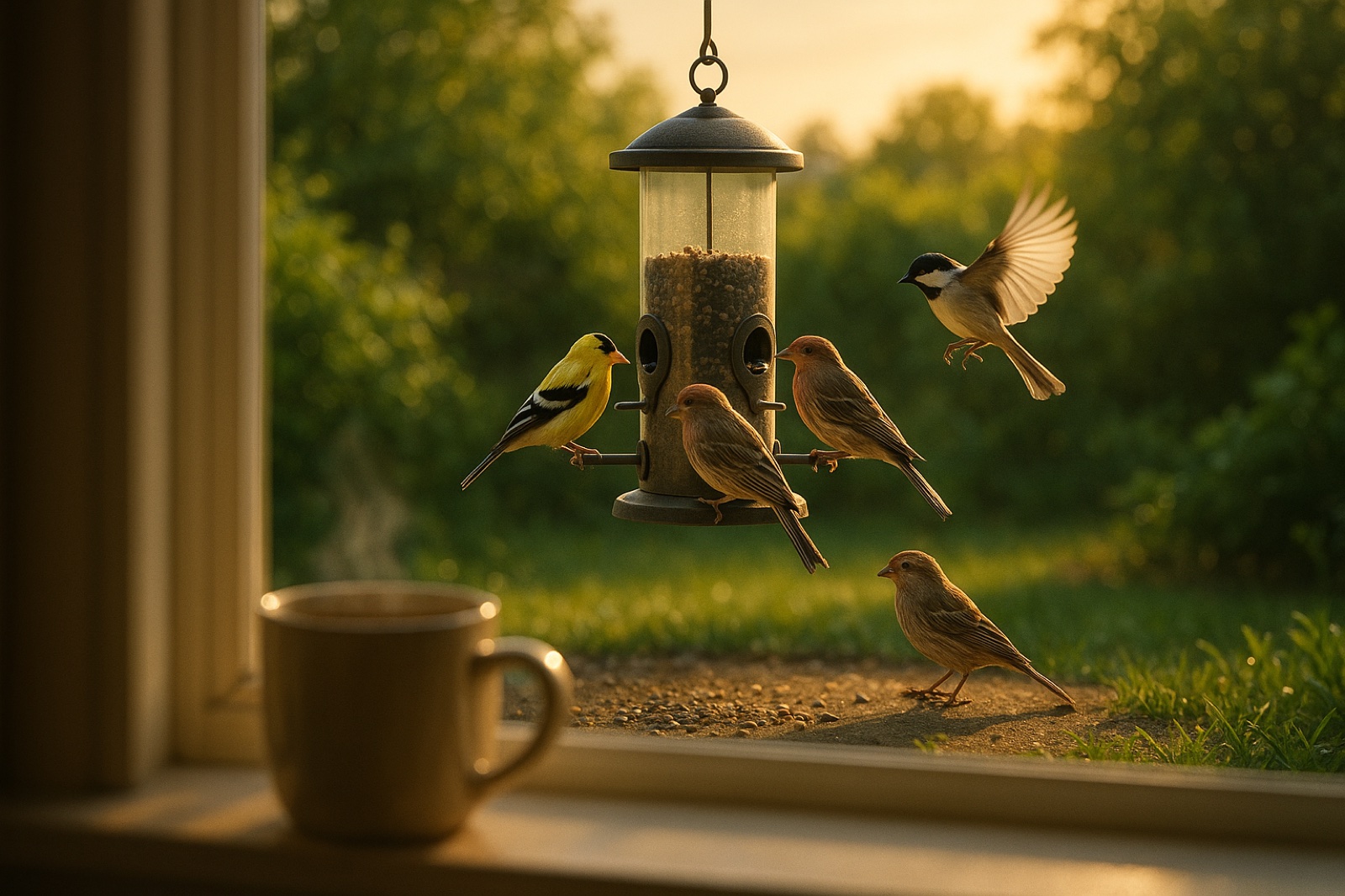
Does feeding birds make you happier? Ask the people who do it, and almost all of them will say yes. A big new study asked thousands of them. Nearly every one said the birds made their lives better.
But the same study also did something most people skipped over. It measured how they were actually doing. And that number told a different story.
Both results are true at the same time. The gap between them is the most interesting part.
What the Bird Feeding Study Found
The study was published this month in the science journal Ambio. It was led by researchers at Virginia Tech, working with the Cornell Lab of Ornithology and several other groups. You can read the research summary here.
The people in it were bird watchers in the United States and Canada. They all take part in a winter project called FeederWatch, where people count the birds at their feeders and send in the numbers. Researchers surveyed them before the six-month season and again after it.
At the end, 95% said feeding and watching birds had a good effect on their wellbeing. Only 55% said the same about the other things that happened in their lives over those months.
When people explained why in their own words, the answers fell into three groups:
- Feelings. Joy, gratitude, hope and calm. Some said the birds lowered their stress during hard stretches of life.
- Attention. The birds made them curious. Learning which bird was which gave them something to focus on and get better at.
- Meaning. They felt they were helping the birds, helping science, and sharing something with their family.
The paper’s title comes straight from one of the people who answered: “It’s a good reason to get up every morning!”
That line is worth sitting with. It isn’t about a mood. It’s about a reason.
Does Feeding Birds Make You Happier? The Part Most Reports Skipped
Here is the surprise. The researchers also gave everyone a standard wellbeing questionnaire, before the season and after it.
The scores barely moved. According to a detailed report on the paper, the main group was 3,658 people. Their average score rose by less than half a point, which the researchers did not count as a real change. Most people stayed about the same. A few hundred went up. A few hundred went down.
So the researchers were careful. Their study does not prove that feeding birds makes you mentally healthier. To test that, you would need to follow people who are brand new to it and watch what happens.
They named other limits too. Most of the people in the study were older, well educated and comfortable with money. They weren’t a picture of everyone. And the final survey asked people to remember six months back, which memory doesn’t always do well.
That honesty is the gold in this study. It would have been easy to write “bird feeding boosts wellbeing” and stop. They didn’t.
So What Are Bird Lovers Actually Getting?
If the scores didn’t change, were 95% of people just wrong about their own lives? Probably not. They were likely answering a different question.
A wellbeing score is like a thermometer. It checks your general temperature. But “a good reason to get up” is not a temperature. It’s a direction. It’s something small that pulls you out of your own head each morning.
Think about what a feeder asks of you:
- You have to look outward, not inward.
- You have to wait, because the birds come when they come.
- You have to notice small differences, like a new color or a different call.
- You give something away to creatures who will never thank you.
That is the opposite of how worry works. Worry looks inward, hates waiting, and only notices what might go wrong. We have written before about negativity bias, the way one bad thing can outweigh ten good ones. A bird at a feeder is ten small good things, one after another, all morning.
It may not change your score. It may change what you are looking at. Sometimes that is the bigger thing.
You Don’t Need a Garden to Try This
Most people in the world don’t have a backyard feeder. You don’t need one. Birds live almost everywhere people do: on rooftops, in markets, on wires, in city parks.
- Pick one spot. A window, a bus stop, a bench. Look for birds there for two minutes a day.
- Learn one bird. Just one. Learn its name and its call. Curiosity was one of the three things people in the study named.
- Write down what you saw. The people in this study kept counts. Counting turns glancing into noticing.
- If you do feed birds, keep it clean. The researchers point out that feeders can spread disease between birds. Clean them often, and put them where cats can’t hide.
If you’re curious how much stress you’re carrying right now, our free stress level test takes a few minutes and gives you a clear picture.
Who Is Doing the Feeding?
There’s a very old piece of advice for worried people that sounds a lot like this study. Look at the birds, it says. They don’t plant. They don’t fill barns. They don’t store anything up for later. And they are fed anyway.
We usually hear that as a gentle “slow down and enjoy nature.” But look at what it actually points to. It doesn’t point at the birds. It points past them, to the one doing the feeding. The old answer was that God feeds them, and that you matter far more than they do.
Every person in this study has stood on the giving side of that picture. Up early on a cold morning, filling a feeder for small creatures who will never know their name. If a tired person in a winter coat will do that for a sparrow, it’s worth asking how much care might be pointed at you.
It’s the same thing we noticed when we looked at the scarcity mindset. The fear that there will never be enough shrinks everything. The birds don’t seem to carry it.
A Good Reason to Get Up
The study didn’t find a cure. It found something quieter. Thousands of people, on thousands of cold mornings, saying the same thing in different words: this helps.
Maybe not on the score sheet. But in the moment the kettle is on, the feeder is full, and the first small bird lands. You stop thinking about yourself for a minute. You watch something being cared for.
That’s not nothing. For a lot of people, it’s enough to get up for.
Questions People Ask About Feeding Birds and Wellbeing
Does feeding birds make you happier?
In a 2026 study published in the journal Ambio, 95% of North American bird feeders surveyed said feeding and watching birds improved their wellbeing, describing joy, calm, curiosity and a sense of purpose. However, their scores on a standard wellbeing questionnaire barely changed over six months, so the study shows people value bird feeding highly but does not prove it improves overall mental health.
Why do people say bird watching is good for mental health?
People who feed and watch birds describe three main benefits: positive feelings such as joy, gratitude, hope and calm; engagement, meaning curiosity and the focus of learning to identify species; and meaning, such as helping birds, contributing to science and sharing the hobby with family. Many say it gives them a reason to get up in the morning.
Is it bad to feed wild birds?
Feeding wild birds has benefits and risks. Researchers note that bird feeders can help spread disease between birds and can increase risks from predators such as cats and from window collisions. Cleaning feeders regularly and placing them away from hiding spots for cats and at a safe distance from windows reduces those risks.
Can I get the benefits of bird watching without a garden?
Yes. Birds live in most places people live, including cities. Spending a few minutes a day watching birds from a window, balcony, park bench or bus stop, learning to recognize one species, and writing down what you see all build the curiosity and attention that bird watchers describe as valuable.
What is Project FeederWatch?
Project FeederWatch is a winter citizen science program run by the Cornell Lab of Ornithology and Birds Canada. Participants in the United States and Canada count the birds that visit their feeders and submit the counts, helping scientists track bird populations over time.
Discussion Question
The study found that 95% of people said birds made their lives better, even though their wellbeing scores stayed about the same. Which do you trust more: how people say they feel, or what the questionnaire measured? Tell us what you think in the comments.
Share This
“95% of bird feeders said the birds make life better. Their wellbeing scores barely moved. Both can be true. This is a lovely read on the difference between a mood and a reason to get up. https://bgodinspired.com/index.php/nature-and-creation/does-feeding-birds-make-you-happier/”
“I never thought about who the bird feeder is really for. Worth two minutes: https://bgodinspired.com/index.php/nature-and-creation/does-feeding-birds-make-you-happier/”
“You don’t need a garden. Pick one window, learn one bird, write down what you see. Loved this piece on what bird watching actually gives people: https://bgodinspired.com/index.php/nature-and-creation/does-feeding-birds-make-you-happier/”