 0
0
 0
0
Hebrew Word for Humility: What Does “Kana” Really Mean?
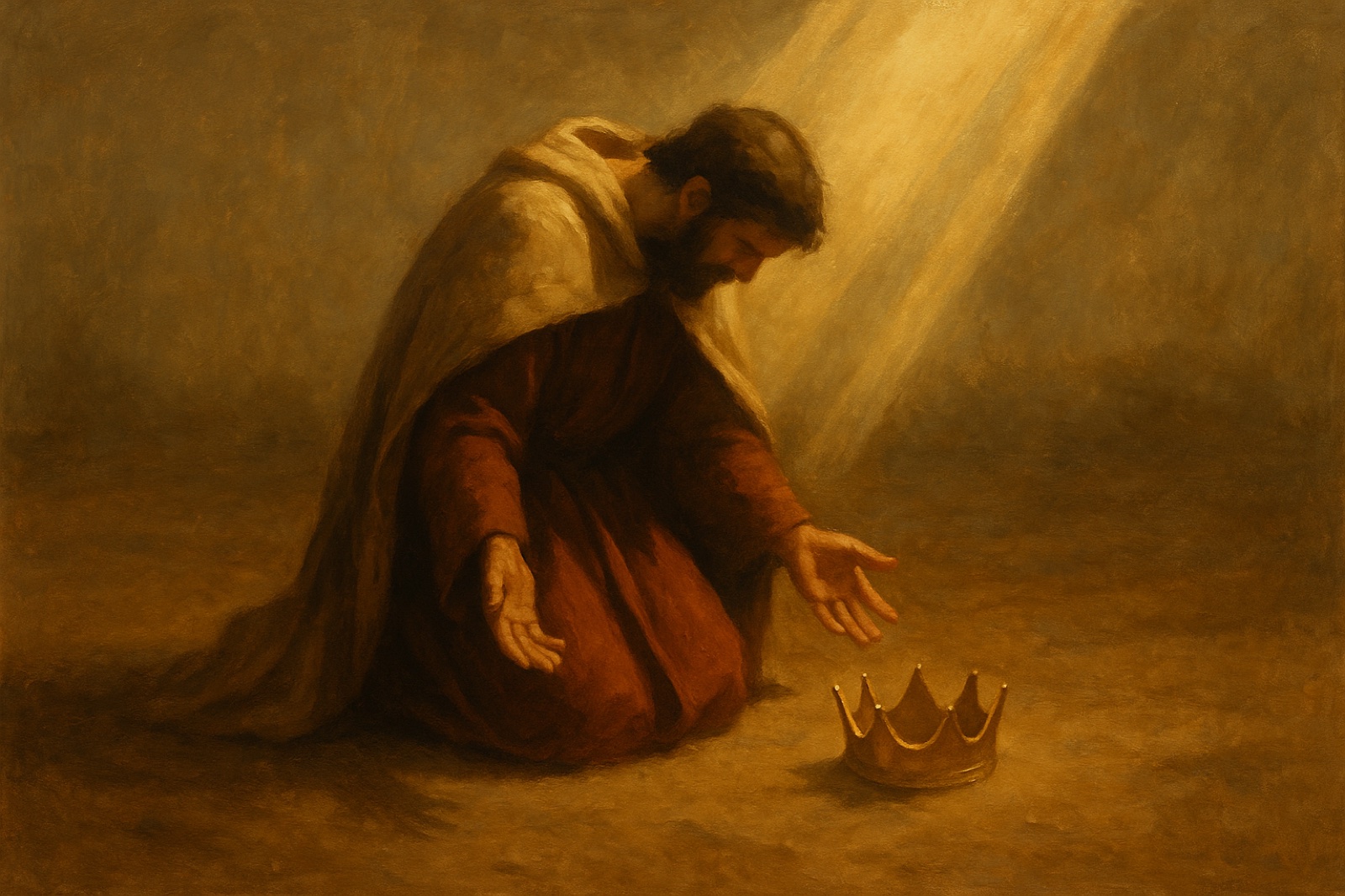
Quick answer: The Hebrew word behind “humble yourself” in verses like 2 Chronicles 7:14 is כָּנַע (kana’), pronounced kah-NAH, Strong’s H3665. It is a verb, not a feeling. Its basic meaning is “to be brought low, to be subdued,” and the Bible uses it for armies that stop fighting and surrender. When it turns back on a person (“he humbled himself”), it means choosing to lay down your fight before God. In Hebrew, humility isn’t thinking little of yourself. It is the moment you stop resisting God.
Word Study: Where “Kana” Comes From
Kana is a word about prayer, but it is also a word about war. Look at how the Bible uses it in its battle stories:
- “So Moab was subdued that day under the hand of Israel. And the land had rest fourscore years.” (Judges 3:30)
- “David smote the Philistines, and subdued them.” (2 Samuel 8:1)
- “Their enemies also oppressed them, and they were brought into subjection under their hand.” (Psalm 106:42)
Every one of those English words, “subdued” and “brought into subjection,” is kana. The picture is a side that has been fighting and now goes down. The swords drop. The resistance is over.
Here is what makes the word so rich. Hebrew verbs can be turned back on the person doing them, the way English says “he dressed himself.” When kana is turned back like that, it stops meaning “he was defeated” and starts meaning “he humbled himself.” Nobody beat him. He laid down his own weapons. That is the form used in almost every verse about people humbling themselves before God.
So kana is not a personality trait. It is an event. It usually happens in a crisis, when a person has been fighting God, often for years, and finally stops. That is why the word shows up so often in the stories of kings. The book of 2 Chronicles uses it more than a dozen times, and it becomes the dividing line between kings: the ones who humbled themselves, and the ones who “humbled not” themselves (2 Chronicles 36:12).
That makes kana a different word from anavah, the Hebrew word for meekness. Anavah is a settled character, the kind of person Moses was. Kana is the turning point, the day a proud person bends. (If you want the character side, see our study Hebrew Word for Meekness.)
Want to learn humility from the One who lived it? Jesus said, “Whosoever therefore shall humble himself as this little child, the same is greatest in the kingdom of heaven” (Matthew 18:4), and the best way to learn that from Him is to walk with Him day by day through the Gospels. 30 Days Walking with Jesus is a set of short, easy-to-read devotionals that bring His words, actions, and love to life. It’s built for new Christians learning how to start and for long-time Christians who want the connection back. The 3-day sample below is free.
Where “Kana” Appears in the Bible
Kana appears a few dozen times in the Hebrew Bible. Here are the places where it does the most work:
| Reference | Text (KJV) | What the word is doing here |
|---|---|---|
| 2 Chronicles 7:14 | “If my people, which are called by my name, shall humble themselves, and pray, and seek my face, and turn from their wicked ways; then will I hear from heaven, and will forgive their sin, and will heal their land.” | Kana comes first in the list. Before praying and seeking, the people lay down their resistance. |
| Leviticus 26:41 | “…if then their uncircumcised hearts be humbled, and they then accept of the punishment of their iniquity” | The heart itself is what gets “subdued.” Kana is an inside job. |
| 2 Chronicles 12:6 | “Whereupon the princes of Israel and the king humbled themselves; and they said, The LORD is righteous.” | Humbling yourself sounds like this: admitting God is right and you were not. |
| 2 Chronicles 33:12 | “And when he was in affliction, he besought the LORD his God, and humbled himself greatly before the God of his fathers” | Manasseh, one of Judah’s worst kings, bends after being bound in fetters and carried to Babylon (2 Chronicles 33:11). |
| 2 Chronicles 34:27 | “Because thine heart was tender, and thou didst humble thyself before God, when thou heardest his words against this place…” | Josiah, one of Judah’s best kings, bends the moment he hears God’s word. |
Put the last two side by side. Manasseh humbled himself only after he was carried off in fetters. Josiah humbled himself the moment Scripture was read to him. Same word, same result: God heard them both. The Bible doesn’t grade humility on how early or how gracefully it arrives. It just asks whether you will bend.
Verse Deep Dive: 1 Kings 21:27–29, “Seest Thou How Ahab Humbleth Himself?”
“And it came to pass, when Ahab heard those words, that he rent his clothes, and put sackcloth upon his flesh, and fasted, and lay in sackcloth, and went softly. And the word of the LORD came to Elijah the Tishbite, saying, Seest thou how Ahab humbleth himself before me? because he humbleth himself before me, I will not bring the evil in his days…” (1 Kings 21:27–29)
If you had to pick the least likely person in the Bible to be praised for humility, Ahab would be near the top of the list. That’s exactly why this passage matters.
1. Ahab was the worst of the worst. Just two verses earlier, the Bible gives him this verdict: “But there was none like unto Ahab, which did sell himself to work wickedness in the sight of the LORD, whom Jezebel his wife stirred up” (1 Kings 21:25). He had just let an innocent man, Naboth, be murdered so he could take his vineyard. Elijah had come to tell him judgment was coming.
2. Ahab’s kana was plain and physical. He tore his clothes, put on sackcloth, fasted, and “went softly.” That last phrase is small but telling. A king who used to stride around taking what he wanted now walks quietly. This is what kana looks like in a body: the fight goes out of him.
3. God pointed it out. This is the surprising part. Elijah didn’t notice Ahab’s change and report it to God. God noticed it and told Elijah: “Seest thou how Ahab humbleth himself before me?” The word is used twice in one breath, as if God wanted the prophet to look closely. God was watching for the moment this man would bend.
4. It made a real difference. Ahab’s humbling didn’t erase every consequence, and the text is honest about that. But it moved the judgment out of his lifetime. One act of laying down his fight, from the most wicked king Israel had seen, and God responded.
Read in the original, this passage turns humility from an achievement into an invitation. Kana is not something only good people can do. It’s the one thing even the worst person can do, and heaven is watching for it.
Not All “Humility” Is the Same
English uses “humble” for all of these, but Hebrew has several different words, and they describe different things:
| Word | Meaning | Example |
|---|---|---|
| kana’ (כָּנַע, H3665) | To be subdued; to humble yourself | A decision to stop resisting God, often in a crisis (2 Chronicles 7:14) |
| ʿanah (עָנָה, H6031) | To be bowed down, afflicted, humbled | Being humbled by hard things: “to humble thee, and to prove thee, to know what was in thine heart” (Deuteronomy 8:2) |
| anavah (עֲנָוָה, H6038) | Meekness, humility | A settled character, like Moses (Numbers 12:3) |
| shaphel (שָׁפֵל, H8217) | Low, lowly | A position: “A man’s pride shall bring him low: but honour shall uphold the humble in spirit” (Proverbs 29:23) |
You can think of them as a story. The wilderness years in Deuteronomy 8 are ʿanah: life presses you down. Kana is the moment you stop pushing back and bend before God. Anavah is who you become when you keep living there. And Proverbs 29:23 shows how it ends: the one who stands tall gets brought low, and the one who is low in spirit gets held up with honor.
Why the Original Word Changes the Meaning
Most people read “if my people… shall humble themselves” as a call to feel small, to think badly about themselves, or to act modest. Kana says something different. It is the language of surrender. The question 2 Chronicles 7:14 asks is not “do you feel humble?” but “will you stop fighting?”
That changes three things.
First, humility is something you do, not something you wait to feel. Ahab didn’t wait until he felt sorry enough. He put on sackcloth and changed how he walked. Kana is a choice you can make today, even if your feelings haven’t caught up.
Second, humility has a direction. Again and again, when kana describes a person, it says “before me,” “before God,” or “before the LORD.” Biblical humility is not mainly about how you compare to other people. It’s about whether you’ve laid down your resistance toward God.
Third, it’s never too late. The kings of kana include the worst (Ahab, Manasseh) and the best (Josiah, Hezekiah, who “humbled himself for the pride of his heart,” 2 Chronicles 32:26). The kings the Chronicler condemns with this word are the ones who wouldn’t bend at all: Manasseh’s son Amon “humbled not himself before the LORD, as Manasseh his father had humbled himself” (2 Chronicles 33:23), and Zedekiah “humbled not himself before Jeremiah the prophet” (2 Chronicles 36:12). The door stays open right up until you refuse to walk through it.
Jesus lived the same pattern from the other side. The Son of God, who had every right to fight, laid it all down: He “humbled himself, and became obedient unto death, even the death of the cross” (Philippians 2:8). Ahab humbled himself because he had lost. Jesus humbled Himself when He could have won. That’s why we can bend without fear. The One we are surrendering to already bent down for us.
Living It Out
Think of one area of your life where you’ve been arguing with God. Maybe it’s a habit you keep defending, a person you won’t forgive, or a plan you keep pushing even though you sense God saying no. That is where kana happens.
This week, do one physical, concrete thing that says “I’m done fighting.” Kneel when you pray about it. Write down what you’ve been holding and tell God you’re setting it down. Make the phone call you’ve been avoiding. Like Ahab walking softly, let your body say what your heart is deciding. God sees it.
Journal Prompts
- Kana is also a war word: an army that stops fighting and goes down. Where in your life are you still “fighting” God? What would it look like to lay down that weapon?
- God said to Elijah, “Seest thou how Ahab humbleth himself before me?” Who is the person you’d least expect to change? How does it change your prayers for them to know God is watching for the moment they bend?
- Manasseh humbled himself in fetters; Josiah humbled himself the moment he heard God’s word. Which one does your own story look more like right now, and what would it take to bend sooner next time?
Prayer
Lord, I confess there are places where I’m still fighting You. I defend what I want, and I argue with what You’ve said. Today I want to kana: to lay down my weapons and bend before You. I don’t have to feel worthy to do it; even Ahab was seen when he humbled himself. Thank You that Jesus humbled Himself all the way to the cross, so I can bow without fear. Search my heart, soften what is hard, and hear me as You promised. In Jesus’ name, Amen.
Share This
If this study helped you, here are two posts you can copy and share:
- The Hebrew word for “humble yourself” in 2 Chronicles 7:14 is kana, the same word the Bible uses for armies that stop fighting. Biblical humility isn’t thinking less of yourself. It’s laying down your fight with God. [Post URL]
- King Ahab was called the most wicked king in Israel. But when he humbled himself, God said to Elijah, “Seest thou how Ahab humbleth himself before me?” (1 Kings 21:29). It’s never too late to bend. [Post URL]
FAQ
What is the Hebrew word for humility in 2 Chronicles 7:14?
The word translated “humble themselves” in 2 Chronicles 7:14 is kana’ (כָּנַע, Strong’s H3665). It is a verb meaning “to be subdued” or “to be brought low,” and in this form it means to humble yourself, to willingly stop resisting God.
What is the difference between kana and anavah?
Kana is a verb that describes an action or a turning point: a person choosing to humble themselves, often in a crisis. Anavah (Strong’s H6038) is a noun that describes a settled character of meekness or humility, like Moses in Numbers 12:3. Kana is the moment you bend; anavah is living bent low before God.
Does biblical humility mean thinking badly about yourself?
No. Kana is about surrender, not self-criticism. It almost always describes humbling yourself “before God,” meaning you stop resisting and admit God is right, as the princes of Judah did when they said, “The LORD is righteous” (2 Chronicles 12:6).
Can a wicked person truly humble themselves before God?
Yes. The Bible uses kana for King Ahab, whom it calls the most wicked king of his time (1 Kings 21:25–29), and for King Manasseh, who humbled himself in affliction and was heard (2 Chronicles 33:12–13). In both cases, God responded to their humbling.
Learn humility by walking with Jesus. 30 Days Walking with Jesus offers 30 days of short, easy-to-read devotionals that bring Jesus’ words, actions, and love to life, whether you’re just starting out or rekindling a faith that has gone quiet. Start with the free 3-day sample: