 0
0
 0
0
Every year, when the evenings get dark early, a lot of people type the same odd little word into a search bar: hygge. (Say it roughly “HOO-guh.”)
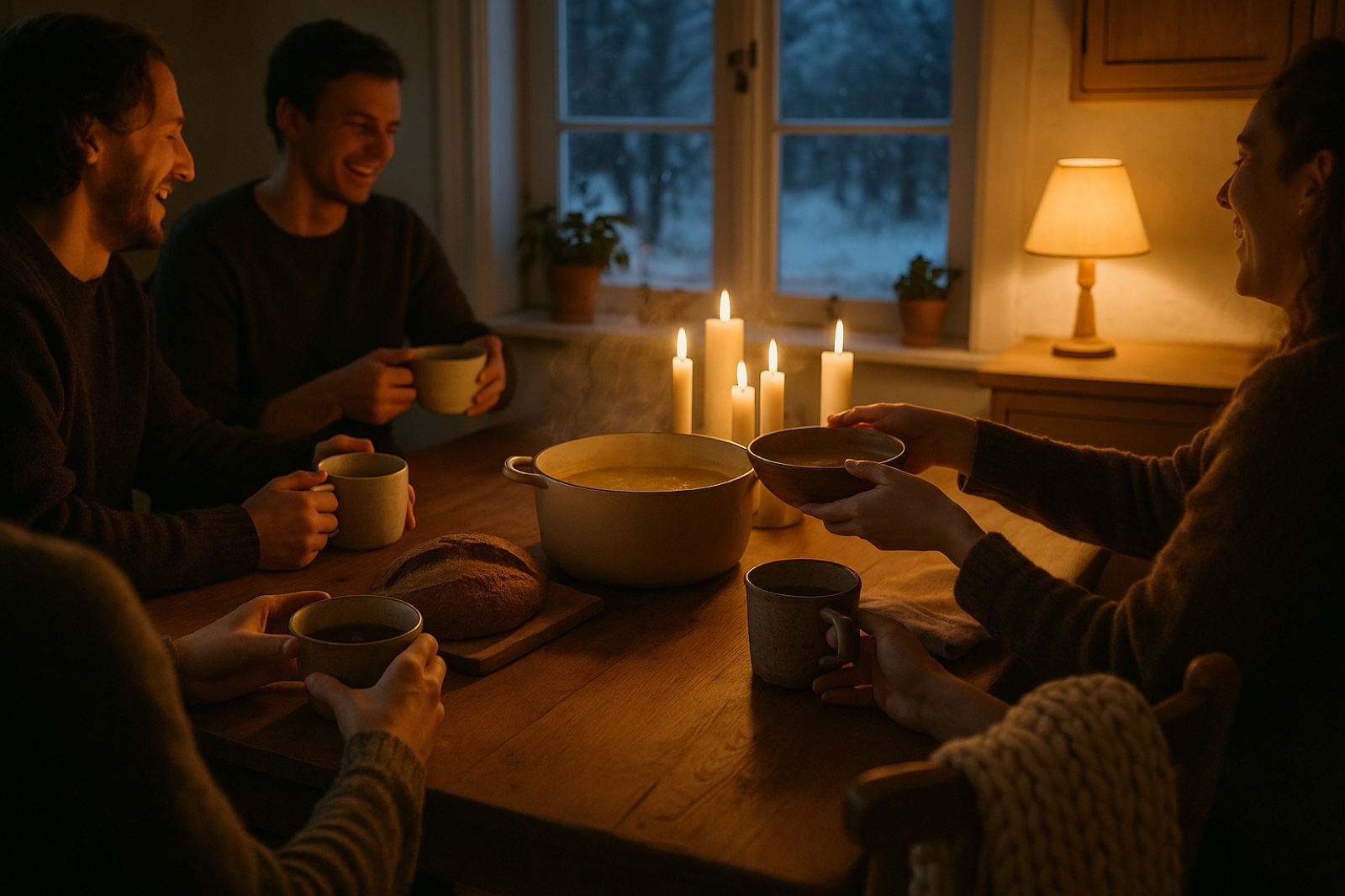
The pictures that come back all look alike. A candle. A thick knitted blanket. Wool socks. A mug of something hot. Rain or snow on a window.
So it is easy to think hygge is a look. A shopping list. A thing that comes in a box.
But the man who made the word famous around the world wrote down what he thinks hygge really is. And when you read his list, almost none of it can be bought.
What Is Hygge? The Short Answer
Hygge is a Danish and Norwegian word for a warm, safe, unhurried feeling, usually shared with other people. Collins English Dictionary, which made it the runner-up for its word of the year in 2016, defined it as “a concept, originating in Denmark, of creating cozy and convivial atmospheres that promote wellbeing.”
Look at that word convivial. It means friendly, lively, being together. Cozy is only half of the definition. The other half is people.
That matches how hygge is usually described in Denmark itself: a kind of everyday togetherness. A feeling of being safe, of being equal with the people around you, and of talk that flows without anyone forcing it. The candle is there. The candle is just not the point.
Where Does the Word Hygge Come From?
Nobody knows for certain, and it is more honest to say so than to pick one story.
The word first appears in Danish writing in the 1800s. Most accounts trace it back through an older Norwegian word tied to comfort and well-being, and further back to Old Norse words for thinking and for the mind or soul. Some people also connect it to the English word “hug.” That link is a guess, not a proven fact. But it is a lovely guess, and you can see why people like it.
Here is a surprise. Treating hygge as the very heart of being Danish is fairly new. The strong emphasis mostly grew in the late 20th century. And the worldwide craze came later still, around 2016, when a pile of hygge books arrived in English at almost the same time.
Hygge is one of a handful of words from other languages that people keep falling in love with. The Japanese idea of beauty in worn things is another, and it has a strange history too. Our piece on what wabi-sabi really means tells how it started out as two sad words.
The Man Who Made Hygge Famous
The best known of those hygge books was The Little Book of Hygge by Meik Wiking, who runs the Happiness Research Institute in Copenhagen. He is a big reason many people outside Scandinavia know the word at all.
Wiking really does love candles. In the book he reports that Danes burn more candles per person than anyone else in Europe, and that when Danes are asked what they link with hygge, candles are the thing most of them mention. Danish even has a word for a killjoy: lyseslukker, “the one who puts out the candles.”
So yes, candles matter. But then Wiking did something most hygge shopping guides skip right past.
The Hygge Manifesto: 10 Rules, and Almost None Are Things
Wiking boiled hygge down to ten ideals. He called it the Hygge Manifesto. Here it is in plain words:
- Atmosphere. Turn the lights down.
- Presence. Be here now. Put the phones away.
- Pleasure. Coffee, chocolate, cake.
- Equality. “We” over “me.” Share the jobs, and share the talking.
- Gratitude. Take it in. This might be as good as it gets.
- Harmony. It is not a competition. We already like you. No need to brag.
- Comfort. Get comfy. Take a break.
- Truce. No drama. Politics can wait for another day.
- Togetherness. Build friendships and shared stories.
- Shelter. These are your people. This is a place of peace and safety.
Now read that list again and count the things you could buy. Some soft lighting, maybe. Something sweet. That is about it.
Everything else is about how people treat each other. Share the work. Don’t hog the conversation. Don’t perform. Leave the arguments at the door. Be glad you are here, with these people, tonight.
That is the part the brochures miss. Hygge is not mainly a product. It is a way of being with other humans. It is why someone can own every candle and blanket in the shop and still feel lonely on a winter night, while someone else with a borrowed kitchen and a pot of soup has more hygge than they know what to do with.
Why Hygge Pulls at Us Every Winter
Interest in hygge climbs every year as the days get shorter, and peaks around the turn of the year. Part of that is simple weather. Dark evenings make everyone want warmth.
But part of it might be a hunger people don’t have a name for. Many of us live busier and more alone than we would choose. We scroll at night instead of talking. We eat standing up. So when we see a photo of a candle-lit table, we may not really be wanting the candle. We may be wanting the people who should be sitting around it.
If that is you, you are not strange. Feeling alone is one of the most common human experiences there is. If you want an honest read on where you stand, our free How Lonely Am I? check takes a couple of minutes. And you are in good company. Four hundred years ago a sick poet, lying in bed and listening to funeral bells next door, wrote the line everyone still quotes: “No man is an island.”
The Oldest Hygge Might Be Older Than the Word
Long before anyone in Denmark said “hygge,” a small group of people found their way to the same thing.
The very first followers of Jesus did not have buildings to meet in. They had kitchens. One of the oldest descriptions of them says they went from house to house, sharing meals, with glad and simple hearts.
Put that phrase next to Wiking’s list. Glad: gratitude, pleasure. Simple: no bragging, no performing, nothing to prove. Nobody at those tables had to earn a seat. And the reason it worked, they believed, was that God was at the table too, so the warmth in the room was not only coming from the people in it.
That changes how the whole idea looks. The comfort so many of us go searching for each winter may not be a luxury at all. It may be something close to sacred: a table, with people at it, where you are welcome just as you are.
How to Have Hygge With No Money
You don’t need Denmark, a fireplace, or a new blanket. Here is hygge the way the manifesto actually describes it:
- Invite one person. Not a party. Just one. Tea and bread is enough.
- Let everyone do something. One brings the food, one makes the tea, one washes up. That is the “equality” rule, and it makes guests feel like family.
- Put the phones in another room. Presence costs nothing and changes everything.
- Soften the light. One lamp instead of the overhead light, a single candle, or sit by the window as the sun goes down.
- Call a truce. Agree before you start: no arguing about the news tonight.
- Ask one real question, then listen. “What was the best part of your week?” works almost anywhere in the world.
- Do it again. Hygge grows with habit. The second time is easier than the first, and the tenth feels like home.
The Candle Helps. The People Are the Point.
It doesn’t have to be winter. It doesn’t have to be Denmark. It doesn’t have to be pretty enough for a photo.
Hygge is a table where nobody is showing off, nobody is fighting, and nobody is left out. You can make one this week, with whatever you have, for whoever is near. Light the candle if you have one. Then look up from it, at the faces around you. That is what you were looking for all along.
Over to You
Which of Wiking’s ten hygge rules do you think is the hardest to keep: no phones, no bragging, or no politics? Tell us in the comments.
Questions About Hygge
What does hygge mean in English?
Hygge has no exact English translation. It is a Danish and Norwegian word for a warm, safe, unhurried feeling, usually shared with other people. Collins English Dictionary defines hygge as “a concept, originating in Denmark, of creating cozy and convivial atmospheres that promote wellbeing.” The closest English words are coziness, comfort and togetherness together.
How do you pronounce hygge?
Hygge is pronounced roughly “HOO-guh” in English. The first sound is close to the “hoo” in “hook,” and the second is a short, soft “guh.” It does not rhyme with “jiggy” or “higgy,” which are common mispronunciations.
Is hygge Danish or Norwegian?
Hygge is used in both Danish and Norwegian, but it is most strongly linked to Denmark. The word first appears in Danish writing in the 1800s and is usually traced to an older Norwegian word connected with comfort and well-being. The idea of hygge as a core part of Danish identity grew mainly in the late 20th century, and it became popular worldwide around 2016.
What is the Hygge Manifesto?
The Hygge Manifesto is a list of ten ideals written by Meik Wiking, head of the Happiness Research Institute in Copenhagen and author of The Little Book of Hygge. The ten ideals are atmosphere, presence, pleasure, equality, gratitude, harmony, comfort, truce, togetherness and shelter. Most of them describe how people treat each other, such as sharing tasks, not bragging and avoiding arguments, rather than objects like candles or blankets.
Can you have hygge without spending money?
Yes. Hygge depends far more on people and attention than on products. A simple meal or pot of tea with one friend, soft light from a single lamp or candle, phones put away, shared chores and a no-arguing rule for the evening all create hygge at almost no cost. Candles and blankets can add to the mood, but they are not required.
Share This
Read the Hygge Manifesto and count the things you can actually buy. It’s about two. The rest is “share the talking,” “no need to brag” and “politics can wait.” Hygge was never really a blanket. https://bgodinspired.com/index.php/spiritual-devotional/what-is-hygge/
Danish has a word for a killjoy: lyseslukker, “the one who puts out the candles.” But the best part of hygge isn’t the candle. It’s a table full of people who already like you.
Turns out the coziest thing in the world might be the oldest one: a shared meal, soft light, and nobody showing off. This piece on what hygge really means stayed with me.