 0
0
 0
0
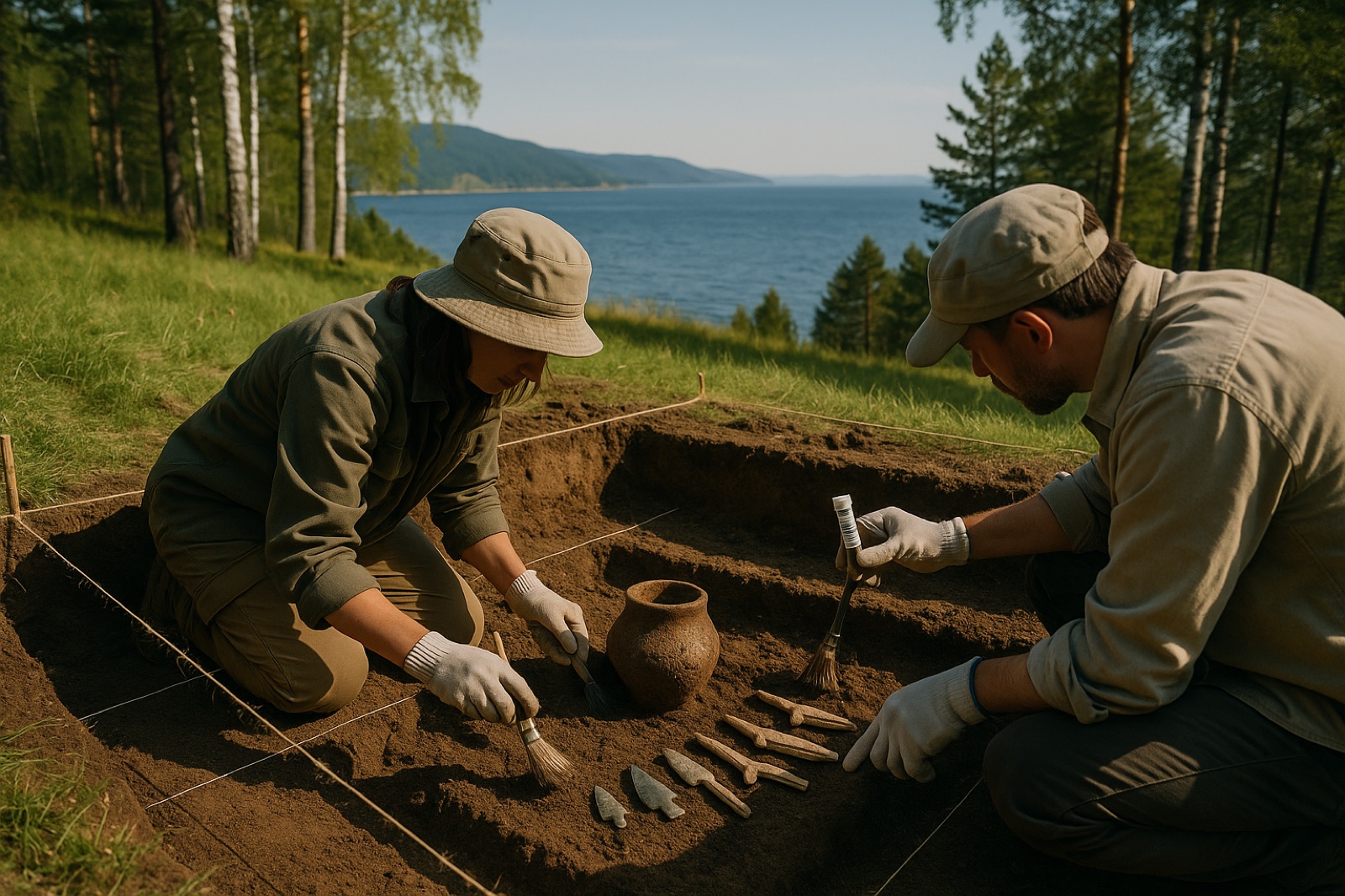
About 5,500 years ago, near the shores of Lake Baikal in Siberia, a small community of hunters and fishers began burying its children.
Not one child here and there. Many of them, over a short stretch of time. Brothers and sisters. Cousins. In one grave, three young girls were laid side by side. In another, an aunt was buried with her nephew.
For decades, archaeologists could not explain those graves. Now ancient DNA has given them an answer: plague. According to the University of Copenhagen, which led the research, these are the oldest known plague strains ever found, and they were already deadly.
How the Oldest Known Plague Was Found
The graves come from four hunter-gatherer cemeteries near Lake Baikal, the deepest lake on Earth. The people buried there lived by hunting, fishing and gathering. There were no cities. No farms. No crowded markets.
An international team tested the remains of 46 people from those cemeteries for the DNA of Yersinia pestis, the germ that causes plague. Eighteen of them carried it. That is roughly 4 in every 10.
The real number may have been higher. The researchers point out that this kind of test is known to miss many real infections, because DNA breaks down over thousands of years.
The study, titled “Lethal plague outbreaks in Lake Baikal hunter-gatherers 5,500 years ago,” was published online in the journal Nature on 17 June 2026. It is one more example of ancient DNA quietly rewriting old stories, like the 4,000-year-old city in northern China where it exposed human sacrifice.
The Puzzle of the Children’s Graves
Archaeologists had been scratching their heads over two of these cemeteries for a long time. Far too many of the dead were children. And far too many seemed to have died close together.
“The unusually high number of children and the short timespan was a real puzzle that we’ve been trying to solve since the 1990s,” said archaeologist Andrzej Weber of the University of Alberta. “Finding out that plague was the cause is extraordinary, but it makes so much sense.”
The new work filled in the picture. Deaths peaked among children aged about 7 and a half to 11, before puberty. Radiocarbon dates from the largest cemetery were packed tightly together, and the team concluded that the first outbreak happened within a single generation.
Then the DNA did something even more personal. By working out who was related to whom, the researchers could rebuild family trees. The plague had moved through small family groups, which fits a disease spreading from person to person.
- At a cemetery called Bratskii Kamen, three girls aged between 4 and 9 shared one grave. Two of them were most likely cousins.
- At Ust’-Ida I, the largest site, an aunt and her nephew were buried in a shared grave. Plague DNA was found in both.
“Based on the plague DNA, the genetic relationships between the victims, the archaeological analysis and the radiocarbon dating, we’ve built a really clear, complete picture of what happened during these outbreaks,” said lead author Ruairidh Macleod, now a research fellow at the University of Oxford.
A Plague That Didn’t Need Fleas
When most people hear the word plague, they picture the Black Death: rats, fleas and painful swellings. But that version of the disease came later. The study notes that plague strains did not have the genetic tools needed for the classic flea-borne, swollen-gland form until around 3,800 years ago.
The Baikal strains did not have them either. So how did they kill so many people?
Part of the answer may be a gene the team found in these ancient strains, called a superantigen. Superantigens are toxins that can make the immune system badly overreact. This particular version has never been seen in later plague strains.
“Even before the bacterium evolved efficient flea-borne transmission, these ancient strains appear to have carried a potent combination of virulence factors that could make infection highly lethal,” said Martin Sikora of the University of Copenhagen, one of the study’s senior authors.
How the germ reached people in the first place is less certain. These hunter-gatherers lived in close contact with marmots, large burrowing rodents that still carry plague today. The researchers think the outbreaks may have jumped straight from infected marmots into humans.
“Whether the earliest forms of plague were mild or virulent has been a matter of debate,” said senior author Eske Willerslev, “but our findings demonstrate that these ancient strains were already highly lethal.”
What the Study Can and Can’t Tell Us
It is worth being careful here, because a story like this is easy to exaggerate.
- What is well supported: plague DNA was found in 18 of 46 people tested across four cemeteries, many of the victims were closely related, and deaths clustered among children.
- What is likely but not proven: that marmots were the source, and that the superantigen gene helps explain why these strains were so deadly. The team says that gene still needs to be studied in the lab.
- What can’t be ruled out: the paper says differences in how children and adults behaved may also have played a part in why so many children died.
- What nobody can know: what these families believed about the sickness, or what they said to each other while it was happening.
They Buried Their Children With Care
There is one detail in the study that is easy to read past.
These graves were not rushed pits. The paper describes the dead receiving “the typical Isakovo mortuary treatment and grave goods,” the normal burial customs of that culture. Objects were placed in the ground with them, as they were for anyone else. And family members were laid in the same grave, which the researchers read as an “acknowledgement of biological kinship.”
Think about what that means. In the middle of an illness they could not see, could not name and could not stop, these parents and grandparents still did the slow, careful work of love. They dressed the grave. They put cousins next to each other. They did not know what was killing their children. They knew exactly who their children were.
The Oldest Question About Disease
For most of human history, when sickness swept through a family, people asked the same question. What did they do to deserve this?
Epidemics were blamed on bad luck, bad air, bad people and angry gods. During the Black Death in Europe, some towns blamed their Jewish neighbours, and whole communities were murdered. Even today, when something terrible happens to someone, many of us feel a quiet pull to find the reason in the person it happened to. Psychologists have a name for that pull, and it explains why it feels so wrong when bad things happen to good people.
The Baikal graves quietly take that question apart. A girl of eight in a fishing camp 5,500 years ago, long before writing, had done nothing to earn a germ that came out of a marmot burrow. The disease was older than every story that would later be told to explain it.
There is a very old conversation about exactly this. Two thousand years ago, some people brought Jesus news of a disaster in Jerusalem: a tower had collapsed and killed eighteen people. The question underneath was the old one. Were they worse than everybody else? Jesus said no. Then he turned the question back on the people asking it, as if to say: stop measuring the dead, and look honestly at your own life while you still have it. It is a hard answer and a kind one. It refuses to turn suffering into a scorecard, and it holds out the hope that a God who sees all of it is not keeping that kind of score.
What the Baikal Families Left Behind
If you have lost someone and caught yourself wondering what they did wrong, or what you did wrong, you are asking one of the oldest questions people have ever asked. Grief has a way of looking for somewhere to put the blame. And grief can come back hardest years later, long after the explanations have run out.
The families at Lake Baikal never got an explanation. It took 5,500 years and a genetics lab to give them one. What they did have was each other, and the good sense to lay a child beside her cousin, with all the care they gave anyone they loved.
Love came first. The answers came much, much later. That might be the most hopeful thing these graves have to say.
Discussion Question
When something terrible happens to a family, why do you think people are so quick to look for someone to blame, and does knowing the real cause make the loss any easier to carry? Tell us what you think in the comments.
Share This
Ancient DNA has solved a mystery archaeologists puzzled over since the 1990s: why so many children were buried together near Lake Baikal 5,500 years ago. It was plague, thousands of years before the Black Death. https://bgodinspired.com/?p=115554
They couldn’t see the germ killing their kids, and they had no one to blame. So they buried cousins side by side, with all the usual care. Love came first. The answers came 5,500 years later. https://bgodinspired.com/?p=115554
I didn’t know plague was killing whole families long before there were any cities. A thoughtful read about the oldest known plague, and the old habit of blaming the people who suffer: https://bgodinspired.com/?p=115554
Questions People Ask About the Oldest Known Plague
What is the oldest known plague outbreak?
The oldest known plague strains found so far come from hunter-gatherer cemeteries near Lake Baikal in Siberia, where outbreaks began about 5,500 years ago. A study published in the journal Nature in June 2026, led by the University of Copenhagen, found DNA of the plague bacterium Yersinia pestis in 18 of 46 people tested across four cemeteries. The outbreaks were lethal and killed many children.
Did plague exist before the Black Death?
Yes. Plague existed thousands of years before the Black Death of the 1300s. Ancient DNA shows the plague bacterium Yersinia pestis was infecting and killing hunter-gatherers near Lake Baikal in Siberia about 5,500 years ago. Early strains lacked the genes needed for the classic flea-borne bubonic form, which scientists say appeared around 3,800 years ago.
How did ancient plague spread without fleas?
The 5,500-year-old plague strains from Lake Baikal lacked the genes that let plague spread efficiently through fleas. Researchers found the infections clustered in small family groups, which is consistent with spread from person to person. They believe the disease may first have passed to people directly from infected marmots, burrowing rodents that still carry plague today.
Why did the ancient Lake Baikal plague kill so many children?
At the Lake Baikal plague cemeteries, deaths peaked among children aged roughly 7 and a half to 11. The researchers have not fully explained why. The ancient strains carried an unusual superantigen, a toxin gene that can trigger a severe immune reaction, which may help explain how deadly they were. The study also says differences in behaviour between age groups cannot be ruled out.
Is disease a punishment for something people did?
Infectious diseases are caused by germs, not by the moral failings of the people who catch them. The 5,500-year-old plague at Lake Baikal killed young children who lived long before cities or writing, and who could not have caused it. The urge to blame the victims of disease is very old, and it has often led to cruelty, as when some European towns blamed and attacked their Jewish neighbours during the Black Death.