 0
 0
Nobody asks it at the beginning. You pray the prayer, something genuinely shifts, and a few days later you are standing in your own kitchen with a question you would never say out loud in a room full of church people: so what do I actually get out of this?
Peter asked it out loud. Mark wrote down the question and the answer, which means the most awkward version of the thing you are wondering has been sitting in the Bible for two thousand years with a reply attached. The reply is a list. It is not the list most people expect, and one line in it is the reason the rest can be trusted.
Peter Asked First, and He Wasn’t Polite About It
A moment earlier, a wealthy man had come to Jesus wanting to know what he lacked. He was told to sell what he had and come along. Mark’s note on how that went is four words longer than it needs to be: “And he was sad at that saying, and went away grieved: for he had great possessions” (Mark 10:22, KJV). We looked at the grip that keeps a person in that exact spot in the oldest story about walking away sad.
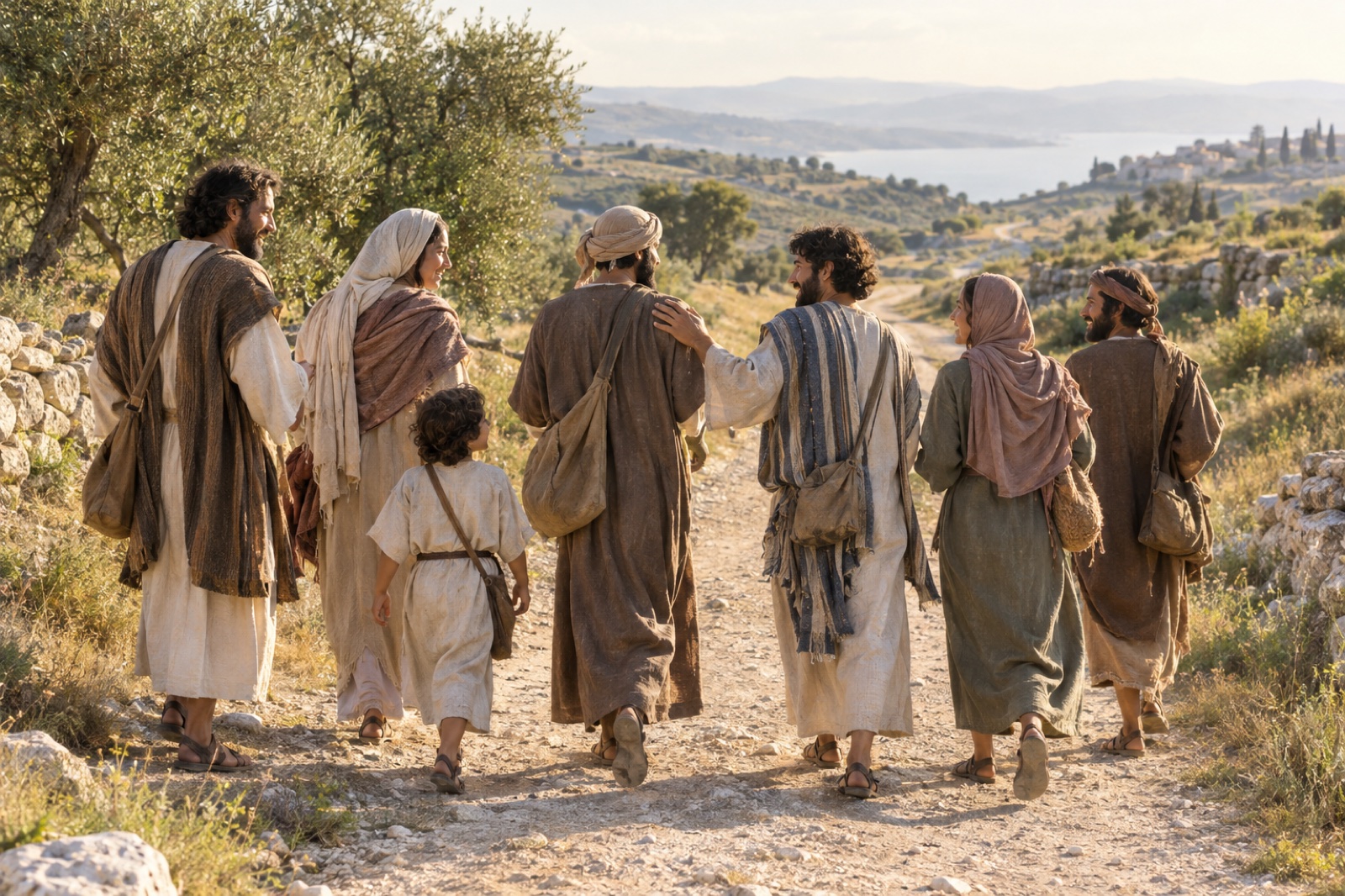
Jesus watched him go. And in the quiet right after that, Peter speaks up:
“Then Peter began to say unto him, Lo, we have left all, and have followed thee.” (Mark 10:28, KJV)
Say that in a real voice. It is not a sermon. It is a man who has just watched somebody else get to keep everything, doing the arithmetic on what his own yes has cost him, and saying it in front of everyone.
Here is the first thing worth noticing, before any of the rest. Jesus does not correct the question. There is no rebuke, no “you shouldn’t be asking that,” no suggestion that wanting to know is a sign of weak faith. He just answers it.
The List Jesus Gave
“And Jesus answered and said, Verily I say unto you, There is no man that hath left house, or brethren, or sisters, or father, or mother, or wife, or children, or lands, for my sake, and the gospel’s, But he shall receive an hundredfold now in this time, houses, and brethren, and sisters, and mothers, and children, and lands, with persecutions; and in the world to come eternal life.” (Mark 10:29-30, KJV)
Three things in that sentence are easy to read past.
A hundredfold. A hundred times over. Not replaced, not compensated. Multiplied.
Now in this time. Eternal life gets its own clause at the very end, “in the world to come,” and that clause exists precisely because everything in front of it does not. The hundredfold is for this life. For this year.
And not one item on the list is abstract. Houses. Brothers. Sisters. Mothers. Children. Land. Asked what following him pays, Jesus answered with furniture and family and dirt.
Two Words That Never Come Back
Now put the two halves of that sentence side by side, because they are almost the same list and not quite.
What gets left behind: house, brethren, sisters, father, mother, wife, children, lands. Eight things.
What comes back a hundredfold: houses, brethren, sisters, mothers, children, lands. Six.
Count them against the quoted verses yourself. Two of the eight are in the first list and simply are not in the second: father and wife.
Mark does not explain the gap, and anyone who tells you confidently why it is there has gone past the text. But in the King James wording it is right on the surface, and it is hard to unsee once you have counted it. Readers have long tied the missing father to something Jesus says later: “And call no man your father upon the earth: for one is your Father, which is in heaven” (Matthew 23:9, KJV). A hundred mothers, a hundred brothers, a hundred sisters, and no stand-in for God.
That is a reading, not a ruling. What the passage plainly does is quieter and stranger than either: it promises you a crowd, and it declines to promise you everything.
Then He Puts the Hard Part Inside the Promise
And this is the line that changes how the whole list reads.
With persecutions.
Look at where those two words sit. Not in a footnote. Not three chapters later, once you are already committed. They are inside the same sentence as the hundredfold, wedged between the good list and eternal life, in the middle of the benefits.
Nobody selling anything does that. You do not put the cost in the brochure, in the same breath as the promise, in the same grammatical clause. Which is exactly why the rest of it is worth taking seriously. A promise that carries its own price tag is making a different kind of claim than one that doesn’t.
Jesus is not telling Peter the walk will be easy. He is telling him it will be full. Those are not the same offer, and only one of them survives contact with a real week.
What the Hundredfold Looks Like on an Ordinary Tuesday
So, concretely. Not in theory, not someday. What is different for you this month?
- The family part is the most literal thing on the list. You start recognising people. A message from someone who prayed for you on a bad Wednesday. A person two rows over who asks how the job thing went and then actually waits for the answer. It rarely arrives as a building you join. It usually arrives as two or three people who answer their phone, which is roughly how it started for the first Christians too, as we traced in what to do as a new Christian without a church.
- Mornings change shape before anything else does. Ten unhurried minutes with the words of Jesus, before the phone, means his words are already in the room when the hard call comes at two in the afternoon. You are not reaching for something new. You are remembering something you heard today.
- The Bible stops being a wall. Once you are reading his life in order rather than opening at random, you know where you are. That daily “where do I even start” decision, the one that quietly ends most good intentions by Thursday, simply stops existing.
- You stop auditing yourself. This is the one people notice last and value most. Peter asked a self-interested question out loud and got a straight answer. You are allowed to come as you are, with your actual motives, and still be walking.
And the honest part, because you deserve one: none of that is a formula. The persecutions clause is in the verse for a reason. People who love Jesus still get bad news. What the passage promises is not a protected life. It is a populated one, and company on the road. That is also why walking with him starts closer to home than most of us assume, which is the thread we followed in walking with Jesus starts with him walking your way.
The Part You Can Start Tomorrow Morning
Here is where most people stall, and it is not motivation. It is Day 2. You have a good ten minutes, it genuinely helps, and then the next morning you are standing there half awake with a whole Bible in front of you and no idea what to read next.
That is the only thing 30 Days Walking with Jesus was built to solve. It walks through the life of Jesus one day at a time, as a beginner-friendly reading plan through the Gospels, so the question of where to start is already answered for a month. Each day takes under 10 minutes. You get 30 short devotional videos, each under 60 seconds, 30 full-chapter audio readings for the mornings your eyes won’t focus, a complete PDF study guide with journal prompts, and 5 quick-reference scripture guides.
And the honest ask, plainly: it is free. No payment, no card required, no upsell waiting on the other side. Instant access on any device, and it stays yours. The words of Jesus should not sit behind a paywall, so they don’t.
Peter asked what he would get. He got a list with a crowd on it, a cost in the middle of it, and a road to walk it on. You can start the walk with your coffee tomorrow.
Questions People Are Asking
Q: What are the benefits of walking with Jesus according to the Bible?
A: The clearest answer comes from Jesus himself in Mark 10:29-30, where Peter points out that the disciples have left everything to follow him. Jesus replies that anyone who has left house, family or land for his sake “shall receive an hundredfold now in this time, houses, and brethren, and sisters, and mothers, and children, and lands, with persecutions; and in the world to come eternal life.” The list is deliberately ordinary and physical, most of it is promised for this life rather than the next, and the cost is named inside the same sentence as the promise.
Q: Does walking with Jesus make your life easier?
A: Not according to the passage where Jesus answers that question. In Mark 10:30 the words “with persecutions” sit in the middle of the list of what a follower receives, not in a footnote after it. The promise is a fuller life rather than a protected one, and people who love Jesus still face hard news, grief and loss. What the Bible describes is company on the road rather than a road with nothing difficult on it.
Q: Which two things are missing from Jesus’ list in Mark 10:30?
A: In the King James wording, Mark 10:29 lists eight things a follower might leave: house, brethren, sisters, father, mother, wife, children and lands. Mark 10:30 lists six things that come back a hundredfold: houses, brethren, sisters, mothers, children and lands. Father and wife are in the first list and not in the second. Mark never explains why. Many readers connect the missing father to Matthew 23:9, “call no man your father upon the earth: for one is your Father, which is in heaven,” but the Gospel itself leaves the gap unexplained.
Q: Is it wrong to ask what I get out of following Jesus?
A: Peter asked it out loud, in front of the other disciples, right after watching a rich man walk away and keep his money. Mark 10:28 records it as “Lo, we have left all, and have followed thee.” Jesus does not rebuke him or call the question selfish. He answers it with a specific list. The Gospels treat the question as a normal one for someone counting what a decision has cost them.
Q: How do I start walking with Jesus, practically?
A: Start smaller than you think and start tomorrow. Tell Jesus one honest thing you need help with, then read a short piece of his life in one of the Gospels before you pick up your phone. A few unhurried minutes is enough to begin, and the thing that matters most is coming back the next day. If you would rather not decide where to read each morning, 30 Days Walking with Jesus is a free, beginner-friendly plan through the Gospels that takes under 10 minutes a day, with no card required.