 0
0
 0
0
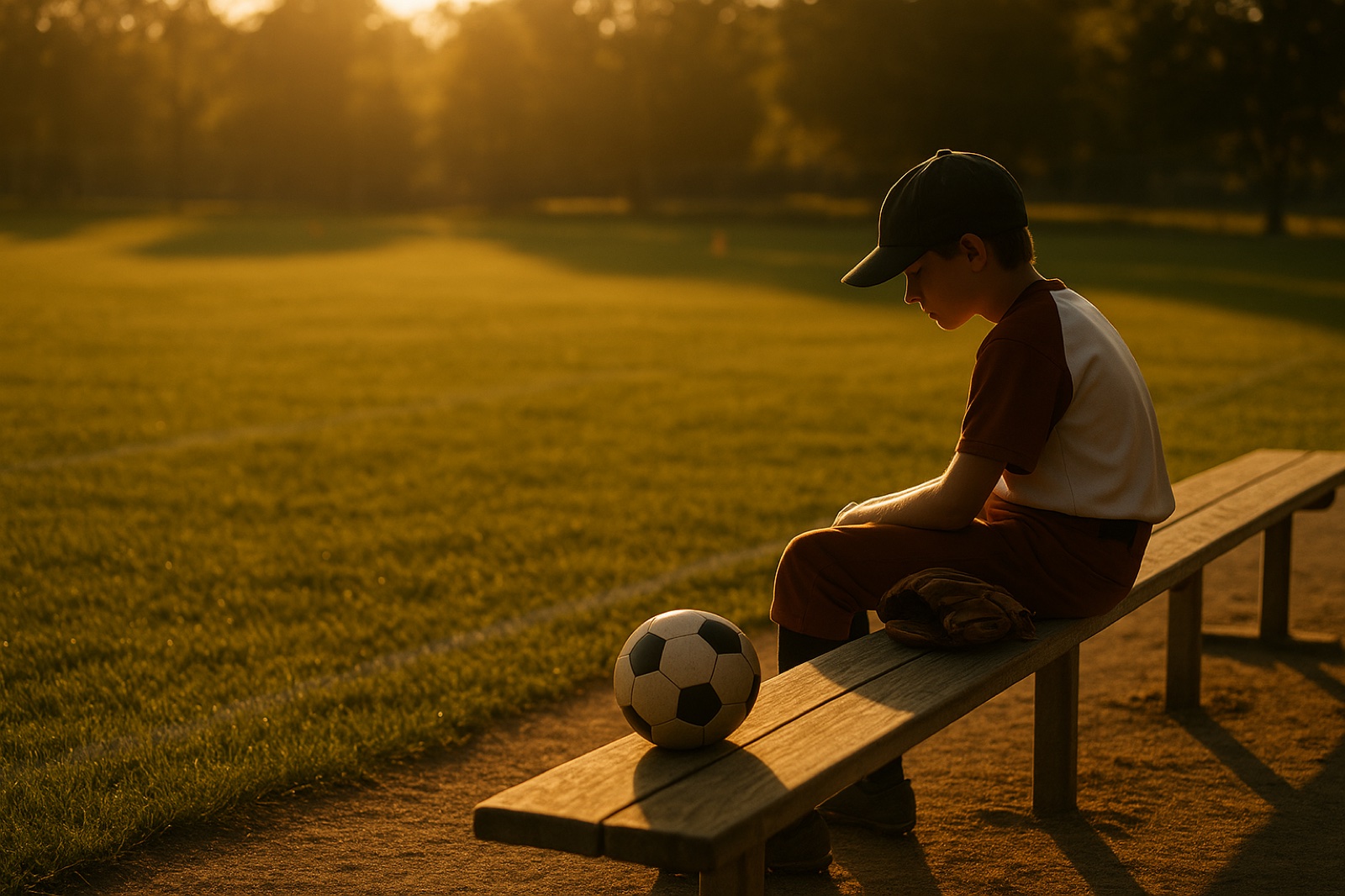
Somewhere in every neighborhood right now, there’s a duffel bag sitting in a closet that hasn’t been touched since spring. A pair of cleats one size too small, because nobody got around to replacing them. A kid who used to beg to leave five minutes early for practice and now finds reasons to be “too tired.” If you’re a parent watching this happen, you’ve probably already asked yourself the question underneath it: when did this stop being fun?
You’re not imagining it, and you’re not alone. Kids are walking away from organized sports younger than they used to — not at 16 or 17, when burnout has always been somewhat expected, but at 10, 11, 12. Right in the middle of what used to be the years kids fell in love with a sport, not the years they gave up on one.
The Age Kids Quit Keeps Dropping
Researchers who study youth sports participation keep landing on a strikingly consistent number: somewhere around 70 percent of kids who play organized sports quit by age 13. That statistic isn’t new — it’s been cited by youth sports researchers and organizations like the Aspen Institute’s Project Play for years. What’s changed is the trend line underneath it. The average age of quitting has been sliding younger, and the reason kids give researchers, over and over, isn’t injury or a bad coach or even losing. It’s that it stopped being fun.
That word — fun — shows up in nearly every study of why kids play sports in the first place. It’s consistently the number one reason kids say they play, ahead of winning, ahead of scholarships, ahead of impressing anyone. And it’s consistently the number one reason they say they quit, once it’s gone.
What’s Actually Pushing Kids Out This Young
The obvious answer is specialization — the pressure to pick one sport by age eight or nine and pour every season into it, travel-team schedule and all. A single sport used to be one part of a kid’s year. Now, for a growing number of families, it’s the organizing principle of the whole calendar: practices four nights a week, tournaments that eat entire weekends, private coaching sessions squeezed in between.
But the deeper driver isn’t really the schedule. It’s what the schedule communicates. When a nine-year-old’s Saturday, their parents’ bank account, and everyone’s emotional weather all hinge on how one travel-league game goes, the kid absorbs a message that has nothing to do with athletics: my worth here is tied to my performance. Not “I had fun today.” Not “I got better.” Whether the day counted — whether the investment was worth it — got outsourced to a scoreboard and a crowd of adults in folding chairs.
That pressure doesn’t always look like yelling from the sideline. Often it’s quieter and more corrosive than that: the car-ride-home silence after a rough game, the subtle shift in a parent’s mood based on playing time, the travel team roster that quietly tells a kid where they rank before a single word is spoken. Kids read all of it. They’re not burning out on the running and the drills. They’re burning out on being evaluated.
If any of this sounds familiar from a completely different angle, it’s worth reading what’s really driving record back-to-school anxiety in kids — a lot of the same performance pressure that’s emptying out youth sports leagues shows up the moment the school bell rings, too.
It’s Not Really About the Scoreboard
Here’s the part that’s easy to miss when you’re deep in a travel-ball schedule: a kid who quits at 11 because sports stopped being fun isn’t just losing a hobby. They’re absorbing an early, formative lesson about how worth gets measured — through performance, through an audience, through whether someone else is impressed enough to keep watching. And once that lesson gets learned on a Little League field, it doesn’t stay on the Little League field. It shows up later in report cards, in job performance reviews, in relationships where a kid-turned-adult still can’t shake the sense that they’re only as good as their last “game.”
That’s the real cost of youth sports burnout, and it’s a lot bigger than an empty trophy shelf. It’s a kid quietly deciding, years before they have the vocabulary for it, that they only matter when someone’s watching and approving.
The Phrase Every Coach Says (And Almost Nobody Explains)
You’ve probably seen it on a locker room wall or a coach’s motivational poster: “Play for an audience of one.” It’s one of those phrases that’s been printed on so many gym walls it’s basically wallpaper at this point — vaguely inspiring, mostly ignored, the kind of thing kids walk past on the way to the water fountain without a second thought.
But the phrase used to carry actual weight before it became a cliché. It started as a real answer to a real problem: athletes and coaches trying to name what it looks like to give full effort when the scoreboard, the crowd, and the college recruiters all disappear — to work hard because the work itself has value, not because of who’s clapping. Somewhere along the way, in the process of getting stamped onto a thousand identical posters, that idea got flattened into a slogan. The words survived. The meaning underneath them mostly didn’t.
Which is a shame, because that original idea might be the single most useful thing a burned-out 11-year-old could hear right now — if someone actually explained what it meant instead of just printing it on the wall.
There’s an old thread of wisdom, older than youth sports leagues by thousands of years, that says a person’s effort has worth completely apart from who’s watching it — that showing up fully, giving your real effort, matters even in the moments nobody’s keeping score. Not because the outcome doesn’t count, but because the worth was never really riding on the outcome in the first place. Something bigger than the crowd in the folding chairs is paying attention, and that attention was never contingent on a good game.
That’s a strange thing for a kid to hear when every other signal in their life — grades, likes, playing time — is telling them the opposite: that worth is earned, ranked, and revocable. But it might be the only version of “audience of one” sturdy enough to survive being benched, cut, or simply having an off season. The poster version can’t survive that. This one can.
It connects to something a lot of families quietly wrestle with once a kid steps away from the identity a sport gave them — the same territory covered in why so many people feel like they’re not enough even when life looks fine on paper. The feeling doesn’t start in adulthood. For a lot of us, it started on a bench.
What This Means If Your Kid Just Walked Away
If your kid just quit a sport they used to love, the instinct is to treat it like a problem to solve — a new club, a different coach, a pep talk about not giving up. Sometimes that’s exactly right. But sometimes the more useful move is just to ask, gently, what actually stopped being fun. Not to fix it in the car on the way home. Just to hear it.
Because underneath the quitting is usually a kid figuring out, in real time, whether they’re allowed to matter without an audience clapping for them. That’s a big question for an 11-year-old to be sitting with alone. It’s worth sitting with it next to them — and it’s a question that doesn’t fully go away with childhood. A lot of grown adults are still quietly working it out too, which is part of why so many teens report feeling alone even when they’re constantly surrounded by people. Being watched and being truly seen turn out to be two very different things.
The trophies will get packed away either way. What sticks is whichever answer the kid lands on first.
Questions People Are Asking
Why are kids quitting youth sports at younger ages than before?
The average age kids quit organized sports has been trending down for years, largely tied to earlier sport specialization, packed travel-team schedules, and rising performance pressure from coaches and parents. Researchers consistently find the top reason kids give for quitting is simple: it stopped being fun.
What percentage of kids quit organized sports by age 13?
Youth sports researchers, including the Aspen Institute’s Project Play, have repeatedly found that around 70 percent of kids who play organized sports quit by the time they turn 13 — a number that has held remarkably steady even as the average quitting age has drifted younger.
Is youth sports burnout different from normal boredom with a sport?
Yes. Ordinary boredom usually fades with a season off or a new sport. Burnout involves emotional exhaustion and a drop in self-worth tied to performance — kids describe feeling like their value is judged by playing time, wins, or a parent’s reaction, not by whether they’re actually enjoying themselves.
What does “play for an audience of one” actually mean?
It’s a phrase, now common on coaching posters, that originally described giving full effort because the effort itself has worth — not because of who’s watching, keeping score, or applauding. Stripped of that original meaning, it often reads as an empty slogan; understood fully, it can reframe how a kid measures whether a game, or a season, “counted.”
How can parents help a burned-out kid without pressuring them to keep playing?
Start by asking what stopped being fun rather than immediately problem-solving. Kids experiencing burnout are often working through a bigger question about whether they matter apart from their performance — a conversation that’s more valuable than any pep talk about not quitting.
Something Worth Talking About
Do you think travel sports and early specialization have made youth sports better or worse for kids — and where’s the line between healthy competitiveness and too much, too young? Drop your take in the comments — we’d genuinely like to hear where you land.
Share This
“70% of kids quit organized sports by age 13. The #1 reason isn’t losing — it’s that it stopped being fun. Here’s what’s really driving youth sports burnout this young.” 🧵
“Every gym has a poster that says ‘play for an audience of one.’ Almost nobody explains what it actually means. Turns out the real version might be exactly what burned-out kids need to hear.”
“If your kid just quit a sport they used to love, don’t fix it in the car ride home. Just ask what stopped being fun. The answer usually says more than you’d expect.”