 0
0
 0
0
After a stroke, the clock is usually the enemy. The drugs that break up a clot work best in the first few hours. Miss that window, and doctors mostly turn to one long, slow road: rehab.
So a recent mouse study caught my eye. Scientists looked at the body clock and stroke recovery, and they started their treatment three full days after the stroke. Long after the usual window had closed.
The mice still healed better.
And one of the two things that worked was not a drug at all. It was simply eating at the right time of day.
What the Body Clock and Stroke Recovery Study Found
The work came from a team at the University of Rochester Medical Center, led by neuroscientist Lauren Hablitz. It was published in the Journal of Clinical Investigation in June 2026 (see the university’s summary).
First, the team tested four ways to make a healthy mouse’s body clock stronger:
- Short bursts of light
- A high dose of melatonin (the “night” hormone)
- An experimental drug called KL001, made to nudge the body clock
- Eating only during waking hours
All four helped the brain’s cleaning system work better. Then the team picked two of them, KL001 and waking-hours eating, and tried them on mice that had had a stroke.
Both started on day three. Both helped. The treated mice moved better on a wire-walking test. Their brain damage was smaller on scans. Their brains cleared fluid better. And they had fewer inflammation signals left over in the brain.
Your Brain Has a Cleaning Crew That Keeps Time
To see why a clock would matter, you need to know about the glymphatic system. Think of it as the brain’s night-shift cleaning crew.
Fluid washes through the brain and carries away waste. This system was found in 2012 by the lab of Maiken Nedergaard at the same university. In 2020, Hablitz’s own research showed that it follows a daily rhythm, even apart from sleep. It rises and falls on the body’s own clock.
A stroke hurts that crew. It damages brain cells, and it also damages the pathways that carry the mess away. So the leftovers pile up.
“If the system responsible for clearing signaling molecules isn’t working properly, everything builds up,” Hablitz said.
The idea is simple. Give the body back its steady beat, and the cleaning crew can start showing up for work again.
The Surprise: It Was When, Not Just Whether
Here is the part most headlines skip.
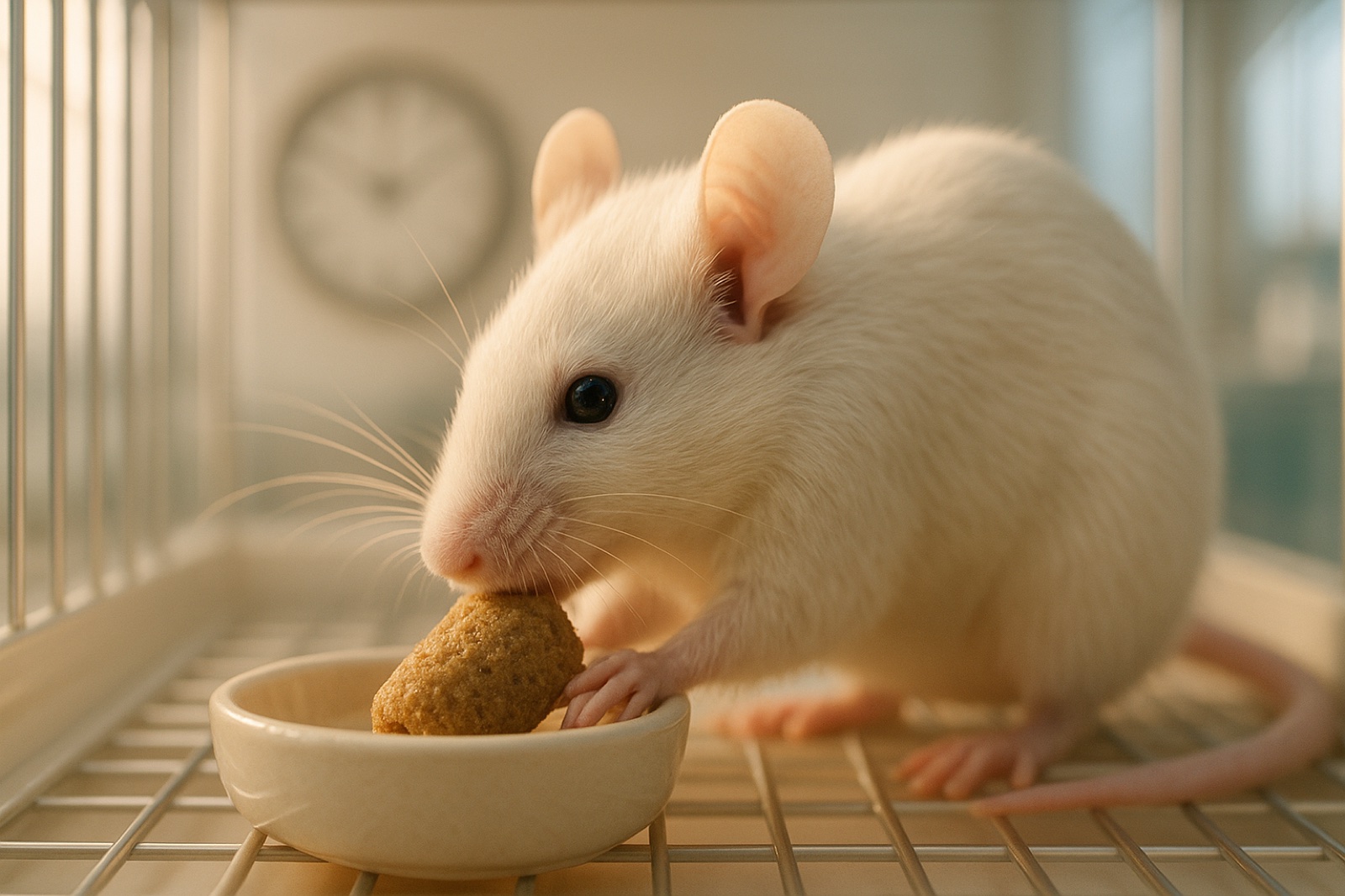
The team didn’t just test “eating on a schedule.” They tested two schedules. One group of mice ate only during their waking hours. For mice, that is the dark part of the day. Another group ate only during their sleeping hours.
The waking-hours group healed better.
The sleeping-hours group? The paper says that schedule “had no effect” on brain clearing, stroke damage, or movement.
So it wasn’t just a break from food that did the work. It was food that lined up with the body’s own day. Same idea, wrong time, no help.
That fits a pattern you may already feel in your own life. A late-night meal and a lunch can be the same food and still land very differently on the body. (Coffee works the same way. It can quietly change your sleep even when you feel fine, as we wrote about in caffeine and deep sleep.)
Three Things the Headlines Leave Out
1. These were mice. The researchers say plainly that the results are limited to animal models. Nobody has tested this on people after a stroke yet. It is not a treatment you can ask for today.
2. The melatonin result has a catch. Only a high dose of melatonin helped the brain’s cleaning system. A lower dose, closer to what people really take, did not. So this is not a reason to buy a bottle of sleep pills.
3. The authors call their own study “largely correlational.” The cleaning crew got better and the mice healed better. But the team says more work is needed to prove one caused the other.
That honesty matters. It is what makes the hopeful part worth trusting.
Why a Day-Three Treatment Is a Big Deal
The paper notes that fewer than 5% of stroke patients meet the strict rules for today’s fast-acting treatments. Most people reach help too late, or have a type of stroke those treatments can’t touch.
That leaves a huge number of people with only rehab. And the authors point out that good rehab depends a lot on where you live and what you can afford.
So the team is excited about something cheap. They write that timed eating or bright light are “low-cost, low-maintenance lifestyle adjustments” that could one day help in hospitals and at home. That is still a hope, not a result in people. But it is a hope that doesn’t need money.
What You Can Take From This Today
None of this replaces medical care. If you or someone you love is recovering from a stroke, the care team comes first. Ask them before changing meals or sleep.
But the bigger lesson is one almost anyone can use, for free:
- Keep your meals in your daytime. Eat while you’re awake and active, and give your body a quiet stretch at night. Our free Intermittent Fasting Finder can help you pick an eating window that fits your day.
- Get morning light. Light is the strongest signal your body clock has. A few minutes by a window or outside early in the day tells your body when “day” is.
- Keep your times steady. Wake, eat and sleep at about the same times each day. The body likes a beat it can count on.
The Oldest Rhythm
We tend to treat rhythm as something extra. Nice to have, once the real work is done.
This study hints at the opposite. The rhythm was part of the healing. The mice didn’t get a new brain. They got their day back, and their bodies did the rest.
There is an old idea tucked into the very first page of the Bible. When it tells how the world was made, it counts each day in a strange order: evening first, then morning. The day starts with rest, not with work. The rhythm is given before a single thing is finished, as if God built the beat in before building anything else.
Maybe healing is less about forcing the body to try harder, and more about letting it find its beat again.
Tonight, that might look like a simple dinner eaten a little earlier. A light turned off. A body allowed to rest on time. Small things. But the brain, it seems, has been keeping time all along. (Even the Earth’s day wobbles, by the way, which we explored in why a day isn’t exactly 24 hours.)
Discussion Question
If doctors could help stroke patients with something as simple as meal timing and light, do you think hospitals would actually change how they run? Why or why not? Share your thoughts in the comments below.
Share This
Mice that had a stroke healed better when they ate only during waking hours, even starting 3 days later. Eating during sleep hours did nothing. Timing mattered. https://bgodinspired.com/?p=117315
I didn’t know the brain has a cleaning system that runs on a daily clock. This mouse study on the body clock and stroke recovery is honest about its limits and still really hopeful: https://bgodinspired.com/?p=117315
Questions and Answers (Q&A)
Can your body clock affect stroke recovery?
In mice, yes. A 2026 University of Rochester study in the Journal of Clinical Investigation found that strengthening the body clock, starting three days after a stroke, led to better movement, smaller brain damage, better brain fluid clearing and less brain inflammation. The researchers stress the results are limited to animals and have not yet been tested in people.
Does time-restricted eating help after a stroke?
In a 2026 mouse study, eating only during the mice’s waking hours helped them recover from stroke, while eating only during their sleeping hours had no effect. This suggests meal timing, not just fasting, was what mattered. It has not been tested in human stroke patients, so anyone recovering from a stroke should talk to their care team before changing how they eat.
What is the glymphatic system?
The glymphatic system is the brain’s waste-clearing network. Fluid flows through the brain and carries away waste and leftover molecules. It was discovered in 2012 by Maiken Nedergaard’s lab at the University of Rochester, and later research showed it follows a daily rhythm tied to the body clock. A stroke can damage it, letting inflammatory molecules build up.
Should I take melatonin to help my brain heal after a stroke?
Not based on this research. In the 2026 University of Rochester mouse study, only a high dose of melatonin improved the brain’s cleaning system, while a lower dose closer to what people typically take did not. Melatonin was also not one of the two treatments tested in the stroke mice. Always ask a doctor before taking supplements after a stroke.
Why is a stroke treatment that starts days later important?
Current stroke treatments that dissolve or remove a clot work best within hours, and according to the 2026 Journal of Clinical Investigation paper, fewer than 5% of patients meet the strict rules to receive them. A treatment that still helps days later could reach far more people, especially those who get to care late or cannot access good rehab.