 0
0
 0
0
You’ve probably seen “My grace is sufficient for thee” on a coffee mug, a sympathy card, or stitched into a pillow at a Christian bookstore. It’s one of those verses handed to people the moment life gets hard — gentle, comforting, the kind of thing you say when you don’t know what else to say. But if you go looking for the actual meaning of 2 Corinthians 12:9 in its real context, it’s a much harder sentence than the coffee mug lets on. It isn’t God saying “don’t worry.” It’s God saying no — three times — and then explaining why.
The Verse in Context: What Happens Right Before 2 Corinthians 12:9
Paul wrote these words while defending himself to a church that had started doubting him. In the middle of that defense, he mentions something almost in passing: an extraordinary spiritual experience, being “caught up to the third heaven” (2 Corinthians 12:2). Then, in the very next breath, he tells them what it cost him.
“And lest I should be exalted above measure through the abundance of the revelations, there was given to me a thorn in the flesh, the messenger of Satan to buffet me… For this thing I besought the Lord thrice, that it might depart from me. And he said unto me, My grace is sufficient for thee: for my strength is made perfect in weakness.” — 2 Corinthians 12:7-9 (KJV)
Scholars still debate what the “thorn” actually was — a chronic illness, an eye condition, a recurring temptation, even the opposition Paul kept facing from other people. He never names it. What we do know is exactly how many times he asked God to remove it: three. Specific, deliberate, desperate requests. And three times, the answer wasn’t removal.
The Real Meaning of 2 Corinthians 12:9 Starts With One Word: “Thorn”
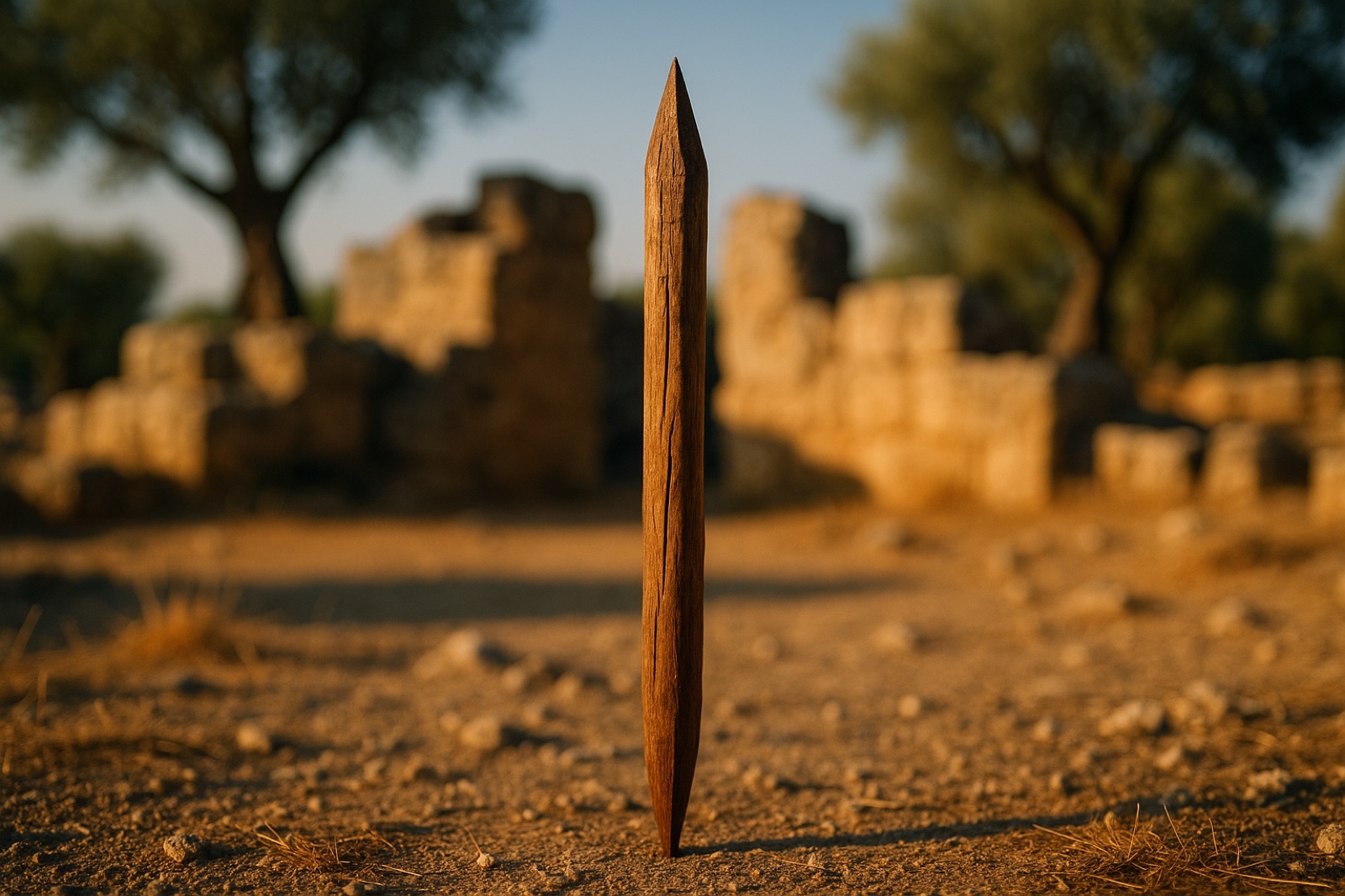
Here’s where the meaning of 2 Corinthians 12:9 gets sharper than most people realize. The Greek word Paul used for “thorn” is skolops — and in everyday Greek writing outside the Bible, that word didn’t usually describe a rose bush snag or a splinter. It described a sharpened stake — the kind used to build a defensive barrier, or, in its harshest use, for impaling. Paul wasn’t describing a minor irritation he was being a little dramatic about. He was describing something that felt driven into him and left there.
That changes what “sufficient” has to carry. If the thorn is small, “my grace is sufficient” is a nice sentiment. If the thorn is closer to a stake — something severe, ongoing, and never removed — then “sufficient” has to mean something much bigger: not comfort for an inconvenience, but strength to keep standing with the stake still in.
The Turn — Why “My Grace Is Sufficient” Isn’t a General Comfort Verse
This is the piece almost every coffee-mug version leaves out. “My grace is sufficient for thee” isn’t a floating, general-purpose comfort line you can drop into any hard moment. In its actual context, it’s God’s specific, direct answer to a specific, direct request He turned down — three separate times. Paul wasn’t told his pain didn’t matter. He was told the removal wasn’t coming, and something else was: strength that shows up inside the thing you asked God to take away, not after it’s gone.
That’s a very different promise than the one most people picture. It’s not “this will pass.” It’s “this might not pass — and I’m still enough.” Unanswered prayer, in that light, isn’t the same as an unheard one — it’s just an answer shaped differently than the one you asked for.
What This Means for You Today
You probably have your own version of Paul’s thorn — something you’ve asked God to remove more than once, that’s still here. The verse doesn’t promise it will leave. It promises something to carry alongside it. The word translated “grace” here is the same one behind everything the Bible says about God’s unearned generosity — and it’s not rationed. It’s sized to the thorn, whatever your thorn actually is.
Here’s something you can do in the next ten minutes: open your notes app and write one sentence naming your actual thorn — not a vague feeling, the real, specific thing. Underneath it, write: “My grace is sufficient for thee.” Then read both sentences out loud, back to back. That’s the verse doing what it was written to do — meeting the specific thing with a specific promise, not a generic one.
3 Things You Can Do Today
- Name your thorn in one sentence, in writing. Not a category of struggle — the actual, specific thing.
- Read 2 Corinthians 12:7-10 out loud, slowly, with your own situation in mind instead of Paul’s.
- Stop asking God to explain why He hasn’t removed it, and ask instead what strength He’s already giving you inside it. Write down one thing that qualifies.
Journaling Prompts
- What’s the “thorn” you’ve asked God to remove more than once? Have you ever said that sentence out loud to Him, specifically?
- Where in your life right now do you feel like you’re performing that you have things handled, when you don’t?
- If God’s answer to your prayer is “my grace is sufficient” instead of removal — what would it look like to actually believe that this week?
A Prayer for the Thorn That’s Still There
God, I’ve asked You to take this away — more than once, more than three times if I’m honest. I don’t fully understand why the answer keeps coming back the same. But I don’t want to keep waiting to feel close to You until this is gone. Meet me here, with the thorn still in, and make Your strength the thing I actually lean on instead of my own. Let Your grace be enough today, even though I don’t feel strong enough for it. Amen.
A Question Worth Sitting With
If God told you plainly, the way He told Paul, that this thing wasn’t going to be removed — but that His strength would be made perfect inside it — would that change how you’re praying about it this week? Paul’s own answer to that question reshaped how he saw every wound he carried. What’s yours?
Share This
- “The word Paul used for ‘thorn’ in 2 Corinthians 12:9 wasn’t a garden thorn — it was a sharpened stake. That changes what ‘my grace is sufficient’ is actually promising.”
- “‘My grace is sufficient for thee’ isn’t a general comfort verse. It’s God’s specific answer to three specific ‘no’s.”
- “God didn’t remove Paul’s thorn. He made it the place His strength showed up instead. Still sitting with that.”
Quick Questions, Honest Answers
What does 2 Corinthians 12:9 mean in simple terms?
It means that when Paul asked God three times to remove a painful affliction he called a “thorn in the flesh,” God said no to removing it and yes to something else — giving Paul enough strength (“grace”) to endure it, strength that would be most visible specifically because Paul was weak, not despite it.
What was Paul’s “thorn in the flesh”?
Scripture never says. Theories include a chronic illness, an eye condition, or ongoing opposition from other people. Most scholars believe the vagueness was intentional, so every reader can recognize their own version of it.
What does the Greek word for “thorn” actually mean?
The Greek word is skolops. Outside the Bible, it was commonly used for a sharpened stake — something used in a defensive barrier or for impaling — a far more severe image than the English word “thorn” suggests on its own.
Does “my grace is sufficient” mean God will fix the problem?
No — in Paul’s case, it meant the opposite. God specifically didn’t remove the thorn. “Sufficient” describes the strength God gives to carry the thing, not a promise that the thing will go away.
Why does the Bible say God’s strength is “made perfect in weakness”?
Because weakness is where a person stops relying on their own ability and makes room for something greater. Paul says this directly in verse 10: “when I am weak, then am I strong” — not because weakness is good in itself, but because it’s where God’s power becomes visible instead of hidden behind self-sufficiency.