 0
0
 0
0
You sit down for your quiet time, and before you’ve even opened your Bible, there’s already a checklist running in your head. Did I pray long enough yesterday? Did I read enough this week? Am I doing enough to actually be close to God? By the time you close the app or the book, you’re more tired than fed.
If you’ve ever read John 15 and heard Jesus say “abide in me” as one more item on that list — one more thing to perform, one more bar to clear — you’re not alone, and you’re not wrong to feel worn out by it. But you might be reading the word wrong. Not because your Bible mistranslated it. Because the culture we live in has quietly retrained what “abide” sounds like.
What Jesus Actually Said in John 15
The scene matters. This is the night before the crucifixion. Jesus is with his closest friends for the last time before everything falls apart — the arrest, the trial, the cross. They’re afraid. They don’t fully understand what’s coming. And in the middle of that fear, Jesus doesn’t hand them a strategy or a to-do list. He gives them one image, and he repeats it until it’s unmistakable:
“Abide in me, and I in you. As the branch cannot bear fruit of itself, except it abide in the vine; no more can ye, except ye abide in me. I am the vine, ye are the branches: He that abideth in me, and I in him, the same bringeth forth much fruit: for without me ye can do nothing.” (John 15:4–5, KJV)
Count it in your own Bible if you want: some form of “abide” shows up eight times in verses 4 through 10 alone. That’s not an accident or a stylistic tic. When a rabbi repeats a single word that many times in seven verses, that word is the entire point of the passage — not a detail inside it.
The Greek Word Jesus Used: Meno
The word behind “abide” is the Greek verb meno (μένω). It shows up close to 40 times in John’s Gospel and letters alone, and its meaning is almost boringly simple: to remain, to stay, to continue, to dwell in place. It is not a word about output. It’s a word about presence.
That matters more than it sounds like, because the New Testament had other words available for effort, and Jesus didn’t reach for any of them here. There’s agonizomai — to struggle, to strive, the root of our word “agonize,” used in Luke 13:24 for “strive to enter in at the strait gate.” There’s kopiao — to labor to the point of exhaustion, the word Jesus himself used in Matthew 11:28 when he said “come unto me, all ye that labor.” (BGodInspired has a full look at that word if you want to see how deliberately Jesus chose it there, too.)
Both of those words were sitting right there in the Greek language, available to Jesus, well understood by his audience. He used neither of them in John 15. He picked the word for staying put.
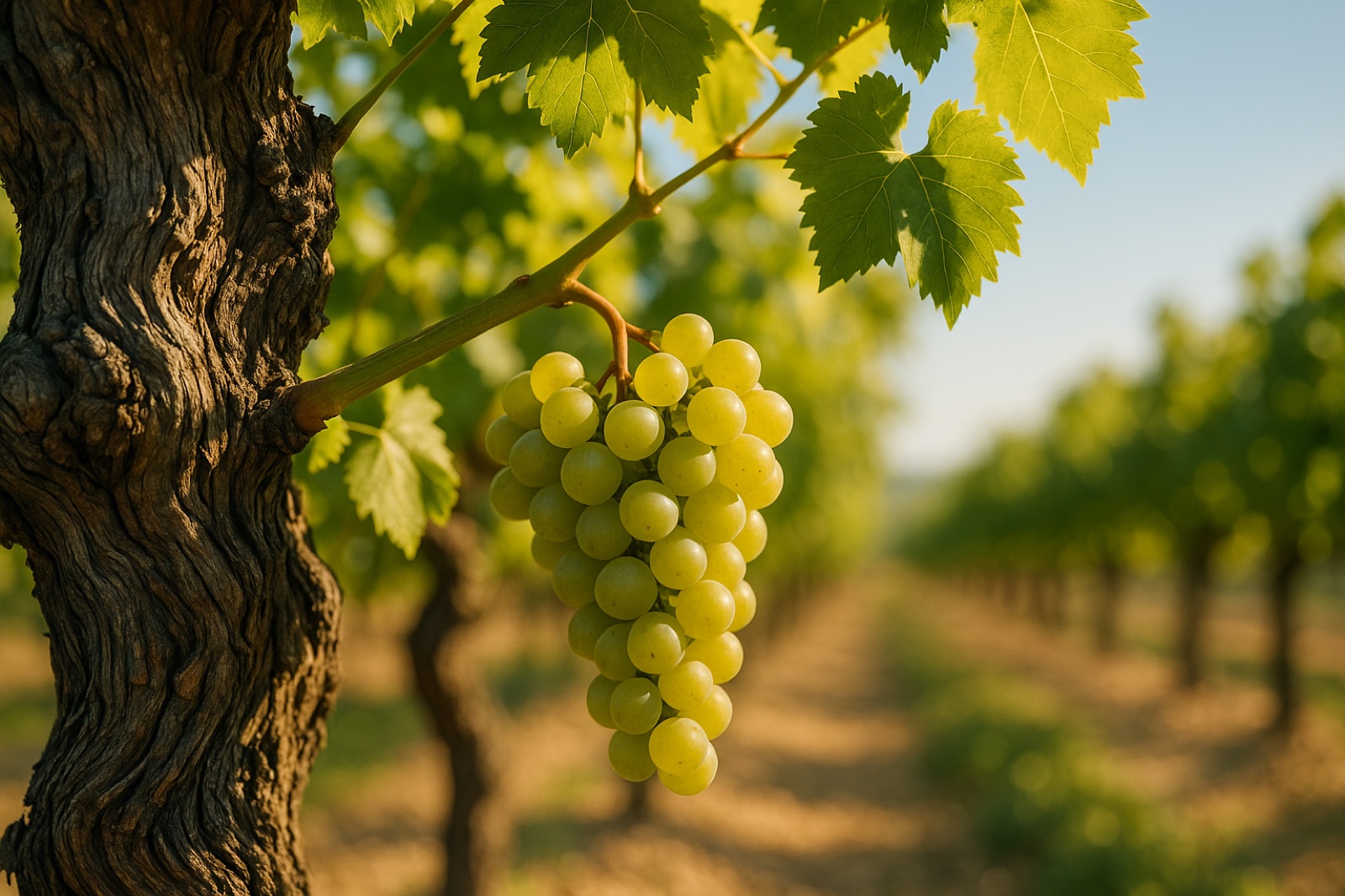
His listeners would have understood the metaphor instantly, because most of them had grown up around vineyards. A branch doesn’t clench up and grind out grapes through sheer effort. It doesn’t strain. It doesn’t work harder during a bad season to compensate. It just stays attached. The vine does the actual producing — pulling water and nutrients up through its own root system and pushing them out into every branch connected to it. The branch’s only job, its entire job, is to not detach.
Fruit Was Never the Point of Your Effort. It Was the Point of Your Staying.
Here’s where it lands for a lot of us. Modern faith culture, without really meaning to, has quietly turned spiritual growth into a productivity system: read more, pray more, serve more, and you’ll produce more fruit. It sounds reasonable. It also completely inverts what Jesus actually said.
He didn’t say “labor in me and you’ll bear fruit.” He said “abide in me, and I in you… for without me ye can do nothing.” The fruit in verse 5 isn’t something the branch manufactures through willpower. It flows out of a connection the branch didn’t create in the first place and doesn’t maintain through effort — only through staying where it already is.
This is the same trap that shows up everywhere outside of faith, too — the belief that trying harder is always the answer, even when trying harder was never actually the problem. One recent look at job search burnout found almost the identical pattern: more effort thrown at a problem that was never actually about effort in the first place. Jesus named that dynamic, in this exact context, two thousand years earlier.
So if you’ve been running on empty after another devotional that left you feeling like you’re behind, that exhaustion isn’t proof you need to try harder. It’s a sign you’ve been answering the wrong question. Not “am I producing enough fruit,” but “am I staying.”
What Staying Actually Looks Like This Week
Abiding isn’t passive in the sense of doing nothing. It’s active in the sense of choosing, again and again, not to leave. Here’s what that can look like in real, ordinary time — not theory.
Actions to Take
- Today: Set a five-minute timer. Don’t open a reading plan or a prayer list. Just sit, and silently say to God, “I’m here. I’m staying.” Let the silence be enough. Notice how uncomfortable it feels to not be producing anything — that discomfort is the old pattern surfacing.
- This week: The next time you catch yourself measuring your faith by output — how many verses, how many prayers, how consistent your streak is — pause and ask out loud, “Am I trying to produce something right now, or am I just staying connected?” Write down whatever answer comes.
- Ongoing: Pick one small daily rhythm you already do without thinking — making coffee, the drive to work, washing dishes — and attach a single sentence to it: “I’m not leaving.” Let that become your abiding practice, tucked inside a moment you were already going to have anyway.
Journaling Prompts
- Where in your life have you been treating your relationship with God like a performance review instead of a relationship?
- If bearing fruit isn’t something you produce but something that grows out of staying, what would change about how hard you’ve been trying?
- What would it actually look like this week to just stay, without needing to prove anything to God or to yourself?
Right below is a free 3-day sample devotional built around exactly this idea — staying connected to Jesus in small, daily moments instead of another spiritual to-do list.
A Prayer for When You’re Tired of Trying to Be Enough
God, I’m tired of measuring myself. I don’t want another list of things I’m supposed to do to earn my way close to you — I just want to actually stay close to you. Help me stop treating this relationship like a job and start trusting that showing up, staying, is enough on its own. Whatever fruit comes from my life, let it come from you, not from how hard I grind. I’m here. I’m not leaving. Amen.
Discussion Question
Where do you think the pressure to “do enough” for God first crept into your faith — church culture, family, comparison, somewhere else entirely? Tell us in the comments. This one’s worth talking through together.
Share This
Jesus never said “labor in me.” He said “abide in me.” The Greek word means stay, not strive. Here’s what that actually changes: https://bgodinspired.com/index.php/short-bible-study-with-me/abide-in-me-meaning-john-15-meno/
The branch doesn’t grind out fruit through effort. It just stays attached to the vine. Maybe that’s the whole point of John 15, and we’ve been reading it backwards. https://bgodinspired.com/index.php/short-bible-study-with-me/abide-in-me-meaning-john-15-meno/
I kept reading “abide in me” as one more thing to perform. Then I looked up the Greek word Jesus actually used. It means the opposite of performing. https://bgodinspired.com/index.php/short-bible-study-with-me/abide-in-me-meaning-john-15-meno/
Frequently Asked Questions
What does “abide in me” mean in John 15?
In John 15:4–5, Jesus tells his disciples to “abide” in him using the Greek word meno, which means to remain, stay, or dwell — not to work, strive, or perform. Using the image of a vine and its branches, Jesus is describing a stable, ongoing connection rather than a task to complete. The branch doesn’t produce fruit by trying harder; it produces fruit simply by staying attached to the vine.
What is the Greek word for “abide” in John 15, and why does it matter?
The Greek word is meno (μένω), and it appears roughly eight times in John 15:4–10 alone. It matters because Jesus had other Greek words available for effort and struggle — like agonizomai (to strive) or kopiao (to labor to exhaustion) — and chose neither. His word choice signals that staying connected, not working harder, is what he was actually asking for.
Why did Jesus repeat “abide” so many times in John 15?
Repetition in Jesus’s teaching usually marks the central point of a passage, not a side detail. Saying a version of “abide” eight times in seven verses, on the night before his crucifixion, tells the disciples this idea is the one thing he most needed them to understand and remember once he was gone.
Is abiding in Christ the same thing as trying harder to be a good Christian?
No — and that’s the exact confusion John 15 corrects. Abiding is about staying connected, not about increasing effort or performance. The passage explicitly says a branch “cannot bear fruit of itself” through its own striving; fruit comes from the vine, through the connection, not from the branch working harder on its own.
How do I actually practice abiding in Christ day to day?
Practically, it looks like small, repeated moments of staying rather than one big spiritual achievement: a few quiet minutes without an agenda, noticing when you’re measuring your faith by output instead of connection, and attaching brief moments of awareness of God to things you already do every day, like a commute or making coffee.