 0
0
 0
0
It turns up on church noticeboards, in sermons, in social media bios, and in a great many gentle arguments about how faith is supposed to travel. Preach the gospel at all times; when necessary, use words. The name underneath is almost always Francis of Assisi.
There is no evidence he ever said it.
It is not in his writings. Not in the Rule he wrote for his brothers, not in his letters, not in his prayers, and not in any of the early biographies written by men who knew him or knew the men who did. No one has yet found the saying in print anywhere before 1989 – more than 750 years after Francis died.
He did write one line that sits close to it. It says something almost opposite, and that is the part worth staying for.
(You will also see it as preach the gospel at all times, and if necessary use words, or preach the gospel always, when necessary use words. Same situation for every version.)
Where “preach the gospel at all times” actually comes from
The honest answer is that nobody knows.
That is unusual for a saying this famous, and it is worth sitting with rather than rushing past. Researchers who have gone looking for the origin have not found an author. What they have found is a date. The earliest appearances anyone has documented both come from 1989 – one in the Mennonite Weekly Review, in a piece by Paul Schrag, and one in an issue of World Vision magazine.
Through the 1990s it spread the way sayings spread once they sound official: a sermon here, a mission newsletter there, a book epigraph, a conference talk. By the 2000s it was everywhere, and by then it had been repeated so often with Francis’s name attached that checking felt unnecessary.
Here is the genuinely surprising part. This is the second time it has happened to him.
The Peace Prayer – “Lord, make me an instrument of your peace” – is also not his. The French historian Christian Renoux traced it in detail: it first appeared anonymously in 1912, in a small French devotional magazine called La Clochette, under the plain title “A beautiful prayer to say during Mass.” Francis’s name was not attached to it until the 1920s, roughly seven centuries after he died.
Two of the three things the English-speaking world most confidently quotes from Francis of Assisi were written by someone else, and in both cases we do not know who. He has become the patron saint of sayings nobody can source – which happens to a person who is universally liked and very rarely read.
What Francis actually wrote about preaching
In 1221 Francis wrote a rule of life for his growing band of brothers. Chapter seventeen is titled “Of Preachers,” and this is the closest authentic thing we have to the famous saying.
It opens with a restriction. No brother is to preach against the practice of the Church, and no brother is to preach at all unless his minister has given him permission to. Then, after that instruction, comes the line:
“All the brothers, however, should preach by their deeds.”
Read who that was written to. It was written to friars who had just been told they were not allowed to stand up and speak. It is not a strategy for spreading the gospel without talking. It is what Francis said to the ones who had to stay quiet.
And notice what it does not say. It does not say deeds are enough, or that words can wait for an emergency. It says the brothers are preaching – already, with their deeds, whether they intend to or not.
That is a much heavier sentence than the modern version. “Use words if necessary” lets you off. “You are already preaching” does not.
The part that makes the saying strange: Francis would not stop talking
If you were going to pin a quote about wordless evangelism on a medieval saint, Francis of Assisi is close to the worst available candidate.
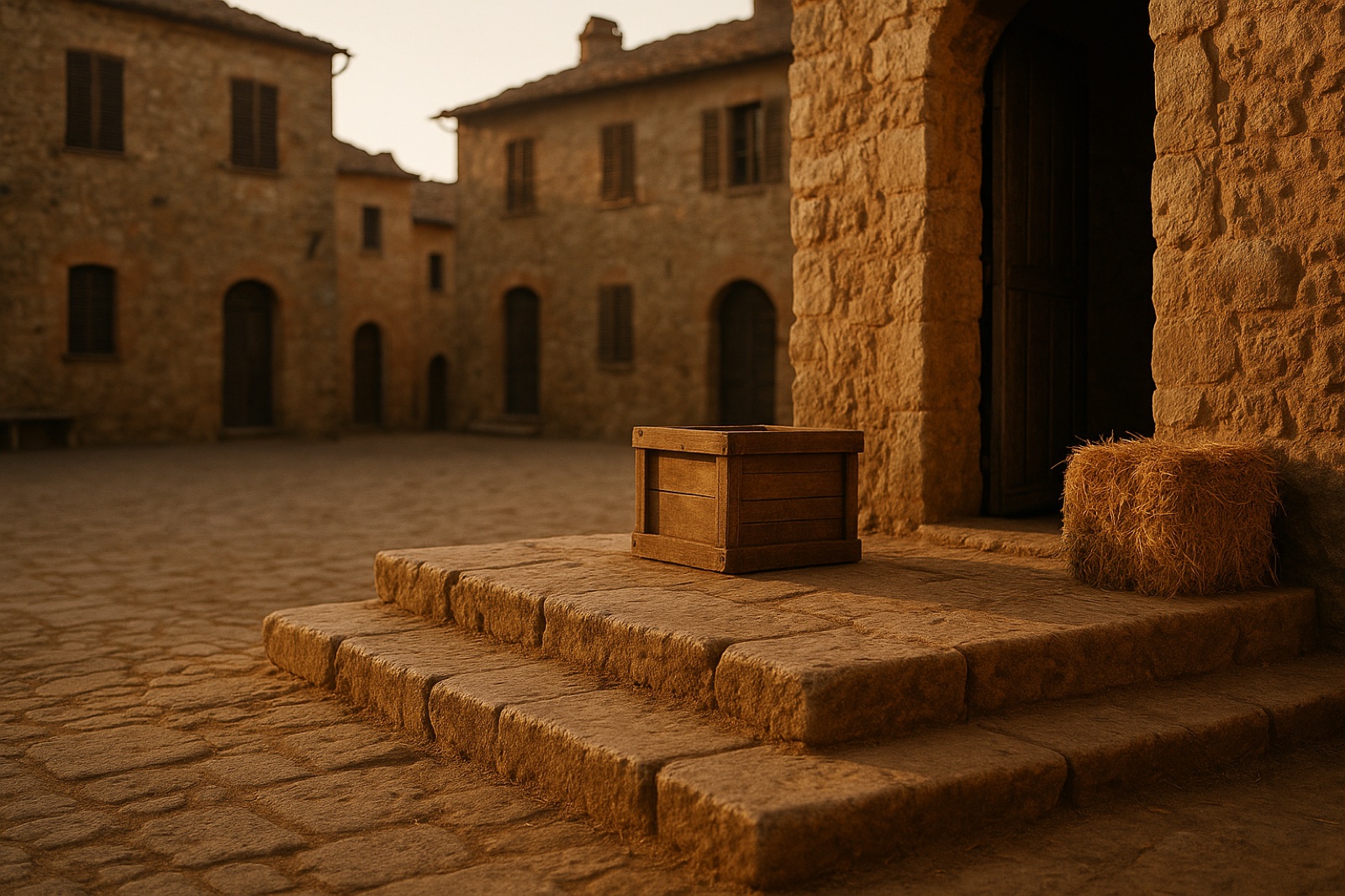
Writing in Christianity Today in May 2009, Mark Galli – who has written a biography of Francis – laid out what the man’s actual working life looked like. He was an itinerant preacher, sometimes speaking in up to five villages in a single day. He preached outdoors, because that is where the people were. In the countryside he would speak from a bale of straw or a granary doorway. In town he would climb on a box, or up a flight of steps, and start.
Thomas of Celano, who wrote the first biography of Francis within a few years of his death, describes his preaching as anything but soft: words filled with power, going straight to the heart. The content that survives is blunt and urgent – he told crowds to do penance and to bear the fruits of it, because life is short.
Even the most famous legend about him is a sermon. He preached to the birds. Whatever you make of the story, notice what the story is about. It is not about a man who felt words were optional. It is about a man who could not be stopped from speaking, and ran out of humans.
Galli finished his piece by suggesting a better version of the slogan: preach the gospel, use actions when necessary, use words always. That is closer to the record.
Why this is more than a technicality
Here is the thing worth being careful about, because the saying has been a real comfort to a lot of people and it did not become popular by accident.
The instinct underneath it is right. Nobody is drawn in by a faith whose words and life do not match. Most of us have watched someone talk beautifully and live badly, and we know exactly how much that talk was worth. If you have leaned on this saying because you find talking about faith frightening, or because you have seen faith used as noise, you were leaning on something true.
The problem is two small words: if necessary.
They quietly turn speech into the emergency option, and they hand you a saint’s authority for it that the saint never gave. They also do something less obvious and, I think, harder. If your life is the only sermon you are allowed to preach, then every bad week becomes a failed sermon. Every time you are short with someone, exhausted, ungenerous, or just ordinary, the message goes out wrong and it is your fault. That is a crushing amount of weight to put on a person’s behaviour – and it is a close cousin of another well-meant line we all repeat, “God won’t give you more than you can handle”, which also sounds like kindness and lands as pressure.
The saying is also, more often than not, used to settle an argument it is not equipped to settle – whether faith travels best by living or by speaking. Francis did not choose. He did both, hard, for twenty years.
The line underneath all of it
There is one more piece of Francis’s own writing worth putting beside the slogan, and it is not original to him either – he says so himself.
Six chapters earlier in that same rule of 1221, telling his brothers how to treat one another, Francis quotes scripture. The verse he reaches for is 1 John 3:18:
“My little children, let us not love in word, neither in tongue; but in deed and in truth.”
That is the sentence the modern saying is a distant, blurred echo of. And look at what it actually targets. Not the tongue. Love that stops at the tongue.
It is not asking anyone to say less. It is asking that the thing you say be true in the place where it costs something. Which is a different request altogether, and a much older one – old enough that Francis was already quoting it as ancient when he wrote it down eight hundred years ago.
Something similar happens to a lot of well-worn lines: they get lifted away from the situation that produced them and end up arguing for something the original never said. “Where two or three are gathered” is another one – quoted constantly about church attendance, and spoken about something else entirely.
So what do you do with the saying?
Nothing dramatic. This is not a call to go and preach at anybody, and if the thought of talking about faith makes you want to lie down, that is not a character flaw and nobody here is asking you to fix it today.
It is just that the sentence is not his, and the man is more interesting than the sentence. Francis gave away everything he owned, spoke to anyone who would stand still, walked into a war zone to talk to a sultan, and told his brothers that their ordinary days were already sermons. That is a bigger life than a slogan about staying quiet.
And if you have quoted the line – in a sermon, in a caption, in an argument – you are in enormous company. It has been printed in books, preached from pulpits and cited by people whose job is checking things. Almost nobody checks a quotation that everybody already agrees on. That is exactly how a saying gets to be everywhere.
If you like this sort of thing, “Be the change you wish to see in the world” has the same shape – universally attributed, never actually found, and the real source turns out to be a better story.
A question worth sitting with
Which saying have you always assumed was scripture, or always assumed belonged to the name printed under it? Most of us are carrying at least one. Tell us which one you would be sorriest to lose – and which one you would be relieved to put down.
Share this
- “Preach the gospel at all times; when necessary, use words” is not Francis of Assisi. Nobody has found it in print before 1989 – over 750 years after he died. What he actually wrote was “all the brothers should preach by their deeds,” to friars who had just been forbidden to speak.
- I had no idea. Francis of Assisi preached in up to five villages a day, outdoors, standing on a crate or a bale of straw. The most famous quote about not needing words belongs to the man who would not stop using them.
- Two of the three things everyone quotes from St. Francis were written by someone else – the “use words if necessary” line and the Peace Prayer. In both cases we still don’t know who wrote them.
Questions people are asking
Did St. Francis of Assisi say “preach the gospel at all times, use words if necessary”?
There is no evidence that he did. “Preach the gospel at all times; when necessary, use words” does not appear in Francis of Assisi’s writings, in his rules for his order, in his letters, or in any of the early biographies written soon after his death in 1226. Researchers have not located the saying in print anywhere before 1989. That is a strong finding, but state it accurately: what can be said is that no record of him saying it exists, not that it has been proved impossible.
Who really said “preach the gospel at all times; when necessary use words”?
Nobody knows. No author has ever been identified for “preach the gospel at all times; when necessary use words.” The earliest documented appearances are both from 1989 – one in the Mennonite Weekly Review, in an article by Paul Schrag, and one in World Vision magazine. The saying spread rapidly through churches and mission organisations in the 1990s with Francis of Assisi’s name already attached, and it stuck.
What did St. Francis actually say about preaching?
The closest authentic line comes from the rule Francis wrote for his brothers in 1221. In chapter seventeen, “Of Preachers,” he forbids any brother from preaching against the practice of the Church or without permission from his minister, and then adds: “All the brothers, however, should preach by their deeds.” That instruction was given to friars who were not licensed to preach with words – and it does not say deeds replace words. It says their deeds were already preaching.
Is “preach the gospel at all times, use words if necessary” in the Bible?
No. “Preach the gospel at all times, use words if necessary” is not a verse and does not appear in any translation of the Bible. The nearest genuine text is one Francis himself quoted in his rule of 1221, 1 John 3:18: “My little children, let us not love in word, neither in tongue; but in deed and in truth.” Notice that the verse is not against speaking. It is against love that stops at speaking.
Did St. Francis of Assisi actually preach out loud?
Constantly. Francis of Assisi was an itinerant preacher who, according to Mark Galli writing in Christianity Today in 2009, sometimes preached in as many as five villages in a single day. He spoke outdoors – from a bale of straw or a granary doorway in the countryside, and by climbing on a box or a set of steps in town. Thomas of Celano, his first biographer, described his preaching as full of power. Even the best-known legend about him, the sermon to the birds, is a story about a man preaching.